

In the intensive care unit (ICU) of modern hospitals, "ICU hospital bed" is a crucial professional term. Many patients' families, medical equipment procurement personnel, and even some new medical staff may wonder: Is an ICU bed the same as what we commonly call a intensive care bed?
The answer is: Yes. ICU beds are intensive care beds; they are essentially the same type of equipment, just called different things in different contexts.
However, to understand this issue more deeply, it is necessary to explain it from multiple dimensions, such as the medical background of ICUs and the structural design of ICU hospital beds, to help readers systematically understand this key medical equipment.
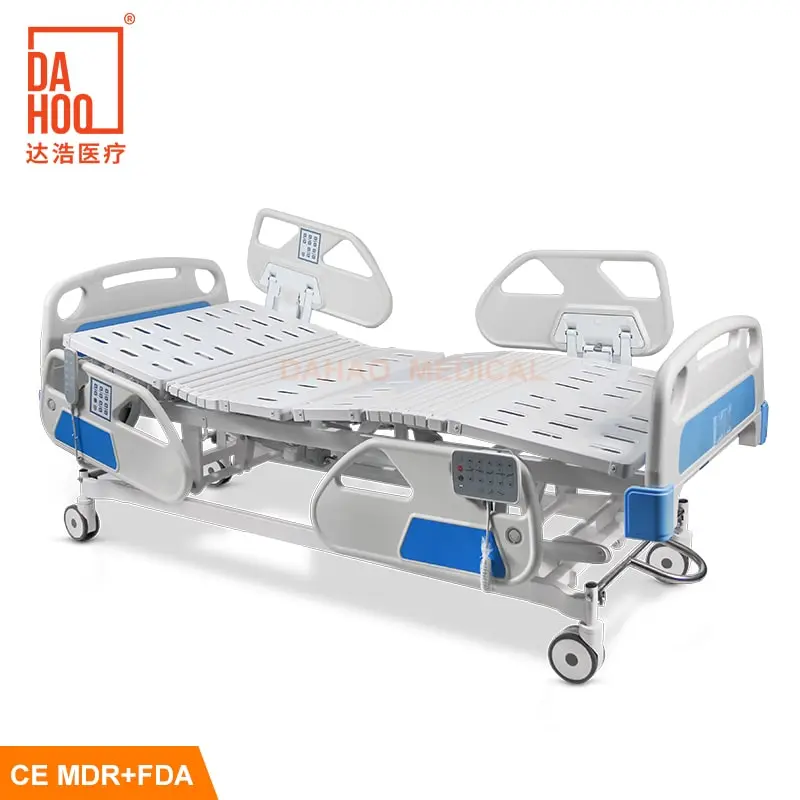
Why are ICU beds and intensive care beds the same concept?
Many people are confused because hospitals have multiple types of beds for different scenarios, such as general ward beds, emergency beds, rehabilitation beds, and operating room beds. In contrast, the term "ICU bed" is more akin to a departmental abbreviation in the medical field (ICU: Intensive Care Unit); while "critical care bed" is more of a direct description of the equipment's purpose.
In other words:
• ICU bed = a specialized bed used in intensive care units
• Critical care bed = a high-end bed with intensive care capabilities
Both refer to the same thing, therefore, in the definition of medical equipment, they are completely corresponding to the same category of equipment.
Why is the design of ICU beds significantly different from that of ordinary ward beds?
ICU beds are specialized equipment for "high-risk, high-intensity, and high-demand scenarios," and their design philosophy is completely different from that of ordinary ward beds. Ordinary ward beds can meet general nursing needs, but ICU beds must simultaneously support multiple functions such as monitoring, emergency care, treatment, assisted mobility, and assisted nursing, thus requiring a more stable, flexible, and intelligent structural design.
What is the core function of ICU hospital beds?
The fundamental goal of ICU hospital beds is: to maximize the safety of critically ill patients, improve monitoring efficiency, and reduce the operational burden on medical staff.
ICU beds are used throughout the entire treatment process for critically ill patients; therefore, the equipment itself must not only be reliable but also able to respond quickly to changes in treatment.
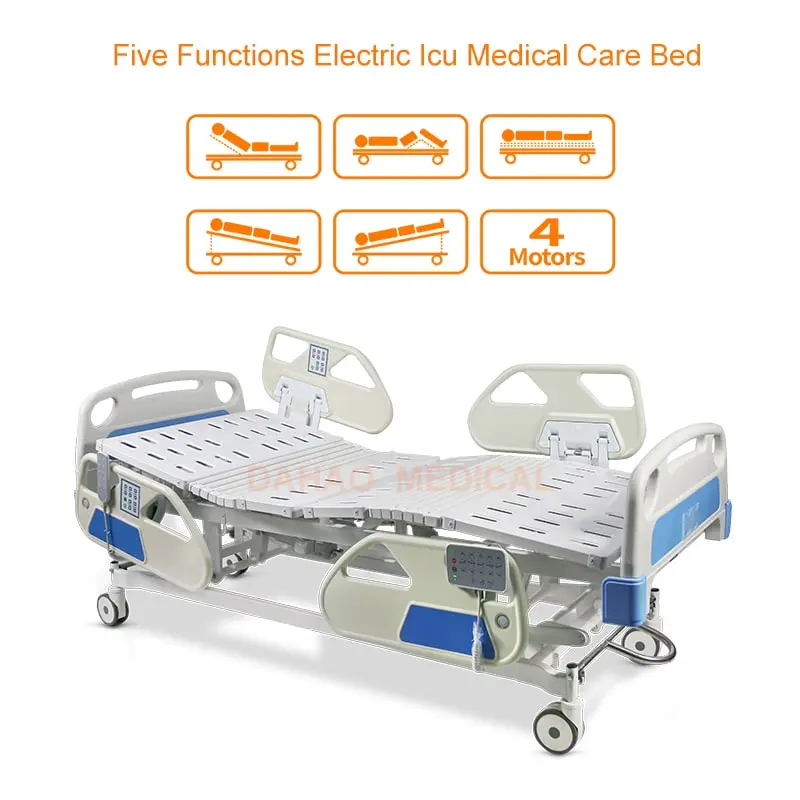
What specialized functions do ICU beds possess that are not found in ordinary hospital beds?
When answering the question, "Is an ICU bed the same as an intensive care unit bed?", we should focus more on its functional aspects, as function inherently determines its purpose.
The following are typical functional configurations of ICU beds, and the main reason they are called intensive care units.
1. Height-Adjustable Segmented Bed Surface Structure
ICU beds generally use a multi-segment bed surface design, commonly four or five segments.
The segmented design allows medical staff to adjust the patient's:
• Supine angle
• Sitting/lying position
• Lower limb height
• Lumbar support
• Special nursing positions
Especially in situations such as respiratory failure, postoperative monitoring, and intubation management, the ability to adjust the patient's position in an ICU bed is crucial for stabilizing their condition.
2. Fully Electric Control System
Electric controls are a basic feature of ICU hospital beds, including:
• Electric height adjustment
• Electric backrest lift
• Electric leg adjustment
• Electric tilt angle adjustment
• Electric CPR one-touch flattening function
These electric functions buy valuable time for resuscitation and significantly reduce nursing risks.
3. Tilt, Reverse Tilt, and Lateral Tilt Functions
ICU beds typically support:
• Trendelenburg position (head down, feet up)
• Reverse Trendelenburg position (head up, feet down)
• Lateral tilt function (available on some high-end ICU beds)
These positions are extremely common in critical care, helping to improve breathing and circulation, or assisting medical staff in turning patients.
4. Higher and Stronger Bedside Guardrails
Critically ill patients are often intubated, connected to monitoring lines, and on ventilators; therefore, falls or abnormal movements must be prevented.
ICU hospital bed rails typically feature:
• Higher safety height
• Fully height-adjustable
• Combined with operation buttons
• Soft-close mechanism
Safety is one of their core design principles.
5. Stronger load-bearing capacity and more stable bed surface
ICU hospital beds usually have higher load-bearing standards because multiple monitoring and nursing devices are often placed simultaneously in intensive care.
Stability must also be higher to prevent bed swaying from affecting the data of treatment equipment.
6. More complex medical equipment interfaces
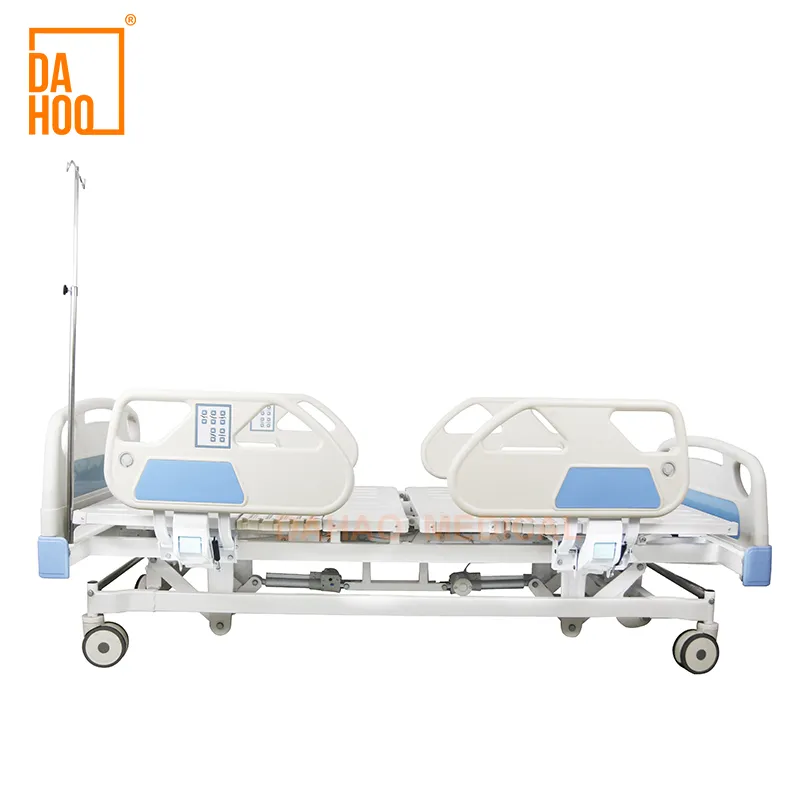
ICU hospital beds are typically equipped with:
• Oxygen interface fixing device
• Infusion stand slot
• Ventilator mounting bracket
• ECG monitoring equipment fixing components
• Quick-release emergency structure at the head of the bed
All of these are designed to improve ICU monitoring efficiency.
What are the irreplaceable professional benefits of ICU beds?
How do ICU beds improve the efficiency of intensive care?
The ICU is the area with the highest monitoring density in the healthcare system, and ICU beds, as core equipment, directly affect:
• The speed of medical staff's operations
• The quality of patient positioning management
• The smoothness of the resuscitation process
• The stability of monitoring equipment
• The difficulty of infection risk control. The more specialized the function, the more precise the monitoring.
Does an ICU bed affect patient recovery?
While it cannot directly treat the disease, an ICU hospital bed can:
• Help patients maintain a better breathing position
• Prevent pressure sores
• Reduce fluctuations in condition during movement
• Reduce risks associated with nursing procedures.
These indirect effects are extremely important for critically ill patients.
Why can't a regular hospital bed replace an ICU bed?
Many non-medical professionals may wonder: Since both allow patients to lie down, why can't a regular hospital bed replace an ICU bed?
Reasons include:
• Slow operation speed of ordinary hospital beds, not supporting one-button CPR
• Poor stability, unsuitable for connecting numerous diagnostic and treatment devices
• Limited bed adjustment, not supporting the special patient positions required for critical care
• Lack of professional tilting function
• Low load-bearing capacity
• Insufficient strength of safety railings
• Lack of connection structure for monitoring equipment
In intensive care unit (ICU) scenarios, ordinary hospital beds cannot meet the safety and professional operation requirements.
Do ICU beds have industry standards or unified specifications?
To answer the question "An ICU hospital bed is the same as a critical care bed," it is also necessary to understand it from a regulatory perspective.
Most countries have clear standards for ICU beds, such as:
• Must have electric multi-stage adjustment
• Must have CPR function
• Must support a specific range of bed height adjustment
• Must have emergency power failure protection
• Must have high-height safety rails
• Must be compatible with commonly used ICU monitoring equipment
These standards give the term "ICU hospital bed" a clear meaning in professional equipment classification, further proving its essential similarity to "intensive care unit bed."
How does the structure of an ICU bed improve nursing efficiency?
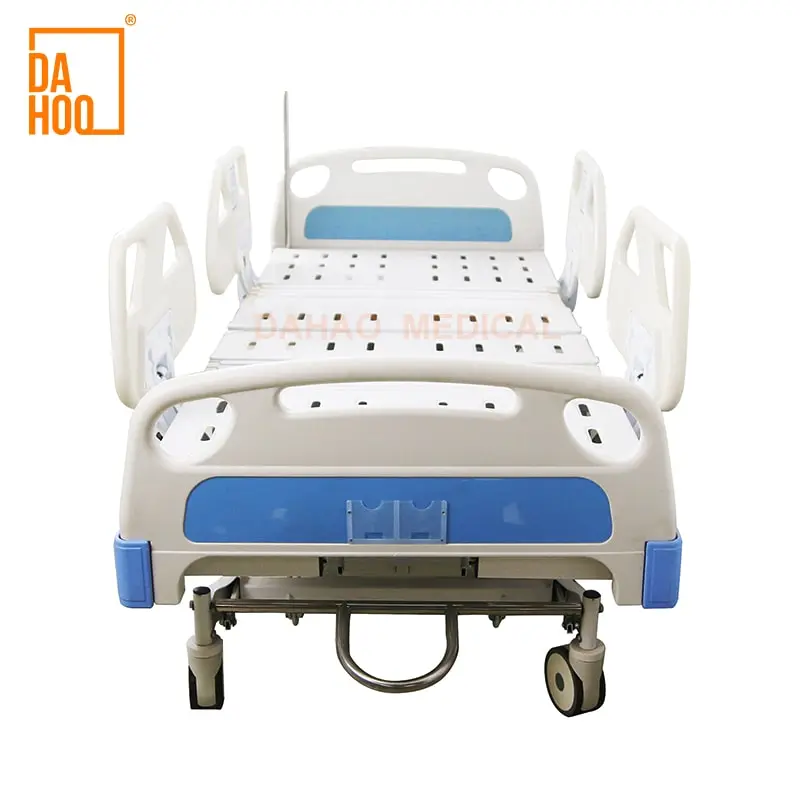
To facilitate smoother nursing procedures in the ICU ward, ICU hospital beds typically have the following targeted structural designs:
1. Movable bed with a strong braking system
To move patients when needed, ICU beds are equipped with casters, but even with easy movement, it must ensure:
• No slippage when stationary
• Absolute stability during resuscitation operations
Therefore, high-end ICU beds typically use a centrally controlled braking system.
2. Space is provided under the bed for equipment access
The under-bed space is rationally designed to accommodate:
• Bedside monitor cables
• Urinary catheters and guide wires
• Nursing aids. This avoids the risks caused by tangled cables.
Is an ICU bed suitable for long-term hospitalization?
The answer depends on the patient's condition.
ICU beds are designed for intensive care, not for long-term comfortable hospitalization. If the patient's condition stabilizes, they are usually transferred to a regular ward, at which point the complex functions of an ICU bed are no longer needed. Long-term use of an ICU hospital bed would actually increase costs and nursing complexity.
How to determine if a bed is an ICU bed?
You can judge from the following aspects:
1. Does it have a fully electric control system?
2. Does it support multi-stage adjustment and specific positions?
3. Is it equipped with a one-button CPR function?
4. Are the guardrails of a professional height and structure?
5. Is its load-bearing capacity and stability significantly higher than that of a regular hospital bed?
6. Is it designed for an ICU setting and compatible with monitoring equipment?
If it meets the above conditions, it can be basically determined that it is an ICU hospital bed, also known as an Intensive Care Unit bed.
Why are ICU beds so important within hospitals?
ICU hospital beds play a role in the medical system not only as "beds" but also as "critical care platforms."
The significance of ICU hospital beds includes:
• Carrying patients through the medical process for critically ill patients
• Connecting numerous life support devices
• Providing a stable structure to reduce risks
• Making emergency care and monitoring more efficient
Therefore, ICU beds are both medical equipment and indispensable infrastructure in the critical care system.
ICU Beds are Intensive Care Unit Beds; They are Essentially the Same
✔ ICU bed = Intensive Care Unit bed
✔ Same equipment, different names
✔ Functionally completely equivalent
✔ Essentially dedicated high-end beds used in ICU settings
Whether from the perspective of name, function, specifications, or actual application, there is no difference between the two.
The only difference is the different ways people express it.
What role does R&D play in Dahao Medical’s growth?
Innovation is a core driver of Dahao Medical’s development. The R&D team continuously improves product ergonomics, safety systems, and user experience across Electric Wheelchairs, Transfer Chairs, and Rollator Walkers. By investing in technical innovation, Dahao Medical helps customers stay competitive in their local markets while maintaining high quality and regulatory compliance.