

In today's increasingly segmented wheelchair market, carbon fiber wheelchairs have gradually become a popular choice for many consumers. Especially in terms of lightweight design, high-end portability, and mobility efficiency, carbon fiber wheelchairs are often considered to represent a "more advanced material solution."
Meanwhile, traditional steel wheelchairs are still widely used.
Steel wheelchairs remain very common in many hospitals, nursing homes, and homes.
Therefore, many consumers have a very direct question when purchasing: Are carbon fiber wheelchairs really stronger than steel wheelchairs?
Some people further wonder: Since carbon fiber wheelchairs are so light, won't they be less durable?
In fact, this question cannot be answered simply by looking at "strength."
Because the "strength" of a wheelchair actually involves multiple aspects:
• Material strength;
• Structural stability;
• Rigidity performance;
• Long-term load-bearing capacity;
• Resistance to deformation;
• Daily durability.
The real difference between carbon fiber and steel wheelchairs is not just "which is stronger."
More importantly: The material principles behind them are completely different. Therefore, to truly understand whether carbon fiber wheelchairs are stronger, we first need to understand: what exactly is carbon fiber?
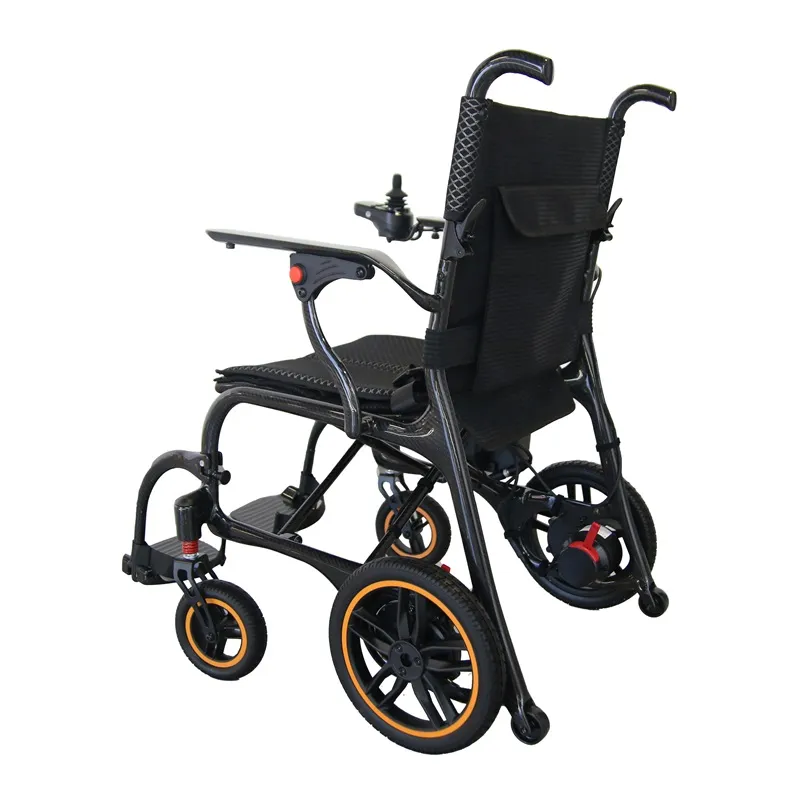
What is a carbon fiber wheelchair?
A carbon fiber wheelchair refers to a wheelchair whose main frame structure is made of carbon fiber composite material.
Traditional wheelchairs mostly use:
• Steel;
• Aluminum alloy;
• Partially composite metals.
Carbon fiber wheelchairs, however, utilize carbon fiber materials to replace some of the metal structure. Therefore, the biggest characteristic of carbon fiber wheelchairs comes primarily from the change in materials.
What exactly is carbon fiber?
Many consumers, upon hearing "carbon fiber," think it's some kind of "high-grade plastic." But in reality, carbon fiber is not ordinary plastic. It belongs to a high-strength composite material.
The biggest characteristics of carbon fiber typically include:
• Lightweight;
• High strength;
• High rigidity.
Therefore, it is frequently used in structural products that require both lightweight and high strength.
Why are carbon fiber wheelchairs gaining increasing attention?
The reason is actually very practical.
Traditional wheelchairs have long suffered from a significant problem: weight, especially steel wheelchairs.
Many consumers find that while steel wheelchairs are sturdy, they are very difficult to move, especially in situations like:
• Getting in and out of a car;
• Folding and moving;
• Traveling;
• Home storage.
The weight issue becomes very significant in these scenarios.
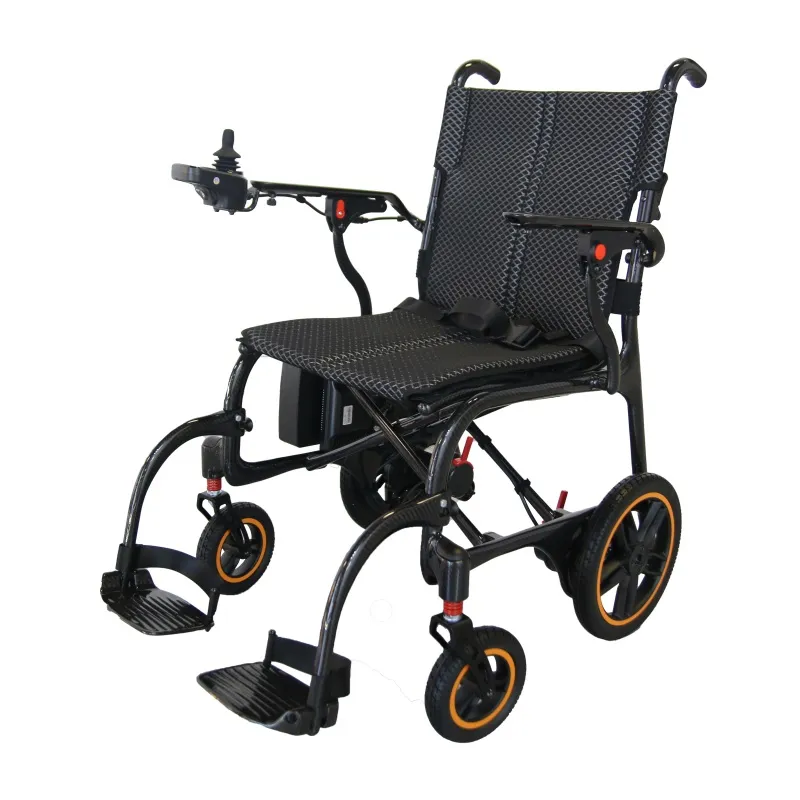
One of the biggest advantages of carbon fiber wheelchairs is that they significantly reduce weight.
Why are carbon fiber wheelchairs lighter?
Because carbon fiber itself has a low density. At the same time, it maintains high strength. Therefore, carbon fiber wheelchairs can maintain structural support while reducing material weight.
This is one of the biggest core advantages of carbon fiber wheelchairs.
Are carbon fiber wheelchairs really stronger than steel wheelchairs?
From a material performance perspective: By weight, carbon fiber's strength and stiffness are indeed far superior to steel. This is a major reason why many high-performance structures use carbon fiber.
1. What does "by weight" mean?
This is a crucial point.
Many consumers mistakenly believe:
"Is carbon fiber absolutely stiffer than steel?"
Actually, a more accurate statement is:
Under the same weight conditions, carbon fiber offers higher strength and higher stiffness.
In other words: A lighter material can achieve higher structural performance.
Therefore, carbon fiber wheelchairs can:
Reduce weight while maintaining a stable structure.
2. What is "Stiffness"?
Many consumers understand "strength" and "stiffness" as the same concept.
However, they are different.
Strength usually refers to:
The material's ability to withstand damage.
Stiffness, on the other hand, focuses more on:
The ability to resist deformation.
Therefore, even a very light carbon fiber wheelchair can still possess high stiffness.
3. Why is stiffness important for wheelchairs?
Because during movement, wheelchairs are constantly subjected to:
• Propulsion force;
• Ground impact;
• Body weight;
• Steering force.
If the frame stiffness is insufficient:
• It is prone to wobbling;
• Reduced pushing efficiency;
• Reduced stability.
Therefore, rigidity directly impacts the wheelchair user experience.
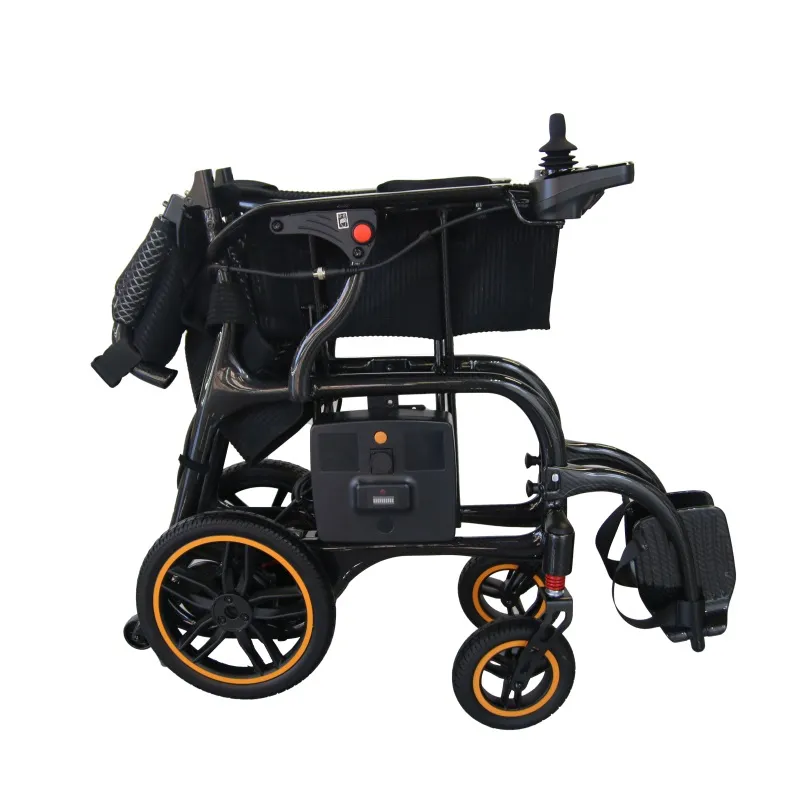
Why do many people perceive steel wheelchairs as "stronger"?
Because steel wheelchairs are typically:
• Heavier;
• Thicker in structure;
• Visually "harder."
Therefore, consumers easily develop the intuition that "heavy equals sturdy."
However, material strength cannot be judged solely by weight.
What are the biggest advantages of steel wheelchairs?
The biggest characteristics of steel wheelchairs typically include:
• Structural stability;
• High load-bearing capacity;
• Lower cost;
• Mature manufacturing process.
Therefore, steel wheelchairs remain very common in many basic care settings.
Why are steel wheelchairs usually heavier?
Because steel itself has a higher density.
At the same time, to ensure structural strength, steel wheelchairs often use thicker materials.
Therefore, their overall weight is usually significantly higher than carbon fiber wheelchairs.
Are carbon fiber wheelchairs "light but brittle"?
This is a common misconception among many consumers.
Because "light" easily evokes associations with:
"thin" and "easily broken."
However, carbon fiber composites are actually quite different from ordinary plastics.
Under normal use conditions, carbon fiber wheelchairs typically offer very high structural strength.
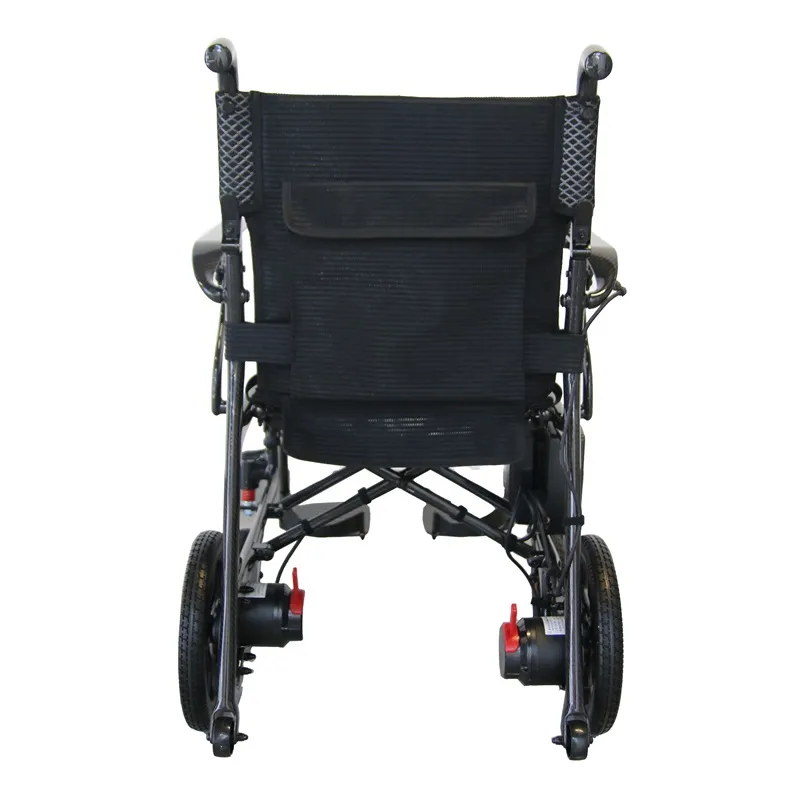
Why do carbon fiber wheelchairs feel "stiffer"?
Because carbon fiber itself has high rigidity.
Therefore, under stress:
the frame typically deforms less.
Many users feel:
carbon fiber wheelchairs are more compact and direct.
Why are carbon fiber wheelchairs more efficient to push?
This is largely due to the rigidity of the frame.
If the frame easily deforms under stress:
some of the pushing force will be dissipated.
Because carbon fiber wheelchairs, due to their high rigidity, typically transmit force more directly.
Why do sports wheelchairs prefer carbon fiber?
Because the sports environment places very high demands on:
• weight;
• rigidity;
• responsiveness.
Carbon fiber wheelchairs can simultaneously meet:
lightweight and high rigidity.
Therefore, carbon fiber is very popular in the field of high-performance wheelchairs.
Are steel wheelchairs necessarily inferior to carbon fiber wheelchairs?
No. Because wheelchairs are not just about the materials.
Also consider:
• Usage environment;
• Weight-bearing requirements;
• Frequency of use;
• Budget;
• Care methods.
The advantages of both materials differ depending on the specific needs.
Why are steel wheelchairs still widely used?
Because steel wheelchairs have very real advantages.
For example:
• Lower cost;
• Mature structure;
• Relatively simple maintenance;
• Stable high load-bearing capacity.
Therefore, steel wheelchairs remain very common in many basic care settings.
Why are carbon fiber wheelchairs usually more expensive?
Because carbon fiber materials are more expensive to manufacture.
Additionally:
• More complex processing;
• Higher process requirements;
• More stringent mold structure.
Therefore, carbon fiber wheelchairs are usually positioned as high-end.
Are carbon fiber wheelchairs more prone to damage?
Many consumers worry about this.
In fact, carbon fiber wheelchairs are generally very stable under normal use conditions.
However, it's important to note: Carbon fiber and steel have different stress logic.
When steel is subjected to impact, it may:
• Bending;
• Deformation. Under extreme impact, carbon fiber may experience:
• Structural cracks;
• Localized damage.
Therefore, the "damage patterns" of the two materials differ.
Is a lighter carbon fiber wheelchair always better?
No.
Besides being lightweight, a wheelchair also needs:
• Stability;
• Safety;
• Sufficient support;
• Sufficient durability.
Excessive pursuit of lightweighting may actually compromise structural stability.
Therefore, carbon fiber wheelchairs also require a balanced design.
What is the core difference between steel and carbon fiber wheelchairs?
Steel wheelchairs tend to prioritize:
Traditional, stable structures.
Carbon fiber wheelchairs, on the other hand, prioritize:
Lightweight, high-rigidity structures.
Therefore, their design logic is completely different.
Why are carbon fiber wheelchairs increasingly attracting attention from high-end users?
Because many users no longer simply need a wheelchair:
"Is there a wheelchair that's lighter, more convenient, and more efficient?"
Carbon fiber wheelchairs excel in these areas.
Is a carbon fiber wheelchair worth choosing?
That actually depends on your needs.
• If lightweight design is a top priority;
• convenience for travel;
• efficiency in pushing;
• and the burden of handling are paramount;
then carbon fiber wheelchairs typically offer significant advantages.
• However, if cost,
• basic care, and
• cost-effectiveness are even more important;
steel wheelchairs also offer practical value.