

Compared to traditional steel or aluminum alloy models, carbon fiber electric wheelchairs are increasingly popular among the elderly, individuals with limited mobility, and rehabilitation patients due to their advantages—namely, light weight, high strength, corrosion resistance, and a modern aesthetic. Lightweight carbon fiber electric wheelchairs significantly ease handling and enhance convenience in scenarios such as home care, daily commuting, travel, and air transport. However, as their usage becomes more widespread, many consumers are raising a practical question: are carbon fiber electric wheelchairs prone to aging in humid or high-temperature environments?
This issue concerns not only the product's lifespan but also directly impacts purchasing decisions and long-term maintenance costs. Some believe that because carbon fiber does not rust, it is completely immune to moisture; others worry that high temperatures could make the carbon fiber structure brittle and reduce its strength, thereby compromising safety. In reality, such views are somewhat one-sided. An electric carbon fiber wheelchair is not made of a single material but is an assembly of various components, including carbon fiber composites, resin matrices, motors, batteries, electronic control systems, bearings, fasteners, and tires. Since different materials have varying levels of resistance to environmental factors—such as humidity, heat, UV radiation, and salt spray—analyzing the aging characteristics of these wheelchairs requires a comprehensive look at both the overall vehicle structure and materials science.
In recent years, the global aging of the population has accelerated, driving continuous growth in the electric wheelchair market. Industry research firms predict steady market growth in the coming years, with lightweight design, high strength, and smart technology emerging as key development trends. Thanks to their excellent overall performance, carbon fiber materials are increasingly being used in high-end medical assistive devices. Meanwhile, as more users reside in coastal, high-humidity, high-temperature, or tropical regions, the proper use and maintenance of carbon fiber electric wheelchairs have become a shared focus for both consumers and manufacturers.
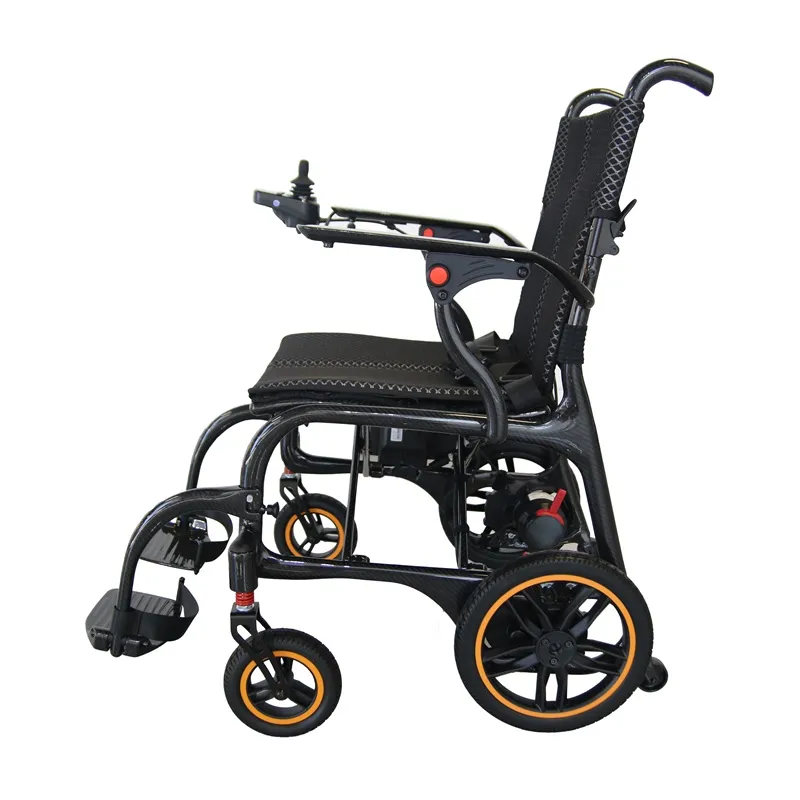
What is a carbon fiber electric wheelchair?
A carbon fiber electric wheelchair is a motorized mobility aid featuring a frame primarily constructed from carbon fiber composites, integrated with a motor, battery, controller, and drive system. Compared to traditional wheelchairs made of steel or aluminum alloy, the defining characteristics of carbon fiber electric wheelchairs are their light weight and high strength. Carbon fiber is a fibrous material composed of high-purity carbon; while its density is only about one-quarter that of steel, its tensile strength can be several times greater. To fully leverage these properties, manufacturers typically combine carbon fiber with high-performance resins—such as epoxy—to create carbon fiber composites. These composites are not only lightweight but also offer excellent rigidity, fatigue resistance, and corrosion resistance, making them widely used in sectors such as aerospace, high-end automotive manufacturing, bicycles, sports equipment, and medical devices.
For carbon fiber electric wheelchairs, lightweight construction makes it much easier for users and caregivers to handle, fold, and transport the chair. A lighter frame significantly reduces physical strain—whether getting the wheelchair in and out of a car, traveling by air, or storing it at home—thereby enhancing the overall user experience.
Does carbon fiber material really not age?
Many consumers assume that because carbon fiber does not rust like steel, carbon electric wheelchairs are virtually immune to aging. In reality, this is a common misconception.
Strictly speaking, carbon fiber itself possesses exceptional corrosion resistance and is largely unaffected by factors like moisture or oxygen, meaning it does not suffer from conventional rusting. However, the frames used in modern electric carbon fiber wheelchairs are not made of pure carbon fiber but rather carbon fiber composites. In addition to the carbon fibers, these materials contain a resin matrix; over time, exposure to high temperatures, ultraviolet (UV) radiation, and hot, humid environments can cause the resin to gradually degrade.
Nevertheless, under normal operating conditions, reputable manufacturers employ optimized resin formulations alongside surface coatings, UV-resistant treatments, and rigorous manufacturing processes. Consequently, the material's weather resistance is sufficient to meet the demands of most indoor and outdoor environments. In other words, with proper use and routine maintenance, exposure to humidity or high temperatures will not cause significant aging of the wheelchair over the short term.
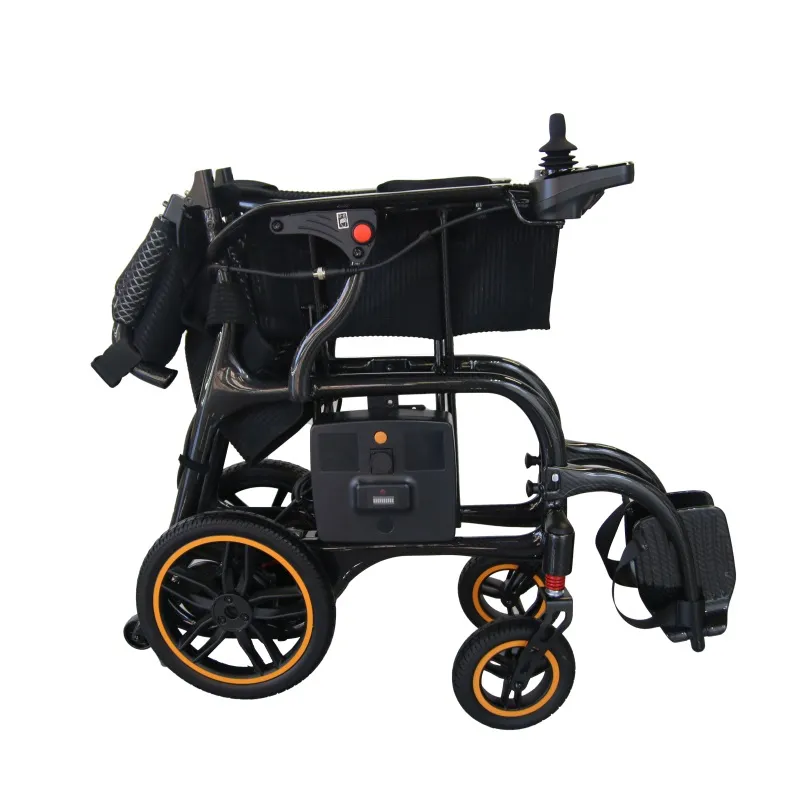
Do humid environments affect carbon electric wheelchairs?
For users living in coastal regions, areas with long rainy seasons, or tropical climates, a common concern is whether humid conditions might shorten the lifespan of their carbon fiber electric wheelchair. In terms of the material itself, carbon fiber composites possess excellent water resistance and do not rust rapidly due to moisture like ordinary steel. Therefore, high air humidity alone will not directly damage the carbon fiber frame.
However, a carbon fiber electric wheelchair consists of more than just the frame; it includes numerous metal components such as bearings, bolts, hinges, braking mechanisms, motor housings, and connectors. If these parts are exposed to high-humidity environments for extended periods—especially in coastal areas with high salt content—corrosion can still occur. Consequently, the primary focus for maintenance should be the vehicle's metal components and electronic systems, rather than the carbon fiber itself.
Furthermore, prolonged exposure to moisture can affect electronic components such as the controller, battery terminals, and motor connectors. If rainwater enters the electrical system, it may cause short circuits, poor electrical contact, or damage to electronic components. Thus, even though the carbon fiber wheelchair itself is highly corrosion-resistant, one should avoid prolonged exposure to rain or immersion in water, as well as storage in poorly ventilated, high-humidity environments.
Do high-temperature environments accelerate the aging of carbon fiber electric wheelchairs?
High-temperature environments warrant even more attention than humidity, though the impact extends beyond just the carbon fiber.
Generally speaking, carbon fiber itself boasts excellent heat resistance; in an oxygen-free environment, it can withstand temperatures far exceeding those encountered in daily life. Therefore, even with outdoor summer temperatures reaching around 40°C, the carbon fiber material itself will not suffer a decline in performance due to the heat.
The real concerns lie with the resin matrix and other components. Prolonged exposure to high temperatures and intense ultraviolet (UV) radiation can cause the resin material to undergo color changes, lose surface gloss, or even show signs of slight aging. Consequently, parking the carbon electric wheelchair in direct, scorching sunlight for extended periods is not recommended.
At the same time, high temperatures typically have a more significant impact on the battery than on the carbon fiber frame. The vast majority of carbon fiber electric wheelchairs currently use lithium-ion batteries. When lithium batteries operate in high-temperature environments, the rate of internal chemical reactions increases; prolonged exposure to heat can not only affect driving range but also shorten the battery's cycle life. Therefore, in hot weather, one should avoid parking the wheelchair for long periods inside a sealed vehicle or in direct sunlight without shade, and should adhere to the product instructions regarding charging and storage. In general, brief exposure to high temperatures will not cause rapid aging in electric carbon fiber wheelchairs; however, prolonged sun exposure, high-temperature storage, and a lack of maintenance can indeed have cumulative effects on the resin, battery, and electronic components. Therefore, maintaining good usage habits remains crucial.
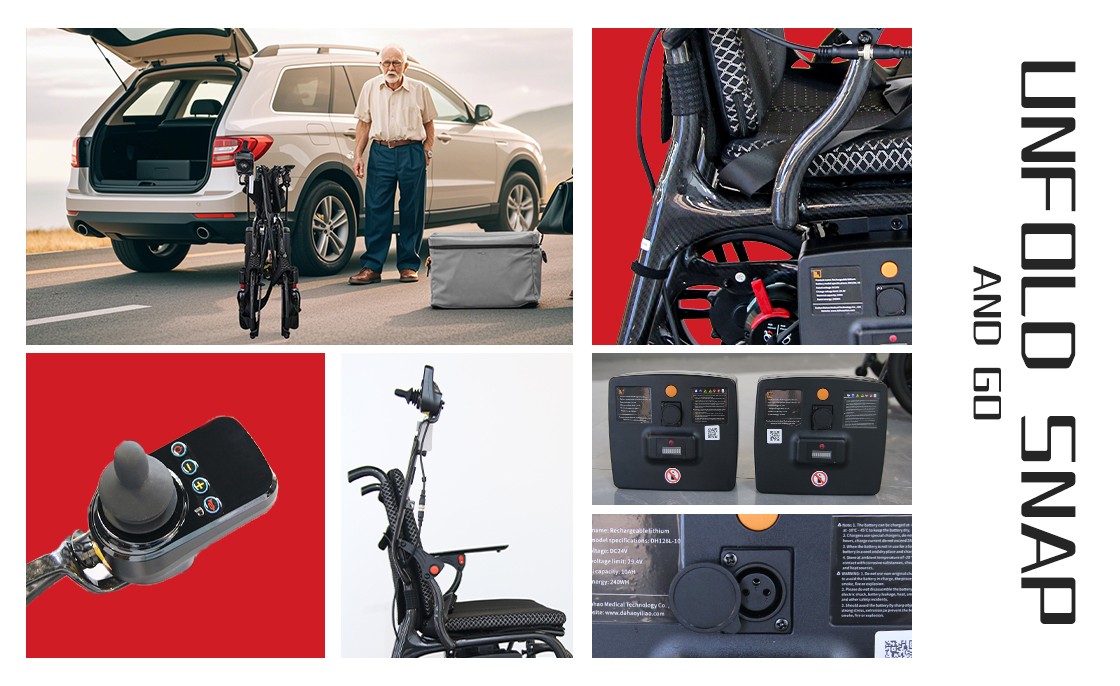
How do carbon electric wheelchairs compare to aluminum alloy and steel models in terms of resistance to environmental aging?
When purchasing a carbon fiber electric wheelchair, many consumers compare it with aluminum alloy and steel models. From the perspective of environmental adaptability, each material has its own advantages, and none is immune to aging in the absolute sense.
Steel Electric Wheelchairs
The primary advantages of steel electric wheelchairs are their lower manufacturing costs and high load-bearing capacity. However, steel has a distinct disadvantage: susceptibility to air, moisture, and salt spray. If the surface coating is scratched or peels off, the exposed steel can easily oxidize and rust in humid environments. Steel wheelchairs require more frequent maintenance and anti-rust treatment, particularly in coastal cities, high-humidity regions, or environments involving prolonged outdoor use.
Aluminum Alloy Electric Wheelchairs
Aluminum alloy electric wheelchairs offer good corrosion resistance. Aluminum naturally forms a dense oxide layer on its surface that effectively slows further corrosion, making these wheelchairs generally more suitable for humid environments than steel models. Nevertheless, in environments with high salt spray, heavy pollution, or prolonged exposure to acidic or alkaline substances, aluminum alloys can still suffer from pitting, oxidation spots, or a loss of surface luster.
In contrast, the carbon fiber composite material used in carbon electric wheelchairs possesses superior corrosion resistance; it does not rust like steel nor undergo significant oxidation like ordinary metals. Consequently, regarding the frame material, carbon electric wheelchairs typically hold an advantage in terms of stability during long-term exposure to humidity. However, it is important to note that a wheelchair consists of more than just the frame; metal connectors, bearings, motors, batteries, and controllers still require proper maintenance. Therefore, claiming that carbon fiber electric wheelchairs are "completely impervious to moisture" is inaccurate. A more precise statement is that while the carbon fiber frame itself is highly corrosion-resistant, the wheelchair as a whole still requires environmental protection and routine maintenance.
The Impact of UV Rays on Carbon Fiber Electric Wheelchairs
In addition to humidity and high temperatures, ultraviolet (UV) radiation is a significant environmental factor affecting the lifespan of outdoor equipment. For carbon electric wheelchairs used frequently in sunlight, UV rays primarily affect the resin matrix and surface coatings rather than the carbon fiber material itself.
Most reputable manufacturers apply a transparent protective layer, UV-resistant coating, or weather-resistant clear coat to the wheelchair frame to mitigate the effects of prolonged sun exposure. Under normal usage conditions, these protective measures effectively slow down the rate of surface aging.
However, if the wheelchair is parked outdoors without shelter and exposed to intense sunlight for several hours or longer each day, the surface coating may gradually lose its luster or undergo slight discoloration. While such changes generally do not immediately compromise the frame's structural integrity, they can affect the product's appearance. Therefore, users who frequently operate their wheelchairs outdoors are advised to park them in a cool, dry, and well-ventilated area whenever possible, or to use a dedicated protective cover when necessary.
How Should Users in Coastal Areas Maintain Their Carbon Fiber Electric Wheelchairs?
Users living in coastal regions often worry that the salt content in sea air will accelerate equipment aging. Indeed, salt-laden environments are more corrosive than typical urban settings, particularly for metal components.
If the wheelchair is frequently used near the beach, on seaside promenades, or in coastal communities, it is recommended to wipe down the frame, armrests, wheel hubs, and other exposed parts with a soft, damp cloth after each use to remove accumulated salt and dust. Follow this by wiping the surfaces dry to prevent moisture from lingering.
Components such as bearings, folding mechanisms, and moving joints should be lubricated regularly according to the product manual to minimize friction and the risk of corrosion. Additionally, battery terminals, charging ports, and controller connections should be inspected periodically for moisture, rust, or debris, with any issues addressed promptly.
Furthermore, when the wheelchair is not in use for extended periods, it should be stored indoors in a dry environment rather than outdoors near the coast, thereby further extending the equipment's lifespan.
How Should Carbon Fiber Electric Wheelchairs Be Used Correctly in Hot Weather?
As summer arrives, surface temperatures in many regions can far exceed ambient air temperatures; equipment parked in direct sunlight may see surface temperatures reach 60 or 70 degrees Celsius. Under these conditions, even if the carbon fiber frame itself does not sustain immediate damage, other components may still be affected.
First, avoid parking the wheelchair inside a closed vehicle for extended periods. Temperatures inside a sealed vehicle can rise rapidly in summer, which not only impacts the lithium battery's lifespan but also subjects plastic components, seat materials, and electronic parts to significant thermal stress.
Second, when charging in hot weather, follow the instructions in the product manual. Opt for a cool, well-ventilated area and avoid charging in direct sunlight or in hot, enclosed spaces. A proper charging environment helps protect the battery and extends the overall service life of the wheelchair.
For users who frequently engage in outdoor activities during the summer, it is advisable to plan outings to avoid the midday heat. Additionally, check the wheelchair for significant heat buildup after use and allow it to cool to a normal temperature before charging or storing it.
Key Factors Determining the Lifespan of Carbon Fiber Electric Wheelchairs
Many consumers believe that the material itself is the primary factor determining the lifespan of a carbon electric wheelchair; however, the factors influencing the vehicle's longevity are far more complex.
First, the manufacturing process is crucial. High-quality carbon fiber composites require rigorous ply design, resin curing, and quality inspection. If the manufacturing process is substandard, long-term stability may be compromised, even if high-quality carbon fiber is used.
Second, usage frequency and load conditions affect lifespan. Prolonged overloading, frequently driving over curbs or steps, severe impacts, or high-speed travel over complex terrain can all accelerate wear and tear on the vehicle's structure and drive system.
Third, routine maintenance is equally important. Regularly checking for loose bolts, proper tire pressure, battery health, and stable control system operation helps identify issues early and prevents the accumulation of faults.
Fourth, the storage environment cannot be overlooked. Even a high-quality carbon electric wheelchair will face greater environmental stress if stored for long periods in conditions characterized by high heat, high humidity, intense UV radiation, or salt spray, compared to one kept in a dry, indoor environment. Therefore, the lifespan of an electric carbon fiber wheelchair is not determined by any single factor, but rather by the combined effects of materials, manufacturing processes, usage patterns, and maintenance habits.
FAQ
Q1: Will a carbon fiber electric wheelchair rust?
A: The carbon fiber frame itself does not rust like steel; however, some metal components on the wheelchair may still be affected by humidity and salt spray, so regular maintenance is required.
Q2: Is a carbon fiber electric wheelchair suitable for use in the humid southern regions?
A: Yes, it is suitable. Carbon fiber material has excellent corrosion resistance, but it is recommended to keep the wheelchair dry, clean it regularly, and inspect the electronic systems and metal parts.
Q3: Can high temperatures damage the carbon fiber frame?
A: Typical summer heat usually does not directly damage the carbon fiber frame, but prolonged exposure to direct sunlight can affect the surface coating, resin, and other components; therefore, it is advisable to avoid extended exposure to intense sun.
Q4: Can the carbon fiber electric wheelchair be used in the rain?
A: It can be used cautiously during light rain, depending on the product's protection rating, but you should avoid driving through deep water or prolonged exposure to heavy rain. Wipe it dry promptly after use and inspect key components.
Q5: Is a carbon fiber electric wheelchair more corrosion-resistant than an aluminum alloy one?
A: In terms of frame material, carbon fiber composites generally offer superior corrosion resistance; however, the overall durability of the wheelchair also depends on the design and maintenance of other components.
Q6: Will prolonged exposure to direct sunlight shorten the battery life?
A: Yes. High-temperature environments can accelerate the aging of lithium batteries, so it is recommended to avoid parking the wheelchair in hot, sun-exposed areas for extended periods.
Q7: How often should the carbon electric wheelchair be serviced?
A: In addition to daily cleaning, it is recommended to regularly inspect the tires, brakes, battery, motor, and fasteners, and to perform professional maintenance according to the manufacturer's recommendations.
Q8: Will scratches on the carbon fiber frame affect safety?
A: Minor surface scratches usually do not affect structural integrity; however, if cracks or delamination appear, or if the wheelchair sustains a severe impact, you should stop using it and have it inspected by a professional.
Q9: What is the biggest factor affecting the lifespan of a carbon electric wheelchair?
A: Factors such as manufacturing quality, usage habits, maintenance routines, storage environment, and battery management collectively influence the wheelchair's lifespan; it is not determined solely by the frame material.
Q10: Is a carbon electric wheelchair a worthwhile long-term investment?
A: For users who prioritize lightweight design, portability, and corrosion resistance, carbon fiber electric wheelchairs—provided they are used and maintained correctly—typically offer high long-term value and excellent overall performance.