

Hospital beds have evolved beyond mere furniture for patient rest and treatment; they have become vital medical equipment integrating nursing support, rehabilitation assistance, safety features, and intelligent monitoring. Historically, traditional hospital beds featured fixed structures or simple mechanical adjustments, serving only basic needs. However, driven by an aging population, a rising number of patients with chronic diseases, and an increasing demand for long-term care, the importance of adjustable hospital beds has grown rapidly. Whether in large general hospitals, rehabilitation centers, elderly care facilities, or home care settings, a common question arises: which type of adjustable hospital bed is the best?
Adjustable hospital beds on the market generally fall into two categories: manual and electric. Manual beds rely on hand cranks or mechanical mechanisms to adjust the bed's angle, whereas electric beds utilize motors and control systems for automated adjustment. While manual beds are typically less expensive than electric ones, electric beds are increasingly the preferred choice for medical institutions and households alike due to their superior functionality, comfort, nursing efficiency, and smart capabilities.
Market research indicates that the global hospital bed market is projected to exceed $5.2 billion by 2025. Electric beds already account for over 60% of this market, with their penetration rate in high-end medical facilities continuing to rise. Demand for electric adjustable hospital beds is particularly strong in countries with aging populations, such as China, Japan, Germany, and the United States. Many hospitals have even adopted electric adjustable beds as standard equipment for new wards. This trend clearly demonstrates that electrification and smart technology have become the core drivers of hospital bed development in modern healthcare.
So, what exactly distinguishes manual adjustable hospital beds from electric ones? Which type is better suited for specific use cases? Why do so many consider the electric adjustable hospital bed the superior choice? This article provides a comprehensive analysis covering structure, functionality, user experience, cost, application scenarios, and future trends.
What Is an Adjustable Hospital Bed?
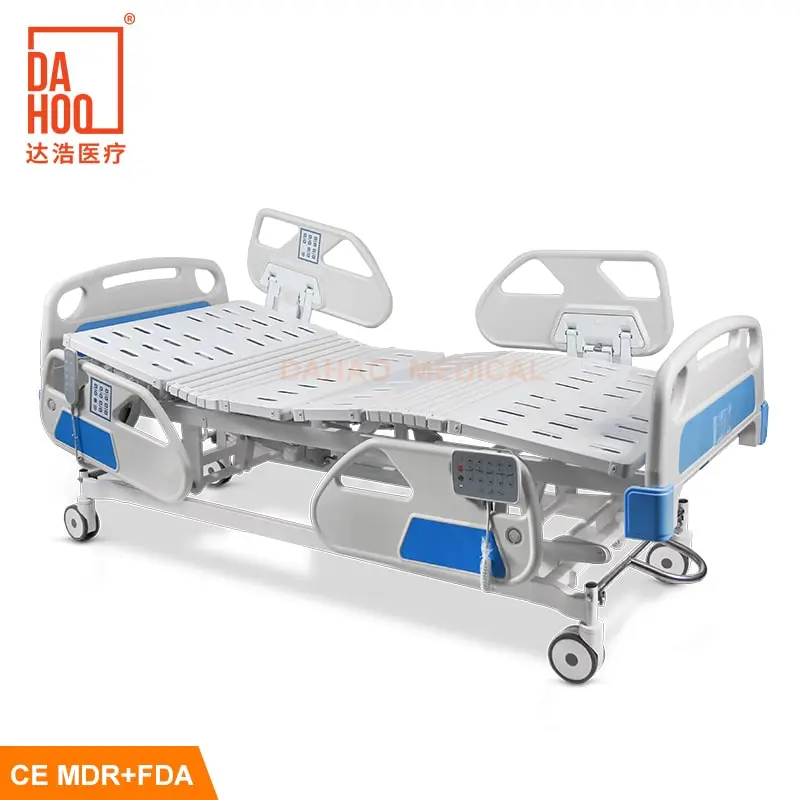
An adjustable hospital bed is a piece of medical equipment designed to alter its angle, height, or configuration to meet specific care requirements. Unlike traditional fixed beds, adjustable hospital beds enable patients to change positions more easily, thereby enhancing comfort and facilitating medical treatment and nursing care.
Typically, adjustable hospital beds offer the following functions:
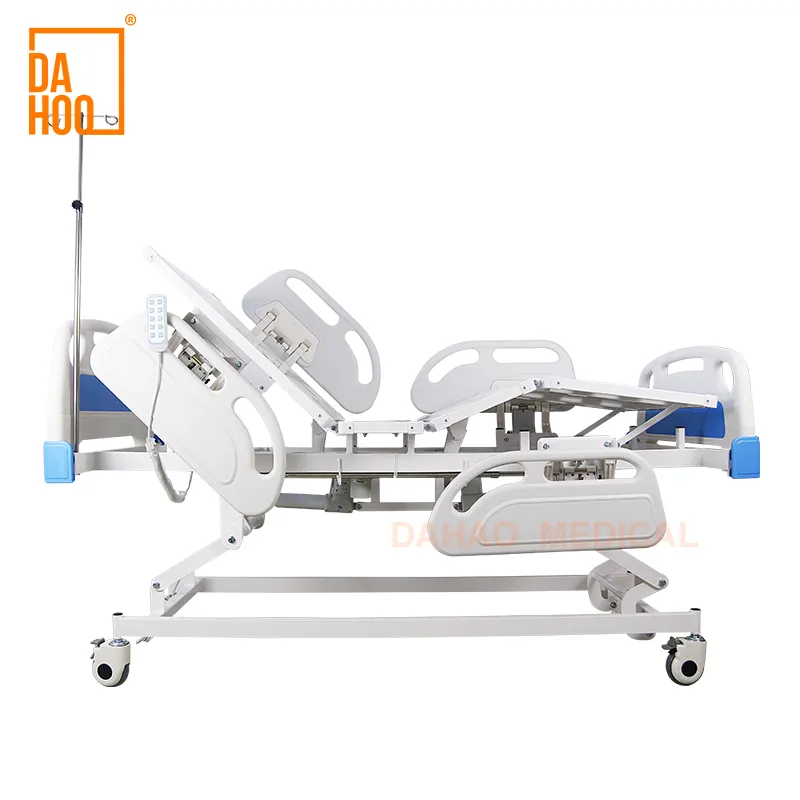
Backrest elevation, leg elevation, overall height adjustment, Trendelenburg (head-down/feet-up) and reverse Trendelenburg (head-up/feet-down) positions, as well as other specialized positioning adjustments. These functions are crucial for patients who are bedridden for extended periods. For instance, raising the backrest assists with eating, reading, and breathing; elevating the legs helps improve blood circulation in the lower limbs; and overall height adjustment reduces the physical strain on caregivers during the care process.
Structurally, adjustable hospital beds generally consist of a bed frame, a segmented mattress platform, a drive mechanism, side rails, and a caster system. Based on the drive mechanism, they are primarily categorized into two types: manual adjustable hospital beds and electric adjustable hospital beds.
What is a manual adjustable hospital bed?
Manual adjustable hospital beds are a common type of bed in traditional care settings. They rely on mechanical transmission structures and hand-crank mechanisms to adjust the bed's configuration.
To operate a manual adjustable hospital bed, caregivers or family members must turn a crank handle; this action engages gears, lead screws, or linkage systems to raise or lower the mattress platform. For example, to elevate a patient's back, the caregiver must continuously turn the corresponding crank until the bed reaches the desired angle.
The advantages of manual adjustable hospital beds include a relatively simple structure, a low failure rate, and lower procurement costs. The price of a standard manual adjustable hospital bed is often just one-third—or even less—of that of an electric bed. Consequently, they remain a viable option for medical institutions with limited budgets or for home care settings.
However, manual adjustable hospital beds also have distinct limitations. Primarily, they rely heavily on manual operation. For patients requiring frequent position changes, caregivers must repeatedly operate the mechanical cranks; this process is not only time-consuming and physically demanding but can also lead to caregiver fatigue. Secondly, manual adjustments often lack smoothness; patients may experience noticeable jolting, especially when significant changes in angle are required. Furthermore, manual hospital beds offer relatively limited functionality—most models only allow for basic backrest and leg-rest adjustments—making it difficult to meet complex care needs.
What is an electric hospital bed?
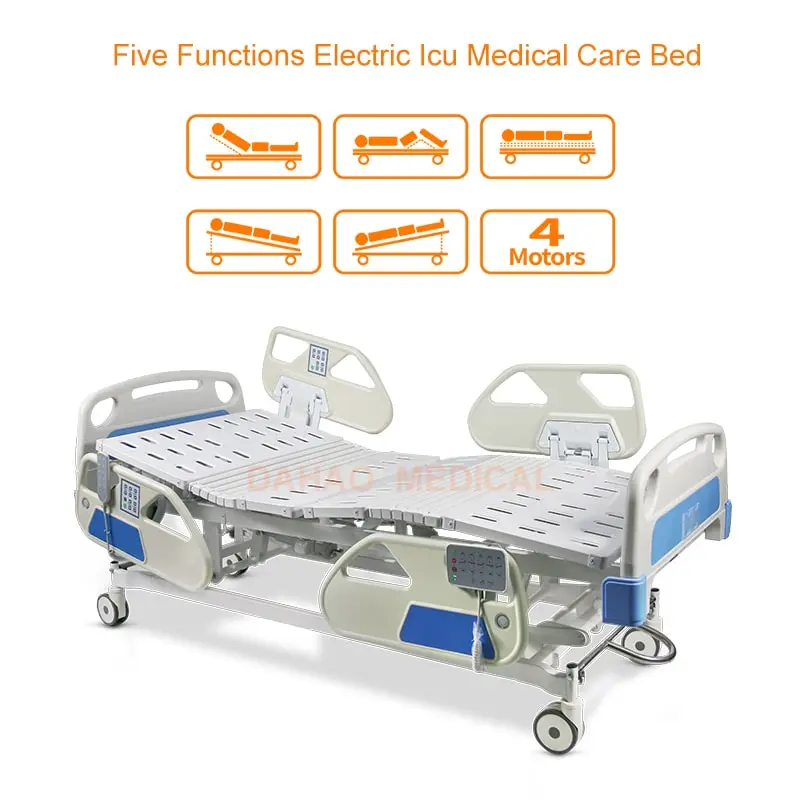
Electric hospital beds represent the future of modern medical care equipment. Unlike manual beds, electric beds use a motor system to drive movement; users can adjust the bed to various positions simply by pressing a button or using a remote control.
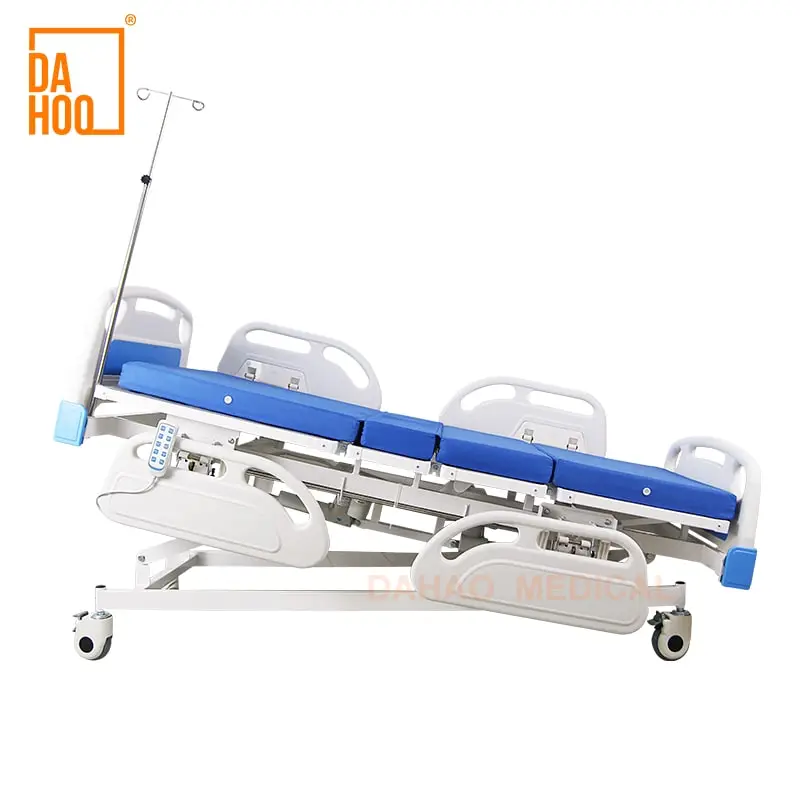
A standard electric hospital bed typically houses multiple motors, each dedicated to a specific function. For instance, a backrest motor controls the elevation of the upper body, a leg motor manages knee elevation, and a lift motor adjusts the bed's overall height. High-end models may even support features such as automatic turning, position memory, one-touch reset, and an emergency CPR flat-position mode.
The primary advantage of electric hospital beds is their ease of operation and smooth movement. Whether it is the patient, a family member, or a caregiver, precise control can be achieved with the simple push of a button. This automation advantage is particularly significant in scenarios requiring frequent care adjustments.
What are the differences between manual and electric hospital beds?
Although both fall under the category of adjustable hospital beds, the actual user experience differs significantly.
First is the method of operation. Manual beds rely on hand-cranking, whereas electric beds operate via push-button controls. The former requires physical effort, while the latter demands almost no extra physical exertion.
Second is the range of functions. Manual beds usually offer only basic features, such as backrest and leg-rest adjustments. In contrast, electric beds often support advanced functions like overall height adjustment, Trendelenburg positioning (head-up/feet-down), automatic turning, and smart memory settings.
Third is caregiving efficiency. For patients requiring frequent position changes, manual beds can significantly increase the caregiver's workload, whereas electric beds greatly improve efficiency.
Fourth is patient comfort. Thanks to smooth motor-driven operation, electric beds generally move more gently and quietly, resulting in a better experience for the patient.
Finally, there is the price. While manually adjustable hospital beds are lower in price, electrically adjustable beds come at a higher cost but offer significantly greater functionality and value.
Why are electrically adjustable hospital beds superior?
In most modern care settings, electrically adjustable hospital beds are considered the optimal choice primarily because they outperform manual beds across multiple dimensions.
1. Electrically adjustable hospital beds significantly reduce the burden of care
Repeatedly turning, lifting, and repositioning patients is a major cause of occupational muscle strain among caregivers. Research indicates that over 40% of lower back injuries in the nursing profession are linked to patient repositioning tasks.
With manual beds, every adjustment requires physically cranking a mechanical mechanism, leading to significant physical exertion over time. In contrast, electric beds use motors to automate these movements, allowing caregivers to shift from manual laborers to equipment operators, thereby drastically reducing physical strain.
2. Electrically adjustable hospital beds enhance patient comfort
For patients confined to bed for extended periods, comfort directly impacts sleep quality, emotional well-being, and the efficiency of recovery. Electric beds allow for precise, smooth adjustments, helping patients find the most comfortable positions.
For instance, post-operative patients may need to maintain a semi-reclined position (30 to 45 degrees) to alleviate respiratory stress and reduce the risk of aspiration. While manual beds can achieve similar positions, the adjustment process is often slow and lacks smoothness; electric beds, however, facilitate fine-tuned adjustments with ease.
3. Electrically adjustable hospital beds are ideal for high-frequency care
In settings such as ICUs, rehabilitation wards, geriatric care units, and long-term home care, patients often require frequent repositioning. Examples include turning every two hours to prevent pressure ulcers, periodically elevating the backrest to assist with eating, and adjusting bed height during rehabilitation exercises.
In these high-frequency care scenarios, the advantages of electrically adjustable beds are clear. Automation makes the care process more efficient and reduces the risk of human error.
4. Electric adjustable hospital beds offer smart capabilities
Modern, high-end electric adjustable hospital beds are no longer merely "beds that move"; they have evolved into intelligent care terminals.
Future or existing high-end models may integrate features such as:
•Pressure monitoring
•Bed-exit alarms
•Fall prevention alerts
•Sleep monitoring
•Automated patient positioning
•AI-driven care recommendations
These are functions that traditional manual adjustable hospital beds cannot provide.
Do manual adjustable hospital beds still have value?
Yes. While electric adjustable hospital beds offer superior overall advantages, manual models have not completely lost their market relevance.
Manual adjustable hospital beds remain valuable in the following scenarios:
Home care with limited budgets; short-term post-operative recovery; low-frequency care needs; and environments with unstable power supplies.
Additionally, manual beds feature simple mechanical structures, low maintenance costs, and do not rely on electricity, thereby eliminating risks associated with power outages.
Therefore, the decision to choose an electric adjustable hospital bed should be based on a combination of budget and actual needs.
Who is best suited for electric adjustable hospital beds?
The following groups are particularly well-suited for electric adjustable hospital beds:
Elderly individuals who are bedridden for long periods represent the most typical group. Frequent turning and repositioning are demanding tasks for caregivers, and electric beds can significantly improve the caregiving experience.
Patients recovering from surgery are also ideal candidates. This is especially true for orthopedic, neurosurgical, and thoracic surgery patients, who often require precise positioning.
Critically ill patients and those in the ICU rely heavily on electric adjustable hospital beds, as they often require complex positioning support.
Individuals with disabilities or limited mobility receiving home care are also excellent candidates for electric adjustable hospital beds.
FAQ
How much more expensive are electric adjustable hospital beds compared to manual ones?
Prices are typically 2 to 6 times higher, depending on the specific features and brand.
Are manual adjustable hospital beds prone to breaking?
They feature relatively simple mechanical structures; they are generally durable and have low maintenance costs.
What happens if there is a power outage while using an electric adjustable hospital bed?
Most mid-to-high-end models are equipped with backup batteries or emergency manual override mechanisms.
Is it necessary to buy an electric adjustable hospital bed for home care?
If there is a bedridden or disabled person at home, it is usually well worth the investment.
Are electric adjustable hospital beds suitable for the elderly?
They are highly suitable, particularly as they help the elderly adjust their posture more easily and enhance their comfort.