

In the realm of modern rehabilitation aids, electric wheelchairs have long since evolved beyond being mere mobility devices; they are now complex products that integrate materials science, mechanical engineering, and ergonomics. As user demands for portability, durability, and comfort continue to rise, the twin objectives of "lightweight design" and "high strength" have emerged as one of the core challenges in the design process.
Against this backdrop, "carbon fiber electric wheelchairs" have gradually entered the public consciousness and become a focal point of interest within the industry.
So, how exactly does carbon fiber enable electric wheelchairs to achieve this harmonious blend of being both "lighter" and "stronger"? The answer to this question requires a deep understanding derived from multiple perspectives—including the structural properties inherent to the material itself, its manufacturing processes, and its performance in real-world applications.
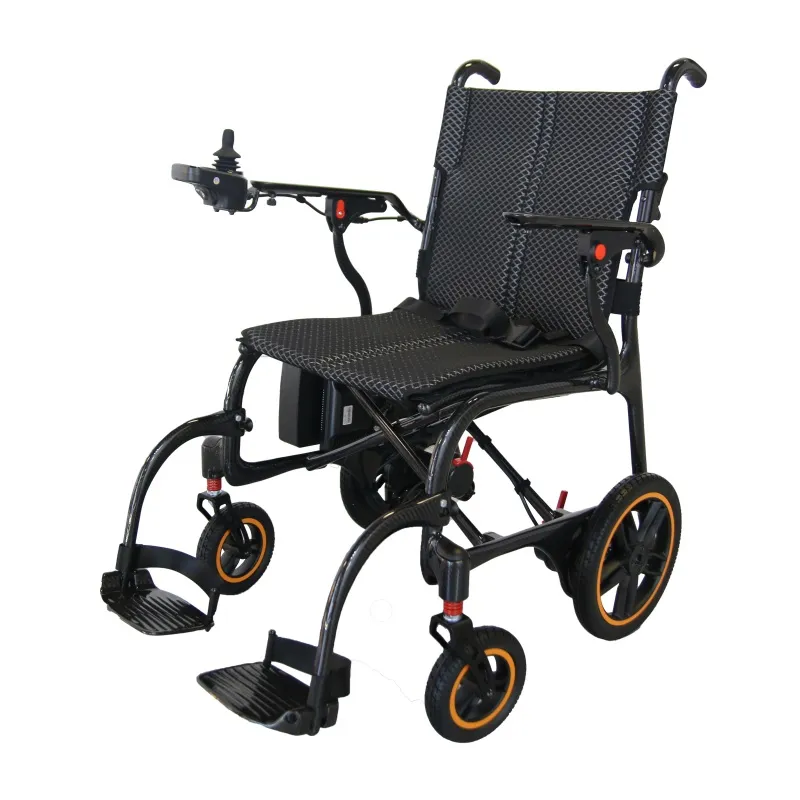
Why Does Carbon Fiber Possess the Dual Advantages of Lightness and Strength?
Carbon fiber is a high-performance fibrous material composed primarily of carbon elements. Its diameter is typically only about one-tenth that of a human hair, yet its internal structure is remarkably dense and orderly. The carbon atoms are arranged in a layered structure—similar to that of graphite—forming a stable hexagonal lattice; this microscopic architecture endows carbon fiber with exceptionally high strength and rigidity.
Compared to traditional metal materials, carbon fiber's most distinctive characteristic lies in its exceptionally high "specific strength" and "specific stiffness." Specific strength refers to the ratio of a material's strength to its density. Simply put, for a given weight, carbon fiber can withstand a load far greater than that of steel or aluminum alloys.
This implies that in the structural design of an electric wheelchair, utilizing carbon fiber allows for a reduction in the total amount of material used while simultaneously ensuring the overall stability and safety of the structure. Consequently, "electric carbon fiber wheelchairs" are able to maintain—or even enhance—their load-bearing capacity, all while achieving a substantial reduction in overall weight.
What Is the Key to Weight Reduction in Carbon Fiber Electric Wheelchairs?
Traditional electric wheelchairs typically employ steel or aluminum alloys as their primary structural materials. While steel offers high strength, its high density often results in a heavier overall vehicle weight; conversely, while aluminum alloys are relatively lighter, they still face certain limitations regarding strength and rigidity.
The density of carbon fiber is typically only about one-quarter that of steel, and it is approximately 30% lighter than aluminum. This means that simply by substituting materials—the very first step in the design process—"electric carbon fiber wheelchairs" achieve a significant reduction in weight right from the start.
More importantly, carbon fiber possesses excellent design flexibility. Unlike metal materials, which rely on processes such as cutting and welding, carbon fiber is typically fabricated through a process of layering and molding. Engineers can adjust the orientation and number of fiber layers in specific areas based on anticipated load requirements, thereby achieving "strength distribution on demand."
This capability for "directional reinforcement" allows for further structural optimization. For instance, engineers can increase the number of fiber layers in load-bearing zones while reducing material usage in areas subject to lower stress, thereby achieving a more refined and precise weight-reduction design for the overall structure. This is a key reason why "carbon fiber electric wheelchairs" can significantly reduce overall vehicle weight without compromising safety.
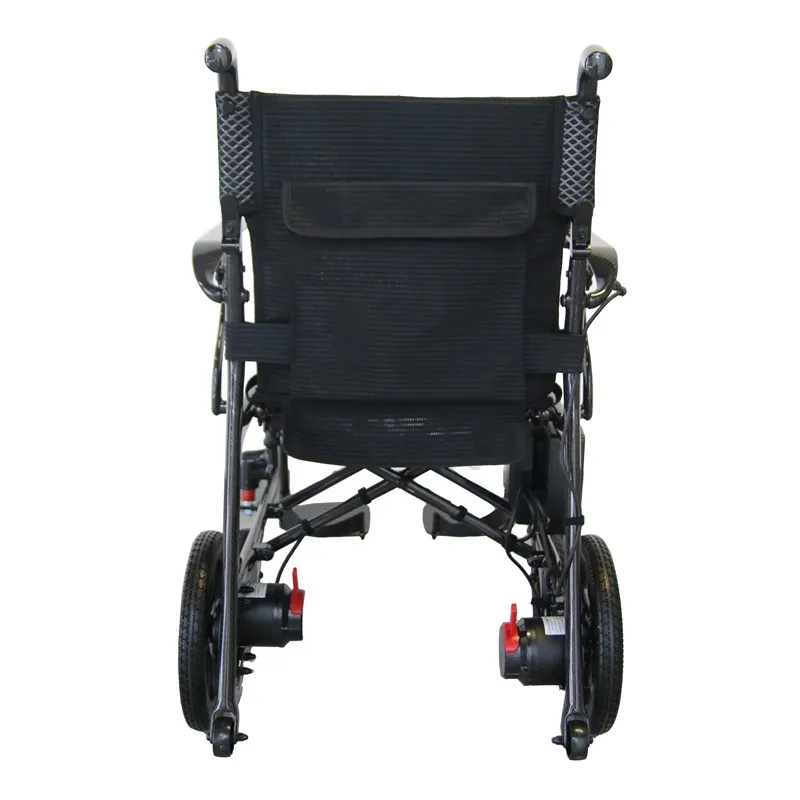
The Source of Strength in Carbon Fiber Electric Wheelchairs: The Synergy Between Fiber Structure and Composite Materials
Carbon fiber is not utilized as a standalone material; rather, it exists in the form of a "composite material"—specifically, as carbon fiber reinforced polymer (CFRP), formed by bonding carbon fibers with a resin matrix.
In this system, the carbon fibers bear the primary structural loads, while the resin serves to anchor the fibers, transmit stress, and protect the overall structure. Working in synergy, these two components endow the material as a whole with exceptional mechanical properties.
For "carbon fiber electric wheelchairs," this composite structure offers multifaceted advantages in terms of strength:
•High Tensile Strength: Capable of withstanding significant tensile forces without fracturing.
•Excellent Fatigue Resistance: Highly resistant to damage caused by repetitive stress during long-term use.
•Strong Impact Resistance: Exhibits greater resilience against bumps and minor collisions encountered during daily use.
•High Rigidity: The structure resists deformation, thereby enhancing handling stability.
These properties ensure that carbon fiber is not merely "lightweight" but also remains highly reliable, even in demanding and complex operating environments.
Rigidity and Stability: Key Factors Enhancing the User Experience
An electric wheelchair must do more than simply bear weight; it must also maintain stability while in motion. Particularly during startup, acceleration, turning, and when traversing inclines or declines, the rigidity of the frame directly impacts the handling experience.
Carbon fiber material possesses an exceptionally high Young's modulus (elastic modulus), which means it exhibits minimal deformation when subjected to external forces. For "electric carbon fiber wheelchairs," this high rigidity offers several significant advantages:
•Greater structural stability during movement, minimizing wobbling or shaking
•More precise steering and faster responsiveness
•Reduced energy loss and improved power efficiency
•Enhanced overall riding comfort
In contrast, certain traditional materials may undergo minute deformations after prolonged use—thereby compromising overall performance—whereas carbon fiber demonstrates far greater stability in this regard.
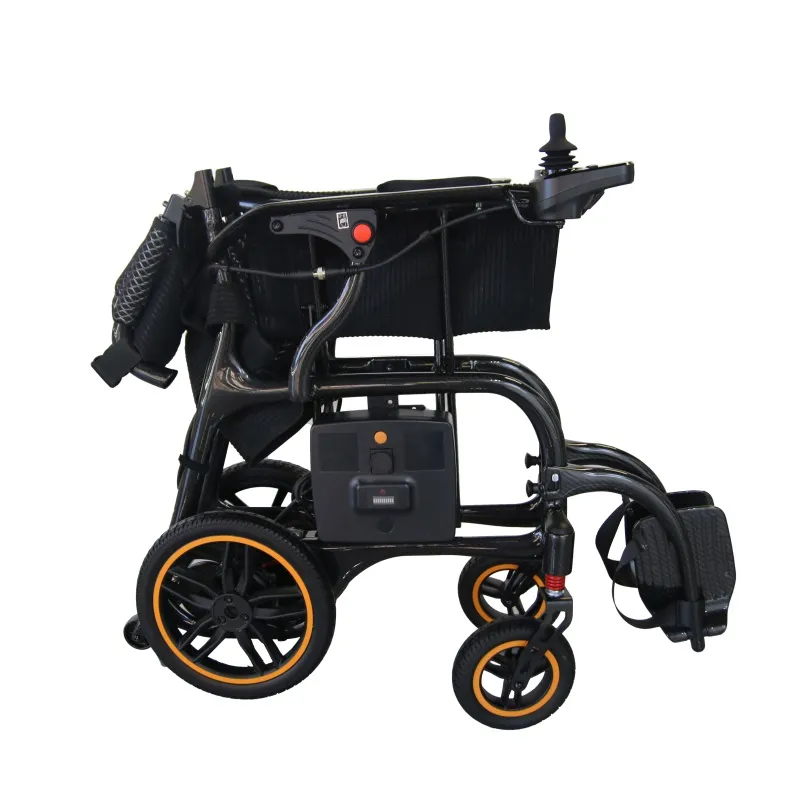
Durability and Environmental Adaptability of Carbon Fiber Electric Wheelchairs
As devices subject to frequent daily use, electric wheelchairs demand exceptional durability. Carbon fiber materials possess distinct advantages in this area as well.
First, carbon fiber exhibits excellent corrosion resistance. Unlike steel, which is prone to rusting, carbon fiber does not undergo oxidation reactions in humid environments. This ensures that "carbon fiber electric wheelchairs" maintain optimal performance across a wide range of climatic conditions.
Second, carbon fiber demonstrates strong adaptability to temperature fluctuations. Whether exposed to high or low temperatures, its performance remains relatively consistent, avoiding issues such as material embrittlement or a decline in structural strength.
Furthermore, carbon fiber's superior fatigue resistance contributes to its long-term durability. Even when subjected to frequent vibrations and fluctuating loads, the material's structural integrity remains intact, thereby extending the overall service life of the wheelchair.
Manufacturing Process Advancements Drive Performance Realization in Carbon Fiber Electric Wheelchairs
The enhanced performance of "electric carbon fiber wheelchairs" is not solely attributable to the material itself; it is also inextricably linked to advancements in manufacturing processes.
Carbon fiber molding typically employs techniques such as prepreg layup, hot-press molding, or vacuum infusion. These processes allow for precise control over material distribution and structural geometry, enabling the realization of highly complex designs.
For instance, integrated molding techniques reduce the number of connecting components, thereby lowering overall weight while simultaneously boosting structural strength. Moreover, minimizing the reliance on welding or bolted joints results in a more robust and reliable structure—one less susceptible to loosening or fatigue-related damage.
Additionally, modern manufacturing technologies enable a higher degree of precision in translating design specifications into physical reality, thereby creating greater scope for structural optimization within "carbon fiber electric wheelchairs." Leveraging its manufacturing and supply chain capabilities within China, Dahao Medical offers carbon fiber electric wheelchairs with highly competitive specifications (weighing approximately 13.5 kg with the battery included, or 12 kg without; featuring a weight capacity of 136 kg; and reaching a top speed of 4.5 km/h).
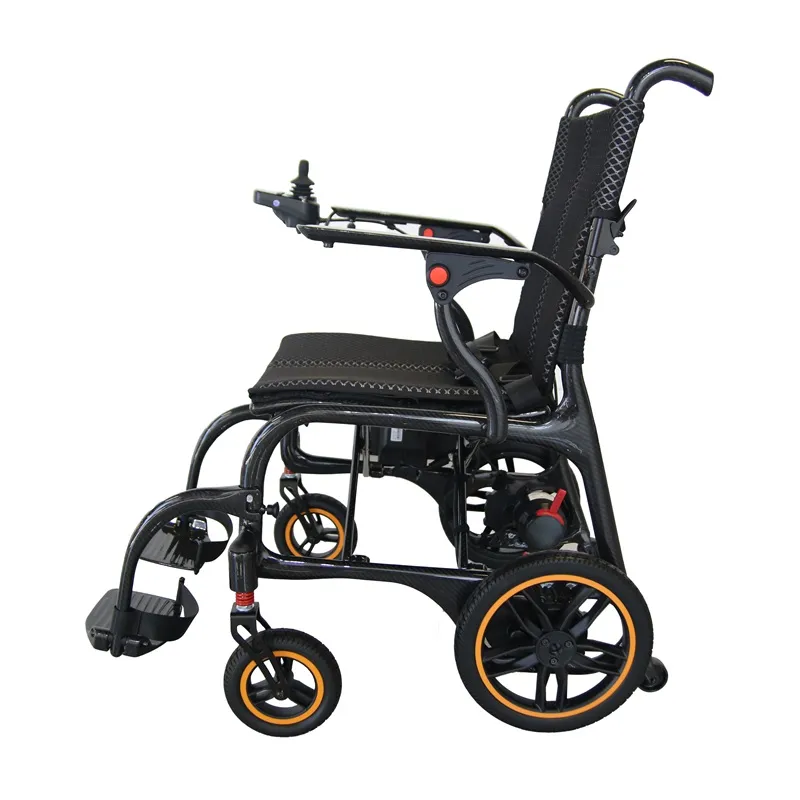
What is the significance of the lightweight design in carbon fiber electric wheelchairs?
For the user, the lightweight nature of a "electric carbon fiber wheelchair" is not merely a technical specification; it directly impacts their daily living experience.
Reduced weight translates to:
•Easier handling and storage
•Greater convenience when boarding/exiting vehicles or transferring
•Reduced strain on the motor and battery, thereby enhancing operational efficiency and range
•Increased maneuverability in confined spaces
Collectively, these factors establish lightweight design as one of the key objectives in electric wheelchair engineering. Carbon fiber serves as a crucial material solution for achieving this goal.
Enhanced Strength: A Guarantee of Safety
While prioritizing lightweight design, safety remains the absolute baseline in electric wheelchair engineering. The inherent high strength of carbon fiber ensures that "electric carbon fiber wheelchairs" remain robust and reliable in terms of load-bearing capacity.
In practical use, a wheelchair must withstand the user's body weight, dynamic loads, and the impacts associated with navigating varied terrain. Carbon fiber structures effectively distribute these stresses, preventing excessive localized strain that could otherwise lead to structural damage.