

In modern medical care environments, with the increasing demand for home care, "electric hospital beds" have become common equipment in many homes, rehabilitation centers, and nursing facilities. However, when consumers are preparing to purchase an electric hospital bed, they often encounter a core question: What are the differences between semi-electric and fully electric hospital beds?
Although both are types of electric hospital beds, they differ significantly in functional structure, operation methods, ease of use, nursing efficiency, and applicable populations. A correct understanding of the differences between these two types of electric hospital beds is crucial for caregivers, families, and patients themselves.
This article will provide an in-depth, professional, and systematic analysis of the differences between semi-electric and fully electric hospital beds, offering you the most critical basis for choosing an electric hospital bed.
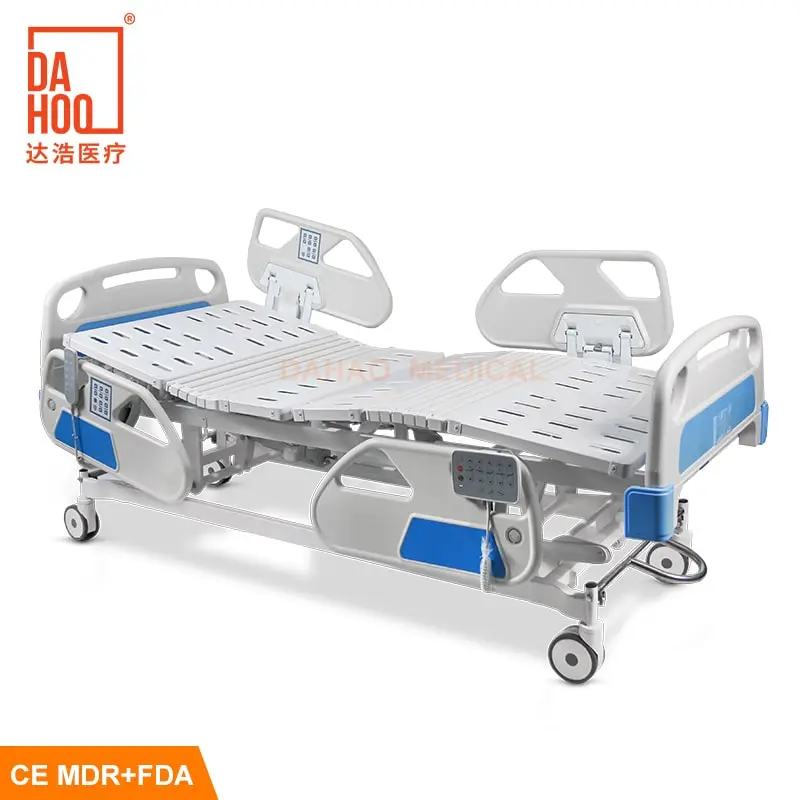
What is an electric hospital bed? What are its basic functions?
An electric hospital bed is a medical bed whose surface angle or height is adjusted through an electric motor system.
Its purposes include:
• Maintaining an ideal resting posture for patients
• Reducing discomfort caused by prolonged bed rest
• Improving nursing efficiency
• Reducing the operational burden on nursing staff
• Increasing the safety of the nursing process
Generally, the most important adjustable parts of an electric hospital bed include:
1. Backrest lifting
2. Leg lifting or knee bending
3. Overall bed height adjustment
4. Special patient positions (some models)
Based on the adjustment method, electric hospital beds are roughly divided into:
• Semi-electric hospital beds
• Fully electric hospital beds
Both are electric hospital beds, but their operation methods and functional depth differ greatly.
What is a semi-electric hospital bed? How does it work?
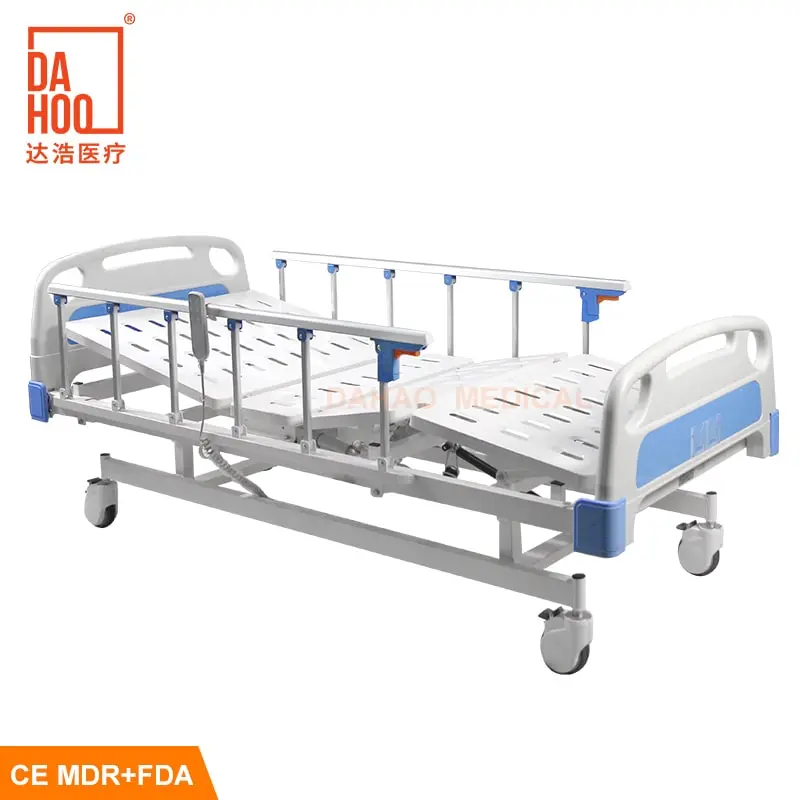
A semi-electric hospital bed refers to: a medical bed where some functions are achieved electrically and some functions are achieved manually.
Typically, a semi-electric hospital bed has:
• Electrically adjustable backrest
• Electrically adjustable legs
• Manual crank adjustment of bed height
In other words, although a semi-electric hospital bed has an electric system, it does not provide a full range of electric adjustments.
Typical characteristics of semi-electric hospital beds include:
• Electric motor controls bed surface angle
• Joystick controls height adjustment
• Relatively basic functions
• Relatively simple structure
• Lower cost
• Easy maintenance
Semi-electric hospital beds remain common in hospitals, rehabilitation facilities, and homes, and are a major category of economical nursing beds.
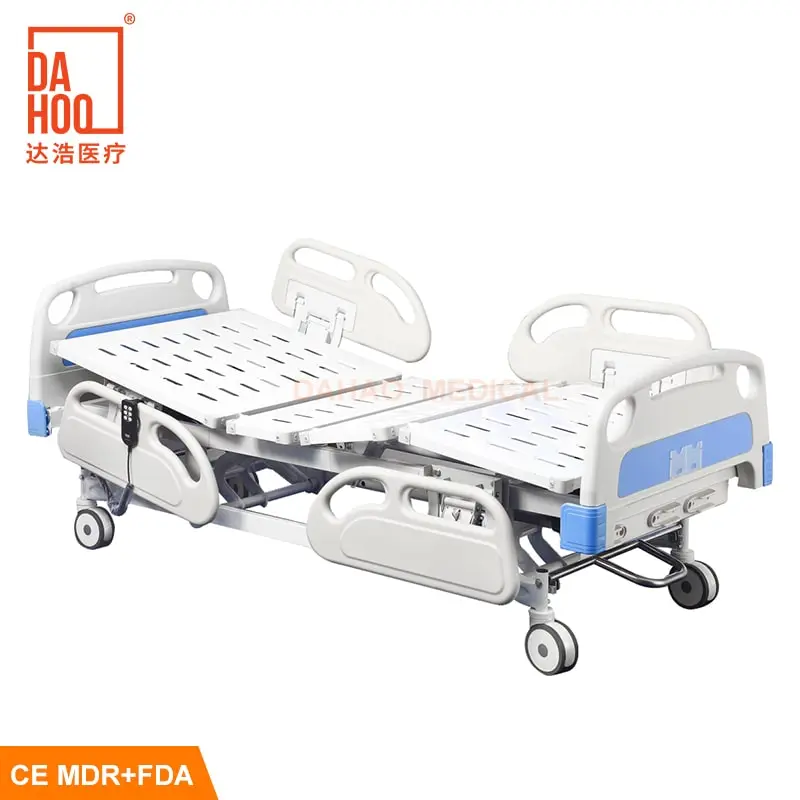
What is a fully electric hospital bed? What electric functions does it offer?
A fully electric hospital bed means that all major functions are achieved through an electric system, requiring no manual operation.
Typically, fully electric hospital beds feature:
• Electric backrest lifting
• Electric leg lifting
• Electric bed height adjustment
• Electric special position adjustment (some models)
All adjustments are operated via:
• Bedside control panel
• Remote control
• Caregiver control panel
Typical features of fully electric hospital beds include:
• Fully electric design
• Easier operation
• More suitable for long-term care
• Easier for elderly caregivers
• More precise position adjustment
• Easier for patients to control independently
• Higher nursing efficiency
Therefore, fully electric hospital beds are a higher-end and more convenient type of medical bed in the modern nursing system.
What are the differences between semi-electric and fully electric hospital beds?
To help you better understand the differences, this section will provide a systematic comparison from multiple perspectives, including function, operation method, nursing experience, ease of use, and safety.
1. What are the differences in their operation methods?
Semi-electric hospital beds:
• Electric adjustment of body position (backrest, legs)
• Height adjustment via manual crank
• Elderly caregivers may find it difficult to use the crank.
Fully electric hospital beds:
• All movements are electric
• Any adjustment can be completed with a single button control
• More suitable for scenarios requiring frequent care
Core difference: Fully electric hospital beds require no manual operation.
2. What are the differences in the number and richness of functions?
Semi-electric hospital beds have more basic functions:
• Electric backrest
• Electric legrest
• Manual height adjustment
• Simple accessories available for a few models
Fully electric hospital beds have more comprehensive functions:
• Electric backrest
• Electric legrest
• Electric height adjustment
• Overall bed tilt
• Special patient positions (e.g., Trendelenburg)
• Concealed guardrails
• Anti-pinch stop system
Core difference: Fully electric hospital beds have a wider range of adjustments and functions.
3. What are the differences in nursing efficiency?
Semi-electric hospital bed nursing efficiency:
• Caregivers still need to manually adjust the height.
• May increase operational stress during long-term care.
• Some position adjustments are time-consuming.
Fully electric hospital bed nursing efficiency:
• Fully electric process.
• Quick operation.
• Significantly reduces the physical labor of caregivers.
• More suitable for professional nursing institutions and elderly care.
Core difference: Fully electric hospital beds are more labor-saving, time-saving, and more efficient.
4. What are the different impacts on patient comfort?
Semi-electric hospital bed:
• Position is adjustable, but the adjustment range is limited.
• Height cannot be precisely controlled.
• Suitable for mild to moderate care needs.
Fully electric hospital bed:
• More precise angle adjustment.
• Can be adjusted by the patient via remote control or side control.
• More suitable for long-term bedridden patients and those requiring intensive care.
• More convenient for nighttime care.
Core difference: Fully electric hospital beds provide a higher level of comfort.
5. Are there any differences in safety?
Semi-electric hospital bed:
• Features basic safety rails
• Simpler electric system
• Improper use of manual cranks may cause bed instability
Fully electric hospital bed:
• Multiple safety features
• Electronic system prevents overload
• Caregivers can lock patient operation buttons
• More user-friendly lighting for nighttime operation (some models)
Key difference: Fully electric hospital beds typically have a more comprehensive safety system.
6. Can the user operate it independently?
Semi-electric hospital bed:
• Patients can only use backrest and leg adjustments
• Height adjustment must be done by a caregiver
Fully electric hospital bed:
• Patients can adjust to various positions independently
• More suitable for patients with partial independence
• Reduces patient inconvenience and dependence
Key difference: Fully electric hospital beds are more suitable for self-adjustment and respect patient independence.
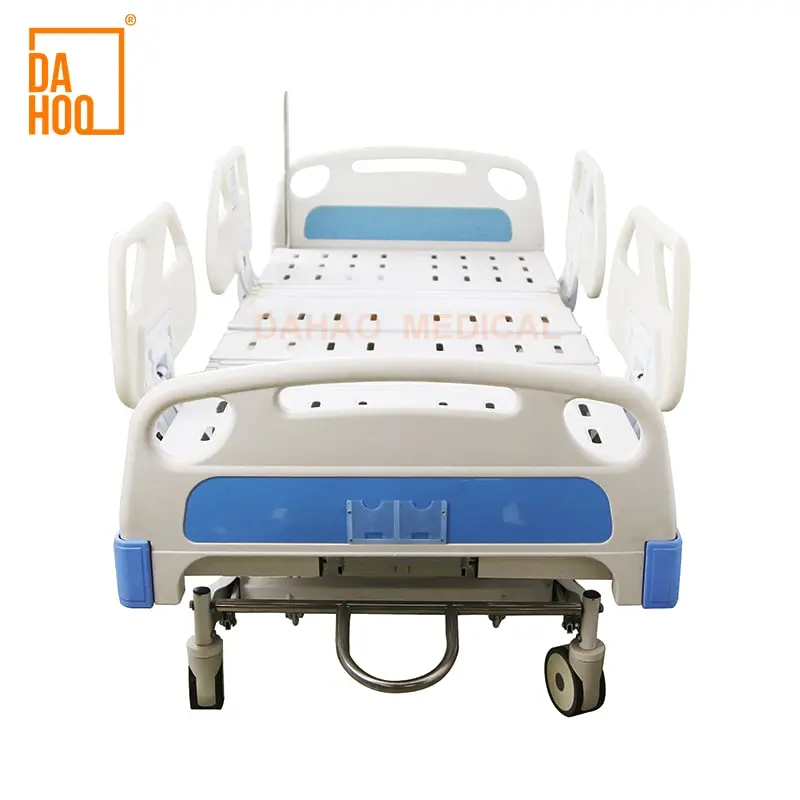
Should I choose a semi-electric or fully electric hospital bed?
Many families hesitate when purchasing electric hospital beds: "Semi-electric or fully electric?"
Here are some common considerations:
1. What is the patient's level of care?
• Light care: A semi-electric bed is sufficient.
• Moderate care: Electric adjustment is necessary, but a fully electric bed is easier.
• Heavy care or long-term bedridden patients: A fully electric bed is strongly recommended.
2. What is the physical condition of the caregiver?
• Caregiver is middle-aged or young: A semi-electric bed is generally fine.
• Caregiver is an elderly family member: A fully electric bed is more suitable.
• High-intensity, high-frequency care: A fully electric bed is safer and less strenuous.
3. Is frequent bed height adjustment required?
If frequent adjustments are needed:
• Changing dressings
• Back care
• Treating skin problems
• Assisting the patient to sit up
• Using other equipment A fully electric bed is clearly more advantageous.
4. Is the budget sufficient?
In general:
• Semi-electric beds are more economical and suitable for basic care needs.
• Fully electric hospital beds are more expensive, but offer a better nursing experience and patient comfort.
Choose one based on your budget and needs.
How fast is your delivery time?
Thanks to our advanced manufacturing system and large production capacity, Dahao Medical ensures fast delivery for both standard and customized orders. Our factory is equipped with modern machinery and efficient processes, allowing us to meet tight deadlines without compromising quality. For customers looking to buy from a reliable supplier, we provide stable supply and timely shipments to support smooth purchasing operations.