

In home care, elderly care, and post-operative rehabilitation, toilet chairs and toilet wheelchairs are two of the most common types of toilet assistance devices. Many users find that they look similar—both are assistive chairs with a toilet seat and commode—but their prices, functions, and applicability differ.
Unclear understanding of the differences can lead to inappropriate purchases, inconvenience, or even safety hazards.
This article will delve into the core differences between toilet chairs and toilet wheelchairs from multiple perspectives, including structural design, usage scenarios, mobility, convenience, weight-bearing capacity and safety, cleaning methods, and target audiences, helping you make the right choice.
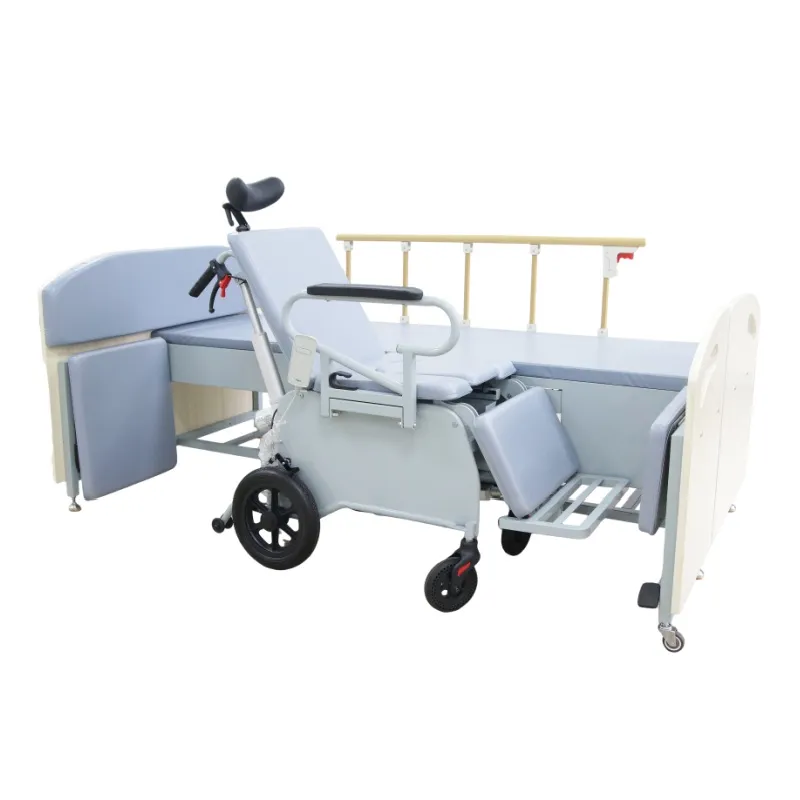
What are the main structural differences between toilet chairs and toilet wheelchairs?
1. Structural Features of a Toilet Chair
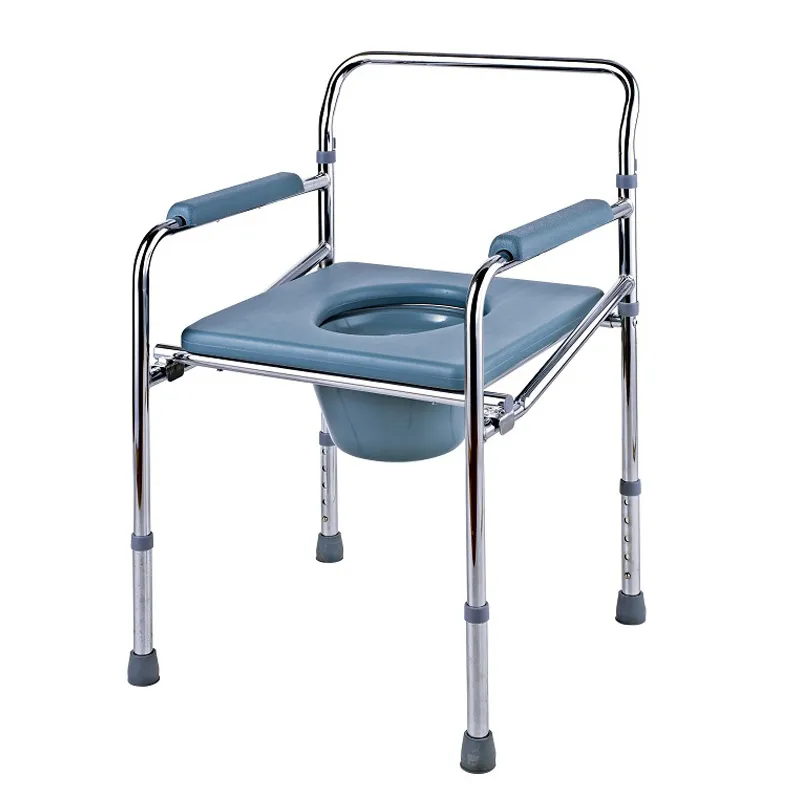
A toilet chair is a device designed primarily for "fixed toilet assistance." Its structure generally includes:
• A basic seat cushion or padded seat ring
• A removable potty bowl
• Four-legged stable support
• Armrests and backrest (some models are foldable)
• Height-adjustable support legs
Its focus is on stability, weight-bearing capacity, and suitability for using the toilet in place or moving short distances.
The design of a toilet chair is more like a "stable chair with excretion function," emphasizing a safe, non-slip toilet environment rather than mobility.
2. Structural Features of a Toilet Wheelchair
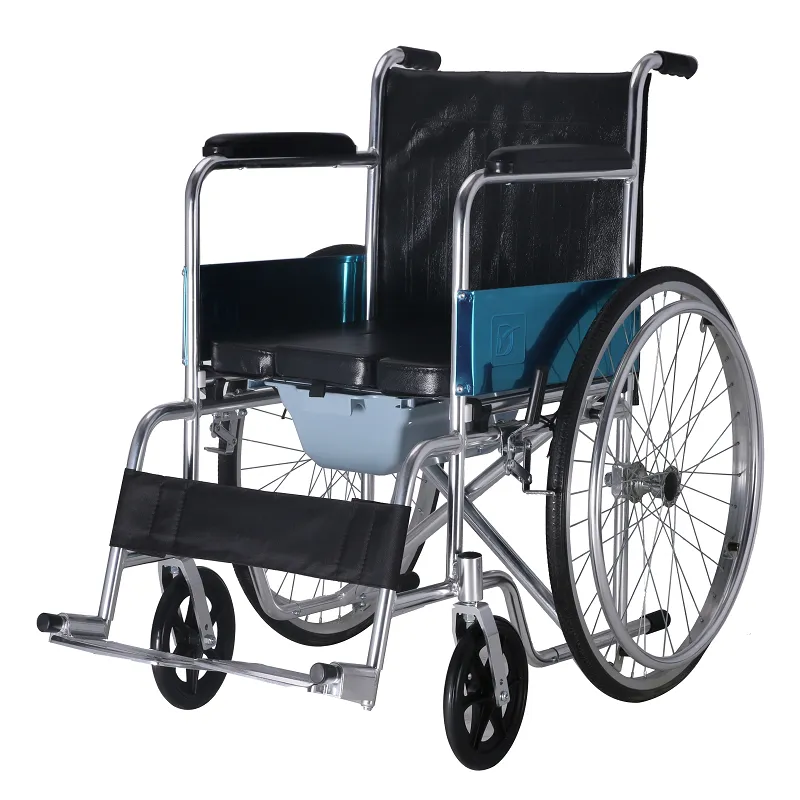
A toilet wheelchair (Commode Wheelchair) combines the dual functions of a wheelchair and a toilet chair. It includes:
• A commode structure under the seat
• Front and rear wheels with wheels
• Foot pedals
• A push handle
• A braking system
• Armrests and a backrest
• Even some indoor pushing capability
The core design principle of a toilet wheelchair is mobility + toilet accessibility, allowing caregivers to push it or the patient to move it themselves between bathrooms and rooms.
What are the differences in mobility between a toilet chair and a toilet wheelchair?
1. Mobility of a Toilet Chair
Most toilet chairs do not have wheels and require:
• Caregivers to assist the user in sitting down
• Short-distance movement indoors can be done by lifting or dragging
• Not suitable for moving between rooms
Some models have auxiliary casters, but these are more for convenient chair movement than for pushing while seated.
2. Mobility of Toilet Wheelchairs
Toilet wheelchairs are designed for "sitting mobility," and their mobility methods include:
• Pushed by caregivers
• Users can roll the wheels by hand (on some models)
• Equipped with an all-around braking system to ensure stability while using the toilet
This design allows users to:
• Sit on the toilet wheelchair from the bedside
• Be pushed to the bathroom by caregivers
• Use directly over a regular toilet
The ease of movement is far greater than that of a toilet chair.
What are the differences in safety between toilet chairs and toilet wheelchairs?
1. Safety Features of Toilet Chairs
Because they are stationary, toilet chairs emphasize safety more in terms of:
• Four-point landing, sturdy structure
• Non-slip footpads
• Anti-tipping
• Stable weight-bearing capacity (80kg~150kg, depending on the model)
The design goal is to ensure that the user does not wobble when standing, sitting, or using the toilet.
2. Safety Features of Toilet Wheelchairs
Toilet wheelchairs need to be mobile, so their safety systems are more complex:
• Independent brakes for rear and front wheels
• Anti-tipping design (available in some high-end models)
• Fold-up armrests for easy transfer
• Must be in braking position when using the toilet
• Generally stronger load-bearing structure
However, toilet wheelchairs require higher skills from caregivers during movement, especially when turning and braking.
What are the differences between toilet chairs and toilet wheelchairs in terms of usage scenarios?
1. Suitable Scenarios for Toilet Chairs
Toilet chairs are more suitable for the following scenarios:
• Bedside toilet use at night
• Reducing frequent movement for users in home care
• Assisting users with weak legs but some self-care ability
• Elderly or post-operative patients using the toilet in the bedroom
It is suitable for:
Situations where users "don't want to go to the bathroom frequently."
2. Suitable Scenarios for Toilet Wheelchairs
Toilet wheelchairs are more suitable for:
• When caregivers need to move patients.
• When users need to move between the bedroom, living room, and bathroom.
• In nursing homes (hospitals, nursing homes).
• For individuals who need to move between different areas and also require toilet access.
Toilet wheelchairs meet the combined needs of:
"Need to move + need to use the toilet."
What are the differences in cleaning methods between toilet chairs and toilet wheelchairs?
1. Cleaning Focus for Toilet Chairs
Most toilet chairs use a portable commode, requiring:
• Emptying and washing after each use.
• Regularly cleaning the seat ring.
• Checking that the rubber pads on the four feet are clean and non-slip.
Due to their simple structure, the cleaning process is relatively easy.
2. Cleaning Focus for Toilet Wheelchairs
Toilet wheelchairs require more thorough cleaning:
• Cleaning the commode.
• Cleaning the seat.
• Cleaning the wheel tracks.
• Checking the brakes.
• Daily wiping of the footrests and armrests.
Because wheelchairs are frequently moved, the cleaning intensity is higher than that of ordinary toilet chairs.
Are there big price differences between toilet chairs and toilet wheelchairs? Why?
1. Price Structure of Toilet Chairs
Toilet chairs have a simple structure and lower manufacturing costs. The general price range is:
• Basic model: 100-300 yuan
• Models with cushions or multiple functions: 300-600 yuan
2. Price Structure of Toilet Wheelchairs
Toilet wheelchairs include a mobility system, resulting in higher manufacturing costs. The general price range is:
• Basic toilet wheelchair: 300-800 yuan
• Models with large wheels, self-propelled movement, upgraded brakes, and enhanced cushions: 800-2000 yuan
Price differences come from:
• Wheel system
• Braking system
• Armrest and footrest design
• Material (aluminum alloy vs. ordinary steel)
Which is more suitable for the elderly: a toilet chair or a toilet wheelchair?
The choice should not be based on age, but rather on mobility and care methods.
Suitable seniors for toilet chairs:
• Can stand and sit up independently
• Frequent nighttime toilet visits
• Reluctant to walk frequently
• Suitable for bedside use
Suitable seniors for toilet wheelchairs:
• Require assistance from caregivers
• Have limited mobility
• Need frequent bathroom access
• Need to move long distances indoors
For seniors with leg problems, balance issues, or a tendency to fall, toilet wheelchairs are safer and more convenient.
Which is less strenuous, a toilet chair or a toilet wheelchair?
For users:
• Toilet chairs are less strenuous (no need to move, only requires bedside use)
• Toilet wheelchairs are less strenuous (can be moved while seated, no walking required)
The difference depends on whether movement within the home is necessary.
For caregivers:
• Toilet chairs emphasize overall static care
• Toilet wheelchairs reduce the number of times caregivers need to lift and move the child, making it easier for caregivers.
What are the differences between toilet chairs and toilet wheelchairs in terms of folding and storage?
Toilet Chair:
• Many models are foldable
• Easy to store
• Suitable for small apartments or for travel
Toilet Wheelchair:
• Some are foldable, but the structure is larger
• Larger storage volume
• More suitable for long-term use
What factors should be considered when choosing a toilet chair or a toilet wheelchair?
1. User's mobility
• Can they stand independently?
• Do they need to be pushed?
2. Caregiver requirements
• Is assistance from a caregiver available?
• Do they need to be moved or pushed into the bathroom?
3. Usage environment
• Is the bathroom cramped?
• Is movement between rooms necessary?
4. Safety requirements
• Is there a risk of falling?
• Is a braking function required?
How to choose between a toilet chair and a toilet wheelchair?
In short:
• Toilet chairs are suitable for users who cannot walk far and need to use the toilet in one place indoors;
• Toilet wheelchairs are suitable for users who need mobility assistance and need to be pushed into the bathroom.
The biggest difference between the two is:
Toilet chair = Fixed toilet assistance device
Toilet wheelchair = Movable toilet and transfer assistance device
Choosing the right option not only affects the toilet experience but also the user's safety and dignity. Hopefully, this article will help you make the most suitable decision among many products.
What distinguishes Dahao Medical’s products from other manufacturers?
Dahao Medical stands out in the market for its combination of high-quality products and customer-focused services. Unlike many other manufacturers, we provide a comprehensive approach to production, offering both off-the-shelf products and customized solutions. With certifications like ISO 13485, CE, and FDA, our products meet global standards for safety and performance.
We also maintain a robust supply chain and offer quick delivery times, making us the preferred choice for customers worldwide.