

Medical beds are among the most basic and important nursing equipment in medical institutions. Whether in outpatient observation wards, general inpatient wards, or intensive care units (ICUs), different types of beds play a crucial role in supporting patients, improving nursing efficiency, and reducing nursing risks.
Therefore, scientifically classifying medical beds helps hospital procurement personnel, nursing teams, and equipment managers to more systematically understand the structure and function of beds, thus enabling them to select the most suitable beds for patients.
There are many classification standards for medical beds, the most common of which include: by power mode (manual, semi-electric, and fully electric); and by usage scenario (general nursing beds and ICU beds).
The following will provide a comprehensive explanation of the core question, "What are the different types of medical beds?"
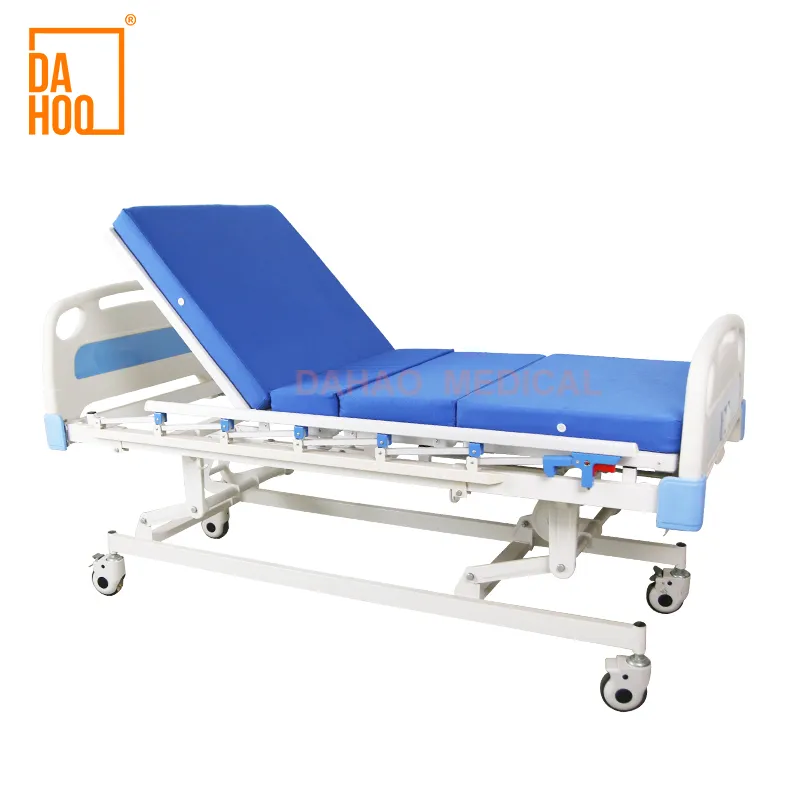
What are medical beds? Why is their classification so important?
Medical beds are specialized beds designed specifically for hospitals, clinics, and nursing facilities. Compared to ordinary home beds, hospital beds are characterized by adjustable surfaces, ease of care, strong load-bearing capacity, and protective functions. In actual use, medical hospital beds are not a single standard, but rather vary in type depending on nursing needs, patient conditions, and ward characteristics.
Why differentiate between hospital bed types?
The main reasons include:
• Vastly different patient needs: Post-operative patients, long-term bedridden patients, emergency patients, and critically ill patients require different functionalities.
• Different ward standards: General wards and ICUs have significantly different requirements in terms of functionality, safety, and protection.
• Different nursing work methods: Wards with high-intensity nursing care require more automated beds to reduce nurses' physical exertion.
• Cost differences: The price of different hospital beds varies greatly, ranging from basic manual beds to high-end electric ICU beds, with price differences reaching several times or even ten times.
Therefore, understanding the classification of medical hospital beds is a prerequisite for effective hospital configuration and procurement.
What are the different categories of medical hospital beds based on their power function?
Classifying hospital beds by power source is the most common and widespread method, mainly including:
• Manual hospital beds
• Semi-electric hospital beds
• Fully electric hospital beds
The characteristics, application scenarios, advantages, and disadvantages of these three types of beds will be detailed below.
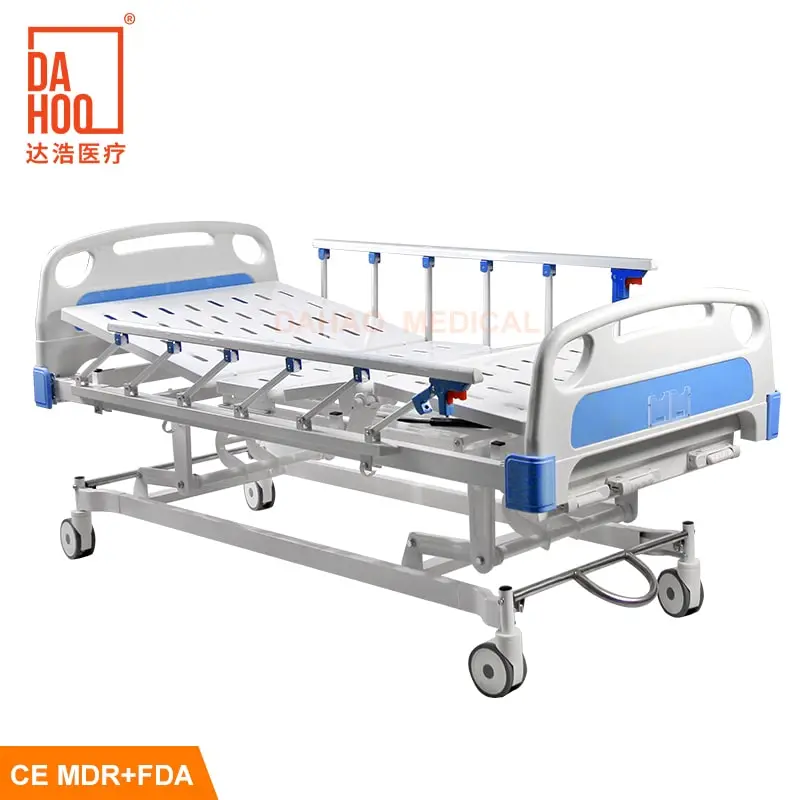
What type of hospital bed is a manual hospital bed?
What are its structure, advantages, and disadvantages?
Manual hospital beds are traditional hospital beds that adjust the bed's posture using mechanical structures such as rockers and handwheels. They are one of the common basic nursing bed types in hospitals. Their main characteristics are as follows:
Structural characteristics of manual hospital beds
Manual hospital beds are typically equipped with 1-3 rockers, enabling the following functions:
• Backrest height adjustment
• Legrest height adjustment
• Overall height is not adjustable or slightly adjustable depending on the model
Because they use a purely mechanical structure, maintenance is relatively simple.
Advantages of manual hospital beds
1. Low cost, suitable for wards with limited budgets.
2. Stable and durable structure, requiring no electricity.
3. Low maintenance costs, and the mechanical structure is easier to repair.
Disadvantages of Manual Hospital Beds
1. Adjustment requires manual operation, increasing the workload for nurses.
2. Patients cannot adjust their posture independently, resulting in lower comfort.
3. Fewer functions, unsuitable for post-operative recovery or long-term bedridden patients.
What Scenarios are Manual Hospital Beds Suitable For?
Manual hospital beds are typically used in:
• General inpatient wards
• Temporary observation rooms
• Departments with low nursing requirements
• Small hospitals or township health centers with limited medical budgets

What are the characteristics of semi-electric hospital beds?
Why are they becoming increasingly common in hospitals?
Semi-electric hospital beds combine both electric and manual adjustment, serving as a transitional product between manual and fully electric hospital beds.
Functional Features of Semi-Electric Hospital Beds
Typical features include:
• Electric adjustment for the backrest and legrests
• Manual adjustment of the overall bed height
• Basic safety features
Advantages of Semi-Electric Hospital Beds
1. Less strenuous than manual hospital beds, reducing the burden on nursing staff.
2. Patients can adjust the height themselves using buttons, improving comfort.
3. Lower cost than fully electric beds, offering better value for money.
Limitations of Semi-Electric Beds
1. Height adjustment still requires manual adjustment, which is inconvenient for some nursing procedures.
2. Fewer functions compared to fully electric beds.
3. Suitable for moderate nursing needs, but not suitable for ICU or other intensive care units.
Which wards are suitable for semi-electric beds?
• General wards
• Surgical wards
• Rehabilitation wards
• Geriatric care wards
Because of their moderate price and reduced manpower burden, they are widely used in many hospitals.

What are the core functions of fully electric beds?
Why have they become the mainstream configuration in hospitals?
Fully electric beds are the most widely used high-performance beds in modern hospitals. They use motors to control multiple components, and almost all adjustments can be made using buttons.
Structure and Functions of Fully Electric Hospital Beds
Fully electric hospital beds typically include:
• Electric backrest height adjustment
• Electric legrest height adjustment
• Overall height adjustment (high and low)
• One-touch positioning functions (e.g., CPR position, reclining, forward tilt)
• Dedicated control system for nursing staff
• Side guardrails
• Detachable headboard and footboard design
High-end models also include:
• Weight monitoring system
• Bed surface angle display
• Automatic anti-slip protection
• CPR quick-leveling mechanism
Advantages of Fully Electric Hospital Beds
1. Fully electric operation, high nursing efficiency.
2. Patients can adjust their posture independently for optimal comfort.
3. Suitable for postoperative, critically ill, and elderly patients who are bedridden for extended periods.
4. Multi-functional adjustment is essential for ICU beds.
Disadvantages of Fully Electric Hospital Beds
1. Highest price, high procurement cost.
2. Requires a power supply; backup batteries or manual function are needed during power outages.
What scenarios are fully electric hospital beds suitable for?
• ICU (Intensive Care Unit)
• High-risk patient wards
• Post-operative recovery areas
• High-end wards
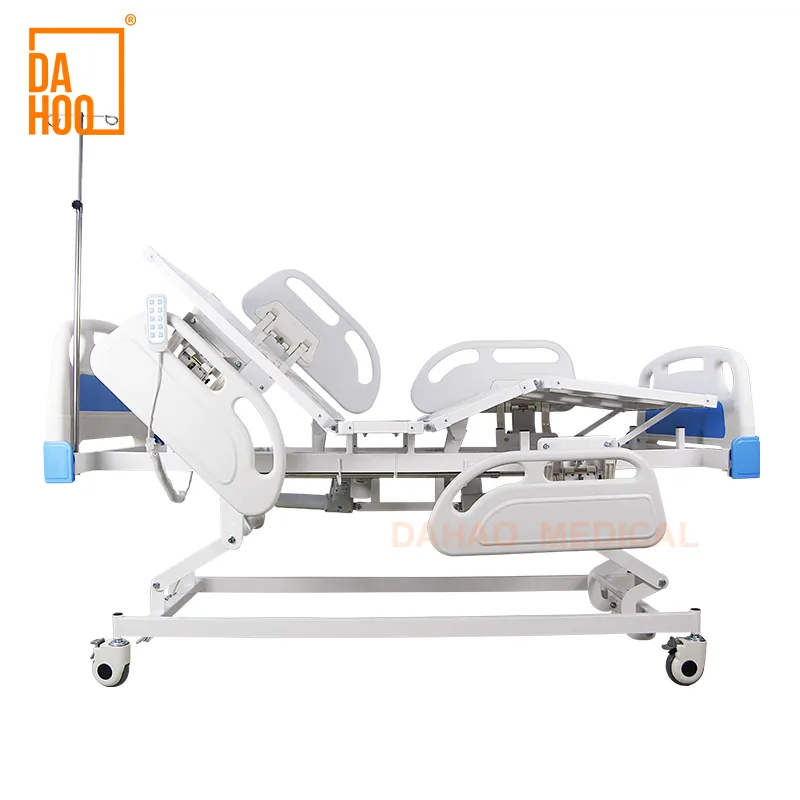
What types of medical beds can be classified according to their application scenarios?
Besides power type, medical beds can also be classified according to ward area and usage scenario. The two most common types are:
• General nursing beds
• ICU beds
The differences between these two types of beds will be explained below.
What are the characteristics of general nursing beds?
What kind of nursing needs are they suitable for?
General nursing beds are the standard bed type commonly set up in hospitals and are suitable for the vast majority of patients.
Main characteristics of general nursing beds:
1. Can be operated manually, semi-electrically, or with simple electric power.
2. Equipped with basic backrest and legrest adjustment functions.
3. Includes left and right guardrails, IV stand holes, drainage hooks, and other accessories.
4. Simple structure and easy maintenance.
Applicable Scenarios for Standard Nursing Beds
• Internal Medicine Wards
• Surgical Wards
• Gynecology Wards
• General Observation Areas
• Rehabilitation Departments, etc.
Standard nursing beds prioritize "sufficiency and durability." Their functions are more basic than ICU beds, but sufficient to meet general nursing needs.
What functions do ICU beds include? How do they differ from standard beds?
ICU beds, also known as intensive care beds, are designed specifically for patients with unstable vital signs or requiring close monitoring.
Typical Features of ICU Beds
1. Almost all are fully electric beds with precise adjustments.
2. Equipped with advanced functions such as tilting forward and backward, CPR quick leveling, and weighing.
3. More stable bed structure with stronger load-bearing capacity.
4. Often equipped with a central control system and a dedicated nursing control panel.
5. Features safety configurations such as anti-pinch design, anti-slip system, and bed exit alarm function.
6. A wider range of bed heights accommodates different nursing movements.
ICU Bed Application Scenarios
• Intensive Care Unit (ICU)
• High Dependence Unit (HDU)
• Post-Operating Room Recovery Unit (PACU)
• Emergency Resuscitation Room
ICU beds are currently the most complex and functional type of medical bed, an indispensable piece of equipment for critical care in modern hospitals.
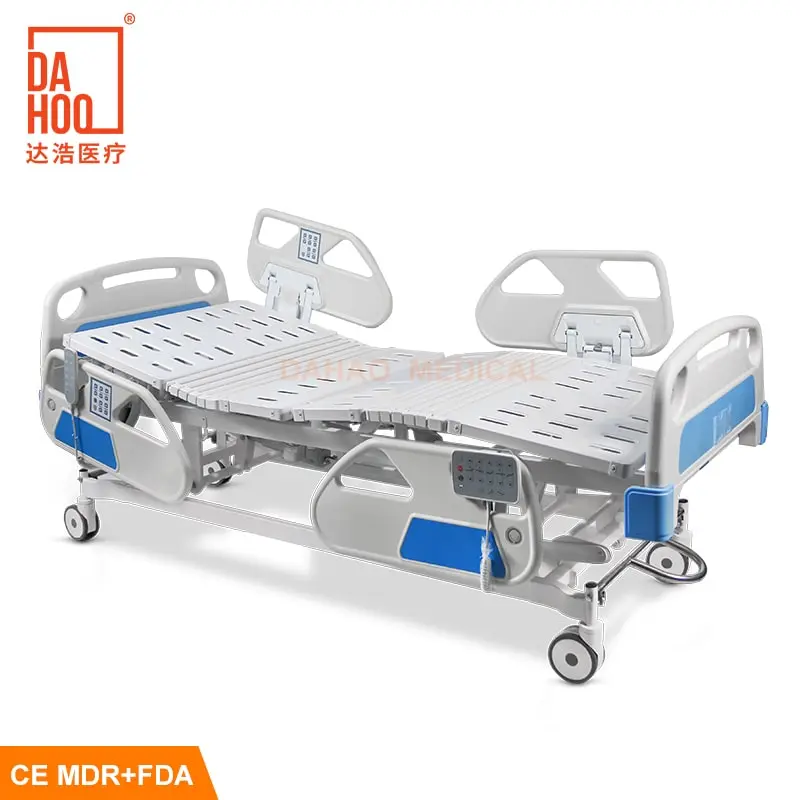
What factors should hospitals focus on when selecting beds?
While "manual, semi-electric, fully electric" and "general nursing beds, ICU beds" are the most basic classification methods, hospitals should also consider the following factors when actually purchasing:
1. Patient Population: Wards with a large number of elderly patients should prioritize fully electric beds.
2. Department Nature: Emergency, critical care, and post-surgical wards require ICU beds or high-function beds.
3. Budget and Quantity: Cost-effectiveness must be considered when purchasing in large quantities.
4. Bed Dimensions and Weight Capacity: Is it suitable for obese patients? Is it suitable for high-frequency nursing movements?
5. Maintenance Capability: Does the hospital's engineering department have the capability to maintain the electric hospital beds?
6. Safety Standards: Do the anti-pinch design, bed departure alarm, and bed rail height meet current standards?
How do I place an order with Dahao Medical?
Placing an order with Dahao Medical is easy. You can contact us through our website or by email to discuss your product requirements, quantities, and shipping preferences. Whether you are purchasing for personal use, wholesale, or customized solutions, our sales team is available to guide you through the ordering process. We will provide you with a detailed quotation and estimated delivery time, ensuring a smooth and hassle-free transaction. We are committed to providing excellent customer service at every step of the ordering process.