

In daily life, many people gradually notice that they walk slower, become unsteady, tire more easily when outdoors, and even start to worry about falling. But at the same time, many hesitate over a question—"Do I really need a rollator walker?"
In fact, whether or not you need a rollator doesn't depend on age, nor does it equate to "complete loss of mobility."
From a professional perspective, a rollator is a tool used to assist walking, improve safety and stability. Its core function is to reduce risk and improve the quality of movement, not to replace walking itself.
So, how can you objectively and rationally determine if you need a rollator walker? This article will provide a systematic analysis from multiple functional dimensions.
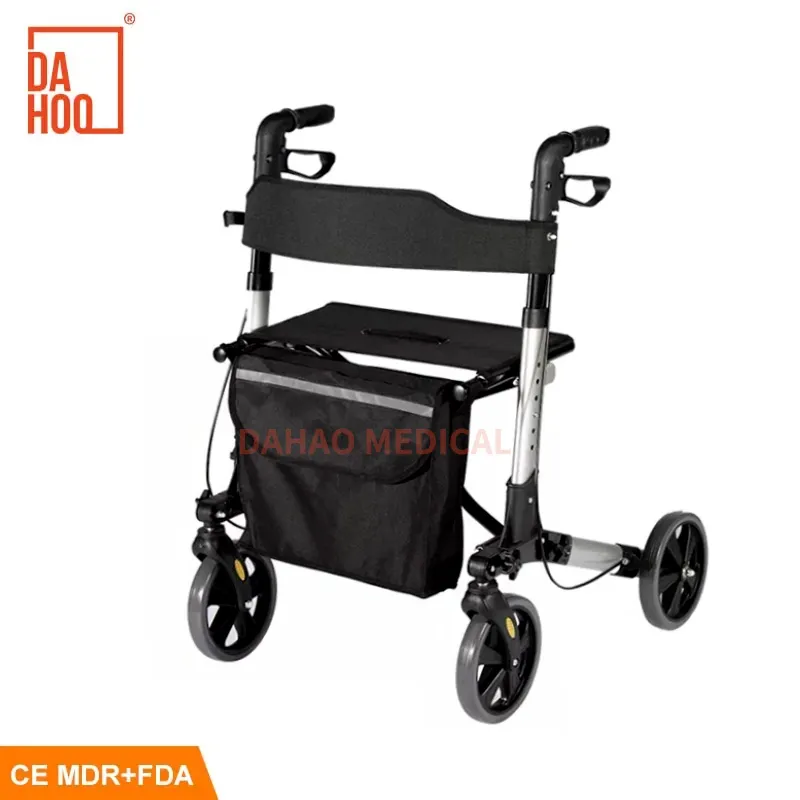
When is a Rollator Walker"Needed"?
The key to determining whether you need a rollator is not "whether you can still walk," but rather the following core questions:
• Is walking safe?
• Is walking stable?
• Does walking easily cause fatigue?
• Does walking affect your quality of life?
If safety and stability have significantly decreased during walking, then a rollator walker is no longer an "optional" tool, but a reasonable assistive tool.
Is losing balance while walking a sign you need a rollator?
Balance is one of the most important indicators for determining whether you need a rollator walker.
If you experience the following while walking:
• Significant swaying when turning
• Constant need to adjust posture while standing
• Frequent need to hold onto walls or furniture while walking
• Noticeable instability when going uphill, downhill, or crossing thresholds
These all indicate that your body needs extra support to maintain balance.
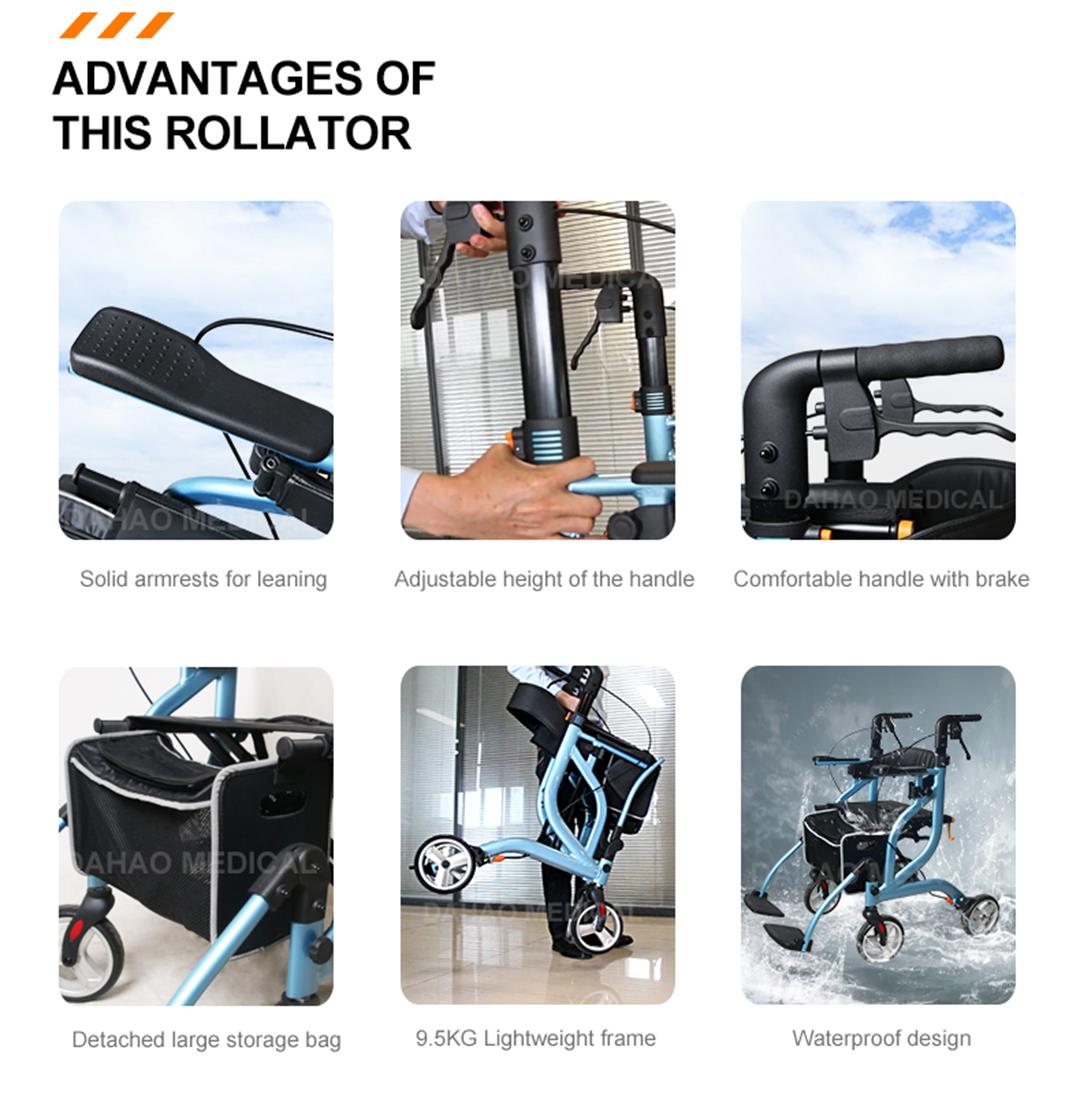
In these situations, a rollator walker can significantly improve walking stability by providing multi-point support.
Does frequent worry about falling mean you should consider a rollator?
The fear of falling is itself a very important warning sign.
When a person is walking:
• Consciously slows down their pace
• Avoids going out alone
• Is afraid to walk on unfamiliar surfaces
Importantly sensitive to changes in the ground.
This usually means that the body's confidence in walking safety is decreasing.
One of the functions of a rollator walker is to provide continuous and reliable support during walking, relieving the body of constant tension and thus improving the walking experience.
Is feeling tired while walking a key factor in determining whether you need a rollator?
The answer is yes.
If, even without high-intensity activity, walking still easily results in:
• Lower limb weakness
• Significantly shortened walking distance
• Frequent stops to rest
• Longer recovery time after walking
These symptoms indicate a significant increase in energy expenditure for maintaining movement.
In such cases, a rollator can distribute some of the weight and stabilize the pressure, making walking easier and extending activity time.
Does needing to hold onto something while walking mean a rollator is more suitable?
Many people unconsciously begin using "temporary support" instead of a rollator, such as:
• Holding onto a wall
• Holding onto furniture
• Holding onto a shopping cart
• Holding onto someone else's arm
These behaviors themselves demonstrate that the body is actively seeking support.
Compared to these unstable and uncontrollable support methods, a rollator walker provides a structurally stable and well-designed support system, offering significant advantages in safety and controllability.
Do you need a rollator if you have difficulty going up and down stairs or on uneven surfaces?
Adaptability to changes in surface conditions is a key criterion for determining whether a rollator walker is needed.
If you experience significant difficulty in the following situations:
• Going up and down stairs
• Walking on slopes
• Navigating uneven surfaces
• Entering narrow spaces
This indicates that your body is facing challenges in center of gravity control and gait coordination.
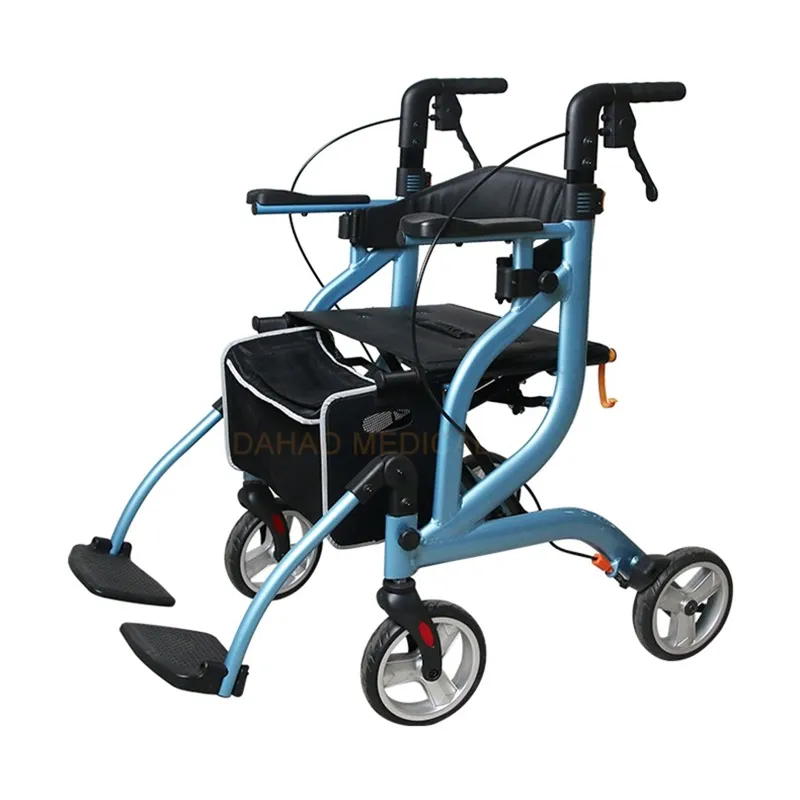
A rollator can help you complete these movements more smoothly by providing additional support points.
Is a significant decrease in walking speed a cause for concern?
Walking speed is not just a matter of efficiency; it is closely related to bodily function.
When a person's walking speed decreases significantly, it is often due to:
• Hesitation to take large strides
• Fear of losing balance
• Insufficient lower limb strength
• Lack of confidence in the environment
A rollator walker doesn't make you "walk slower," but rather improves your sense of security, making your gait more stable, thereby maintaining reasonable mobility in the long run.
Is a shortened standing time a reference indicator for determining rollator needs?
If you experience the following:
• Need to sit down after standing for a short time
• Sway from side to side while standing
• Need to lean on an object for stability
This indicates that your body is already under stress in terms of static balance and weight-bearing.
A rollator not only functions during walking, but also provides necessary support during getting up, standing, and turning.
Is a rollator only suitable for people who "can't walk"?
This is a very common misconception.
In fact, a rollator walker is more suitable for:
• Those who can still walk, but are not stable
• Those who have safety concerns while walking
• Those who tire easily while walking
• Those who want to extend their activity time
In other words, the optimal stage for using a rollator is often when you "can still walk, but are already unstable."
Why is it safer to use a rollator earlier and more appropriately?
From a functional perspective, the core value of a rollator lies in:
• Reducing the risk of falls
• Increasing confidence in movement
• Extending the time of independent activity
Considering a rollator walker only after walking ability has significantly declined often means missing the optimal assistance window.
Will a rollator walker make the body more dependent?
This is one reason why many people are hesitant to use a rollator walker.
However, from a practical functional perspective, a rollator does not replace walking; rather, it:
• Provides safety boundaries
• Reduces unnecessary energy expenditure
• Improves the quality of movement completion
Under safe conditions, the body can actually participate in activities for longer periods.
What details in daily life can help determine if you need a rollator?
You can objectively observe the following:
• Has the frequency of going out decreased?
• Has the walking distance shortened?
• Do you rely more on others for company?
• Do you avoid complex environments?
These changes often don't happen suddenly but are the result of gradual accumulation.
What is the core purpose of using a rollator?
Determining whether you need a rollator walker ultimately comes down to a core question: Does using a rollator make your movements safer, more stable, and easier?
The purpose of a rollator walker is not to restrict, but to protect and support mobility.
How should we rationally view the question of "needing a rollator"?
Needing a rollator doesn't mean you've lost your ability; rather, it indicates that:
• Your body needs extra support
• Your safety is paramount
• Your quality of life deserves protection
This is a rational and proactive choice, not a regression.
How do you determine if you need a rollator?
You can assess this by considering the following:
• Is your walking stable?
• Are you prone to losing your balance?
• Do you frequently feel fatigued?
• Are you worried about falling?
• Do you need external support?
If multiple signals appear simultaneously, then a rollator walker has likely become a necessary and appropriate assistive tool.
The core value of a rollator lies in making movement safer, more stable, and more sustainable.
Correctly and promptly determining whether you need a rollator walker demonstrates your commitment to your safety and quality of life.
What sets Dahao Medical apart from other suppliers?
Dahao Medical distinguishes itself from other suppliers through our commitment to quality, innovation, and customer satisfaction. Our factory in Foshan, China, covers over 8,000 square meters and is equipped with advanced manufacturing equipment to produce medical mobility products. We offer both standard and customized solutions, catering to diverse customer needs.
With certifications from ISO 13485, FDA, CE, and TUV, our products meet international standards. We also offer fast delivery, competitive pricing, and exceptional after-sales service, making us a preferred supplier in the medical equipment industry.