

In the field of home care, electric home care beds have become a core piece of equipment in many households. They help elderly people with limited mobility, patients in recovery, and those who are bedridden for extended periods to obtain a safer, more comfortable, and more convenient home care experience.
However, many families often encounter an important but easily overlooked question when purchasing or using home care beds: Can two people sleep in an electric home care bed?
The answer is a resounding no.
From the perspectives of structural load-bearing capacity, functional attributes, safety standards, and care purposes, home care beds are only suitable for single-person use and are absolutely unsuitable for two people to sleep in the same bed.
This is not only for safety reasons but also to ensure that users receive professional care and to avoid damage to the equipment.
This article will analyze in depth from multiple perspectives why two people cannot sleep in an electric home care bed at the same time, so that readers can fully understand the correct way to use a home care bed and avoid the risks associated with incorrect use.
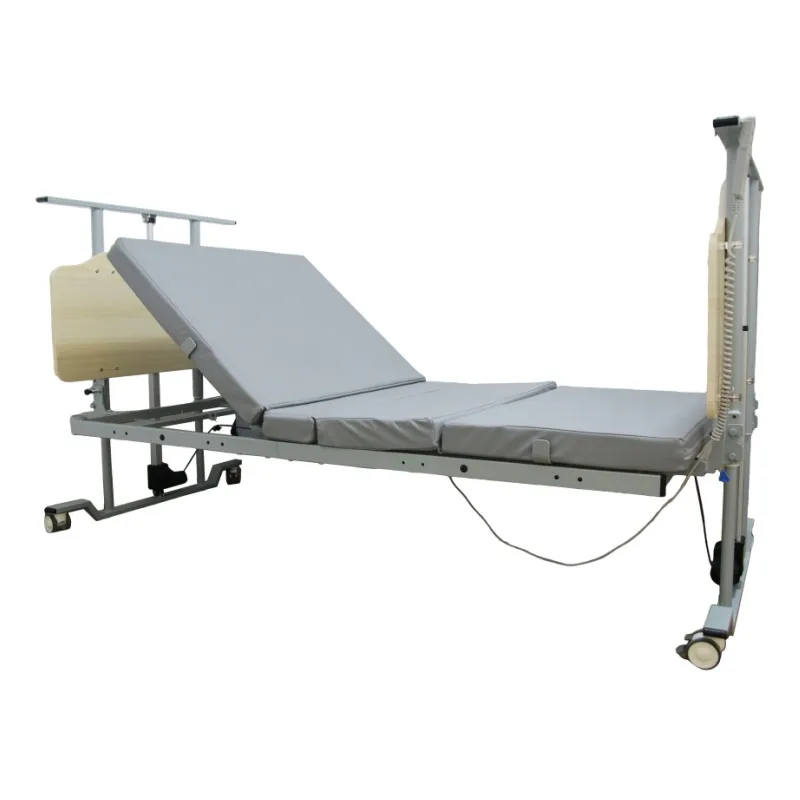
Why are electric home care beds designed for single-person use?
The biggest difference between a home care bed and a regular family bed is that it is a medical assistive device designed specifically for single-person care. Its functions, weight-bearing capacity, size, structure, and all other parameters are centered around the care needs of a single patient.
Here are the fundamental reasons why home care beds must be used by a single person:
1. The weight-bearing structure of a home care bed is only designed for one person
Most home care beds have a weight-bearing range of:
• Around 170kg (single person weight)
• High-end models support up to 200kg–250kg
However, the weight-bearing standard is still the static weight-bearing capacity for a single person, not the total weight of two people stacked together. Two people sleeping on a home care bed simultaneously are highly likely to exceed the specified weight-bearing capacity, causing:
• Motor overload
• Damage to the lifting system
• Wardrobe deformation
• Bed board breakage
• Bed tilting
Any of these damages can lead to serious risks of use.
2. Home nursing beds are not wide enough for two people
The width of a typical home nursing bed is:
• 90cm
• 100cm
• 105cm
• 120cm (wider version)
Even the 120cm wide version is insufficient to guarantee a safe sleeping space for two people (a standard double bed is at least 150cm–180cm wide).
Sleeping together on a narrow nursing bed can lead to:
• Inability to maintain a natural posture
• Excessive pressure on each other during sleep
• Increased risk of falling out of bed
• Impaired use of nursing functions
Therefore, the width limitation itself makes home nursing beds unsuitable for double sleeping.
3. Nursing functions cannot be used properly when two people are sleeping
Electric home nursing beds typically include:
• Backrest lift function
• Leg lift function
• Overall height adjustment
• Tilt function
• Guardrail lift
• Anti-slip structure
These functions are designed to allow patients to safely turn over, sit up, and transfer. When two people share a bed:
• Functional operation is hindered
• The person sleeping on the other side may be suddenly lifted, pressed, or tilted
• Extremely high probability of falls
• Uneven load on the bed affects the lifting mechanism
Therefore, multiple users can cause safety features to malfunction.
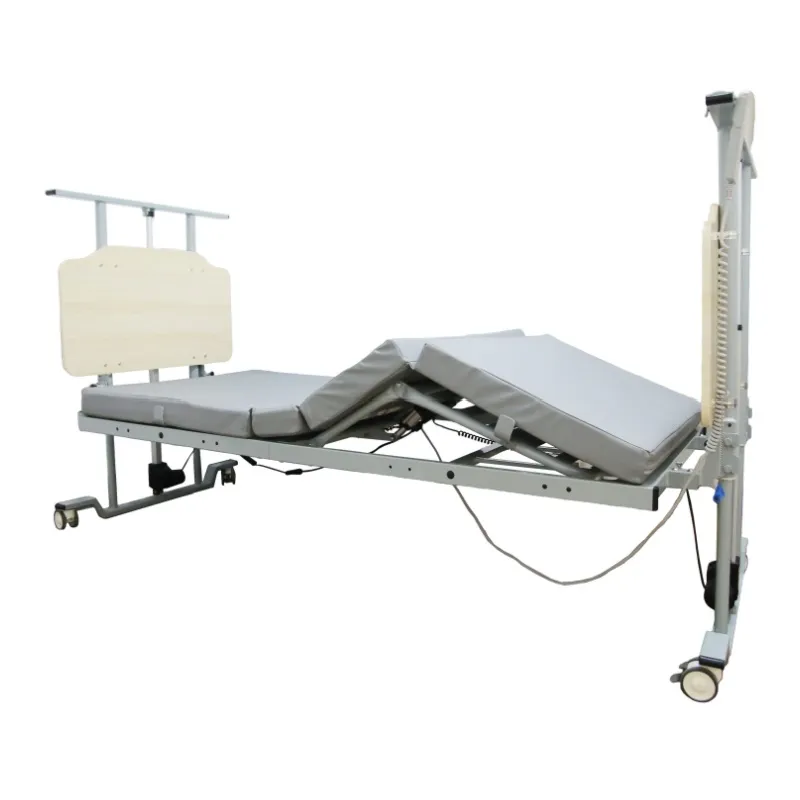
What safety hazards exist when two people sleep together on a home nursing bed?
While some families may consider having two people sleep together for emotional support or due to space constraints, this presents significant safety risks.
1. Increased risk of falls from the home nursing bed
Nursing beds are inherently narrow, making it easier for two people to:
• Roll over when turning over
• Guardrails may become loose due to excessive pressure
• Inability to adhere to safety boundaries
Especially for the frail, falls can lead to serious injuries.
2. Damage to the Bed Motor
When the combined weight of two people exceeds the design weight of the home nursing bed, the motor needs to bear extra pressure, which may result in:
• Slow operation
• Abnormal noises
• Difficulty starting
• Jamming
• Ultimately, direct damage
Once the motor is damaged, not only are repair costs expensive, but the overall safety of the bed is also significantly reduced.
3. Hindering Nursing Procedures
Double sleeping makes it difficult for caregivers to perform:
• Turning over
• Positioning
• Changing incontinence supplies
• Wound observation
• Routine cleaning
• Functional adjustments
Nursing objectives may be completely impossible to achieve.
4. Compression Affecting Patient's Breathing or Circulation
For the elderly, those recovering, and post-operative patients, their bodies are extremely vulnerable. Two people squeezed into a narrow bed can easily lead to:
• Breathing obstruction
• Chest or abdomen compression
• Poor sleeping posture
• Restricted blood circulation
• Joint compression
• Increased cardiac burden
These risks are often overlooked, but can have serious consequences.
5. Increased Risk of Cross-Infection
Many users of home care beds are in poor health. Two people sleeping on the same narrow bed can lead to:
• Bacterial transmission
• Skin cross-infection
• Risk of respiratory disease transmission
Especially for patients with weakened immune systems, close contact with environmental sources of bacteria should be avoided.
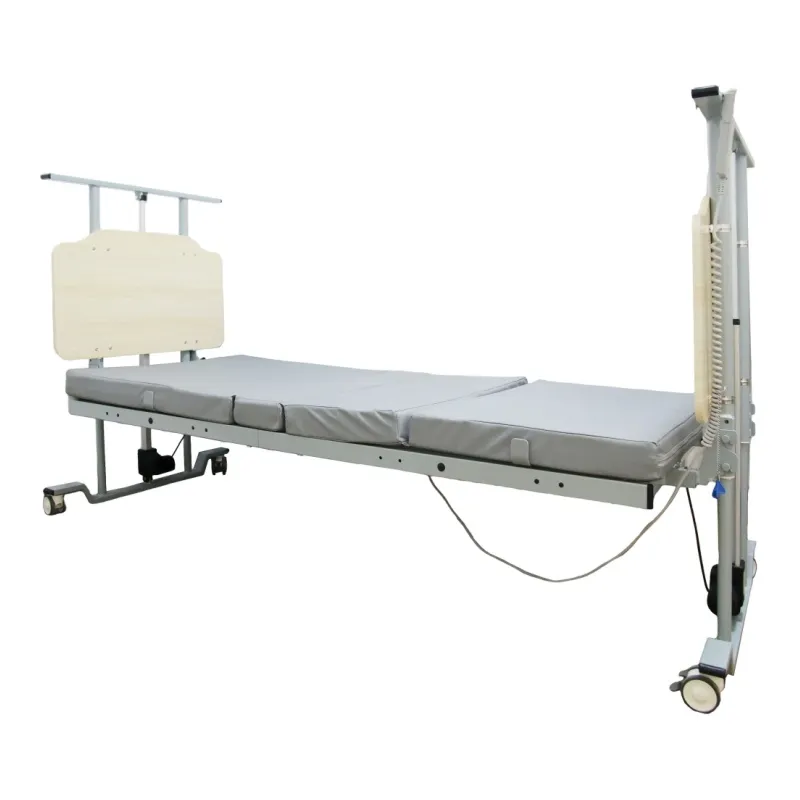
What are the weight-bearing standards for home care beds?
To better understand "why two people shouldn't sleep on a home care bed," we must start by analyzing the weight-bearing standards.
The weight-bearing capacity of a home care bed typically includes three aspects:
1. Static Weight-Bearing Capacity
This is the maximum weight the bed surface can withstand when stationary.
Most home care beds have a static weight-bearing capacity of:
• 170kg–250kg (single person)
However, this does not mean that the weight of two people can be combined. The weight-bearing design is essentially for even weight distribution for one person.
2. Dynamic Weight-Bearing Capacity
When the bed is raised, lowered, or adjusted, the load on each motor increases. The dynamic weight-bearing capacity is generally 20%–30% lower than the static weight-bearing capacity.
For example:
• Static load-bearing capacity: 200kg
• Dynamic load-bearing capacity: approximately 150kg–160kg
This means that the combined weight of two people, even if one is lighter, will far exceed the dynamic load.
3. Localized Load-Bearing
When two people are on the bed simultaneously, uneven weight distribution and localized pressure can cause:
• Bed board dents
• Excessive stress on weld points
• Structural deformation
• Motor drive imbalance
This is one of the most common causes of damage to home nursing beds.
Is the width of the nursing bed sufficient for two people to sleep together? —No
- -Why is the width of a home nursing bed insufficient for two people to sleep?
The main width specifications for home nursing beds are:
• 90cm (standard)
• 100cm (comfort)
• 105cm (reinforced)
• 120cm (wider)
The width of a typical family double bed is:
• 150cm–180cm
The nursing bed is clearly insufficient in width.
Two people crammed into a bed with a width of 90cm–120cm will experience the following problems:
• Difficulty turning over
• Mutual pressure
• Insufficient space beside the bed
• High risk of falling
Even with a wider 120cm nursing bed, it is still a single-person device, not a replacement for a double bed.
What characteristics of a home nursing bed determine that it can only be used by one person?
1. Nursing functions are designed for single use
The main functions of an electric home nursing bed include:
• Adjustable backrest angle
• Adjustable leg height
• Overall height adjustment
• Bed tilting
• Fall protection rails
• Under-bed equipment access space
These functions are essentially designed to care for one person.
If there are two people in the bed:
• Raising the backrest will lift both people simultaneously
• Tilting to the side will cause the other person to shift in an unbalanced position
• Leg lift function will fail
• Guardrails will not effectively protect both people
The entire usage process becomes dangerous and uncontrollable.
2. Nursing beds are medical assistive devices
Home nursing beds differ from ordinary beds. They are medical assistive devices with:
• Electric system
• Mechanical transmission
• Medical-grade structure
• Safety accessories
and have clearly defined usage requirements.
Double use can lead to:
• Malfunction of medical equipment
• Significantly increased risks
• Shortened motor lifespan
• Abnormal floor stress
Therefore, they must be used by a single person.
3. Nursing bed safety certification is based on single-user standards
Nursing beds typically undergo the following certifications:
• Medical device safety standards
• Load-bearing capacity testing
• Electrical safety testing
• Stability testing
All tests are conducted under single-user conditions and are not designed or evaluated for the safety of double use.
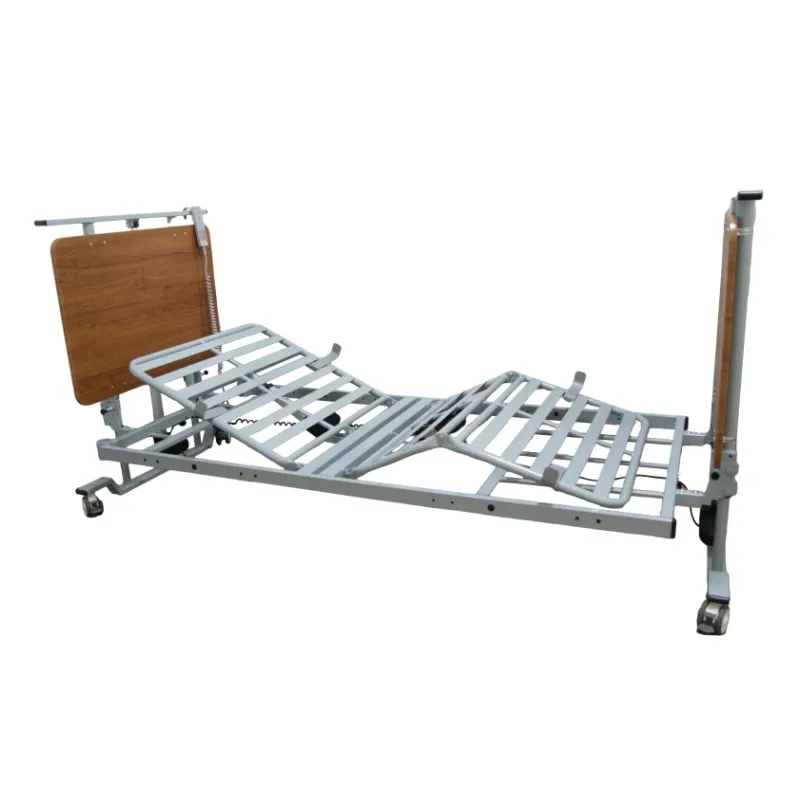
What are some safer alternatives if you need to accompany a patient to sleep?
While two people cannot sleep together on a home nursing bed, there are still many ways to balance companionship and safety.
1. Place a regular single bed next to the nursing bed
This method is safe, reasonable, comfortable, and does not affect the nursing function.
2. Use a companion bed or folding companion chair
Hospitals commonly use companion beds as a form of companionship, and the same applies to homes.
3. Maintain close proximity but do not sleep together
Site next to the nursing bed:
• Small sofa
• Resting chair
• Folding recliner
This allows for easy monitoring while minimizing risks.
4. Leave space for immediate care
Sleeping together does not replace a dedicated care space; maintaining a designated area for caregiving at the bedside is more important.
Can two people sleep on an electric home nursing bed? — No.
Considering factors such as weight-bearing capacity, size, safety, structural design, and care needs, it is clearly stated that: Home nursing beds are for single use only and should never be used by two people together.
Reasons include:
• Insufficient weight-bearing capacity
• Inability to withstand dynamic loads
• Narrow bed surface
• Single-person nursing function design
• Risk of falling out of bed during use
• Potential motor damage
• Obstruction of nursing procedures
• Increased physical stress on the patient
• Safety standards are based on single-person use
Therefore, for patient safety, nursing effectiveness, and equipment lifespan, it is essential to use the home care bed correctly according to standard requirements.
What is Dahao Medical’s experience in the healthcare industry?
With over 15 years of experience in the healthcare industry, Dahao Medical has established itself as a leading manufacturer of medical mobility and care products. Since our founding in 2008, we have been dedicated to improving the lives of patients and caregivers through high-quality, reliable products.
Our extensive experience, combined with our expertise in research and development, allows us to create innovative solutions that meet the evolving needs of healthcare providers and individuals alike.