

Patient lifters are widely used in hospitals, rehabilitation facilities, and home care environments. Their main function is to assist caregivers in the safe transfer of patients between beds, wheelchairs, chairs, or sanitation facilities. From their initial design, patient lifters are intended to reduce the risk of falls, lighten the burden of care, and improve the safety of transfers.
However, an often overlooked question is: If a patient lifter is used improperly, could it itself become a source of risk?
The answer is clear—yes, improper use of a patient lifter can indeed cause it to tip over, even leading to serious consequences.
Understanding this conclusion is not to deny the safety value of patient lifters, but rather to better understand their usage boundaries and risk conditions.
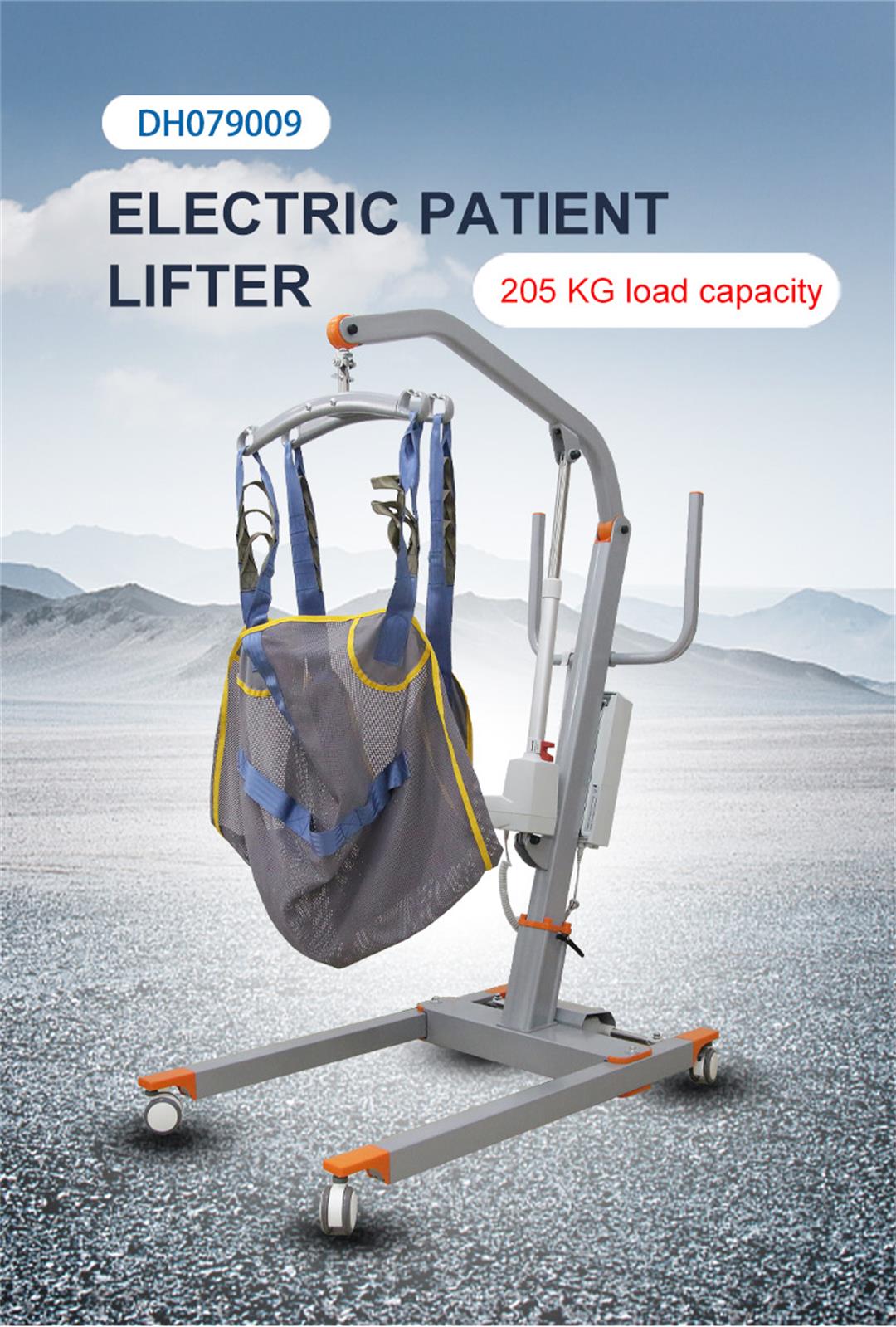
Is a patient lifter inherently safe?
From a structural design and functional perspective, a patient lifter is a highly safe assistive device under specific conditions. Its safety relies on the following:
• A reasonable load-bearing structure
• A stable base support
• A properly matched sling system
• Standardized operating procedures
When these conditions are met, a patient lifter can significantly reduce the risks associated with manual handling.
However, it is important to emphasize that: a patient lifter is not an "automatically safe" device.
Once the design assumptions and usage conditions are deviated from, the risks will quickly become apparent.
Why does improper use of a patient lifter lead to tipping?
The stability of a patient lifter depends on the balance of forces.
Under normal circumstances:
• The patient's weight is transferred to the main arm through the slings
• The weight is then evenly distributed to the support base
• The base forms stable contact with the ground.
When the operating method, usage environment, or load conditions deviate, this balance is disrupted, increasing the likelihood of tipping.
Therefore, tipping is not an accidental event, but the result of a combination of factors related to improper use.
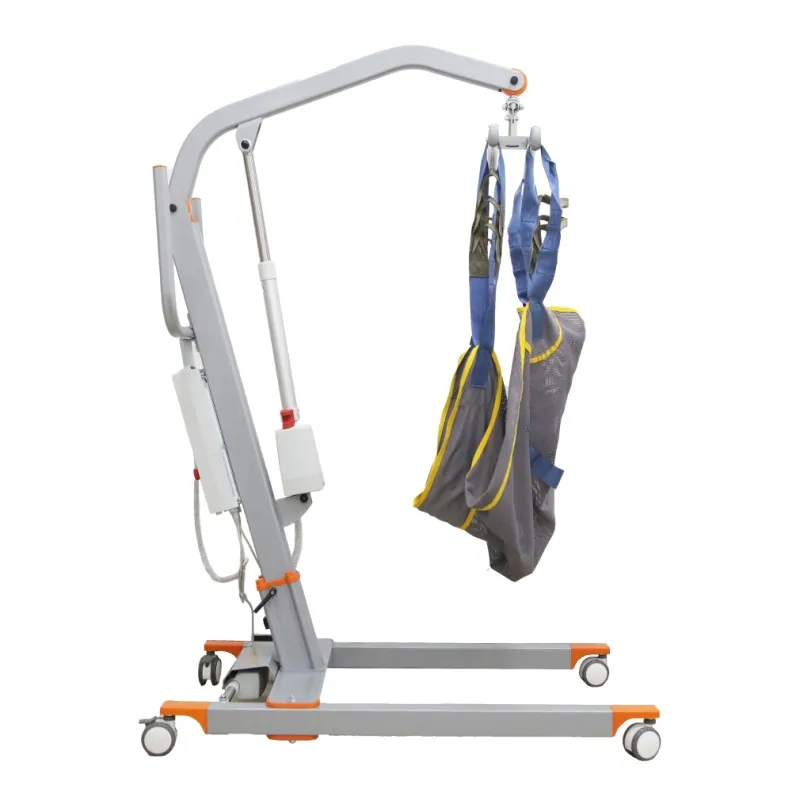
Why does overloading increase the risk of a patient lifter tipping?
Every patient lifter has a clearly defined rated load-bearing range. This parameter is not a reference value, but a safety boundary.
When a patient lifter is overloaded:
• The force on the main structure exceeds its design limits.
• The center of gravity and its front-to-back distribution change.
• The base's anti-tipping ability decreases significantly.
Even if the equipment itself is not immediately damaged, its stability is weakened, greatly increasing the risk of tipping over.
Why is improper use of the sling equally dangerous?
The sling is an extremely critical component of the patient lifter system.
If the sling is used improperly, for example:
• The sling size does not match the patient.
• The suspension point is incorrectly connected.
• Uneven force distribution
These will directly affect the patient's posture in the air, causing the weight to be biased to one side, resulting in an asymmetrical load.
This unbalanced load forces the patient lifter to bear abnormal lateral forces, easily leading to equipment instability.
Why is the patient lifter's center of gravity so important?
During operation, the patient lifter's center of gravity changes with the patient's position.
When a patient is lifted off the ground:
• The center of gravity rises significantly.
• Stability becomes more sensitive to the deployment of the base.
If, during this process:
• The base is not fully deployed.
• The ground is uneven.
• The pushing/pulling angle is improper.
These will all cause the overall center of gravity to shift, thus increasing the risk of tipping over.
Does improper operating posture affect the stability of the patient lifter?
Yes, and the impact is often underestimated.
When operating the patient lifter:
• Pushing too fast.
• Sudden stops or turns.
• Improper pulling angle.
These will all generate additional inertial forces on the equipment.
If these dynamic forces exceed the base's tolerance, they will disrupt the original balance and increase the likelihood of tipping over.
Why does the ground environment affect patient lifter safety?
The stability of the patient lifter ultimately depends on the contact between the wheels and the ground.
The following ground conditions reduce safety:
• Uneven ground
• Slopes or thresholds
• Slippery surfaces
Under these conditions, even without obvious operational errors, the patient lifter's anti-tipping ability will significantly decrease.
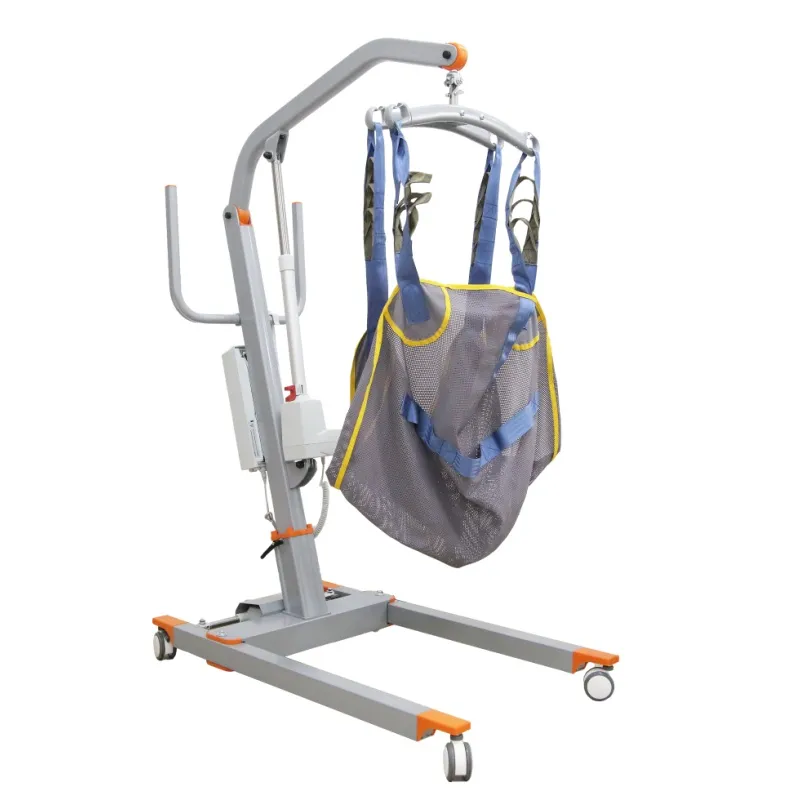
Is the patient lifter more prone to tipping while moving?
Compared to a stationary state, a moving patient lifter is indeed more prone to instability.
The reasons are:
• Movement introduces inertial forces
• Turning generates lateral forces
• Changes in speed affect center of gravity control
Frequent movement while the patient is suspended, coupled with a lack of necessary operational control, increases the risk of tipping.
Why is operational error often not caused by a single factor?
In most cases, the risk of a patient lifter tipping is not caused by a single error, but rather by a combination of issues, such as:
• Approaching or exceeding the rated load capacity
• Improper harness connection
• Unfavorable ground conditions
• Excessive operating speed
These factors work together to ultimately lead to equipment instability.
What prerequisites does the safe use of a patient lifter depend on?
To ensure the true safety of a patient lifter, its use must meet the following basic prerequisites:
• User weight is within the rated range
• Sling model matches the patient
• Ground is flat and dry
• Base is fully extended and locked
• Operator understands the basic operating logic
Ignoring any of these prerequisites may compromise overall safety.
Why can't a patient lifter be considered a "zero-risk device"?
A patient lifter is an assistive tool, not an automatic safety system.
Its safety comes from:
• Correct selection
• Correct installation
• Correct operation
If it's viewed as "absolutely safe as long as it's used," it's easier to overlook potential risks.
Does the patient lifter design consider the risk of tipping?
Yes.
Most patient lifters, during the design phase, reduce the risk of tipping through:
• Widened base
• Low center of gravity structure
• Distributed force design
However, these designs are effective only within reasonable usage limits and cannot completely eliminate the risks from incorrect operation.
Why emphasize "suitable users, suitable environment, and suitable operation"?
Patient lifters are not "universal devices."
Only when:
• Suitable patient physical condition
• Suitable space and ground environment
• Suitable operating procedures
The patient lifter can truly fulfill its safety purpose if all three conditions are met simultaneously.
A mismatch in any one of these conditions can significantly increase the risk.
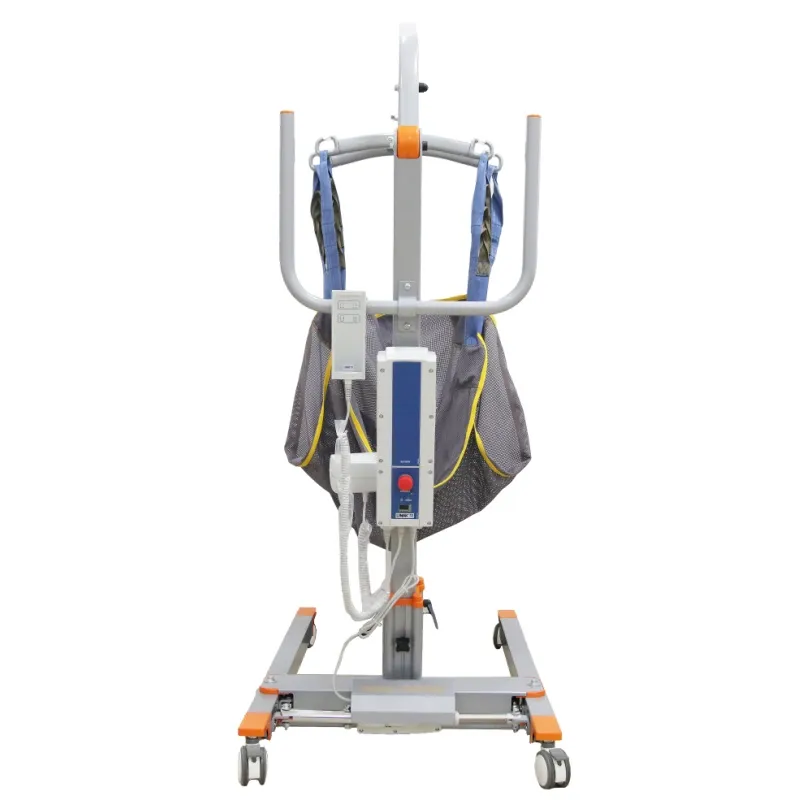
What is the essence of the tipping risk of a patient lifter?
Essentially, the tipping risk of a patient lifter stems from a disruption of its mechanical balance.
This disruption is not a defect in the equipment, but rather a result of:
• Exceeding design assumptions
• Deviating from usage guidelines
• Neglecting operational details
How to correctly understand the issue of "patient lifters tipping over"?
The correct understanding is:
• The patient lifter itself is safe.
• Incorrect use will change its safety attributes.
• The tipping risk is foreseeable and avoidable.
Therefore, the purpose of discussing this issue is not to create panic, but to clarify the boundaries of use.
Will improper use of a patient lifter lead to tipping?
The answer is clear:
Yes, improper use of a patient lifter can indeed lead to it tipping over.
The core reasons include:
• Overloading
• Improper sling or connection methods
• Unsuitable ground conditions
• Incorrect operating procedures
Sling-type patient lifters do pose a risk of tipping over when overloaded or used improperly, potentially leading to serious consequences.
Only when used by the right people, in the right environment, and under the right operating conditions can a patient lifter truly become a safe and efficient nursing aid, rather than a potential source of risk.
Does Dahao Medical offer training for its products?
Yes, Dahao Medical provides training for customers who purchase our products, particularly for healthcare facilities or distributors. We offer detailed product manuals, online training, and on-site support to ensure that users understand how to operate and maintain our Electric Wheelchairs, Hospital Care Beds, and other medical devices. Our training covers everything from assembly and installation to safety features and troubleshooting, ensuring that your team can use our products effectively and safely.