

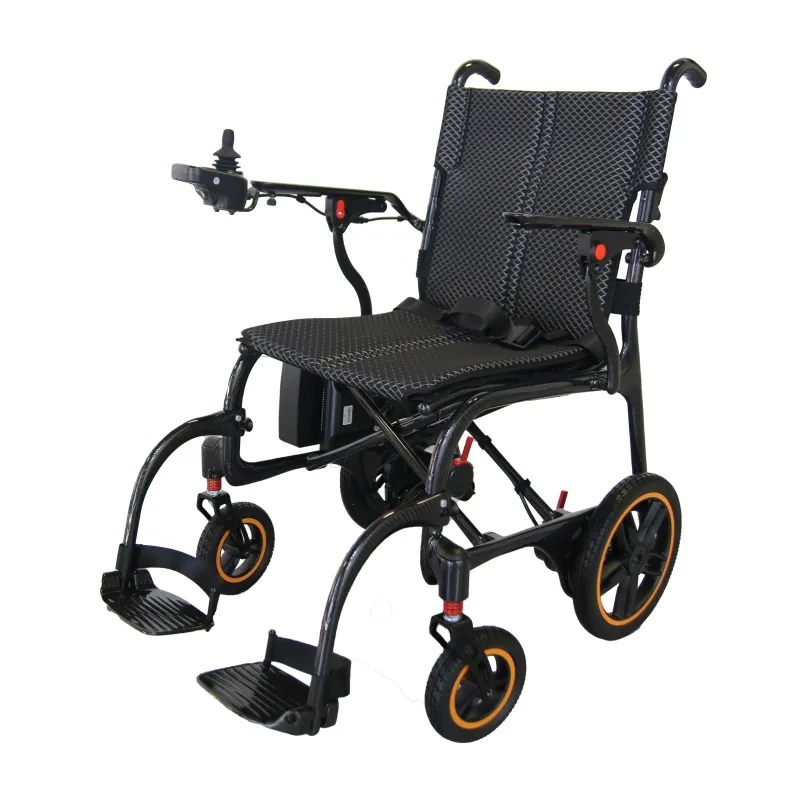
In the past, consumer attention regarding electric wheelchairs focused primarily on range, comfort, and stability; however, "lightweight design" has recently emerged as an increasingly important purchasing criterion. Driven by this trend, carbon fiber electric wheelchairs have become a popular category in the high-end market. Compared to traditional steel or aluminum alloy models, the primary selling points of carbon fiber electric wheelchairs are clear: they are lighter, stronger, and more portable, while also offering a more high-tech aesthetic and commanding a premium price.
However, when consumers begin to explore the market, they often encounter a common question: why does a standard electric wheelchair cost only a few thousand yuan, while a carbon fiber model often runs to 20,000 or 30,000 yuan—with some high-end models exceeding 50,000 yuan? Many initially attribute this to brand premiums, dismissing "carbon fiber" as merely a marketing concept. Yet, a closer look at the manufacturing process reveals that the high price is not simply a markup for the brand name; rather, it stems from a complex and costly system of manufacturing processes.
The factors driving up the cost of carbon fiber power wheelchairs go beyond the material itself to include critical stages such as structural design, composite material layup, mold making, molding processes, joining technologies, quality control testing, and overall system integration.
In other words, a high-quality carbon electric wheelchair is not merely a standard model with a different material; it is essentially a fusion of aerospace-grade composite manufacturing, automotive lightweight engineering, and the integration of intelligent electromechanical systems. To understand the high cost, one must break down the full cost structure and analyze each key manufacturing process step by step.
Why is the market placing increasing importance on carbon electric wheelchairs?
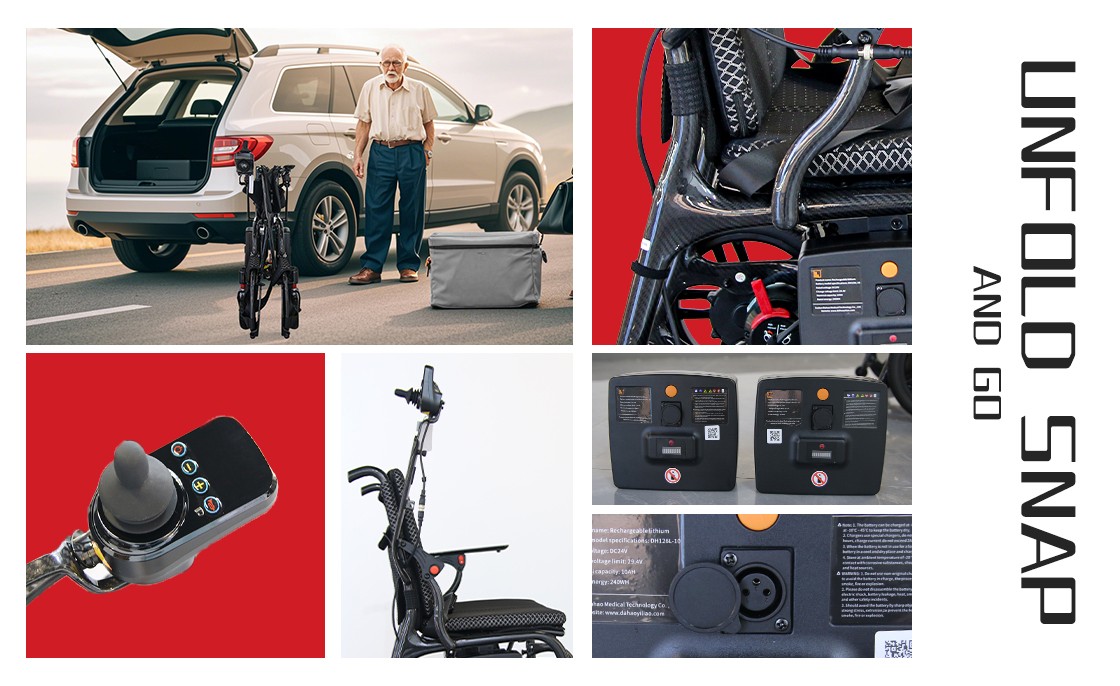
Traditional electric wheelchairs typically feature steel or aluminum alloy frames. While steel frames offer high structural strength and low manufacturing costs, the resulting wheelchairs are generally heavy, often weighing between 35 and 60 kilograms. Aluminum alloy frames reduce weight, yet most products still weigh in the range of 25 to 40 kilograms. While this weight may not be a major issue for users who stay strictly indoors, it directly impacts the user experience for those who need to go out frequently. For instance, when users or their family members need to load a wheelchair into a car trunk, carry it up stairs, fold it for storage, or take it on an airplane, the total weight of the chair becomes a decisive factor. Industry research indicates that for every 5-kilogram reduction in an electric wheelchair's weight, the physical burden perceived by the user during handling decreases by over 20% on average—a difference that is often even more pronounced for elderly caregivers. Consequently, lightweight design has emerged as a core development trend in the electric wheelchair industry.
This is precisely where the advantages of carbon fiber electric wheelchairs lie. Carbon fiber composites possess exceptionally high specific strength and specific stiffness; for the same strength requirements, they weigh far less than steel or aluminum alloys. Simply put, carbon fiber achieves comparable or even superior structural strength using significantly less material weight. Some high-end carbon fiber electric wheelchairs can keep their total weight within the 15-to-20-kilogram range, approaching the weight levels of certain high-end manual wheelchairs. However, achieving such lightness comes at a price, relying on an expensive and complex manufacturing ecosystem.
Raw Material Costs: Carbon Fiber as a High-Value Material
The most immediate cost factor for carbon fiber electric wheelchairs is the raw material itself. Upon seeing the characteristic black woven texture of carbon fiber, many consumers mistakenly assume it is merely a type of "premium plastic." In reality, however, carbon fiber is a high-performance composite reinforcement material that is far more difficult to manufacture than standard metals. It is typically produced from polyacrylonitrile (PAN) fibers or pitch-based materials through a series of high-temperature processes—including pre-oxidation, carbonization, and graphitization—with some stages exceeding 1,500 degrees Celsius; the entire production process demands rigorous temperature control and specialized equipment.
Common industry grades include T300, T700, T800, and even T1000, with each grade corresponding to specific strength and modulus characteristics. Generally, industrial-grade carbon fiber may cost hundreds of yuan per kilogram, whereas high-performance aerospace-grade carbon fiber can cost thousands of yuan or more per kilogram. Because carbon fiber electric wheelchairs must withstand sustained dynamic loads—including the user's weight, road impacts, steering torque, and the stresses of repeated folding—the material performance requirements are far more stringent than those for ordinary consumer goods. While low-grade carbon fiber can reduce costs, it struggles to maintain sufficient reliability over long-term use; consequently, high-end carbon fiber electric wheelchairs typically utilize medium-to-high-grade materials, which directly drives up the base cost.
More importantly, carbon fiber is not used in isolation. It must be combined with high-performance resin systems to form a carbon fiber composite structure. This means that, in addition to the fibers themselves, manufacturers must procure high-performance epoxy resins, curing agents, and other auxiliary materials—all of which further increase raw material costs.
Structural Design Costs: Carbon Fiber Wheelchairs Cannot Simply Copy Metal Designs
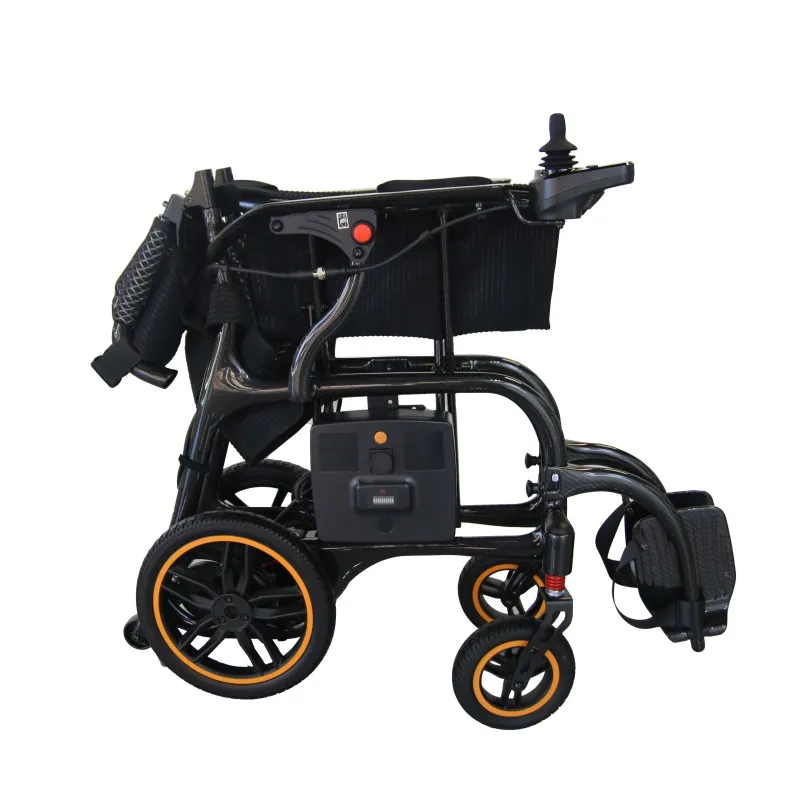
Many assume that a carbon electric wheelchair can be created simply by swapping a traditional aluminum alloy frame for carbon fiber, but the reality is far more complex. Steel and aluminum alloys are isotropic materials, meaning their mechanical properties are relatively consistent in all directions. Carbon fiber composites, however, are distinctly anisotropic; their strength depends heavily on the orientation of the fibers.
This implies that engineers cannot simply replicate traditional metal frame designs. Applying a structure originally designed for aluminum alloy directly to carbon fiber can lead to issues such as localized stress concentration, interlaminar delamination, or even structural cracking. Therefore, developing a carbon electric wheelchair usually requires creating a completely new structural model and performing extensive simulation calculations.
Why Is R&D for Carbon Fiber Electric Wheelchairs So Costly?
Because the stress scenarios an electric wheelchair faces are far more complex than they appear on the surface. The frame must withstand not only static weight but also various dynamic conditions—such as continuous vibration during flat-ground travel, backward torque when climbing hills, braking impact when descending, lateral torque during turns, and instantaneous impact loads when traversing curbs. These diverse scenarios subject different areas of the frame to vastly different stress distributions.
To optimize the structure, R&D teams typically conduct iterative finite element analysis, constantly adjusting wall thickness, cross-sectional shapes, fiber orientation, and local reinforcement strategies. Each design optimization entails time and engineering costs, and these R&D investments are ultimately reflected in the retail price of every carbon electric wheelchair.
Lay-up Process: The Core Technology Determining Performance Limits
If raw materials determine the theoretical performance ceiling, then the lay-up process determines the product's actual, final performance. "Layup" refers to the process of stacking layers of carbon fiber prepreg at specific angles and in a specific sequence to form the final structure. Common layup orientations include 0°, 45°, 90°, and -45°, with different angles designed to withstand loads from different directions.
In carbon fiber power wheelchairs, critical load-bearing areas—such as the main structural beams, motor mounting zones, areas near folding joints, and seat supports—typically require multi-angle composite layups to balance strength and weight. However, layup is far more complex than simply stacking sheets of fabric. Particularly with complex curved structures, the position, angle, and tension of each fiber layer must be precisely controlled.
Manual layup remains the industry standard, especially for mid-to-high-end products. Manual processing entails long production cycles, high technical requirements, and significant labor costs, while also being subject to the variability of worker experience. Even a deviation of just a few millimeters can compromise structural integrity. This is a key reason why it is difficult to significantly lower the price of carbon fiber power wheelchairs.
Molds and Molding Processes: The Key Factor Driving Cost Differences
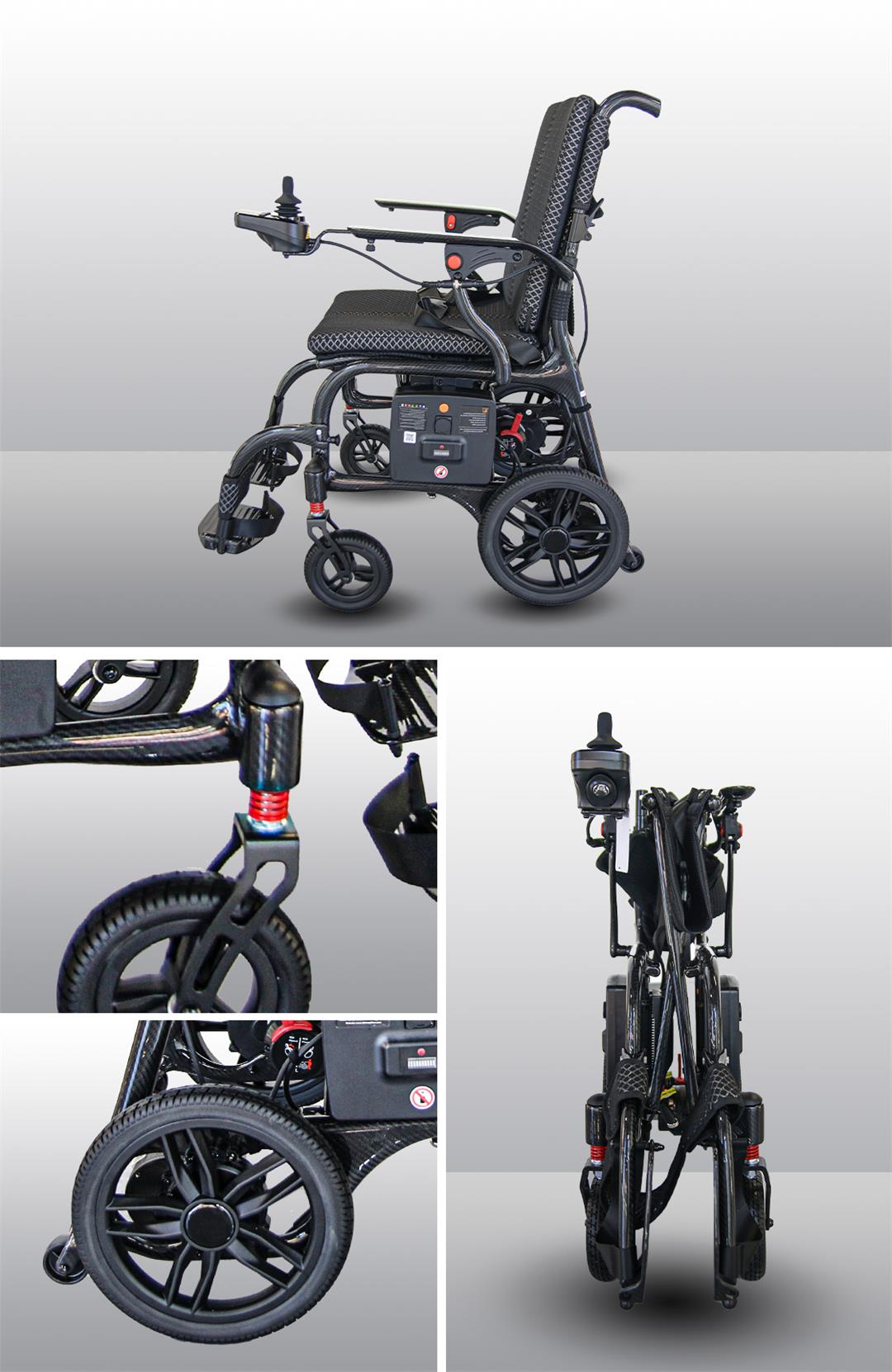
One of the primary manufacturing differences between carbon electric wheelchairs and standard metal wheelchairs lies in the molding process. While traditional metal wheelchair frames can be rapidly produced through tube cutting, bending, and welding, carbon fiber structures generally rely on mold-based molding. This means that every complex component of the frame—including the main chassis, armrests, outer casings, and battery compartments—requires a high-precision mold.
High-precision composite molds are expensive in their own right. A single set of industrial-grade molds can cost anywhere from tens of thousands to hundreds of thousands of yuan, with extremely stringent requirements for surface precision, heat resistance, and dimensional stability. For high-end carbon fiber electric wheelchair brands with limited sales volumes, these mold costs are difficult to amortize quickly.
Why is the molding process for carbon fiber electric wheelchairs so expensive?
Because it directly determines the quality of the internal structure. The ideal state for carbon fiber composites is one with virtually no internal air bubbles, voids, or resin pooling, ensuring a uniform bond between the fibers and the resin. To achieve this, manufacturers typically employ advanced processes such as vacuum bagging, autoclave molding, or resin transfer molding (RTM).
These processes demand precise control over temperature, pressure, and curing cycles. Inadequate control can lead to the formation of internal voids. Even a porosity level of just 2% to 3% can lead to a significant reduction in structural strength. The reliability of high-end carbon fiber electric wheelchairs relies heavily on high-quality molding processes, which in turn entail substantial investment in equipment and high manufacturing costs.
Joining Processes and System Integration: The Real Challenge Lies in the Interfaces
Many mistakenly believe that the primary challenge in manufacturing carbon fiber electric wheelchairs lies in the frame itself; however, from an engineering perspective, the truly complex aspect is often the joining process. An electric wheelchair is not a monolithic structure; it requires the installation of numerous components, including motors, batteries, controllers, braking systems, armrests, and folding mechanisms.
The challenge arises because carbon fiber cannot be welded directly like metal. Assembly typically requires mechanical fasteners, metal inserts, structural adhesives, or hybrid joining methods. These connection points are often the structure's weakest links, as they are where loads concentrate.
In many cases of structural failure, the main beams do not snap; instead, the connection points suffer from delamination, cracking, or loosening. Consequently, manufacturers of high-end carbon fiber electric wheelchairs invest heavily in the design of these joints—incorporating local reinforcement layers, optimizing load-transfer paths, and utilizing specialized metal inserts. These unseen engineering details represent a significant portion of the overall cost.
Furthermore, the pursuit of extreme lightweighting results in a more compact internal layout, complicating the positioning of batteries, heat dissipation systems, wiring, and controllers. This increased complexity in system integration further drives up manufacturing costs.
Quality Control and Testing Costs: High-End Products Must Withstand Long-Term Use
Carbon electric wheelchairs are designed for users with limited mobility, necessitating exceptionally high standards of reliability. While minor structural issues in consumer electronics might merely affect the user experience, structural failure in an electric wheelchair can pose a direct threat to the user's safety.
Therefore, high-end carbon fiber power wheelchairs typically undergo rigorous testing, including static load tests, dynamic fatigue tests, drop tests, impact tests, and vibration tests. Some products even undergo simulations involving tens of thousands of load cycles to verify structural stability over the long term.
Such testing is costly, requiring not only specialized equipment but also significant time for prototype validation. However, for high-end manufacturers, this investment cannot be skipped, as it directly determines the product's safety limits.
FAQ
Q1: Why are carbon electric wheelchairs significantly more expensive than aluminum alloy models?
Because not only are material costs higher, but expenses related to R&D, molding, assembly (joining), and testing are also substantially greater.
Q2: Are carbon fiber electric wheelchairs really lighter?
Yes. High-end models are typically 30% to 50% lighter than traditional electric wheelchairs.
Q3: Are carbon fiber electric wheelchairs durable?
Provided the design is sound and the manufacturing quality is high, they offer excellent durability and strong fatigue resistance.
Q4: Are all carbon fiber power wheelchairs worth buying?
Not necessarily. Low-quality products may have hidden issues regarding assembly techniques and quality control.
Q5: Will carbon fiber power wheelchairs become cheaper in the future?
It is quite likely in the long run; prices are expected to drop as manufacturing scales up and production technologies mature.