

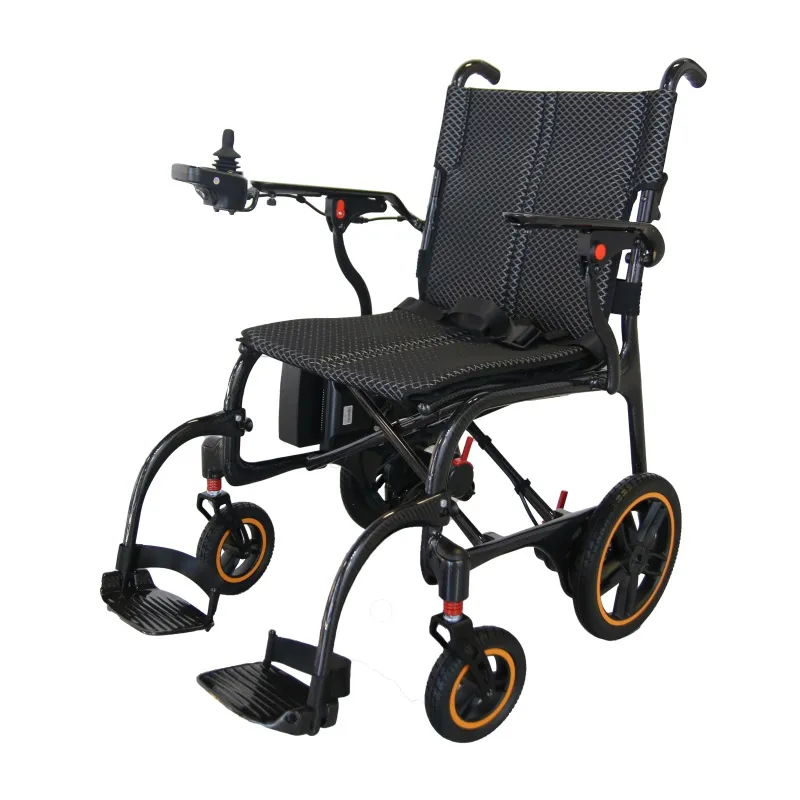
In recent years, driven by rapid advancements in lightweight technology within the field of assistive medical devices, carbon fiber electric wheelchairs have emerged as a significant product category in the high-end market. Compared to traditional steel or aluminum alloy models, carbon fiber electric wheelchairs offer advantages such as lighter weight, superior strength, and a modern aesthetic, making them increasingly popular among the elderly, people with disabilities, and frequent travelers. This is particularly true in the portable electric wheelchair market, where the use of carbon fiber has drastically reduced product weight—with some high-end models weighing around 20 kg—offering a compelling benefit for users who need to transport their wheelchairs frequently.
However, as carbon fiber electric wheelchairs become more widespread, consumers are raising practical questions: If the wheelchair suffers a fall, impact, or frame fracture, can it be repaired? Can safety be guaranteed after repair? Is the repair cost justified? How does repairing carbon fiber differ from repairing steel or aluminum alloy wheelchairs?
In fact, this is a topic of interest not only to consumers but also to wheelchair dealers, repair centers, and procurement professionals in the assistive device industry. Because carbon fiber is a composite material—differing fundamentally from traditional metals in terms of load-bearing characteristics, failure modes, and repair techniques—the approach to handling frame damage differs significantly from that used for steel or aluminum alloy wheelchairs.
Why are more electric wheelchairs adopting carbon fiber materials?
For a long time, steel and aluminum alloys were the primary materials used for electric wheelchair frames. Steel wheelchairs offer robust construction, low manufacturing costs, and excellent load-bearing capacity, but they have a distinct disadvantage: significant weight. Many traditional steel models weigh between 35 kg and 50 kg, making them inconvenient for home users who need to transport them regularly.
The subsequent introduction of aluminum alloy electric wheelchairs addressed some of these weight issues. Compared to steel models, aluminum alloy wheelchairs are typically 20% to 30% lighter, allowing them to become mainstream products in the mid-to-high-end market. However, as user demands for portability have risen, the industry has sought lighter material solutions; it is against this backdrop that carbon fiber has entered the field of wheelchair manufacturing.
In terms of material properties, carbon fiber composites boast an exceptionally high strength-to-weight ratio. For the same level of strength, carbon fiber weighs only about one-quarter—or even less—than steel. Consequently, carbon fiber electric wheelchairs can significantly reduce the vehicle's total weight while maintaining structural integrity. Currently, the total weight of many high-end carbon fiber electric wheelchairs on the market is kept between 15 and 25 kilograms, with some ultra-lightweight models weighing even less.
For this reason, carbon fiber electric wheelchairs are increasingly the choice of users who travel frequently, fly often, or value independent living.
Are carbon fiber power wheelchairs truly stronger than metal ones?
Upon seeing carbon fiber widely used in aerospace, high-end automobiles, Formula 1 racing, and cycling, many consumers naturally assume it must be stronger than steel. From an engineering perspective, however, this understanding is not entirely accurate.
Carbon fiber does indeed possess very high tensile strength. Certain high-performance carbon fiber materials can be several times stronger than ordinary steel; however, material strength is not synonymous with resistance to damage. Steel is a ductile metal; when subjected to significant impact, it tends to bend or deform first, thereby absorbing some of the impact energy. Carbon fiber, on the other hand, is a typical composite material—it is extremely rigid but lacks ductility.
In other words, a steel electric wheelchair might bend, dent, or undergo localized deformation upon impact while retaining its overall structural integrity. Conversely, if a carbon fiber electric wheelchair is subjected to loads exceeding its design limits, it may develop cracks, undergo delamination, or even fracture completely. Therefore, it is not that carbon fiber electric wheelchairs are "less prone to damage," but rather that their failure modes differ entirely from those of traditional metal wheelchairs.
This material characteristic is a key reason why many users misunderstand carbon fiber power wheelchairs.
Why do carbon fiber electric wheelchair frames fracture?
Under normal circumstances, high-quality carbon fiber electric wheelchairs undergo rigorous testing and certification, and their service life can typically span several years or even a decade or more. Frame fractures are most often caused by abnormal use or sudden impact events.
The most common cause is damage from a fall. For instance, a user might accidentally drop the carbon fiber power wheelchair while lifting it into a car trunk, causing it to hit the ground from a height; it might slip while navigating stairs; or it could suffer a severe collision during air travel or shipping. Any of these scenarios can damage the frame.
Another common cause is prolonged overloading. Every carbon fiber power wheelchair has a specified weight limit—such as 120 kg, 136 kg, or 150 kg. If a user consistently exceeds this design load, fatigue stress accumulates within the structure. While the issue may not be immediately apparent, repeated long-term stress can cause delamination between the carbon fiber layers, eventually leading to cracks or even a complete fracture.
High-speed collisions with obstacles are also frequent culprits. If the wheelchair strikes a curb, speed bump, stair edge, or solid wall at high speed, the impact force may concentrate on a specific area, exceeding the material's structural limits.
Industry data indicates that more than half of all carbon fiber structural damage cases stem from external impacts, whereas fractures caused by the material's natural aging are relatively rare.
Can a broken carbon fiber power wheelchair frame be repaired?
Many people assume that a broken carbon fiber frame must be scrapped, but this view is inaccurate. From a technical standpoint, these frames can often be repaired; the real questions are whether repair is worthwhile and whether the repaired unit remains safe—factors that require specific analysis.
If the damage is limited to surface cracks or localized fiber layer issues, professional carbon fiber repair techniques can usually be employed. Technicians remove the damaged area, re-lay carbon fiber fabric, and impregnate and cure it using high-performance epoxy resin. With proper reinforcement design, the repaired area can regain significant strength.
Such repair techniques are already widely used in the aerospace, bicycle, and racing industries. Many carbon fiber bicycle frames worth tens or even hundreds of thousands of yuan are repaired using similar methods after sustaining localized damage. For certain non-critical load-bearing areas—such as armrest connection points, footrest mounting structures, or accessory attachment zones—the results of repairs are generally quite satisfactory.
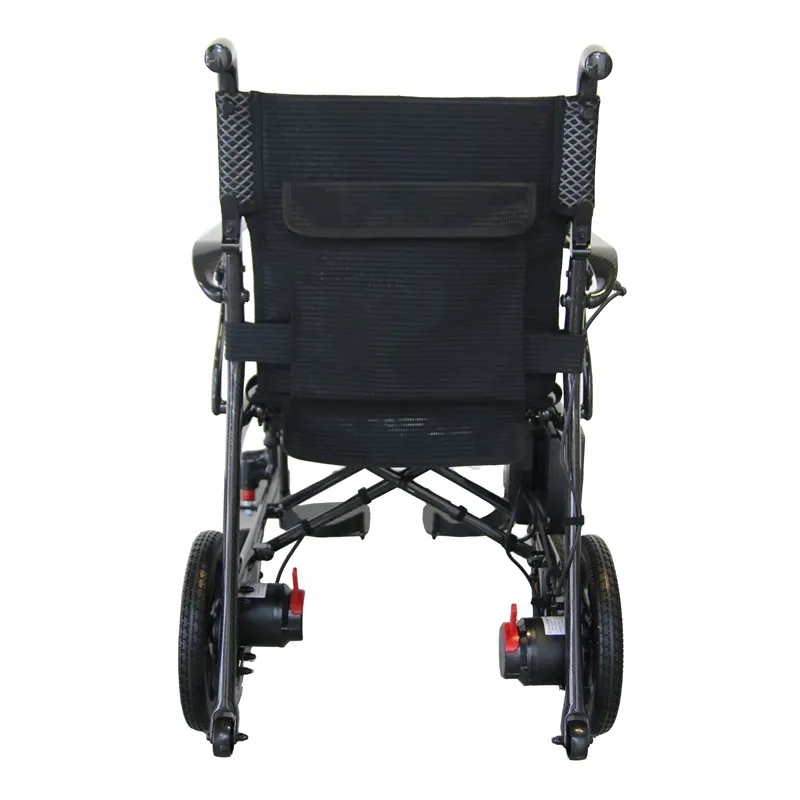
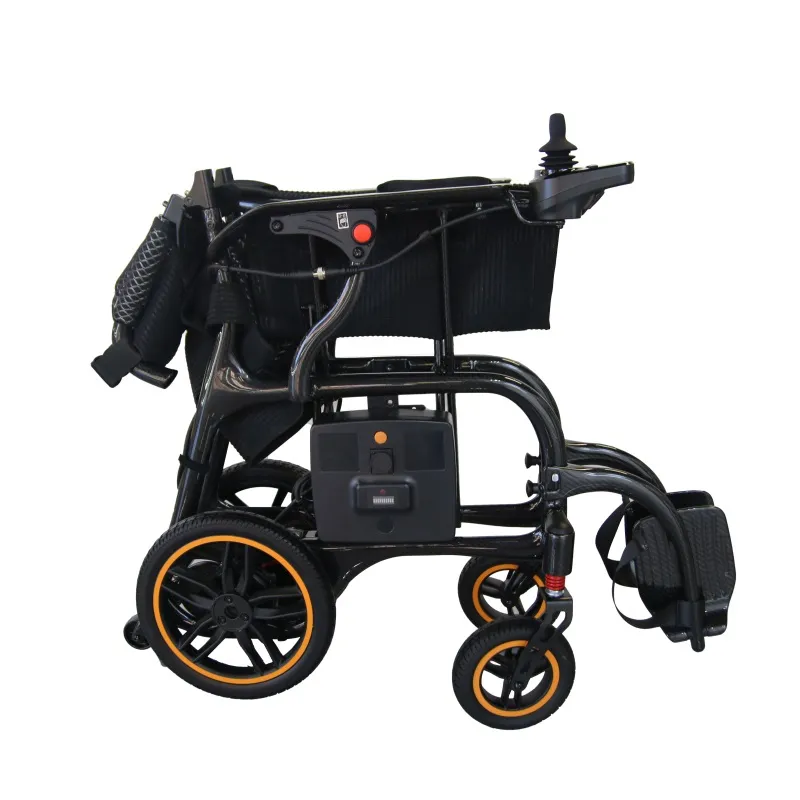
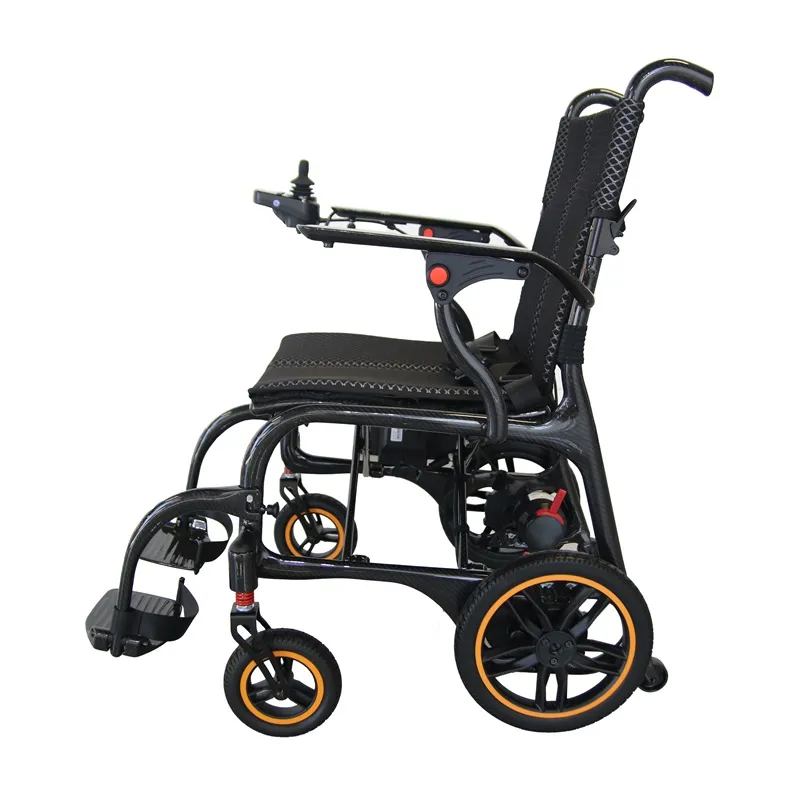
However, if the damage occurs in primary load-bearing structural areas—such as the seat support crossbar, main frame rails, motor mounting frame, or core components of the folding mechanism—repair becomes significantly more difficult. These areas bear the most critical structural loads of the carbon fiber power wheelchair; even if a repair is successfully completed, it is difficult to fully restore the frame to its original factory-designed state.
Consequently, when faced with such situations, many manufacturers prioritize recommending that users simply replace the frame.
Why do manufacturers prefer replacement over repair?
Many users assume that manufacturers recommend frame replacement to boost revenue from spare parts sales; in reality, however, the primary reasons are safety liability and risk management.
Carbon fiber power wheelchairs are classified as medical assistive devices, and their users are predominantly elderly individuals, people with mobility impairments, or those with fragile physical conditions. Should the frame structure fail again, it could directly result in the user falling, sustaining injuries, or even being involved in a serious accident. Therefore, manufacturers must exercise extreme caution regarding any repairs involving primary load-bearing structures.
Additionally, carbon fiber materials have a characteristic where hidden damage is difficult to detect. Often, the surface may appear to have only minor scratches, while the internal fiber layers have already fractured or delaminated. To accurately assess the extent of the damage, professional repair facilities typically require methods such as ultrasonic testing, thermal imaging, or industrial CT scanning. These diagnostic tools are costly and generally unavailable at standard repair shops.
For this reason, many wheelchair manufacturers prefer to replace the frame assembly entirely rather than assume the potential risks associated with repair.
Is a repaired carbon fiber power wheelchair safe?
This is one of the questions users care about most.
From an engineering perspective, a professionally repaired carbon fiber structure can typically regain approximately 80% to 95% of its original strength. For standard consumer products, this represents an excellent level of repair. However, for medical assistive devices, determining whether the structure has been restored to a sufficiently safe state requires an assessment based on the specific location of the damage.
If the damage is located in a non-critical area and the repair is performed by a professional facility using standard procedures, the wheelchair can usually continue to be used normally. However, if the damage affects a core load-bearing structure, even a repair that restores a high degree of strength may still fail to meet original factory certification standards. Therefore, there is no single answer regarding the safety of a repaired carbon fiber power wheelchair; safety must be determined based on inspection results and professional assessment.
Are repair costs for carbon fiber power wheelchairs high?
Compared to steel electric wheelchairs, the repair costs for carbon fiber models are typically significantly higher.
If the frame of a standard steel electric wheelchair cracks, it can often be repaired via welding for just a few hundred yuan. In contrast, repairing carbon fiber involves multiple complex processes—such as material analysis, damage inspection, carbon fiber ply layup, resin curing, and post-repair testing—often resulting in costs reaching several thousand yuan.
For some high-end carbon fiber electric wheelchairs, if the main frame sustains severe damage, the repair cost may even approach the price of a new frame. Consequently, after weighing the options, many users choose to simply replace the damaged component.
How can damage to the carbon fiber power wheelchair frame be prevented?
Prevention is clearly more important than post-damage repair.
During daily use, users should strictly adhere to the manufacturer's weight limits and avoid prolonged overloading. Additionally, users should slow down when traversing curbs, speed bumps, or uneven surfaces to minimize impact forces. For users who transport their wheelchairs frequently, using specialized protective covers and securing devices is recommended to reduce the risk of drops.
Furthermore, it is advisable to periodically inspect critical areas of the frame, particularly the folding mechanism, motor mounting points, and key connection nodes. If any unusual cracks, strange noises, or localized deformation are detected, the manufacturer or a professional repair service should be contacted immediately for an inspection.
FAQ
Can a carbon fiber power wheelchair still be used after cracking?
Continued use is generally not recommended. Even minor surface cracks may compromise the internal structural integrity; a professional inspection should be conducted before deciding whether to continue using it.
Can a carbon fiber electric wheelchair always be repaired?
Not necessarily. Minor cracks and localized damage can usually be repaired, but if the main load-bearing structure suffers a severe fracture, frame replacement may be required.
Can carbon fiber electric wheelchairs be welded like steel wheelchairs?
No. Carbon fiber is a composite material and cannot be repaired using metal welding techniques; instead, it requires carbon fiber patching and resin curing processes. Can a repaired carbon fiber electric wheelchair regain its original strength?
Professional repairs can typically restore about 80% to 95% of the original strength, though whether it meets factory standards requires a case-by-case assessment.
Why are repair costs for carbon fiber power wheelchairs so high?
The repair process involves specialized testing equipment, carbon fiber materials, structural analysis, and complex techniques; consequently, the technical requirements and labor costs are far higher than those for repairing standard metal wheelchairs.
Are carbon fiber power wheelchairs more prone to damage than aluminum alloy ones?
Not under normal use. Carbon fiber power wheelchairs possess high structural strength; however, their failure mode differs from that of aluminum alloy models when subjected to severe impact, so extra care must be taken to prevent collisions and drops.