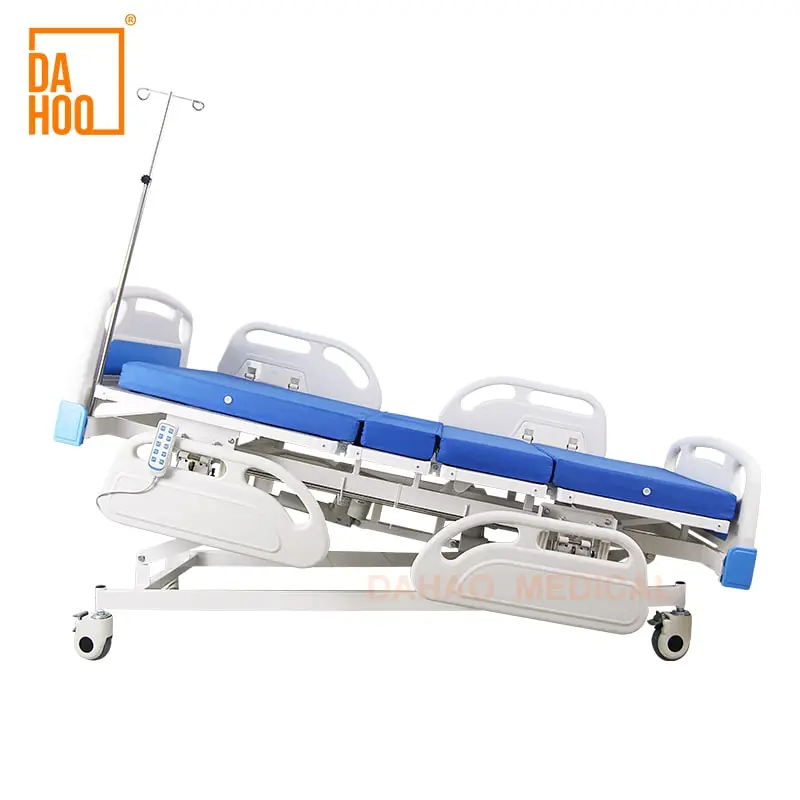

Adjustable hospital beds have garnered significant attention in fields such as long-term bedridden care, post-operative recovery, and elderly care due to their ability to raise the backrest, lift the legs, and adjust the bed's overall angle. However, when purchasing or using these beds, many people ask the same question: do they need to be plugged into a power outlet?
While this question may seem simple, the answer actually depends on the bed's structural design, drive system, functional configuration, safety requirements, and the differences between various product types. For the average consumer, a comprehensive understanding of how these beds work and how they are powered is essential for making informed decisions regarding their purchase and use.
The Core Functions of an Adjustable Hospital Bed Determine its Power Requirements
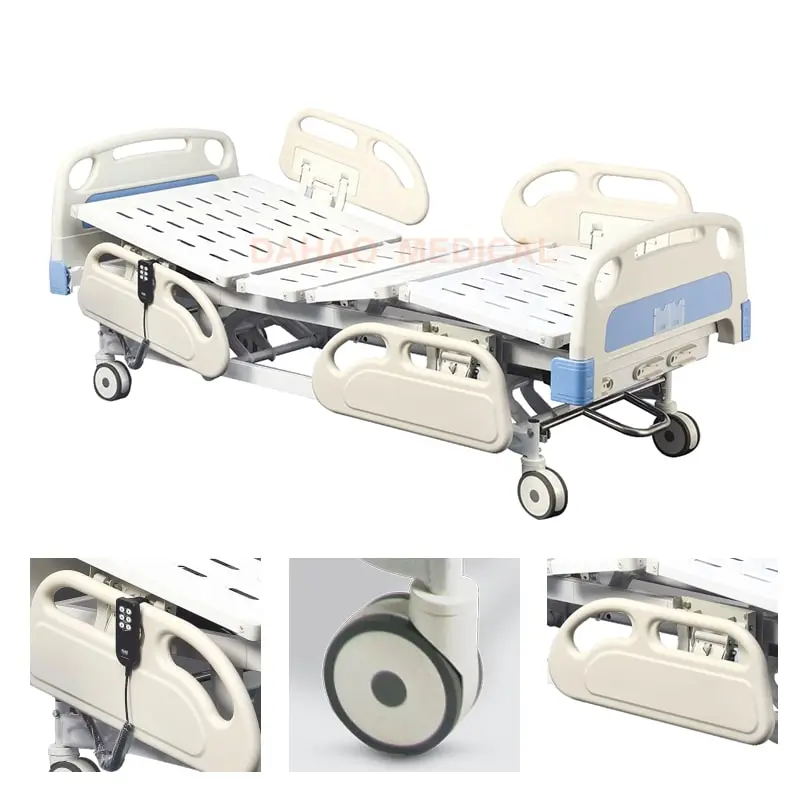
Traditional hospital beds consist primarily of a frame, a bed platform, and side rails; their structure is relatively static, requiring patients to rely on caregivers to help them turn over, sit up, or adjust their posture. In contrast, modern adjustable hospital beds utilize mechanical structures and drive systems to automatically adjust the bed's angle, thereby reducing the burden on caregivers and enhancing patient comfort.
Adjustable hospital beds currently on the market generally offer the following functions:
• Backrest elevation;
• Leg elevation;
• Knee-bend adjustment;
• Overall height adjustment;
• Trendelenburg position (head-down, feet-up);
• Reverse Trendelenburg position (head-up, feet-down);
• One-touch flat position;
• Caregiver positioning modes.
These movements are not performed manually but are driven by electric motors that actuate linkage mechanisms. Therefore, from a technical standpoint, most medical adjustable beds capable of automatic adjustment require electrical power.
In other words, if a user wishes to adjust the bed's position automatically using a remote control, control panel, or buttons, the bed generally needs to be connected to a power source to function.
Not All Adjustable Hospital Beds Require a Constant Power Connection
Although many assume that adjustable hospital beds must always be plugged in, products on the market vary. Based on their drive mechanisms, medical adjustable beds can be broadly categorized into manual and electric types.
Manual adjustable hospital beds rely primarily on crank mechanisms for adjustments. Caregivers turn a crank handle to operate an internal gear system, thereby changing the angle of the bed platform. This type of adjustable hospital bed does not require a power connection, nor does it contain motors or electronic control systems; therefore, it consumes no electricity. Manual adjustable hospital beds still hold a market share in primary healthcare facilities, temporary care settings, and households with limited budgets.
However, as care requirements evolve, electric adjustable hospital beds have become the mainstream product.
Electric adjustable hospital beds are driven by low-voltage motors, allowing users to adjust their position with the simple touch of a button—making operation much more convenient. Under normal conditions, these beds require a mains power connection to operate.
Therefore, when consumers ask, "Do medical adjustable beds need to be plugged in?" it is first necessary to clarify whether the product is a manual or electric model.
Manual adjustable hospital beds do not require a power connection, whereas electric models generally do.
How are electric adjustable hospital beds powered?
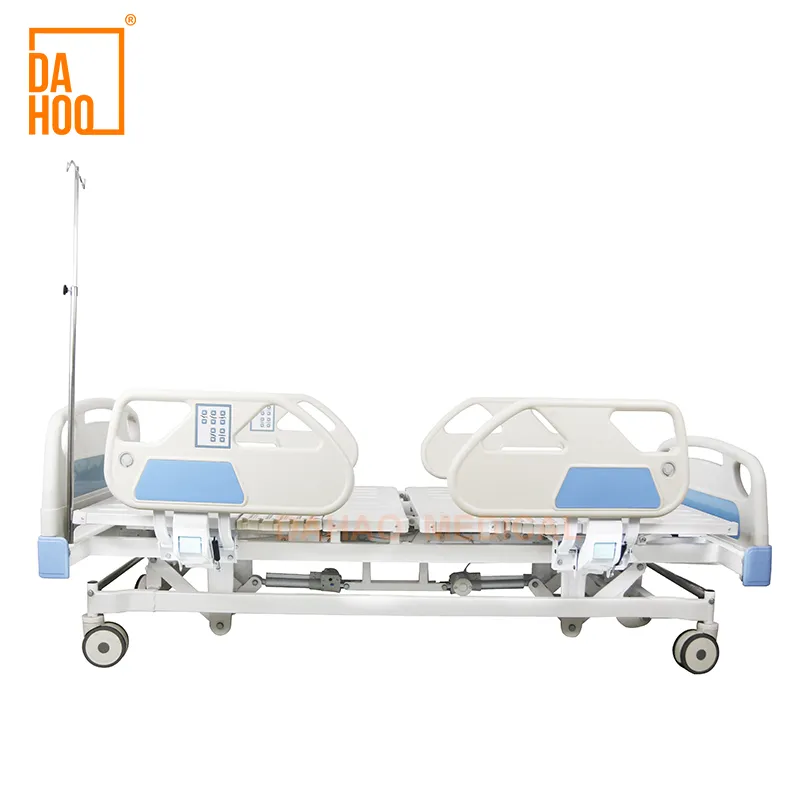
Currently, electric adjustable hospital beds on the market primarily rely on AC power. The bed connects to a standard household or medical facility outlet via a power cord; the system converts the AC power into low-voltage DC power suitable for the motor, thereby driving the adjustment mechanism. This method offers advantages such as stable power supply, reliable operation, and easy maintenance, making it widely used across various medical adjustable bed products.
At the same time, some high-end adjustable hospital beds are equipped with a backup battery system. Under normal conditions, the bed operates via the mains power supply. In the event of a power outage, the backup battery provides short-term power to the motor, allowing the patient to continue making necessary positional adjustments.
Consequently, while adjustable hospital beds with backup power still require a mains connection for daily use, they retain a degree of independent operational capability during emergencies.
This design is particularly suitable for critical care, long-term bedridden patients, and individuals who frequently need to change their body position.
Do adjustable hospital beds consume a lot of electricity when plugged in?
Many household users worry that keeping an adjustable hospital bed plugged in will increase their electricity bills. In reality, this concern is largely unfounded. The motor in an adjustable hospital bed only operates when an adjustment is actually being made. For example, if a patient shifts from a flat lying position to a semi-reclined position, the motor might run for only ten to thirty seconds.
Once the adjustment is complete, the motor stops immediately. Therefore, a medical adjustable bed does not consume electricity continuously like appliances such as air conditioners or water heaters.
Even with multiple angle adjustments made daily, the overall power consumption remains low. For home users, the electricity costs associated with a medical adjustable bed are typically far lower than those of most household appliances.
In terms of energy consumption, electric adjustable hospital beds are classified as low-power devices.
Are there safety concerns with keeping a medical adjustable bed plugged in for extended periods?
Modern adjustable hospital beds are designed with the specific requirements of medical and home care environments in mind. Most utilize safe, low-voltage motor systems. Control circuits are typically insulated, and critical components feature overload protection. Some models also include short-circuit protection, over-current protection, and automatic power-cut mechanisms.
Under normal circumstances, provided the bed is installed and used according to the product instructions, its electrical safety is assured.
However, there are still a few points to consider during actual use.
First, ensure the power outlet is properly grounded.
Second, avoid subjecting the power cord to prolonged compression or pinching.
Third, prevent liquids from entering the controller and motor areas.
Finally, do not attempt to disassemble the electrical system yourself.
These measures help further enhance the safety of using a medical adjustable bed.
Can an adjustable hospital bed still be used during a power outage?
For standard electric adjustable hospital beds, the motor will stop functioning if the external power supply is interrupted and there is no backup battery. While the bed will usually maintain its current position, no further angle adjustments can be made.
The situation differs if the bed is equipped with an emergency battery. During a power outage, the backup battery can support certain adjustment functions, allowing patients and caregivers to adjust the bed's position as needed.
For patients who are bedridden for long periods, this design ensures that basic care needs can still be met during unexpected power failures.
Consequently, the presence of a backup power supply is often a key factor to consider when purchasing a medical adjustable bed.
Why do most hospitals use plug-in electric adjustable hospital beds?
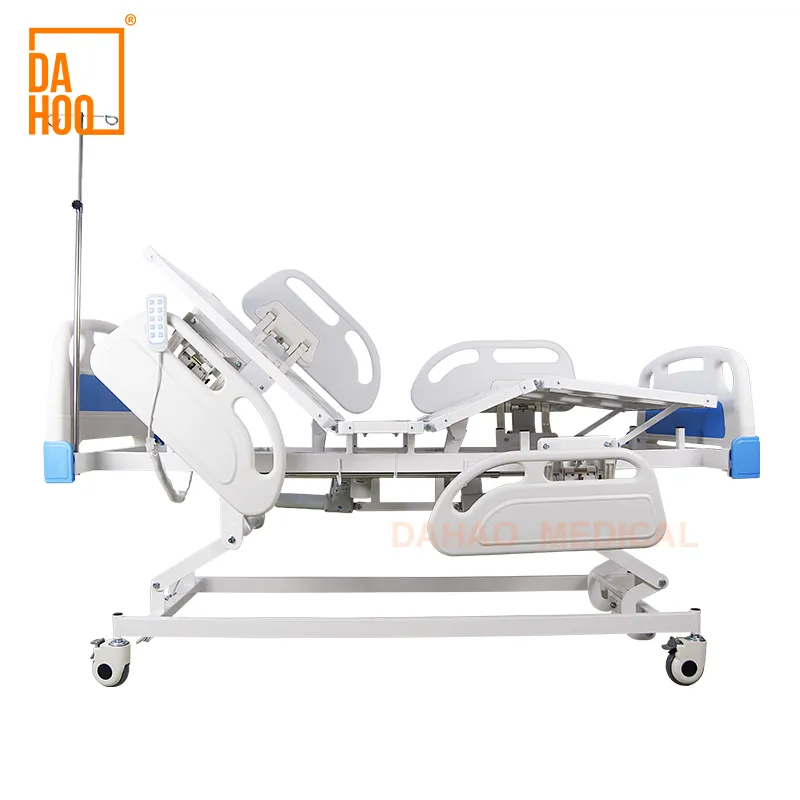
A look at modern medical facilities reveals that most patient rooms are equipped with electric adjustable hospital beds.
The primary reason is improved care efficiency. For medical staff, electric adjustable hospital beds allow for rapid patient repositioning while reducing physical strain. For patients, they provide a more comfortable support experience. Adjustable hospital beds play a vital role, particularly during postoperative recovery, respiratory support, rehabilitation training, and long-term bedridden care. Since hospitals provide a stable power supply, using a bed that plugs into an outlet poses no limitation.
In fact, a stable power supply ensures the continuous, proper functioning of the bed's various features. This is a key reason why electric adjustable hospital beds have become a mainstream choice in medical care.
FAQ
FAQ 1: Must an adjustable hospital bed remain plugged in at all times?
For electric adjustable hospital beds, it is generally recommended to keep them connected to a power source so that position adjustments can be made at any time. If the bed is equipped with a backup battery, it should also be charged and maintained regularly.
FAQ 2: Will a medical adjustable bed collapse during a power outage?
No. Under normal circumstances, electric adjustable hospital beds utilize a mechanical locking mechanism; in the event of a power outage, the bed maintains its current position and will not suddenly drop or collapse.
FAQ 3: What is the difference between a manual and an electric adjustable hospital bed?
Manual adjustable hospital beds are adjusted using a hand crank and do not require electricity, whereas electric adjustable hospital beds use a motor for adjustments, making operation easier and more convenient.
FAQ 4: Do electric adjustable hospital beds consume a lot of electricity?
Overall power consumption is low. The motor operates only briefly during adjustments, so daily electricity costs are typically minimal.
FAQ 5: Does installing a medical adjustable bed at home require special wiring?
Generally, no. Most medical adjustable beds can be plugged directly into standard household outlets, though you should ensure the outlet is properly grounded and meets safety standards.