

For users who rely on electric wheelchairs, battery issues are not a minor malfunction, but a significant problem directly impacting their quality of life. If an electric wheelchair suddenly stops charging, it means the user may be unable to go out, shop, attend appointments, or even manage daily mobility. This is especially true for the elderly, disabled individuals, and those undergoing long-term rehabilitation; for them, electric wheelchairs are not just assistive tools, but crucial devices for maintaining independence. Therefore, "Why won't my electric wheelchair charge?" is one of the most common and anxiety-inducing questions users encounter.
From an industry perspective, many consumers, when faced with a charging problem, immediately assume it's a battery failure and spend a considerable amount on replacing the battery pack. However, the reasons why an electric wheelchair won't charge are complex. Besides battery aging, it can also be related to charger malfunction, poor charging port contact, wiring problems, controller protection mechanisms, prolonged inactivity, abnormal voltage, and the usage environment. Without a systematic troubleshooting process, blindly replacing parts not only increases repair costs but may also fail to truly solve the problem.
With the accelerating trend of global population aging, the power wheelchair market is developing rapidly. According to relevant UN population statistics, the number of people aged 60 and over worldwide will continue to increase in the coming decades, driving the growth in demand for medical assistive devices, rehabilitation equipment, and smart mobile devices. At the same time, modern power wheelchairs have gradually evolved from traditional mobility tools into high-tech assistive devices integrating battery management systems, motor drive systems, and intelligent control systems. Due to their increasingly complex structure, users need a professional understanding of the working principles of power wheelchairs to quickly diagnose problems when encountering malfunctions.
This article will analyze common reasons why "power wheelchairs won't charge," covering aspects such as battery systems, charging equipment, circuit connections, control systems, and routine maintenance to help users understand how to diagnose faults and take correct solutions.

Basic Principles of Electric Wheelchair Charging Systems: Why does an abnormality in any component lead to charging failure?
To solve the problem of electric wheelchairs not charging, it is first necessary to understand its charging process. Electric wheelchairs are not simply charged by plugging them into a power source; rather, multiple components work together to complete energy conversion and power management.
Typically, an electric wheelchair consists of a battery pack, charger, charging port, battery management system (BMS), controller, and motor drive system. When the user connects the charger to the wheelchair, AC power first enters the charger, where it is internally converted into DC power suitable for the battery, and then enters the battery pack through the charging port.
The entire charging process for an electric wheelchair generally includes three stages:
The first stage is constant current charging, where the charger rapidly replenishes the battery with a relatively stable current; the second stage is constant voltage charging, where the charging current gradually decreases as the battery voltage increases; the third stage is maintenance charging, where the intelligent charger adjusts its output based on the battery status to avoid overcharging.
If any of these stages malfunctions—for example, the charger has no output, the battery cannot accept current, the controller detects an anomaly, or the battery protection system activates—the electric wheelchair may be unable to charge.
Currently, electric wheelchairs on the market mainly use two types of batteries: lead-acid batteries and lithium batteries. Traditional electric wheelchairs often use 12V lead-acid battery combinations, such as two 12V batteries connected in series to form a 24V power supply system. Lightweight electric wheelchairs increasingly use lithium batteries, such as 24V and 36V lithium battery systems. Different battery types have significantly different charging methods, voltage requirements, and maintenance methods. Therefore, charging problems cannot be simply assumed to be due to battery damage.
I. Battery aging is one of the most common reasons why power wheelchairs cannot be charged
Battery problems usually account for a large proportion of all power wheelchair charging failures. Since batteries are consumable components, their internal chemical properties gradually decline with increased use, ultimately affecting charging capacity and battery life.
For most power wheelchairs using lead-acid batteries, the normal lifespan is typically about 1.5 to 3 years. If users frequently use the electric wheelchair daily and often completely deplete the battery before recharging, battery life may be further shortened. High-quality lithium battery electric wheelchairs typically have a longer battery life, with cycle times potentially reaching 500 to 1000 or more, but this is still affected by temperature, charging and discharging habits, and storage methods.
Battery aging doesn't always manifest as a complete inability to charge; more often, it presents easily overlooked signs. For example, the charging time for the power wheelchair may significantly shorten, but the actual usable range may decrease; the battery level may show 100%, but rapidly decrease after a few minutes of use; the power wheelchair may experience a sudden power drop upon startup; or the charger may quickly indicate a full charge.
The essence of this situation is battery "capacity degradation." Simply put, the battery can still reach a certain voltage, but it can no longer store as much charge as it once did. For example, a new battery pack might support a power wheelchair for 20 kilometers, but after years of use, it might only support about 5 kilometers, and even a full charge wouldn't meet normal usage needs.
If the battery is chronically undercharged, it can also lead to serious problems. For example, some users leave their power wheelchairs unused for months without regular charging, causing the battery voltage to drop too low. Lead-acid batteries may experience sulfation, while lithium batteries may trigger the BMS protection mechanism, temporarily preventing charging.
II. Charger malfunction is also a significant factor causing electric wheelchairs to fail to charge
Many users overlook the charger itself when troubleshooting electric wheelchair charging problems. In fact, the charger is the core device of the entire charging system. If the charger malfunctions, even if the battery is in good condition, it will not be able to charge.
An electric wheelchair charger internally contains a rectifier module, voltage conversion module, control chip, and protection circuitry. During long-term use, voltage fluctuations, high temperatures, or aging of internal components can cause abnormal charger output.
Common symptoms include:
• The charger indicator light does not illuminate after plugging in;
• The charger displays as normal, but there is no charging response after connecting the electric wheelchair;
• Frequent interruptions during charging;
• The charger overheats abnormally or emits an unusual odor.
Another easily overlooked problem is incompatible charger specifications. Different power wheelchairs require different output parameters. For example, a 24V power wheelchair typically requires a charger compatible with a 24V system, while a 36V lithium battery power wheelchair requires a 36V charging device.
Even if the interfaces look the same, chargers should not be used interchangeably. Differences in voltage, current, and charging curves can lead to charging failure or even damage to the battery.
Therefore, when replacing an electric wheelchair charger, the following parameters need to be checked:
First, is the output voltage compatible?
Second, does the output current meet the requirements?
Third, are the interface specifications consistent?
Fourth, is it compatible with the corresponding battery type?

III. Electric Wheelchair Charging Interface, Wiring, and Connection Issues Are Easily Overlooked
Besides the battery and charger, the connection is also a significant reason why power wheelchairs may fail to charge.
Because electric wheelchairs are frequently moved and subjected to vibration, impacts, and dust over time, the charging interface may become loose, oxidized, or contaminated. For example, if the charging plug needs to be adjusted after insertion to charge, or if the charging status changes when the interface is lightly touched, it usually indicates a problem with the interface contact.
In addition, internal wiring damage is also a possibility. Some power wheelchairs are transported folded for extended periods or used in complex outdoor environments, and the wiring may break due to repeated bending.
Wiring problems typically manifest as:
• Intermittent charging;
• Abnormal battery level display;
• Overheating near the charging interface;
• The power wheelchair suddenly fails to start.
For ordinary users, it's advisable to check external plugs and interfaces for looseness or obvious damage. However, it's not recommended to disassemble the internal wiring of the power wheelchair yourself, as incorrect operation may cause short circuits or further damage.
IV. Controller and Battery Management System Failures Affect Electric Wheelchair Charging
Modern electric wheelchairs are increasingly intelligent. The controller not only controls forward, backward, and speed but also participates in power management.
Some power wheelchairs monitor battery status via the controller during charging. If the system detects an anomaly, such as low voltage, abnormal temperature, or communication errors, it may stop charging.
Lithium-ion battery power wheelchairs, in particular, rely heavily on the Battery Management System (BMS). The BMS is primarily responsible for:
• Preventing overcharging;
• Preventing over-discharging;
• Controlling temperature;
• Balancing battery cells.
When the battery voltage is too low or an anomaly is detected, the BMS may enter protection mode. At this time, users may experience:
• No response when the charger is plugged in;
• Battery cannot be activated;
• Error messages appear on the control panel.
If this occurs, professional testing is required depending on the electric wheelchair brand and model.
V. Temperature and Environmental Factors Also Affect Electric Wheelchair Charging Efficiency
Many users are unaware that ambient temperature has a significant impact on battery performance.
Generally, most batteries perform stably in environments between 10℃ and 30℃. When the temperature is too low, the internal chemical reaction rate of the battery decreases, reducing charging efficiency. For example, electric wheelchairs stored outdoors for extended periods during winter may experience slow charging and reduced battery life.
High temperatures also affect battery life. Long-term exposure to environments above 40℃ will accelerate internal battery aging.
Furthermore, humid environments can also affect the charging port, circuit connections, and the safety of electronic components. Therefore, it is recommended that power wheelchairs be charged in a dry, well-ventilated environment to prevent rainwater from entering the charging port.
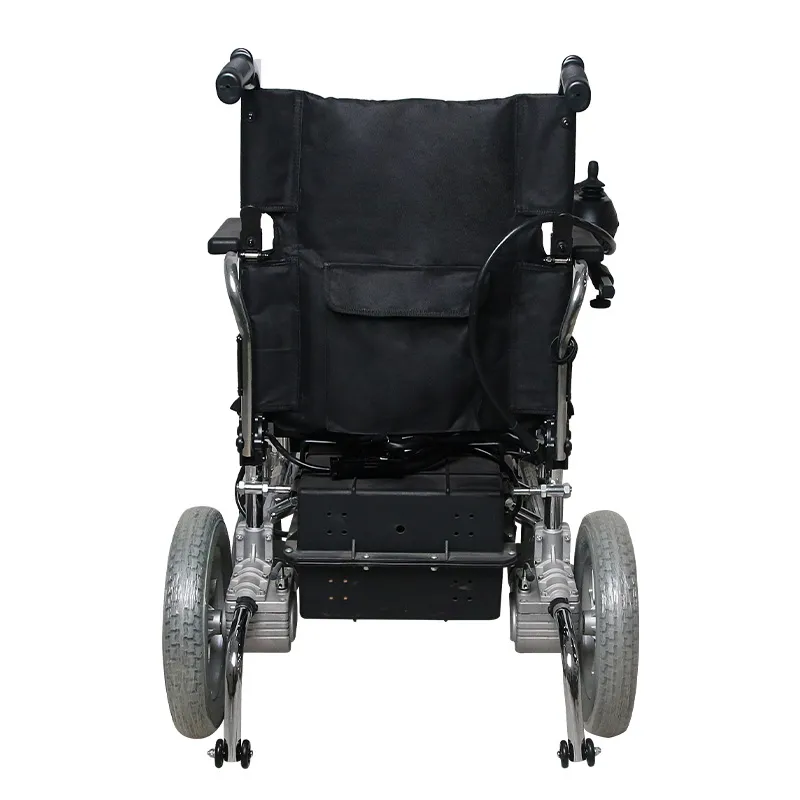
How to Determine Which Component of an Electric Wheelchair is Malfunctioning?
When faced with a problem where a power wheelchair won't charge, users can troubleshoot from the outside in.
First, check the power supply. Confirm that the wall socket is working properly; try connecting other devices for testing.
Second, check the charger. Observe whether the charger indicator light is working properly. If there is no light at all, the charger may be damaged.
Then check the charging port. First, ensure the plug is fully inserted and the connection is secure, without any foreign objects.
Next, observe the power wheelchair's control panel. If error codes appear, consult the instruction manual for diagnosis.
Finally, consider battery issues.
If you have professional tools, use a multimeter to check the battery voltage. For example, a 24V battery system should be within the appropriate voltage range under normal charging conditions. A significantly abnormal voltage may indicate a battery problem.
However, users without electrical repair experience are advised against disassembling the battery or control module themselves; contact a professional repair technician.
How to reduce charging malfunctions in power wheelchairs?
Proper use and maintenance are crucial for extending the lifespan of your power wheelchair.
First, avoid prolonged deep discharge. Do not wait until the battery is completely depleted before charging; it is generally recommended to recharge when the remaining charge is around 20%-30%.
Second, avoid prolonged inactivity. If the power wheelchair is not used for an extended period, check the battery level regularly, typically every 1-2 months for maintenance charging.
Third, use a compatible charger. Do not use other types of charging equipment for convenience.
Fourth, keep the charging port clean. Dust and oxides increase contact resistance and affect charging efficiency. Fifth, avoid use and storage in extreme environments. Maintaining a suitable temperature and dry environment can effectively extend battery life.
For users who rely on electric wheelchairs long-term, regular maintenance not only reduces malfunctions but also prevents disruptions to daily life due to sudden power outages.
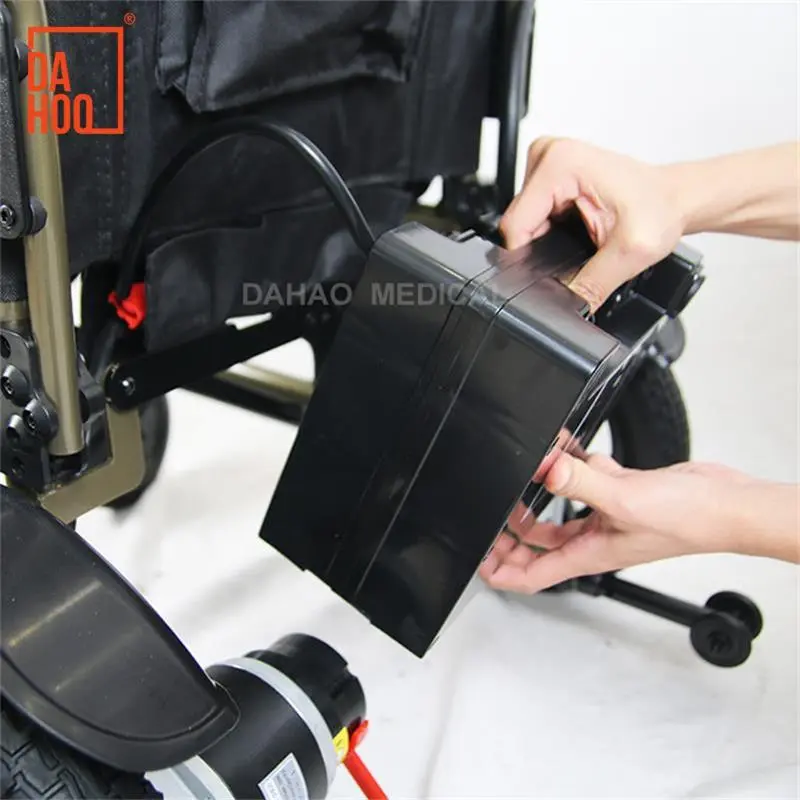
FAQ: Common Issues Regarding Electric Wheelchairs Not Charging
Q1: My electric wheelchair doesn't respond when plugged into the charger. Is the battery broken?
Not necessarily. Possible causes include a damaged charger, abnormal power supply, poor interface contact, or battery protection mode activation. Each of these needs to be checked.
Q2: How often should electric wheelchair batteries be replaced?
Lead-acid batteries typically have a lifespan of about 1.5-3 years, while lithium batteries can last 3-5 years or even longer, depending on usage frequency and maintenance methods.
Q3: Why does my electric wheelchair show a full charge but only last a short time?
This usually indicates a decrease in battery capacity. Although the battery can still be fully charged, the stored capacity has decreased, requiring a battery health check.
Q4: Can the electric wheelchair be continuously connected to the charger?
Long-term connection is not recommended. While some smart chargers have automatic protection features, prolonged full charging may affect the lifespan of some batteries.
Q5: How should I store my power wheelchair if it's not used for a long time?
It's recommended to keep it at approximately 50%-80% charge, store it in a dry environment, and check the battery status regularly to avoid deep discharge.
Q6: What should I pay attention to when replacing a power wheelchair charger?
You need to confirm the voltage, current, battery type, and interface specifications. Don't judge compatibility solely based on the plug's appearance.
Q7: Is it normal for the charger to get hot while charging a power wheelchair?
Slight heating is usually normal. However, if it becomes noticeably hot to the touch, emits an unusual odor, or makes abnormal noises, stop using it immediately and check it.