

In daily medical care, tasks such as moving patients in and out of bed, transferring them between beds and chairs, assisting with toileting or bathing, and supporting post-operative rehabilitation all require varying levels of assistance from nursing staff. For patients who are bedridden for long periods, have limited mobility, are recovering from surgery, or are unable to stand independently, physical transfers often require the coordinated effort of one or more caregivers. Traditional manual handling is not only physically demanding but also increases the risk of patient falls and back injuries among nursing staff.
Against this backdrop, patient transfer equipment—specifically electric patient lifters—has become an essential component in modern healthcare and nursing facilities. With features such as electric lifting mechanisms, ease of operation, high load-bearing capacity, and smooth, stable transfer processes, electric patient lifters are increasingly gaining the attention of hospital procurement departments and care institutions.
Why, then, should hospitals increase their investment in patient lifters? What specific, practical problems can these devices solve? And which technical parameters should hospitals prioritize when making procurement decisions? This article explores these questions by examining industry pain points, the value of such equipment, and the various product types available.
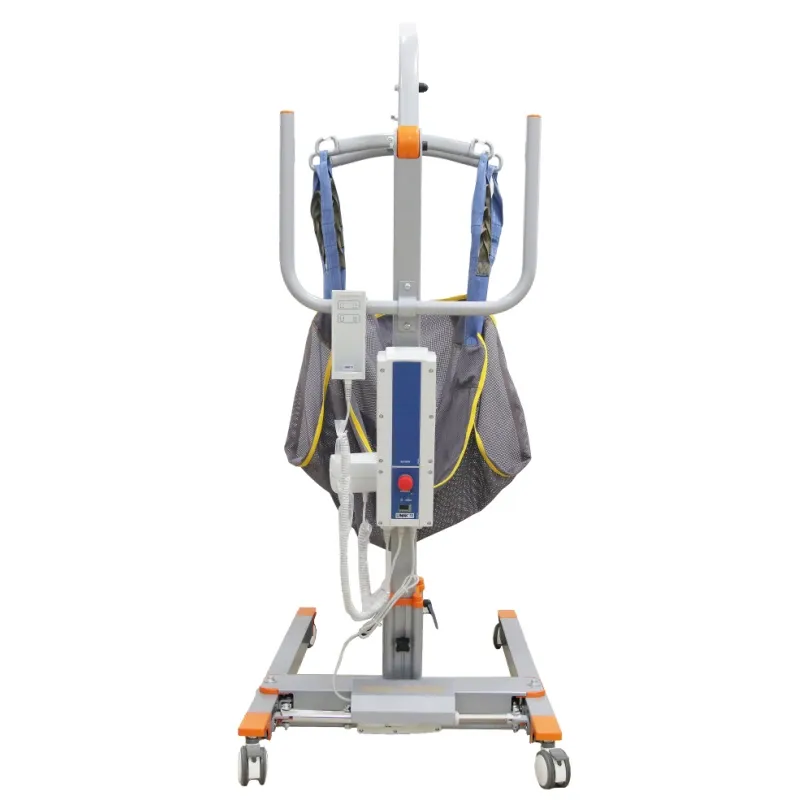
Growing Demand for Healthcare and Nursing: Patient Transfer Equipment Becomes an Essential Need
1. An Aging Population Drives the Demand for Patient Transfers
The aging of the population is a key factor fueling the market for patient transfer equipment. As the proportion of elderly individuals rises, hospitals and long-term care facilities are seeing an increase in the number of older patients. These individuals often face challenges such as reduced muscle strength, limited joint mobility, osteoporosis, and chronic illnesses, all of which significantly impair their ability to move independently.
For instance, patients who have suffered a stroke may experience impaired mobility on one side of their body; those recovering from hip replacement surgery may be unable to stand on their own during the early stages of rehabilitation; and patients who are bedridden for extended periods may be entirely dependent on nursing staff for any adjustments to their body position.
Such patients may require multiple transfers every single day—moving from a hospital bed to a wheelchair, from a wheelchair to the restroom, or between different areas for medical examinations and treatments. Relying solely on manual handling is not only physically demanding but also increases safety risks during the care process.
Consequently, patient lifters have evolved beyond mere auxiliary tools for specialized care settings; they have become essential equipment in departments such as geriatrics, orthopedics, neurology, and rehabilitation medicine, as well as in long-term care facilities.
2. Increasingly Complex Patient Care Needs
Patients in modern hospitals vary significantly in terms of weight, height, mobility, and medical conditions, necessitating diverse transfer methods.
For patients capable of standing independently, caregivers may only need to provide minimal support. Those with partial loss of lower-limb strength may require standing-assist transfer devices, while patients with no independent mobility typically require full-body, sling-style electric patient lifters.
Traditional manual handling relies heavily on the caregiver’s physical strength and experience, yet it often fails to accommodate the specific physical conditions of individual patients. The difficulty of the task increases significantly when a patient is heavy, unable to cooperate, or suddenly loses their balance.
Electric patient lifters—utilizing electric actuators, support arms, and sling systems—bear the primary load during lifting, enabling caregivers to transfer patients with greater stability and control.
3. Growing Emphasis on Safe Patient Handling in Hospitals
In the past, some hospitals sought to reduce the risk of occupational injury primarily by training staff in "proper" manual handling techniques. However, modern research into occupational health indicates that relying solely on correct manual handling posture is insufficient to fully resolve the issue of musculoskeletal injuries resulting from patient handling.
Data from the U.S. Occupational Safety and Health Administration (OSHA) shows that in 2017, nursing assistants in the United States experienced 18,090 musculoskeletal injury cases that required time off work. This equates to an incidence rate of 166.3 cases per 10,000 full-time employees—more than five times the average rate across all other industries at the time.
This underscores that patient handling is not merely a matter of clinical procedure; it is a critical occupational health issue that healthcare institutions must prioritize. Consequently, an increasing number of hospitals are establishing Safe Patient Handling and Mobility (SPHM) programs, utilizing electric patient lifters, ceiling-mounted transfer systems, and other assistive devices to reduce high-risk manual handling.
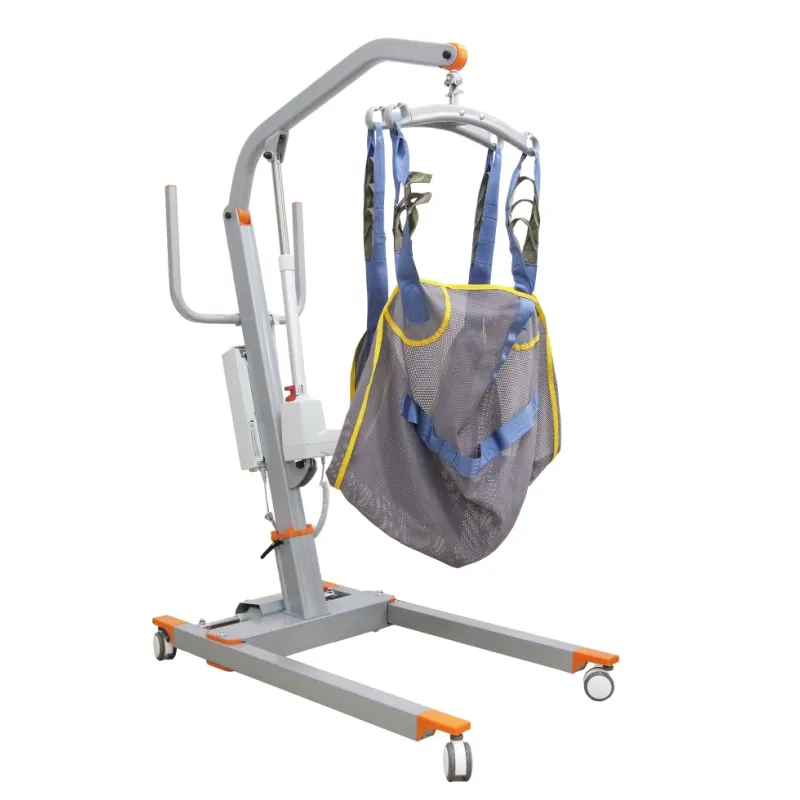
What are the core challenges associated with traditional manual patient handling?
Hospitals invest in patient-handling equipment primarily to address several significant issues inherent in traditional nursing practices.
1. High risk of back and lumbar injuries among nursing staff
Patient handling is a physically demanding task. When assisting a patient in moving from a hospital bed to a wheelchair, nursing staff often need to bend, reach, support the patient’s body weight, and constantly shift their own center of gravity.
These movements place significant mechanical stress on the lumbar spine, shoulders, and upper limbs. The difficulty of manual handling is further compounded when assisting patients who are obese, completely bedridden, or unable to stand independently.
Long-term, repetitive exposure to such high-exertion tasks can lead to chronic lower back pain, shoulder strain, and other musculoskeletal disorders—ultimately resulting in increased absenteeism, staff turnover, and higher nursing costs.
Solution: Hospitals should deploy various types of electric patient lifters tailored to patients' body weight and mobility levels. By using mechanical aids for high-risk lifting and transfer tasks, the physical load borne directly by nursing staff can be significantly reduced.
2. Risk of patient falls and secondary injuries
For patients recovering from orthopedic surgery, any tilting or sudden descent during a transfer can exert undue tension on the surgical site. For patients with osteoporosis, an accidental fall can have severe consequences.
Traditional manual handling requires nursing staff to simultaneously control the patient’s center of gravity and the direction of movement. When a patient is unable to cooperate actively, the uncertainty—and thus the risk—of the transfer process increases substantially.
Electric patient lifts—comprising slings, booms, and stable bases—create a support system that allows patients to be moved while fully cradled or supported.
However, it is important to note that such equipment does not entirely eliminate the risk of falls. Proper selection of slings, thorough checks of all connections, comprehensive patient assessment, and adherence to standardized operating procedures remain critical. Solution: Hospitals should establish a patient transfer assessment protocol. Based on a patient’s level of consciousness, muscle strength, balance, and ability to cooperate, staff should select the appropriate transfer equipment and slings.
3. Manual patient handling impacts nursing efficiency
Patient transfers are an integral part of daily hospital care. A patient who is bedridden for an extended period may require frequent repositioning, cleaning, medical examinations, and transfers between a bed and a chair—tasks that often necessitate the coordination of two or more nursing staff members.
During night shifts, in emergency departments, or during periods when nursing staff are in short supply, manual patient handling significantly increases the burden on staff.
Electric patient lifters can reduce repetitive physical labor, allowing nursing staff to dedicate more energy to patient observation, fundamental nursing care, and rehabilitation support.
Solution: In addition to procuring equipment, hospitals must strategically position these devices to ensure they are easily accessible in high-demand clinical areas, preventing issues where equipment is stored too far away to be used effectively.
What value do electric patient lifts provide to hospitals?
1. Reducing the physical burden on nursing staff
Electric patient lifters typically consist of an electric actuator, a battery, an electronic control system, a boom arm, a base, and a sling. Nursing staff can control the lifting and lowering of the device via a handheld controller, eliminating the need to rely on their own physical strength to lift a patient.
The equipment bears the primary load of lifting the patient vertically, thereby reducing the need for nursing staff to repeatedly lift, carry, bend over, or support the patient’s weight directly.
A "Safe Patient Handling" program—highlighted by the U.S. Occupational Safety and Health Administration (OSHA) and implemented across 23 high-risk nursing units in seven healthcare facilities—demonstrated a significant impact. Following the program's implementation, the incidence of related injuries dropped from 24.0 to 16.9 per 100 employees annually—a reduction of approximately 30%.
While this result stems from a comprehensive safe-handling program rather than the use of electric patient lifts alone, it underscores the tangible occupational health benefits that can be achieved through the combination of mechanical assistive devices and systematic management.
2. Enhancing stability and comfort during patient transfers
Patients often experience anxiety or fear during transfer procedures—particularly those who are physically frail, suffering from post-operative pain, or struggling with poor balance. Electric patient lifts support a patient’s body using appropriate slings. With smooth, controlled lifting and lowering mechanisms, they make the transfer process more manageable. Some models also feature adjustable lifting speeds and emergency stop functions.
Furthermore, the proper use of a patient lift minimizes unnecessary physical strain, enhances the patient’s care experience, and helps preserve their dignity.
3. Optimizing Nursing Staff Allocation
While electric patient lifts cannot entirely replace nursing staff, they can alter how care tasks are distributed.
Provided that a patient’s condition is suitable, the equipment manual permits it, and hospital operational protocols allow for it, certain transfer tasks can be performed using the device—reducing the need for manual lifting by multiple staff members.
For healthcare facilities with limited staffing, such equipment can help optimize workflows. However, complex cases, patients with higher body weight, or high-risk transfers may still require the collaboration of multiple staff members.
4. Promoting Standardized Nursing Procedures
The use of patient lifters encourages the development of more structured operational protocols, covering areas such as patient assessment, equipment selection, sling inspection, the transfer process itself, and equipment disinfection.
Establishing unified operational standards helps minimize inconsistencies between different caregivers, ensuring that equipment is used in a standardized and safe manner.
Common Types of Patient Lifts in Hospitals and Their Applications
Since patient demographics and care requirements vary across hospitals, equipment should be selected based on specific intended uses.
1. Full-Body Electric Patient Lift
Designed for patients who cannot stand on their own or bear their own weight, these lifts are primarily used for transfers between beds and chairs, toileting, and certain bathing or hygiene-related tasks.
2. Electric Sit-to-Stand Lift
Intended for patients who retain some weight-bearing capacity in their lower limbs but cannot transition between sitting and standing independently; these are frequently used in rehabilitation care and for transfers between beds and chairs.
3. Ceiling-Mounted Patient Lifter
These systems move patients along a track installed on the ceiling. They save floor space and are ideal for hospital wards where frequent transfers occur and the necessary infrastructure for installation is available.
4. Bariatric Patient Lifter
Designed primarily for patients with higher body weight, these lifts typically feature a higher weight capacity, wider slings, and a reinforced base structure.
When procuring such equipment, hospitals should base their selection on the specific physical condition of the patients and the intended clinical setting, rather than simply assuming that more features equate to a better product. For instance, general wards might prioritize mobile, full-body sling lifts; rehabilitation centers could incorporate sit-to-stand (standing-assist) devices; and areas with a high frequency of patient transfers might benefit from ceiling-mounted lift systems.
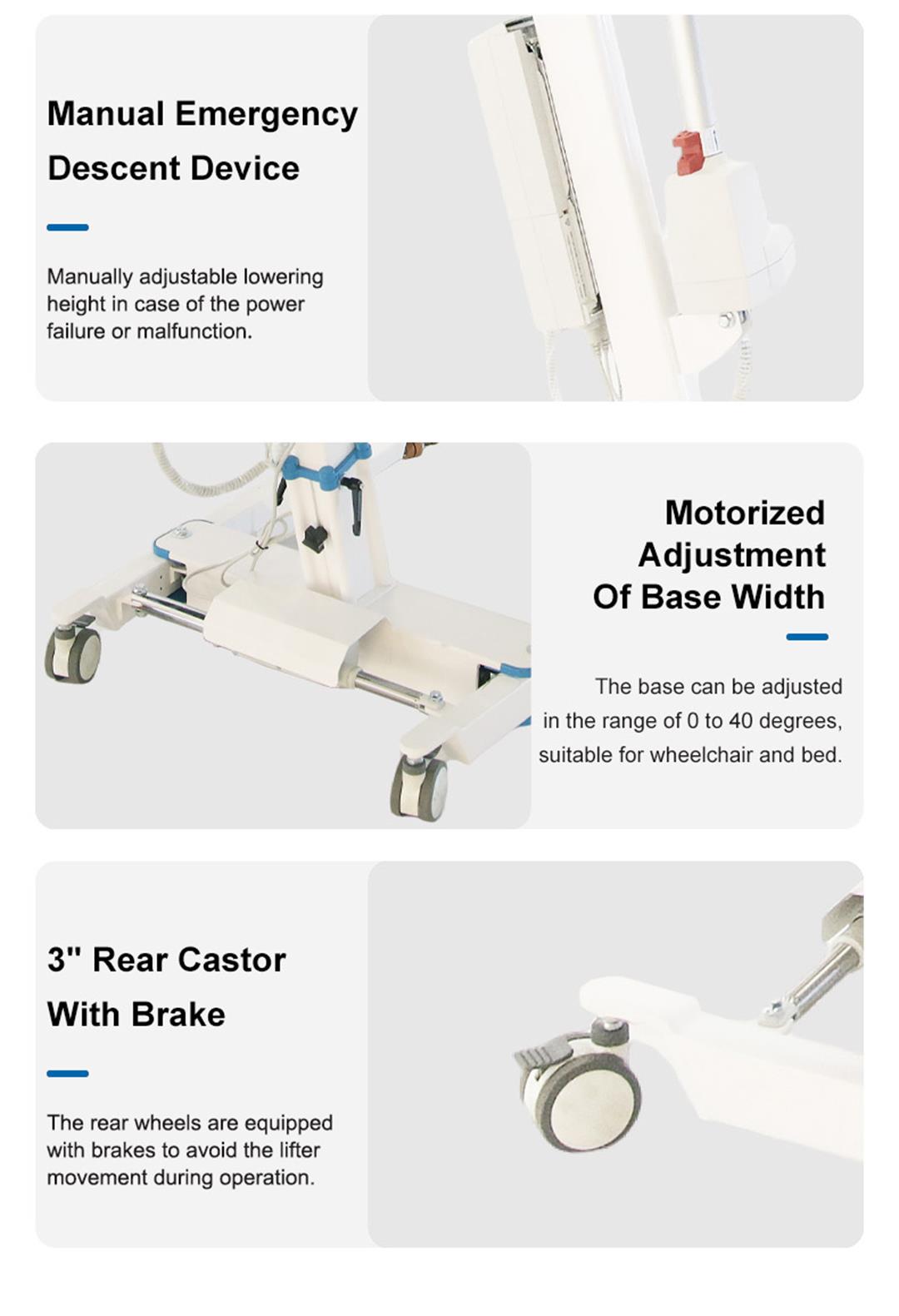
What key parameters should be considered when purchasing an electric patient lift?
Technical specifications directly influence the safety, scope of application, and service life of an electric patient lifter. Hospitals should focus on the following indicators during the procurement process:
| Parameter | Typical Reference | Key Considerations |
| Safe Working Load | 150–200 kg | Match patient weight requirements |
| Bariatric Capacity | 250–300 kg or higher | Verify rated load capacity |
| Battery System | 24V DC commonly used | Battery life and charging time |
| Lifting System | Electric actuator | Smooth and stable operation |
| Base Design | Adjustable width | Bed and wheelchair accessibility |
| Caster Configuration | Usually 4 casters | Mobility and braking performance |
| Control System | Hand controller | Ease of operation and emergency stop |
| Sling Options | Multiple sizes and types | Patient size and compatibility |
1. Rated Weight Capacity
Weight capacity is one of the most critical parameters when purchasing a patient lift.
Standard mobile electric patient lifts typically have a rated capacity of 150 kg to 200 kg, while specialized bariatric models can support 250 kg, 300 kg, or even more.
2. Battery Life and Electric Lifting System
Electric patient lifters generally utilize rechargeable batteries to power an electric actuator (linear actuator) for lifting and lowering operations.
When purchasing, consider factors such as battery capacity, charging time, low-battery alerts, the availability of spare batteries, and emergency lowering functions. Additionally, verify the operational stability of the electric actuator, ensuring it functions smoothly without noticeable jolts, vibrations, or abnormal noise.
3. Base Structure and Maneuverability
Mobile patient lifters typically feature a base equipped with casters. The stability of this base is directly linked to the safety of the equipment during use.
A base with an adjustable width enhances compatibility with various hospital beds and wheelchairs. Hospitals should also evaluate the unit’s turning radius, the effectiveness of the caster braking system, and its stability across different base-width settings.
4. Sling Material and Compatibility
The sling is a vital component that comes into direct contact with the patient. Common types include full-body support slings, toileting slings, head-support slings, and standing-assist (sit-to-stand) slings. When procuring slings, it is essential to evaluate their load-bearing capacity, dimensions, stitching quality, cleaning requirements, and connection mechanisms. Do not assume that slings from different brands are interchangeable simply because they look similar; always verify compatibility as specified by the manufacturer.
5. Safety Features and Product Certification
Hospitals should prioritize verifying that equipment includes overload protection, an emergency stop function, a reliable caster braking system, and clearly marked rated load capacities.
Furthermore, suppliers should be required to provide product manuals, test reports, maintenance guides, and all relevant compliance documentation applicable to the region where the product is sold.
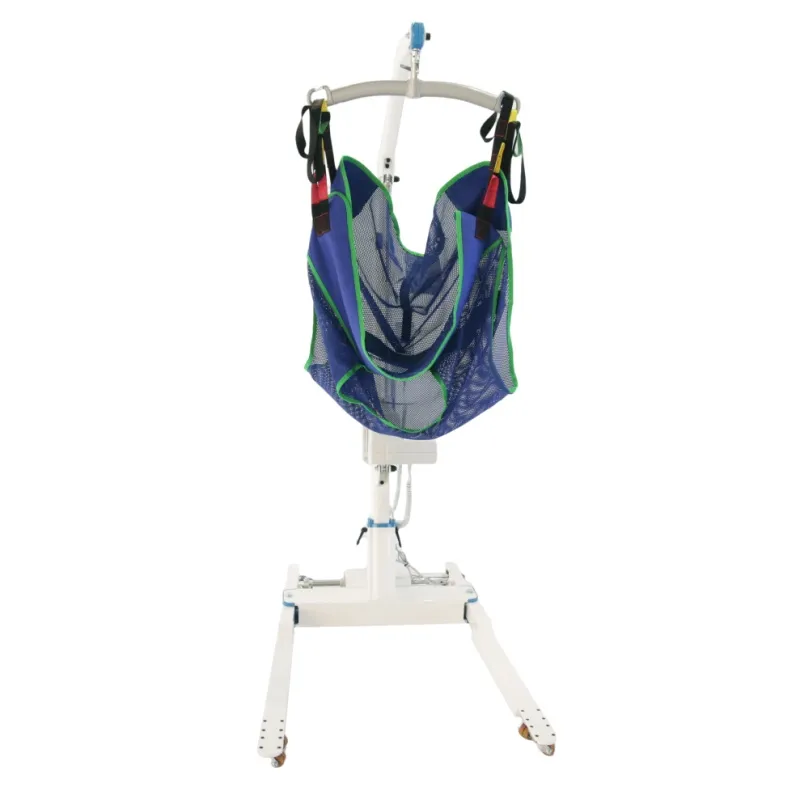
Electric Patient Lifter – Frequently Asked Questions (FAQ)
Q1: Which patients are suitable for an electric patient lifter?
These devices are primarily intended for patients who are bedridden for long periods, the elderly, stroke patients, individuals recovering from surgery, and those unable to independently transfer between a bed and a chair. Suitability varies by model; therefore, a professional assessment should be conducted before use.
Q2: What are the most important parameters to consider when a hospital procures an electric patient lifter?
Key factors include rated load capacity, battery life, performance of the electric actuator, base stability, sling compatibility, and safety features. Additionally, one should review product compliance documentation and the supplier’s after-sales service capabilities.
Q3: How many caregivers are required to operate an electric patient lifter?
This depends on the patient’s physical condition, the specific model of the equipment, and the transfer scenario. While some operations can be performed by a single trained caregiver, complex cases or high-risk transfers may require two or more staff members. Always follow the equipment’s instruction manual and the hospital’s operational protocols.
Q4: Does an electric patient lifter require regular maintenance?
Yes. Hospitals should conduct routine inspections of the battery, electric actuator, lifting arm, casters, braking system, and slings. If any structural damage, electrical faults, or wear and tear on a sling are identified, the equipment must be taken out of service immediately for repair.
