

When many consumers first encounter electric wheelchairs, a question arises that seems simple but is actually quite technical: why is it that while both are wheelchairs, a manual one can often be easily lifted by a single person, whereas an electric one typically weighs twenty or thirty kilograms—with some heavy-duty models exceeding 50 kilograms? For users who frequently need to get in and out of vehicles, fly, use elevators, or rely on family members for lifting, "weight" is not merely a product specification; it is a critical factor directly influencing purchasing decisions, daily usage costs, and freedom of movement.
In reality, this reflects a long-standing set of contradictions within the electric wheelchair industry: users desire wheelchairs that are lightweight yet capable of supporting significant weight; compact and foldable yet offering long battery range; equipped with powerful motors yet easy to transport; and capable of agile indoor maneuvering while also handling slopes, outdoor terrain, and complex ground conditions. In other words, what consumers truly need is not simply "the lighter, the better," but rather a reasonable balance between weight, range, power, stability, load capacity, safety, and portability.
Therefore, the question "Why are electric wheelchairs heavier than manual wheelchairs?" cannot be answered simply by saying "because they have batteries and motors." The weight of an electric wheelchair is actually the result of a comprehensive systems engineering process. It involves not only adding power system components—such as drive motors, controllers, batteries, and electromagnetic brakes—but also redesigning the frame, wheels, connection structures, seating systems, and anti-tip mechanisms to accommodate these additions. This is particularly true when moving from lightweight to heavy-duty models; the increase in weight is rarely just a matter of installing a few extra parts, but rather the result of a simultaneous upgrade across the entire suite of safety and performance specifications.
From the perspective of industry technical standards, an electric wheelchair is far more than just a "chair with a motor." ISO 7176-14:2022 establishes requirements and test methods for the power and control systems of electric wheelchairs and scooters, covering power, control, and safety performance, as well as testing under conditions of normal use, partial failure, and misuse. China's current relevant standards system also covers key components of electric wheelchairs, such as batteries and chargers; for instance, standards like GB/T 18029.25-2022 are identical adoptions of the corresponding ISO international standards.
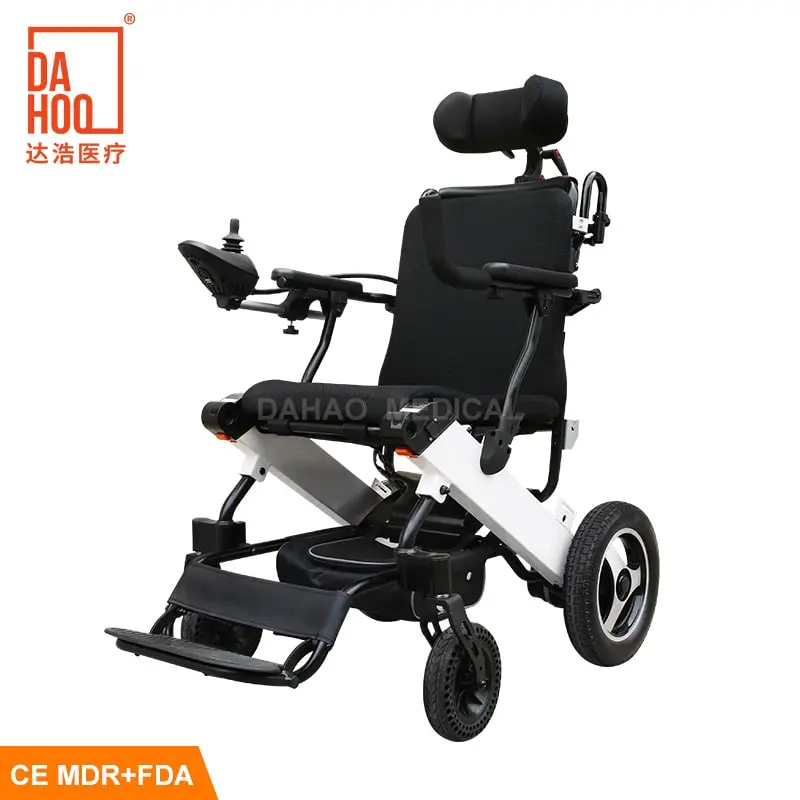
Why are electric wheelchairs inherently heavier?
If you break down a manual wheelchair, its core function is to enable mobility through the user's own hands or by being pushed by a caregiver. Consequently, its mechanical system is relatively simple, consisting primarily of a frame, seat, wheels, footrests, armrests, and brakes. As long as the frame possesses sufficient load-bearing capacity and rigidity, it can fulfill basic mobility functions.
The function of an electric wheelchair, however, is entirely different. It must convert electrical energy into mechanical energy and generate traction through drive wheels, while simultaneously managing speed, direction, braking, and slope navigation, as well as providing a degree of anti-tip protection. Therefore, in addition to the mechanical structure found in manual wheelchairs, electric wheelchairs require the integration of systems such as motors, batteries, controllers, wiring, and electromagnetic brakes.
The most obvious source of added weight is the battery.
Take, for example, the lightweight electric wheelchairs currently common on the market: products using lithium batteries typically have a battery weight of between 0.8 and 2 kilograms per unit. Some lightweight models use 24V, 5.2Ah, or 6Ah lithium batteries, with each unit weighing approximately 0.8 to 1.4 kilograms. This means that simply to achieve a typical range of around 10 kilometers, the wheelchair must carry an additional one to several kilograms of weight from the energy system alone.
However, the battery is not the only source of weight.
Electric wheelchairs typically employ two drive motors. In the case of lightweight models, common configurations include dual 150W, 180W, or even 250W brushless motors. Some products use dual 150W motors, others use dual 180W motors, and models emphasizing power performance may use dual 250W motors.
The motor itself represents only the first layer of weight. To reliably transmit power from the motor to the wheels, additional components are required, such as reduction mechanisms, drive wheels, mounting brackets, bearings, and associated connecting structures. If the product also requires electromagnetic braking, the braking system adds further weight. Then there is the controller. While manual wheelchairs require only mechanical brakes or simple mechanical controls, electric wheelchairs rely on a joystick to send signals to a controller, which then regulates the speed and direction of the two drive motors. To ensure the vehicle remains controllable during starting, stopping, turning, and navigating slopes, the control system cannot be viewed merely as a simple "on/off switch"; rather, it is a comprehensive electronic control system.
Therefore, the fundamental reason for the increased weight of electric wheelchairs can be summarized as follows: manual wheelchairs primarily perform the mechanical tasks of "load-bearing and rolling," whereas electric wheelchairs must handle a complex set of system-level tasks—"load-bearing, energy storage, propulsion, control, braking, and safety."
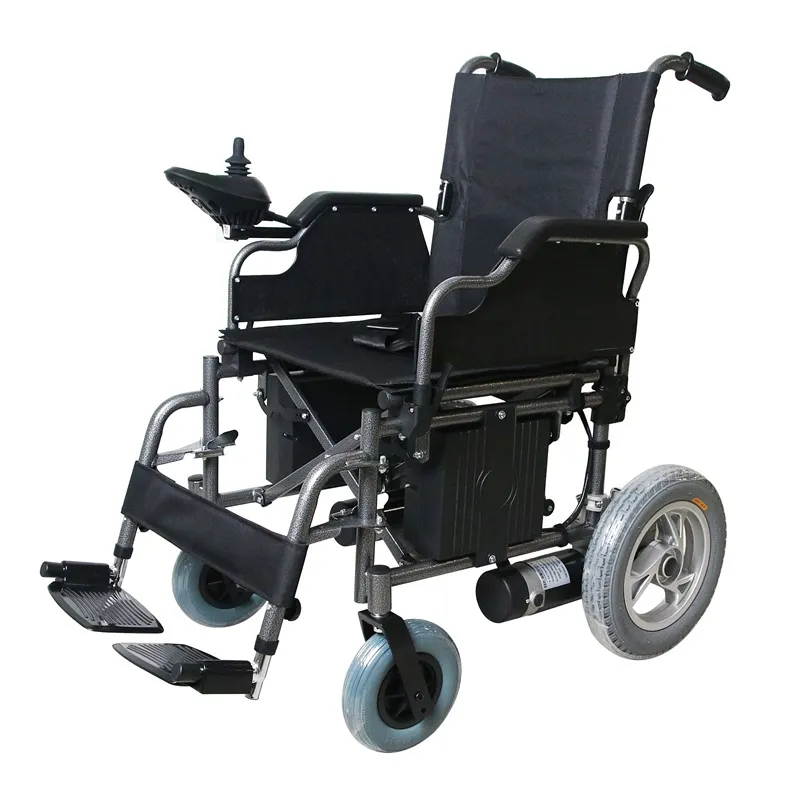
Why do batteries account for a significant portion of an electric wheelchair's weight?
To understand battery weight, one must first grasp a basic relationship: the desired driving range of an electric wheelchair dictates the amount of usable electrical energy required.
For instance, the theoretical rated energy of a 24V, 6Ah lithium battery is approximately:
24V × 6Ah = 144Wh.
If upgraded to a 24V, 10Ah battery, the theoretical rated energy becomes approximately:
24V × 10Ah = 240Wh.
In other words, assuming the voltage remains constant, increasing the capacity from 6Ah to 10Ah results in a theoretical energy increase of about 67%. Greater energy capacity, however, implies increased battery mass, volume, or cost.
Some lightweight electric wheelchairs currently on the market can achieve a nominal range of approximately 10–15 kilometers using compact lithium batteries. For example, some models achieve a range of about 10 kilometers with a 24V 6Ah battery, while a 24V 10Ah battery extends that range to around 15 kilometers.
It is important to note that a product's nominal range does not necessarily equate to the actual range experienced by every user. Real-world range is influenced by factors such as the user's weight, road gradients, surface friction, tire pressure, ambient temperature, frequency of starting and stopping, and the battery's condition. Consequently, manufacturers aiming for more consistent real-world performance must build in a certain energy margin, which further drives the need for increased battery capacity.
This issue is even more pronounced in the case of heavy-duty electric wheelchairs. Because heavy-duty electric wheelchairs typically need to support heavier users and must contend with ramps, outdoor terrain, and prolonged usage, both their power and energy systems require corresponding upgrades.
This is why consumers cannot simply demand that a battery be made smaller to reduce weight. Reducing battery weight may compromise range; downsizing the motor can impair hill-climbing and acceleration capabilities; and thinning the frame may reduce load-bearing capacity and fatigue life. Product lightweighting is essentially a multi-objective optimization problem, not merely a matter of using less material.
Why do motors add significant weight to electric wheelchairs?
In an electric wheelchair, the motor is responsible for converting electrical energy into the mechanical power needed for movement.
Consider a lightweight electric wheelchair using dual 150W motors; its theoretical rated power is 300W. If it uses dual 250W motors, the theoretical rated power reaches 500W—a difference of approximately 67%.
A more powerful system entails larger motors, reduction gearboxes, and mounting structures, while also requiring a controller capable of handling higher current loads.
This is particularly critical on slopes, where the wheelchair must overcome the component of gravity acting along the incline. Assuming a combined mass of 120 kg for the user and wheelchair on a 6-degree slope, a simplified estimate of the downward gravitational force component is:
F = mg sinθ.
Using g ≈ 9.81 m/s² and θ = 6°, the resistance force along the slope is approximately 123 N. This calculation excludes tire rolling resistance, bearing friction, additional resistance from uneven terrain, and the inertial forces involved in acceleration.
This means that for an electric wheelchair to start smoothly on a slope, the motor must be capable of continuously delivering sufficient torque at the wheels. For heavy-duty electric wheelchairs, this requirement is even more demanding due to their greater total mass.
Therefore, a major reason why heavy-duty electric wheelchairs are heavy is precisely because they require more powerful drive systems and sturdier structures to support heavier loads.
Why can't the weight of an electric wheelchair frame be reduced indefinitely?
Upon seeing a lightweight electric wheelchair, many people naturally wonder: since aluminum alloy is so light, why not simply use the thinnest possible aluminum to minimize the weight?
The issue is that a wheelchair is not a static ornament; it is a mobile device that must withstand dynamic loads over the long term.
Once a user is seated, the frame bears more than just static body weight. When the wheelchair traverses thresholds, potholes, slopes, or road joints, the impact on the wheels is transmitted to the frame; momentary loads are generated when the user sits down or shifts their body; and the frame must withstand forces from various directions during sudden stops or turns.
Therefore, the frame design must simultaneously account for strength, rigidity, fatigue life, and stability.
This represents a key difference in design philosophy between lightweight and heavy-duty electric wheelchairs.
Lightweight electric wheelchairs typically utilize aluminum alloy, carbon fiber, or other lightweight materials, reducing weight through folding mechanisms, optimized tubing cross-sections, and component integration. For instance, some carbon fiber models on the market feature a frame weight—excluding the battery—of just 11 to 13 kilograms.
However, if a product is positioned as a heavy-duty electric wheelchair designed to support users weighing 120, 150, or even 160 kilograms, one cannot simply prioritize minimizing the unit's own weight. One reinforced lightweight model currently on the market weighs approximately 25 kilograms yet supports a maximum load of 160 kilograms and allows for the configuration of multiple batteries.
This illustrates a crucial principle: a wheelchair's weight must be evaluated alongside its load-bearing capacity, power performance, and intended usage environment; weight cannot be considered in isolation from functionality.
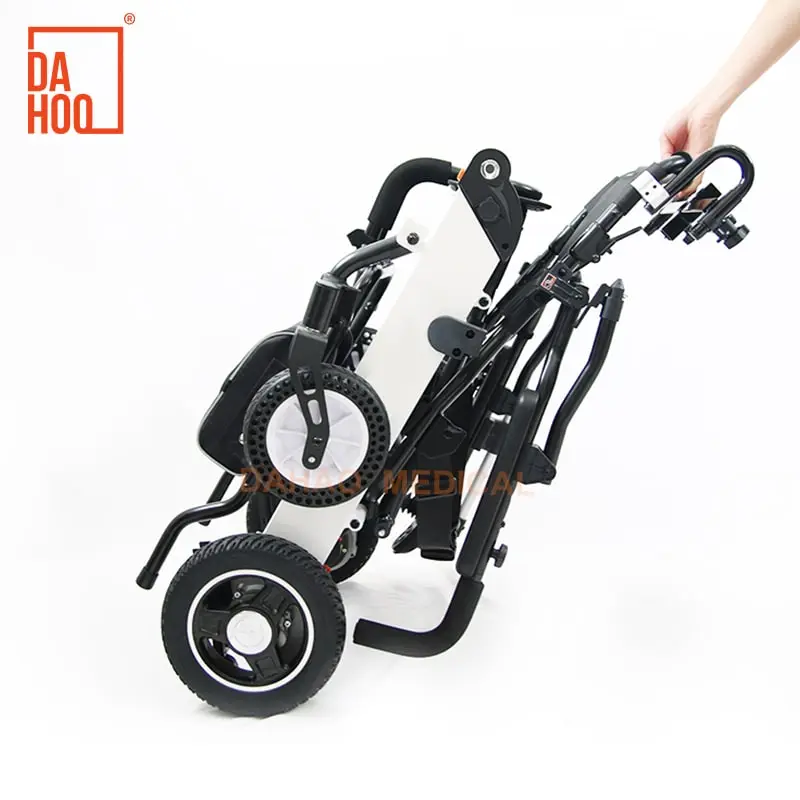
Why are heavy-duty electric wheelchairs heavier?
The core design logic of heavy-duty electric wheelchairs can be summarized in one concept: safety redundancy.
If a wheelchair's maximum load capacity is increased from 100 kilograms to 150 kilograms, the change involves far more than simply "allowing a heavier person to sit in it." A higher weight capacity implies that the frame must withstand greater loads; drive wheels must handle higher ground contact forces; the motor needs to deliver greater torque at the wheels; the braking system must manage higher kinetic energy; anti-tip structures require redesign; and seats, armrests, footrests, and connectors all need enhanced structural reliability.
A vehicle's kinetic energy is related to its mass and the square of its velocity, expressed as:
E = 1/2 mv².
At the same speed, if the total mass increases by 50%, the kinetic energy the vehicle must dissipate during braking also increases by approximately 50%. Therefore, manufacturers of heavy-duty electric wheelchairs cannot simply beef up the frame while retaining the exact same braking and drive systems; the entire system must be properly matched and integrated.
Currently, some heavy-duty or high-capacity electric wheelchairs weigh 25–30 kg or more. For instance, some products with a 150 kg capacity weigh around 27.5 kg (including the battery), while reinforced models designed for high loads may weigh about 25 kg (excluding the battery) and support up to 160 kg.
Consequently, if a consumer notices that a "heavy-duty electric wheelchair" weighs ten kilograms or more than a "lightweight" model, it does not necessarily indicate outdated design; rather, it may reflect higher-spec configurations regarding load capacity, structural rigidity, power output, range, and outdoor adaptability.
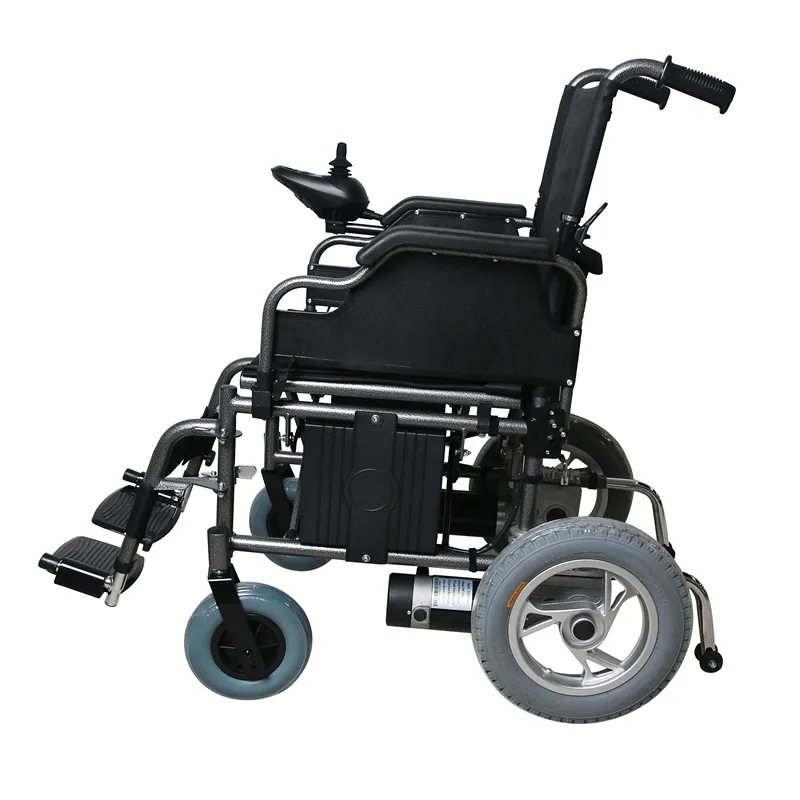
FAQ: Common Questions About Electric Wheelchair Weight
Q1: Are electric wheelchairs always heavier than manual wheelchairs?
Not necessarily. While traditional electric wheelchairs are usually heavier than manual ones, modern lightweight electric wheelchairs can weigh in the low-teens (kilograms). For example, some lightweight models on the market weigh around 11–17 kg without the battery, and even with the battery installed, the total weight can often be kept within the 13–20 kg range.
Q2: How much do lightweight electric wheelchairs typically weigh?
There is no globally standardized definition for this weight category. Based on current market offerings, lightweight electric wheelchairs generally fall within the 12–20 kg range, with some carbon-fiber models weighing as little as approximately 11 kg (excluding the battery). It is important to note that the "weight" specified by the manufacturer may exclude components such as the battery, footrests, or seat cushion; therefore, you should verify the total weight in ready-to-use condition before purchasing.
Q3: Why are heavy-duty electric wheelchairs so heavy?
Heavy-duty electric wheelchairs typically require higher load-bearing capacity, greater driving force, superior structural rigidity, and enhanced safety margins. Consequently, they necessitate more robust frames, motors, tires, braking systems, and connectors. Some models with a 150 kg weight capacity weigh around 27.5 kg, while reinforced, high-capacity models can also exceed 25 kg.
Q4: Is lighter always better for electric wheelchairs?
No. Weight is just one factor to consider. If weight reduction comes at the expense of load capacity, range, power, or structural reliability, the lighter design may not be suitable for actual use. When selecting a lightweight electric wheelchair, you should evaluate maximum load capacity, battery capacity, real-world range, motor power, climbing ability, and total ready-to-use weight.
Q5: Is a larger battery always better for electric wheelchairs?
Not necessarily. A larger battery generally offers a longer theoretical range but also increases weight, bulk, and charging time. Users who primarily make short trips might find a lower-capacity battery more practical, whereas those who travel longer distances might consider a higher-capacity battery or a dual, detachable battery setup.