

As the Earth population gradually gets older and the number of persons who suffer from chronic diseases and/or post-operative rehabilitation as well as those with mobility limitations steadily increases, the home care industry will encounter a growing problem: a large number of the population will have to rely on the members of their own family for long-term care since traditional manual transportation methods are no longer able to match the demand of modern home care. In earlier times, many families thought that providing care for elderly persons with limited mobility would basically depend on the care givers' patience and strength while physical aspect such as lifting and pulling would be done mainly by muscles. They assumed that, as long as family members were attentive enough, daily care could be accomplished. Yet, there came a point when person being carried is either lying bedridden for months, is unable to stand or is simply a very heavy person weighing around 80 or 100 kilograms; manual handling and assistance becomes very inadequate and unsafe.
In the reality of day-to-day home care, things that appear to be very trivial like moving a person from bed to wheelchair, transferring him/her from the wheelchair to the restroom chair, and moving him/her from room to room are in fact considered very high risk care tasks. For the person caring, performing activities like bending over, lifting and turning repeatedly may easily result to lower back, shoulder and knee injuries; on the other hand, lack of proper support from the caregiver during transportation might cause slips, falls, crashes and even secondary injuries to the person receiving care. More specifically, the elderly, those recovering from strokes, patients with spinal injury and persons confined to their beds for long are groups that can benefit greatly from safe patient handling as it is indeed a vital component of home care.
Electric Patient Lifter is another development that provides a much safer, more efficient and highly professional solution for home caregivers. With features such as electric lifting system, a secure sling, a well-balanced and stable base, a user-friendly control interface and a variety of different lifting methods, Electric Patient Lifter enables caregivers to move the patient easily from one place to another like the bedside, the wheelchair, the recliner, the toilet, or anywhere and that too with considerably less physical effort.
To illustrate, besides the medical institutions, the Electric Patient Lifter can also be found in households where the family are taking care of an elderly person. At home, as more attention is focused on elderly persons, the idea that high-end medical equipment can be the key to quality care at home is gradually gaining popularity. The fact is that such equipment is not necessarily used by medical professionals only.
For instance, if a suitable electric patient lifter is acquired by the family needing regular home care, the caregivers’ work load could be considerably cut in terms of both their physical and mental fatigue, the safety of the patient in movement is well guarded and at the same time the patient's dignity and privacy are maintained throughout the care process.
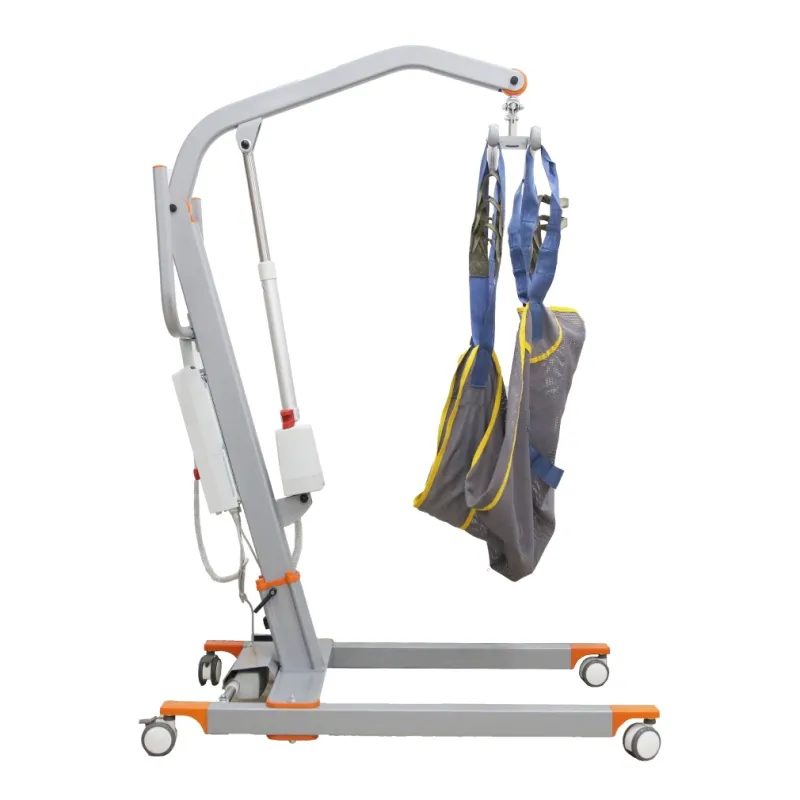
Why is an electric patient lift becoming necessary more and more in home care?
In the old days, patient transfers in home care were commonly done through the help of family members. If the senior was quite mobile, a few steps help might have been enough. Yet, manual patient transport becomes rapidly challenging for the non-able individuals: those in wheel chairs with a wheelchair only can still get up, others may need assistance to be stood up due to poor mobility while weak legs or a loss of physical control may be a case, and some others could have a sudden loss of consciousness or faint leading to falling and need of being caught.
For example, a senior person with hemiplegia due to stroke will require being moved daily from bedroom to wheel chair, wheel chair to bathroom and vice versa. Getting family members to do so completely is a tough physical job, besides requiring very professional handling. Caregiver is an old man, or if only one of the two, the couple in a family, are taking care, then carrying by hand all the time is nearly impossible.
The other issue of home care is the lack of the caregivers' professionalism or being medically trained. Of course, the relatives and caretakers know, from personal experience, the need to take good care of their elderly loved ones, but this, most times does not include any sort of transfer training, when a patient loses balance, cannot walk, falls, the family people just do not know or are not in position to act quickly and right way.
This is the reason that more and more home caregivers are turning to the Electric Patient Lifter. What the machine's key purpose is to replace human caregivers completely. The real point, however, is that it is a machine power source that eases caregiving, so the family members can carry out caregiving tasks in a much better, safer way.
Patient handling and transfers have also been one of the leading causes of job-related injuries, according to patient-handling data published by the US occupational safety and health organization (OSHI). Frequent heavy lifting of persons by caregivers, manual turning and positioning of patients are some activities which lead to back injuries. Aids to patient mobility will, therefore, not only protect the staff who are most at risk but they will also contribute to the reduction of musculoskeletal injuries generally.
The Electric Patient Lifter is a very practical thing for home caregivers. The main benefit is that a physical caregiver is no longer the only source of help, because you can now have the support of a machine. That really makes a big difference in terms of how caregiving is done.
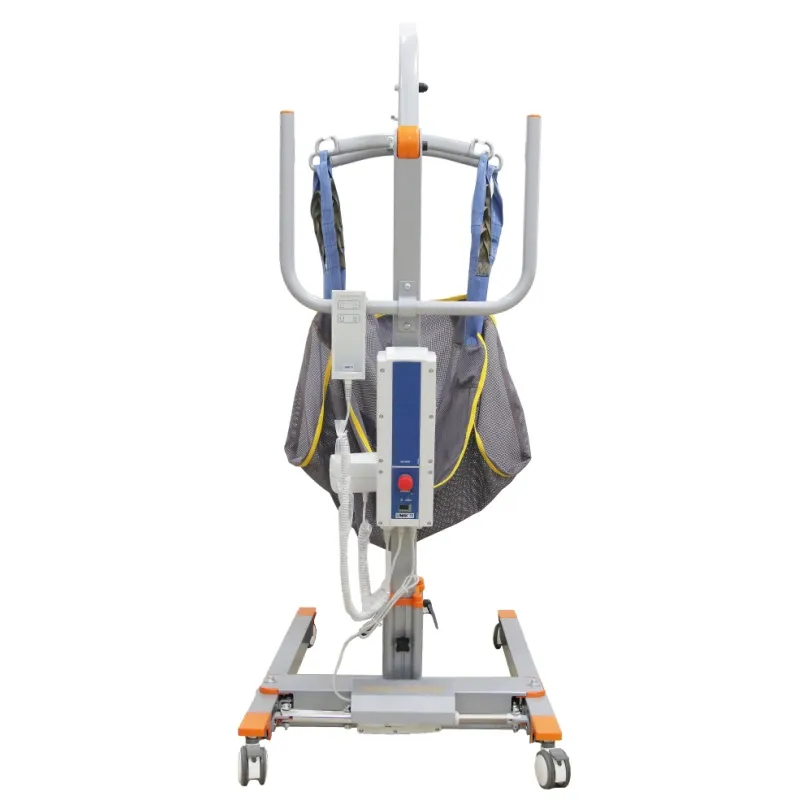
How does the Electric Patient Lifter benefit families in transfer operations?
The Electric Patient Lifter essentially relies on a motor-operated system that does lifting and lowering actions through the help of a sling that keeps the patient supported during the entire transfer.
Compared with manual transport, it is the medical device that can control the body position of the patient better and therefore makes the patient transport process smoother, safer.
An Electric Patient Lifter usually comprises four major mechanical components, besides the patient sling, a lifting motor, a lifting mechanism, and some accessories:
An electric lifting motor: It helps the caregiver raise or lower the patient smoothly by regulating the height;
Mechanical lifting and sling system: The sling is attached to the arm and the patient is connected to the lifting point. The lifting mechanism provides the patient suspension point and the patient is hung on the sling that the patient sits on;
Nursing sling: It is around and supports the patient's body so that their body weight is distributed on the patient's back without concentrating the pressure at one point only;
Base plate or ground base for mobility: A solid base for supporting the device during movement;
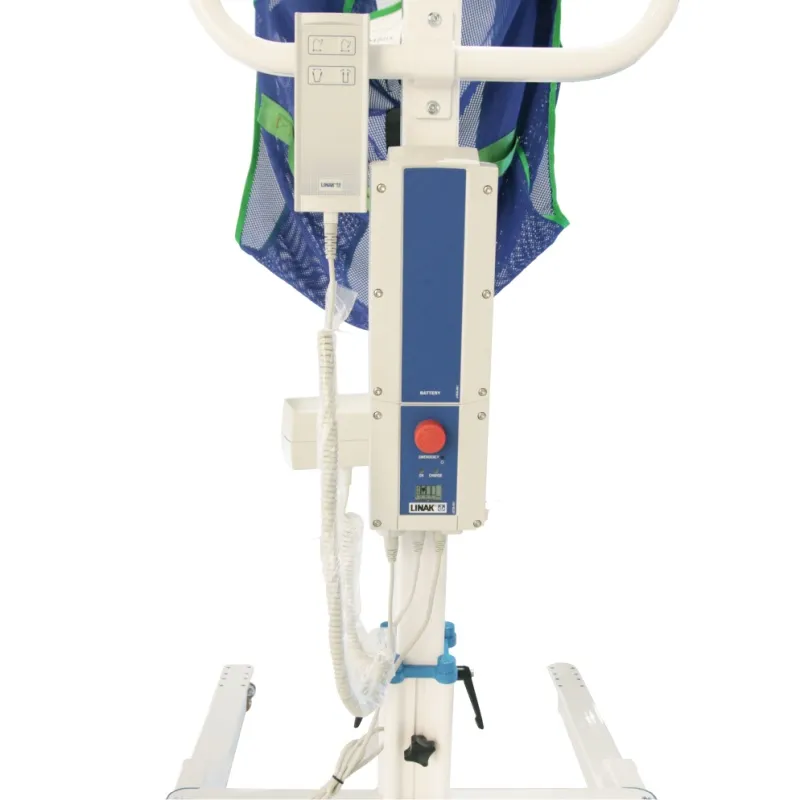
Control panel: It is through this that the caregiver can start, raise, or lower the lifting mechanism;
Battery powered: A rechargeable power source that enables the system to operate away from any wall electricity supply, so that caregivers working in homes do not have to run the cord or plug in a mains socket when lifting up and moving around.
In the case of the Electric Patient Lifter, it is simply a matter of the caregiver getting the correct length of the sling underneath the patient's body, lifting the patient slowly and comfortably using the control buttons on the handle. After that, the nurse can smoothly transfer the patient using the Electric Patient Lifter and finally lower to bed, wheelchair etc, depending on the need of the patient.
To put it short, throughout the activity, caregivers bear patient's weight only indirectly and their major roles are to control the device movement and position adjustments, thereby, physical exertion is greatly minimized.
The lifting capacity of the market is the most significant factor in choosing a model of the Electric Patient Lift. Home use Electric Patient Lifter models are usually the ones with load capacity between 100kg and 150kg while heavy duty ones can handle up to 200kg or more. However, it is important to note that you should not be guided solely by the maximum weight specification when you are picking a model.
Which home care scenarios are suitable for an Electric Patient Lifter?
Many families believe that only completely bedridden patients need an Electric Patient Lifter, but in reality, it's suitable for a variety of care scenarios.
For elderly people who are bedridden for extended periods, an Electric Patient Lifter can assist with movements from bed to wheelchair, bed to nursing chair, and bed to the bathroom. Long-term bedridden patients often cannot change positions on their own; maintaining a fixed posture for a long time not only affects their quality of life but also increases the difficulty of care.
An Electric Patient Lifter also plays an important role for stroke or hemiplegic patients. Some stroke patients, although conscious, are unable to stand independently due to weakness on one side of their body. If family members forcibly help them up, it can easily cause them to lose their balance. Assisted transfer using an electric patient lift reduces the risk of falls and creates safer conditions for rehabilitation training.
For postoperative recovery patients, such as those who have undergone hip or orthopedic surgery, excessive weight-bearing should be avoided in the early stages of recovery. Manual lifting can put additional pressure on the wound, while an electric patient lift allows for smoother movement.
Furthermore, electric patient lifts are particularly valuable for heavier patients. With the increasing global obesity rate, caring for heavy patients is becoming increasingly challenging, and manual transfer alone is becoming increasingly difficult. Choosing a high-load-bearing electric patient lift can effectively reduce the stress on caregivers.
Why is electric patient lift safer than manual transport?
The main benefit of using an electric patient lift is that it decreases the chance of being hurt from working manually.
Mainly, it prevents the direct physical contact which is a heavy burden on the caregiver. When using the manual way of carrying the patient, the caregiver has to keep balancing him/herself while managing the weight of the patient - the two of them can be injured easily in case the patient twitches or the caregiver's footing is lost.
The Electric Patient Lift, in this case, takes most of the weight using the mechanical design of the device and the caregivers are only responsible for operating the device. For instance, when a patient is to be transferred from the bed to the wheelchair, with the help of this device they won't slip or tilt during the process as the device allows for a very stable way of lifting up lowering.
The second point is that an electric patient lift allows safer transfer as it does not require to balance the patient at the time of the transfer. It is well-known that a wide base, an anti tipping arrangement and multilateral slings used with these machines ensure good patient posture while being lifted.
Moreover, the electronic patient lift is the way to go to safeguard a patient's dignity, especially the older patients. A patient can feel that a caregiver is invading their privacy when they lift and change the position of their body. This method of using a professional transfer device would help not only the patient but also the caregiver reduce the physical contact.
One of the points the FDI has made is that despite the use of patient transfer equipment, the mishandling of the patients could still be the reason of major injuries so safety devices should not be used in the wrong way, and proper fit of the sling, safe attachment and operation according to the manufacturer's instructions should be ensured.
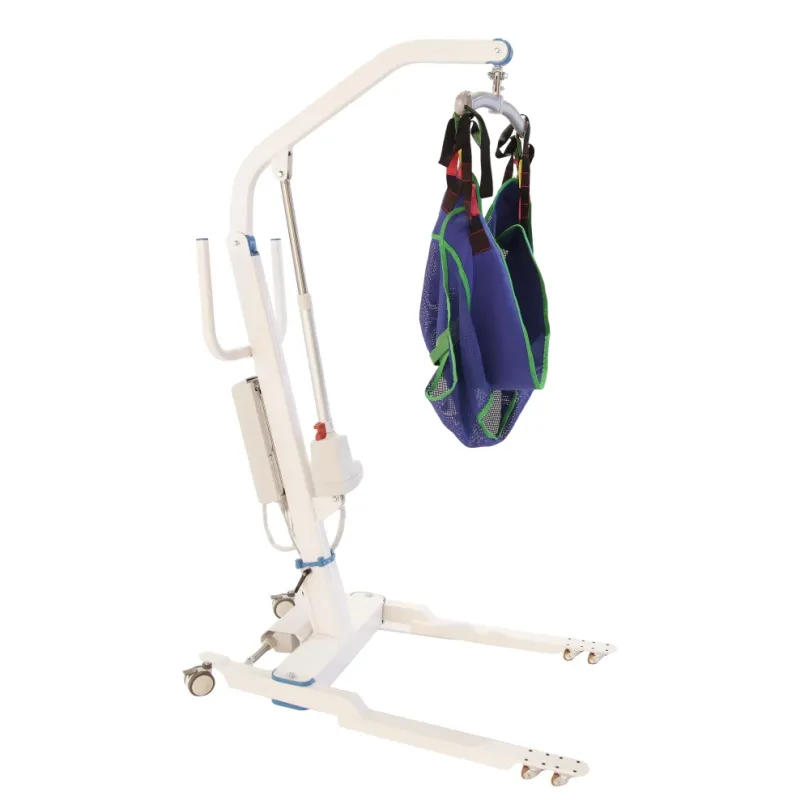
How does the Electric Patient Lifter reduce the burden on home caregivers?
The major issue in home care is not so much the one-time move as it is the repetitive daily tasks that need the same kind of assistance, several times a day, sometimes dozens of times.
Taking the example of a home caregiver, they would have to help the patient doing the following tasks each day:
Helping the patient get up;
Moving the patient in a wheelchair;
Helping in bathing and toileting;
Going back to bed at night).
A home caregiver who has to perform so many physically taxing jobs on a daily basis runs the risk of suffering fatigue and injuries from physical activities. This is because these activities that they do are usually the same over and over again.
Many families are not aware that a patient’s family member may be the home caregiver as well. In most cases, the home caregiver is a person of middle or old age like a 60s or 70s spouse taking care of their partner if that other partner suffers from some serious illness and can hardly stay still on his own.
It was previously mentioned that manual help from the caregiver is both risky for a patient and very dangerous for the caregiver as such a scenario is very conducive to back injuries for the caregiver. Electric Patient Lifters can solve this problem by the fact that the entire manual work will be replaced but a machine that helps out with the lifting process. Therefore, it is a dual benefit, reducing physical fatigue but also making long-term care more sustainable.
From a practical point of view, purchasing a patient lift electric at home may seem to be an increase in the amount of the home equipment to use, but it is rather, a tool that would help reduce care risks while improving the quality of home care.
What major factors would you recommend families to look for when selecting an Electric Patient Lifter?
It's true that Electric patient lifters can alleviate a great many of the problems faced by caregivers, but different domestic living situations can vary quite a lot. For the sake of selecting a suitable product then, you should bear in mind the following points:
To start with, weight capacity is a key deciding factor and probably one of the most important characteristics. It is advisable not to choose the equipment based simply on the patient's current weight but to allow a certain buffer. Say a patient weighs 150lb. Then it wouldn't be advisable for you to only select a device whose weight capacity is 150lb, you would be better off picking a one which has a weight capacity of at least around 180lb.
In the second place, device size. Rooms in a domestic building are rarely as large and open as a hospital room, so when a customer is looking at the purchase of an electric patient lift, the following factors must at a minimum be considered in terms of the room the patient is kept in: bedroom, the door size, elevator size, and operating space of the bed side.
Some of the home-use electric patient lifters nowadays come with a very compact footprint, which makes them a good fit for a general living environment that is typical of a private residence.
As a third point, battery life. Home caregivers mainly value convenience, therefore it is a wise investment to select a device which has a good stable battery system that you can recharge and also find out charging cycle period and backup battery facility.
Strap comfort will be the fourth factor.
The straps are directly laid on the patient's skin, so the appropriate size must be chose based on the patient's actual dimension. It is very likely that if you select a strap that is too tightly fitting you may cause an area of concentrated pressure.
To the other hand, if you choose a strap that is far too loose you end up with reduced comfort and loss of support.
Lastly, the ease of use. It is quite possible the home caregivers will have no prior knowledge of the product. The machine should have basic and user-friendly controls, the handle controls, indication of the level of battery and the emergency descent function.
What safety precautions should be taken when using an Electric Patient Lifter at home?
While an Electric Patient Lifter can improve care safety, proper use remains crucial.
Before each use, check the device's condition, including whether the straps are worn, whether the battery is fully charged, whether the fasteners are secure, and whether the wheels are functioning properly.
During the transfer, ensure that:
The patient's body is centered in the straps;
The strap connections are fully secured;
The path of movement is free of obstructions;
The target location is prepared.
Furthermore, different patients require different types of straps. For example, a patient who can maintain a sitting position may be suitable for a partial support strap, while a patient who is completely unable to control their body usually requires a full support strap.
Caregivers should also read the device's instruction manual and receive basic training. The FDA recommends that home users receive proper training before using patient transfer devices and understand the device's operation and safety precautions.
What is the benefit of the Electric Patient Lifter over the conventional manual care?
The traditional way of caring is based on caregivers' physical strength whereas the Electric Patient Lifter is a device that takes care of the majority load, a major distinction.
Concerning safety aspect, the use ofElectric Patient Lifter minimizes the likelihood of patients falling and caregivers getting hurt.
On an efficient front, the useof the apparatus enables a patient's family members to finish their care-related repetitive work quicker so that the care process can actually become quicker.
Patient comfort-wise, they can make their body movement a little more easy so that their muscles don't have to endure the entire stress.
In a matter of long-term cost, you have to buy the device at first but, after that, it cuts down on the possibility that a caregiver gets hurt and it also prevents you from paying the related medical bills。
Electric patient lifter is not only an assistive device but also an essential tool to change care routines for families who require long-term home care.
FAQ: Frequently Asked Questions about Home Use of Electric Patient Lifters
Q1: Is it really necessary to buy an Electric Patient Lifter for home care?
If there are elderly people who are bedridden for extended periods, patients who cannot stand independently, people recovering from surgery, or people who need frequent transfers in the family, an Electric Patient Lifter can significantly reduce the difficulty of care and improve safety.
Q2: Is the Electric Patient Lifter suitable for single-person operation?
Some home models support single-person operation, but this needs to be determined based on the patient's physical condition and the equipment instructions. For patients who are completely unable to control their bodies, it is recommended to arrange for an assistant based on the risk level.
Q3: What is the typical weight capacity of the Electric Patient Lifter?
Different models vary considerably. Common home-use models have a weight capacity of approximately 100kg to 150kg, while reinforced models can reach around 200kg. A safety margin should be allowed based on actual needs when choosing.
Q4: Can the Electric Patient Lifter only be used in hospitals?
No. More and more products are now designed for home care and can be used for safe transfers between beds, wheelchairs, sofas, and commode chairs.
Q5: Is it safe to use the Electric Patient Lifter?
With proper equipment selection and operation, the Electric Patient Lifter can significantly improve patient safety. However, regular checks of the straps, connections, battery, and mechanical parts are still necessary.
Q6: What's the most important thing to consider when purchasing an Electric Patient Lifter?
The most important factor is matching the family's actual needs, including patient weight, care environment, space size, equipment weight capacity, ease of operation, and after-sales support. A truly suitable Electric Patient Lifter for home care should simultaneously meet the goals of patient safety and caregiver convenience.
