

As the population ages and the demand for care related to chronic illnesses, post-operative recovery, and disability support grows, the care of bedridden patients has become a key focus for medical institutions, elderly care facilities, and home care providers. For patients confined to bed for extended periods, a suitable hospital bed serves not merely as a place to rest; it directly impacts patient comfort, safety, and the efficiency of caregiving. Consequently, the question "Which type of hospital bed is best for bedridden patients?" has become a critical consideration for many when selecting medical care equipment.
In the past, hospital beds were predominantly of a fixed design, intended primarily to accommodate lying down, IV administration, and basic medical treatments. However, as modern care philosophies have evolved, traditional hospital beds have struggled to meet the complex needs of long-term bedridden patients. This is particularly true for individuals with limited mobility, those unable to turn over independently, or those requiring long-term care; standard beds fall short in areas such as position adjustment, pressure ulcer prevention, and the reduction of caregiver physical strain.
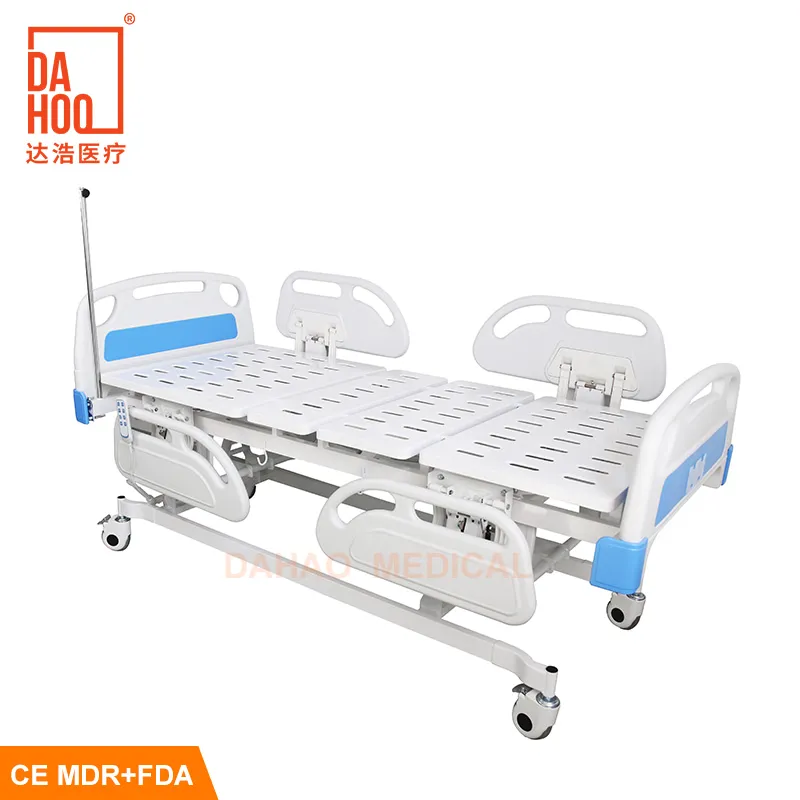
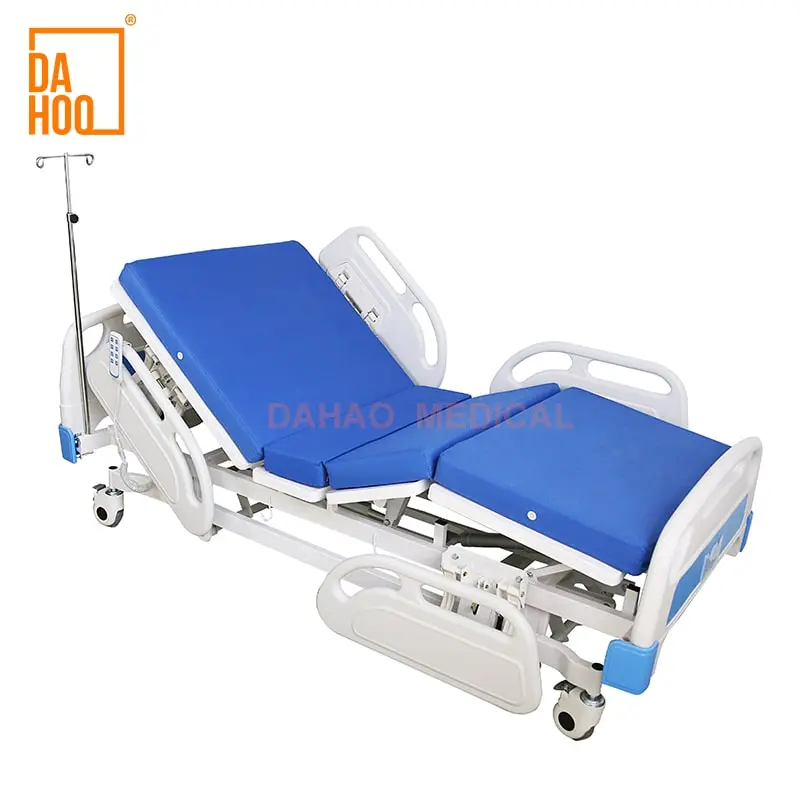
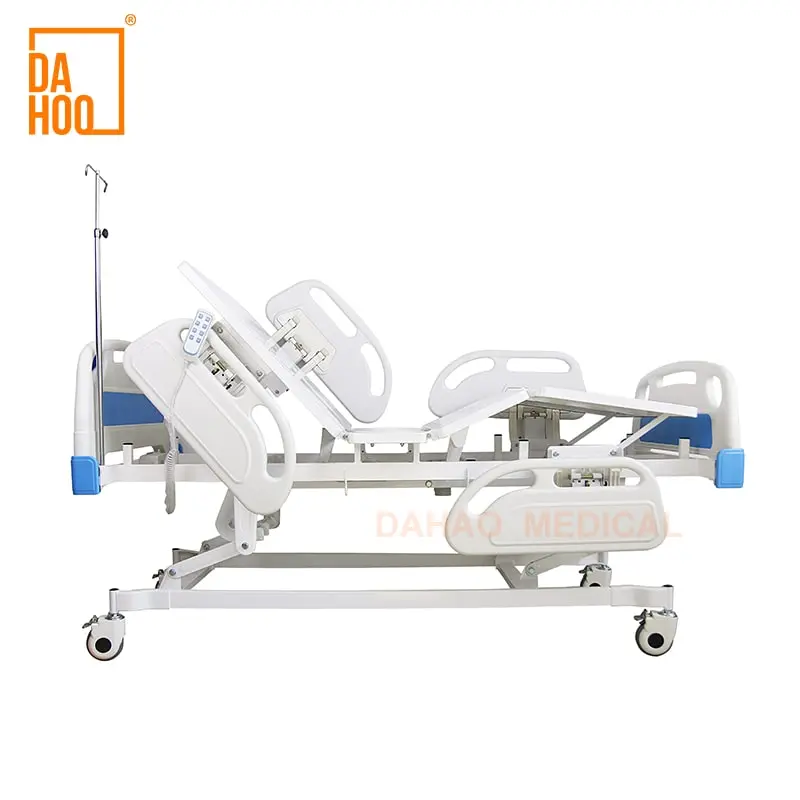
In terms of practical application, electric adjustable hospital beds have emerged as an ideal choice for long-term bedridden patients. Powered by electric motor systems, these beds allow for backrest elevation, leg adjustment, overall height adjustment, and various positional changes. These features provide patients with a more comfortable and safe experience while helping caregivers work more efficiently. As a result, electric adjustable hospital beds are increasingly becoming essential equipment in hospitals, rehabilitation centers, elderly care facilities, and home care settings.
What New Demands Do Long-Term Bedridden Patients Have for Hospital Beds?
Many people assume that a bed needs only to be sturdy and the mattress soft to meet a bedridden patient's daily needs. In reality, however, long-term bed care encompasses a wide range of factors, including the management of the patient's physical condition, ease of caregiving procedures, safety protections, and the prevention of complications. A standard bed cannot address these issues; specialized hospital beds must perform a variety of supportive care functions.
One of the most common issues for long-term bedridden patients is the concentration of pressure caused by reduced physical activity. Because patients cannot frequently change positions, specific areas of the body—such as the sacrum/coccyx, shoulder blades, and heels—endure prolonged pressure. This can easily lead to impaired local blood circulation and even the formation of pressure ulcers. Clinical nursing experience shows that patients confined to bed for extended periods require regular repositioning to alleviate localized, sustained pressure on the body.
Beyond the risk of pressure ulcers, bedridden patients may face issues such as respiratory difficulties, muscle atrophy, joint stiffness, and impaired digestion. For instance, some patients experience chest tightness when lying flat and require back elevation to improve breathing; they need to be shifted to a semi-seated position during meals to prevent choking; and rehabilitation exercises often require body support at various angles.
These requirements dictate that modern hospital beds cannot merely be static platforms; they must possess active adjustability. Consequently, adjustable hospital beds have become a key focus in the upgrading of medical care equipment.
Why are electric adjustable hospital beds better suited for bedridden patients?
The defining feature of electric adjustable hospital beds is the use of motors to control the bed's structure, enabling patients and caregivers to adjust positions with greater ease. Compared to traditional manual crank beds or fixed hospital beds, electric models offer simpler operation and more precise adjustments, while also reducing risks associated with manual handling.
Current market offerings include two-function, three-function, four-function, and multi-function electric hospital beds, with different configurations catering to specific care needs.
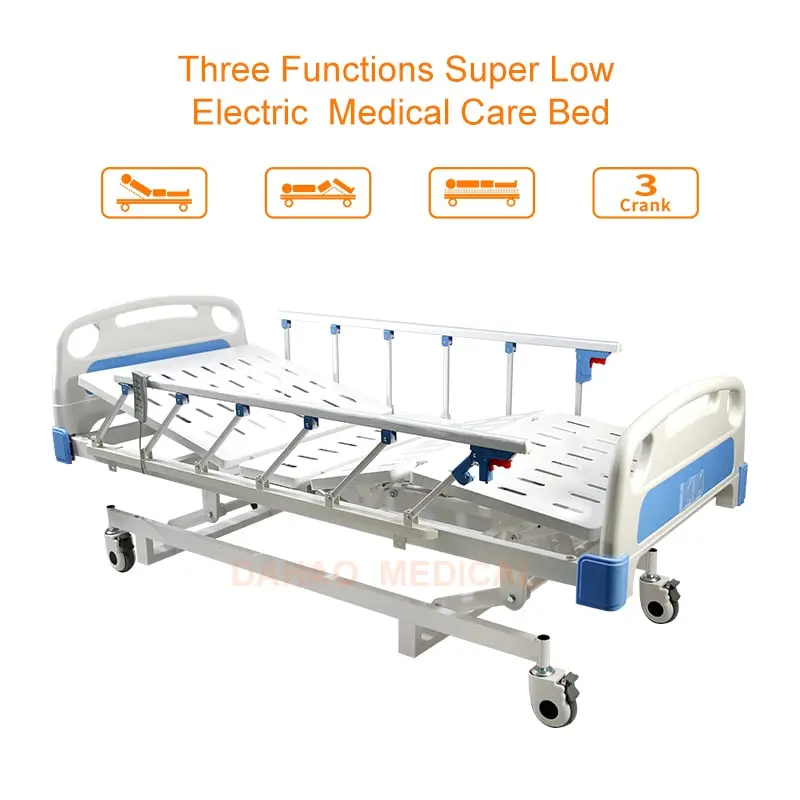
Two-function beds typically allow for back and leg adjustments, making them suitable for general inpatients or those requiring basic care. Three-function beds add a height-adjustment feature, allowing the bed surface to be raised or lowered to suit specific care procedures—a design better suited for long-term bedridden patients. Multi-function electric beds may incorporate features such as forward/backward tilting, lateral turning assistance, and smart controls, primarily serving intensive care, rehabilitation, and high-acuity medical environments.
In terms of standard specifications, electric adjustable hospital beds offer a wide range of movement. For example, the backrest angle typically adjusts between 0° and 70°, while the leg section adjusts between 0° and 30°; bed height can usually be varied within a range of approximately 400mm to 800mm, depending on the model. Regarding load capacity, medical-grade beds generally support over 200kg, with some reinforced models capable of handling static loads of 300kg or more. These parameters are not merely about offering "more features"; rather, they are designed to meet the specific care needs of patients at various stages of their treatment or recovery.
How do electric adjustable hospital beds address the key challenges of caring for bedridden patients?
1. Reducing the risk of pressure ulcers associated with prolonged bed rest
Pressure ulcers have long been a major concern in the care of bedridden patients. Traditional care methods rely heavily on caregivers manually turning patients at regular intervals, a task that presents significant practical difficulties. For heavier patients, turning them alone is physically demanding; furthermore, improper technique can cause skin friction, tearing, or even secondary injuries.
Electric adjustable hospital beds facilitate more effective body positioning through adjustable backrests, leg rests, and—in some advanced models—integrated turning assistance. For instance, when a patient needs to change position, caregivers can adjust the bed's angle using a handheld controller, eliminating the need to manually lift or shift the patient's entire body weight.
Additionally, these beds are often paired with anti-pressure ulcer mattresses; the combination of bed adjustment and pressure redistribution effectively mitigates the risk of localized tissue damage caused by prolonged pressure. For high-risk patients, the bed's adjustability has become a crucial component of the overall care plan.
2. Reducing caregiver workload and improving care efficiency
In hospitals and elderly care facilities, caregivers perform a multitude of routine tasks daily, such as helping patients sit up, adjusting sleeping positions, changing linens, bathing patients, and assisting with medical examinations. If a hospital bed lacks height adjustability, caregivers are often forced to bend over for extended periods, increasing strain on their lower backs.
The height-adjustment function of electric hospital beds alleviates this issue. Caregivers can adjust the bed surface to a height that suits their stature and the specific task at hand—lowering the bed to change linens or raising it to perform care procedures—thereby minimizing repetitive bending.
For large medical institutions, electric adjustable hospital beds not only boost the efficiency of individual care tasks but also optimize overall care workflows.
3. Enhancing patient comfort and accommodating various positioning needs
One of the greatest challenges for bedridden patients is the inability to freely adjust their posture as a healthy person would. Remaining in a flat, supine position for extended periods often leads to physical fatigue and discomfort.
Electric adjustable hospital beds enable patients to adopt a wider range of positions. For example:
During meals, the bed can be adjusted to a semi-seated (Fowler's) position;
When reading or conversing, the backrest angle can be raised;
During sleep, the angle can be lowered;
During rehabilitation exercises, body support can be adjusted according to specific training requirements.
For patients with certain respiratory conditions, slightly elevating the upper body can improve comfort; for post-operative patients, properly adjusting the leg and backrest angles helps reduce physical strain.
What parameters should be considered when choosing an electric adjustable hospital bed?
While the variety of hospital beds on the market is expanding, a higher price or more features does not necessarily mean a bed is suitable for every patient. Selection should be based on the patient's physical condition, the care environment, and actual usage needs.
First, consider the number of motors. The number of motors determines the bed's adjustability. Two-motor models generally meet basic back and leg adjustment needs; three-motor models add height adjustment, facilitating long-term care; four-motor or multi-motor models offer advanced positioning capabilities, making them better suited for complex care environments.
Second, consider weight capacity. Hospital beds must support the patient's weight and withstand dynamic pressures during care; therefore, the bed frame structure, motor performance, and load-bearing design are crucial. Standard care environments usually require a weight capacity of over 200 kg, while special cases may require reinforced structures.
Bed dimensions are also a key factor. Standard hospital beds are typically 2,100–2,200 mm long and 900–1,000 mm wide. Dimensions that are too small may compromise patient comfort, while dimensions that are too large can hinder mobility within the ward and affect space utilization.
Additionally, safety features such as side rails, electrical systems, and emergency protection mechanisms are essential. High-quality electric adjustable hospital beds should feature stable side rails, anti-pinch designs, power-outage protection, and emergency lowering functions to ensure patient safety.
Which type of hospital bed is best for bedridden patients?
Overall, the best hospital bed for a bedridden patient is not necessarily the one with the most complex functions; rather, the choice should be based on the patient's specific needs.
For patients with short hospital stays, a basic hospital bed that meets essential rest and treatment requirements is often sufficient. For elderly individuals who are bedridden for extended periods or patients with limited mobility, a three-function electric adjustable hospital bed typically offers comprehensive care support, including backrest, leg-rest, and height adjustments.
For critically ill or paralyzed patients, or those requiring frequent care, one might consider a more advanced multi-function electric adjustable hospital bed to better meet needs regarding body positioning and safety.
A hospital bed truly suitable for a bedridden patient should strike a balance between safety, comfort, ease of care, and long-term cost-effectiveness.
FAQ: Common Questions About Electric Adjustable Hospital Beds
Q1: Which patients are electric adjustable hospital beds suitable for?
Electric adjustable hospital beds are primarily suitable for long-term bedridden patients, those recovering from surgery, individuals with mobility impairments, the elderly with disabilities, and those requiring continuous care. These beds offer superior support for patients who need frequent position changes or long-term care.
Q2: What is the difference between a standard hospital bed and an electric adjustable hospital bed?
Standard hospital beds usually offer only basic reclining functions, whereas electric adjustable hospital beds use motors to adjust the backrest, leg-rest, and height. This allows for more flexible patient positioning and reduces the need for manual handling by caregivers.
Q3: Is it better to have more functions on an electric adjustable hospital bed?
Not necessarily. More functions usually imply a more complex structure, which can lead to higher purchase prices and maintenance costs. Selection should be based on the patient's specific needs; for instance, standard long-term care focuses on height, backrest, and leg-rest adjustments, whereas complex care environments may require additional functional support.
Q4: What should be considered when using an electric hospital bed at home?
When purchasing for home use, factors such as room space, bed dimensions, weight capacity, motor stability, and after-sales service should be considered. Additionally, the choice should be based on the patient's actual care needs rather than simply pursuing high-end specifications.
Q5: Can electric adjustable hospital beds be used for the long term?
Medical-grade electric adjustable hospital beds are generally designed for long-term use, though their actual lifespan depends on product quality, frequency of use, and maintenance. Regular inspections of the motor, control system, and bed structure can help extend the equipment's service life.
