

Carbon fiber electric wheelchairs are leading a new trend in lightweight mobility
In the past, when choosing an electric wheelchair, consumers primarily focused on motor power, driving range, and load-bearing capacity. However, as usage scenarios have diversified, a long-standing issue has gained attention: the excessive weight of electric wheelchairs makes them difficult to handle and transport, significantly impacting the user's daily experience.
"Which electric wheelchair is the lightest?" has become an increasingly common question in the market. For users who frequently travel by car, plane, or high-speed rail, or those living in spaces with stairs or limited room, the weight of the wheelchair has become a crucial factor in purchasing decisions. While traditional steel electric wheelchairs often weigh 50 kg or more, the industry is shifting toward lightweight models. Among these, carbon fiber power wheelchairs—leveraging the material's high strength, low weight, and excellent structural properties—are emerging as key representatives of the high-end, lightweight market.
So, which is the lightest electric wheelchair currently on the market? How do carbon fiber models overcome the weight limitations of traditional products? Does "lightweight" mean sacrificing safety or performance? This article provides a comprehensive analysis covering industry pain points, the advantages of carbon fiber, product specifications, buying tips, and future trends.
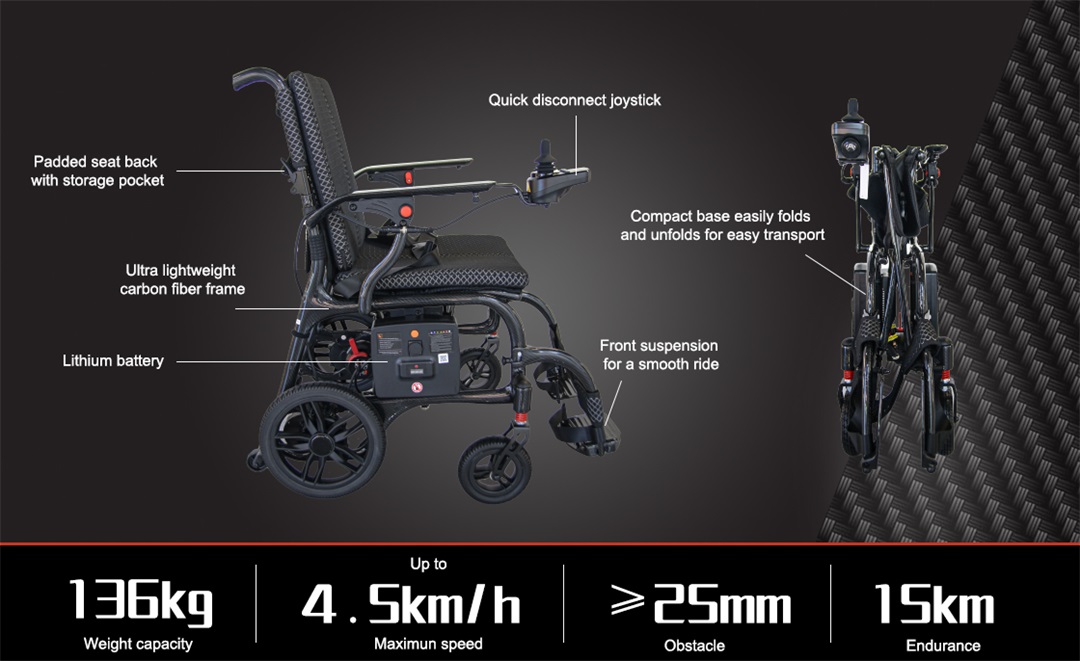
Why are carbon fiber power wheelchairs able to be lighter?
The core reason carbon fiber has been adopted in the power wheelchair industry is its unique combination of properties—characteristics that are difficult to achieve simultaneously with traditional metals.
Carbon fiber is a high-performance composite material distinguished by high strength, high rigidity, low density, and excellent fatigue resistance. Simply put, it allows for reduced material weight while maintaining or even enhancing structural integrity; this is why it is widely used in aerospace, automotive manufacturing, high-end bicycles, and professional sports equipment.
For power wheelchairs, the frame accounts for a significant portion of the total weight. Using a carbon fiber frame significantly reduces structural weight while ensuring sufficient stability.
The approximate weights of various types of electric wheelchairs currently on the market are as follows:
| Electric Wheelchair Type | Common Material | Overall Weight Range | Typical Load Capacity | Main Features |
| Traditional Steel Electric Wheelchair | Steel | 50–80 kg | 100–150 kg | Stable and durable, but difficult to transport due to heavy weight |
| Aluminum Alloy Electric Wheelchair | Aluminum Alloy | 25–40 kg | 100–140 kg | Lighter than steel models, but still has weight limitations |
| Carbon Fiber Electric Wheelchair | Carbon Fiber Composite Material | Approximately 13–20 kg | Over 100 kg | Lightweight and easier to fold and transport |
Some lightweight carbon fiber electric wheelchairs weigh around 15 kilograms, with certain travel-oriented models reaching the 13-kilogram range. Compared to traditional electric wheelchairs, the weight reduction can exceed 40%—a distinct advantage for users who need to transport their wheelchairs frequently. It is important to note that the lightweight nature of carbon fiber electric wheelchairs is not achieved simply by reducing the number of parts; rather, it is realized through material upgrades, structural optimization, and improvements in battery technology. For instance, replacing traditional lead-acid batteries with lightweight lithium batteries, utilizing a foldable frame design, and combining these with a carbon fiber main structure can effectively reduce the wheelchair's overall weight.
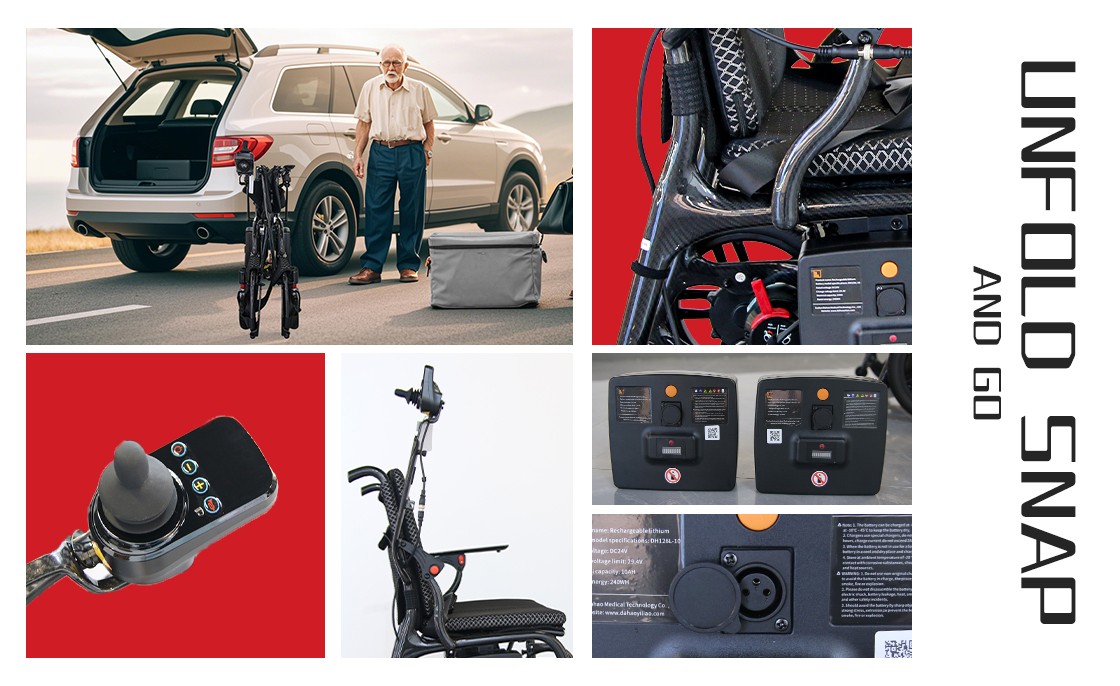
Which electric wheelchair is the most lightweight? Carbon fiber foldable electric wheelchairs represent the leading trend
Looking at current market offerings, the most lightweight power wheelchairs are typically found in the carbon fiber foldable category.
Lightweight carbon fiber power wheelchairs generally feature the following characteristics:
First, excellent weight management. While standard power wheelchairs often weigh over 30 kg, lightweight carbon fiber models can weigh between 15 and 20 kg. Some ultra-lightweight products can even weigh around 13 kg (excluding the battery).
Second, superior foldability. For users, low weight is not the only requirement; ease of storage is equally important. Modern carbon fiber electric wheelchairs typically feature a foldable frame design, allowing them to fit into a car trunk; some models fold down to a size comparable to a standard suitcase, greatly enhancing convenience for daily transport.
Third, power performance is not significantly compromised by the reduced weight. Mainstream carbon fiber electric wheelchairs usually employ a dual-motor drive system. Common specifications include dual 180W–250W brushless motors, 24V lithium batteries, and electromagnetic braking systems, making them suitable for use on city streets and in shopping malls, residential communities, and home environments.
Some models offer a driving range of 15–30 km and a top speed of approximately 6 km/h, meeting daily mobility needs. Of course, actual range varies depending on factors such as user weight, road conditions, and battery capacity.
What core user needs do carbon fiber electric wheelchairs address?
The value of carbon fiber electric wheelchairs lies not merely in their reduced weight; more importantly, they resolve long-standing pain points associated with traditional electric wheelchairs.
The first pain point is the difficulty of handling and transport. Many users with limited mobility are not completely immobile and desire greater autonomy—a freedom often restricted by the excessive weight of conventional electric wheelchairs. Lightweight carbon fiber models make it much easier for users or their family members to fold, transport, and store the chair.
The second pain point involves travel limitations. In the past, traveling with an electric wheelchair often required complex advance arrangements for transport; however, lightweight designs make these wheelchairs far more suitable for travel. Whether for road trips, short excursions, or journeys using public transport, the reduced weight significantly lowers the barriers to use.
The third pain point is the challenge of balancing safety with lightweight construction. Consumers often worry: "Is such a lightweight electric wheelchair actually sturdy?" In reality, high-quality carbon fiber electric wheelchairs do not simply aim to cut weight; instead, they strike a balance between material performance, structural design, and safety testing.
A well-engineered carbon fiber electric wheelchair typically undergoes rigorous testing, including frame strength, load-bearing capacity, durability, and incline performance tests. Some models support a maximum weight capacity of approximately 120–136 kilograms, effectively meeting the needs of most adult users while maintaining a lightweight profile.
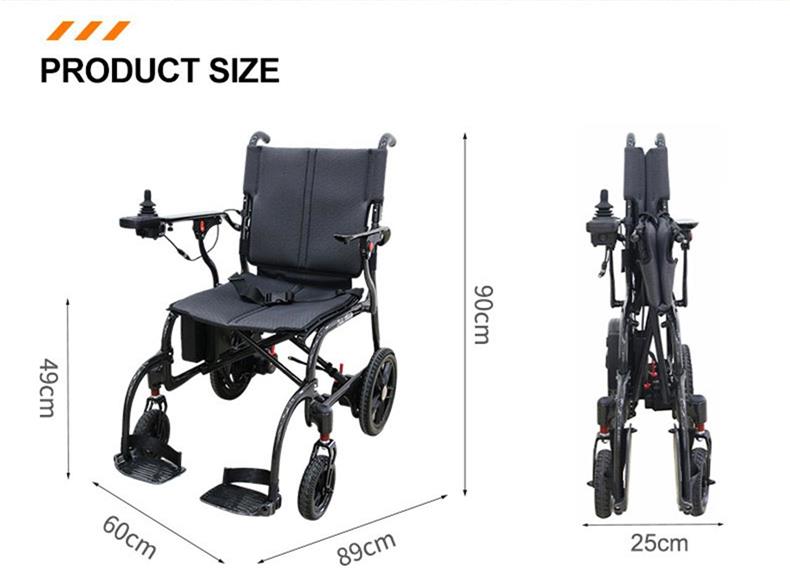
What key specifications should you look for when buying a carbon fiber power wheelchair?
While carbon fiber power wheelchairs offer distinct advantages, consumers should not focus solely on weight when making a choice. The "lightest" product is not necessarily the "most suitable" one; the decision should be based on actual usage needs.
First, pay attention to the total weight of the wheelchair, not just the advertised frame weight. Some products list only the frame weight, but the actual unit requires components like batteries, motors, and controllers; therefore, consumers should ask for the total weight of the fully configured wheelchair.
Second, consider battery performance. Lightweight power wheelchairs generally use lithium batteries, with common specifications including 24V voltage and capacities ranging from 10Ah to 20Ah. Higher capacity translates to a longer theoretical range but also increases weight, so the choice should depend on the intended usage scenario.
If the wheelchair is primarily used for activities near home, a range of around 10 kilometers is usually sufficient; for long-distance outdoor activities, models with a range of 15–30 kilometers are recommended.
Third, consider weight capacity. A lightweight design does not suit every user. Some ultra-light carbon fiber models are better suited for lighter individuals or those prioritizing portability for travel. Users with a heavier build should prioritize models with a higher weight capacity. Fourth, pay attention to the folding mechanism and after-sales service. Electric wheelchairs are devices intended for long-term use; beyond the product's performance, factors such as battery life, spare parts availability, and after-sales repair capabilities are equally important.
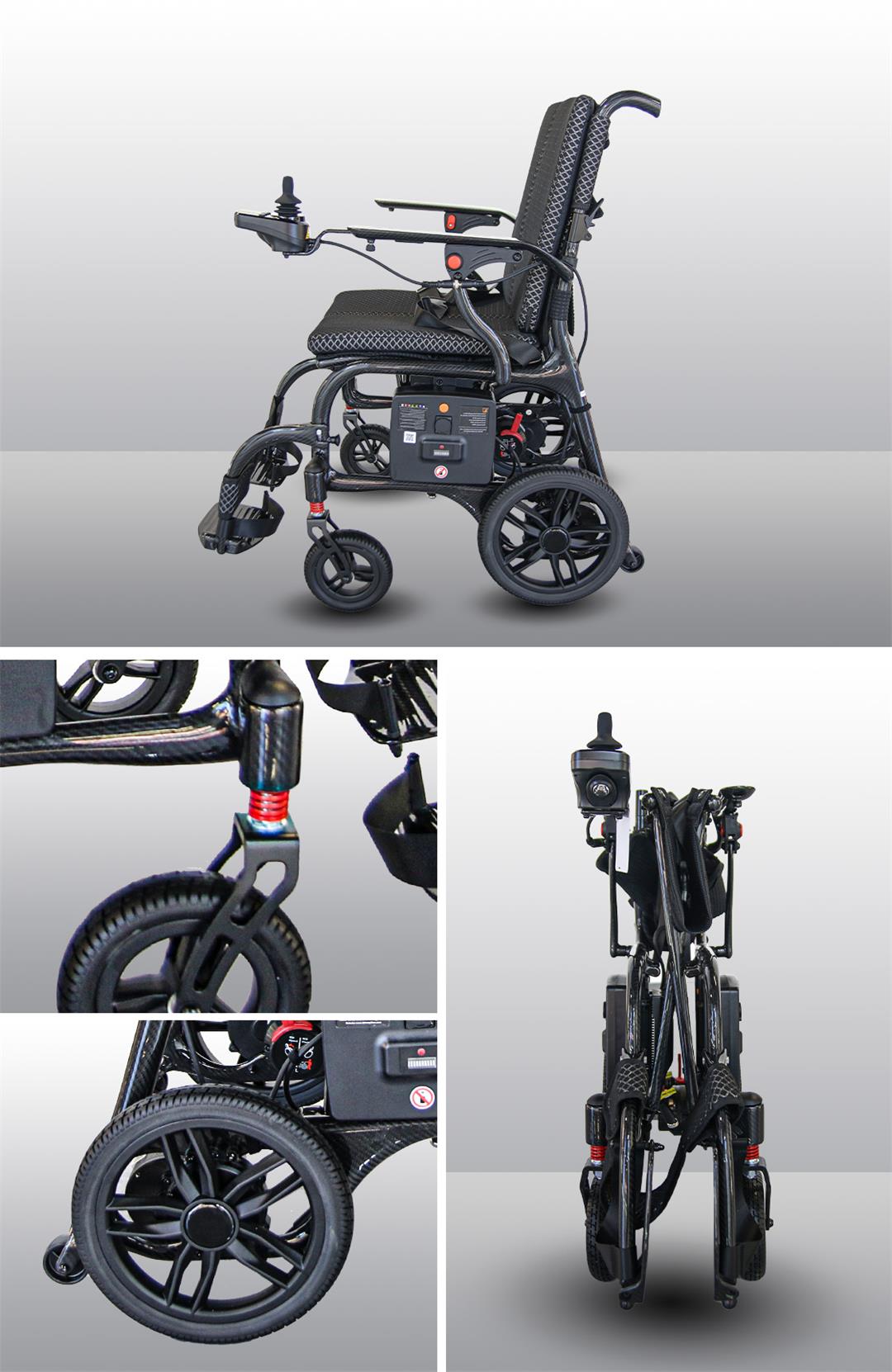
FAQ: Common Questions About Carbon Fiber Electric Wheelchairs
What is the approximate weight of the lightest electric wheelchair currently available?
A: Ultra-lightweight carbon fiber electric wheelchairs on the market can weigh as little as 13–15 kg, while standard lightweight models typically range from 15–20 kg; the exact weight depends on the battery, motor, and configuration.
Can carbon fiber power wheelchairs be taken on an airplane?
A: Some carbon fiber power wheelchairs are suitable for air travel, but they generally require lithium batteries that comply with aviation regulations; you should also confirm transport requirements with the airline in advance.
