

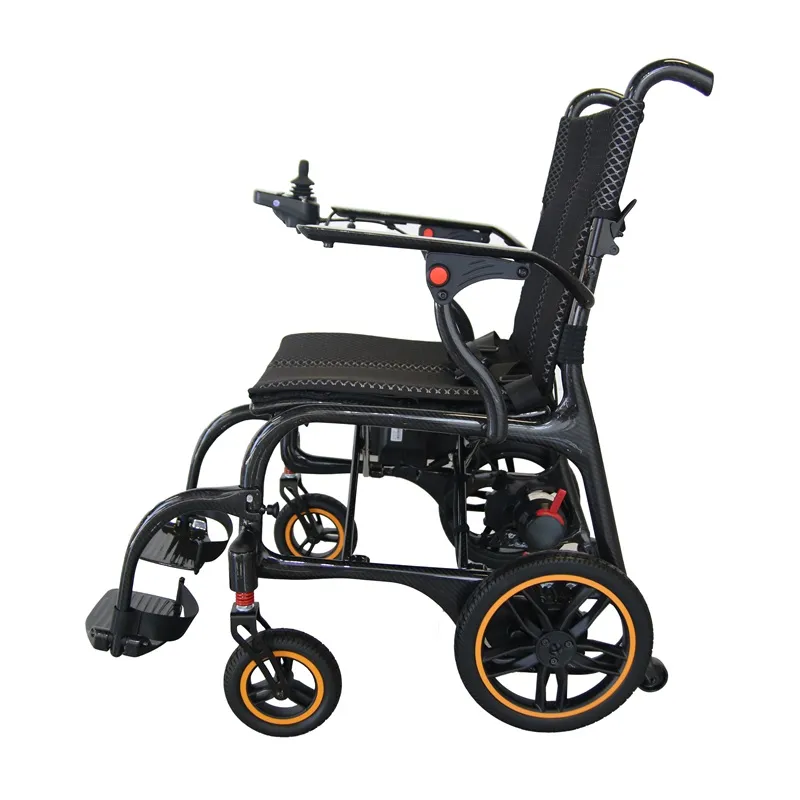
Thanks to advantages such as light weight, high structural strength, corrosion resistance, and ease of folding and transport, carbon electric wheelchairs are attracting increasing attention from overseas users, medical institutions, and brands specializing in mobility aids.
However, when choosing an electric wheelchair, range remains one of the primary concerns for consumers. Many users ask questions like: "What is a sufficient range for a carbon fiber electric wheelchair?" "Is a 15 km range too short?" or "Should I buy a model with a range of 30 km or more?" In reality, a longer range is not necessarily better; the ideal range depends on a comprehensive assessment of usage scenarios, user needs, product weight, and portability.
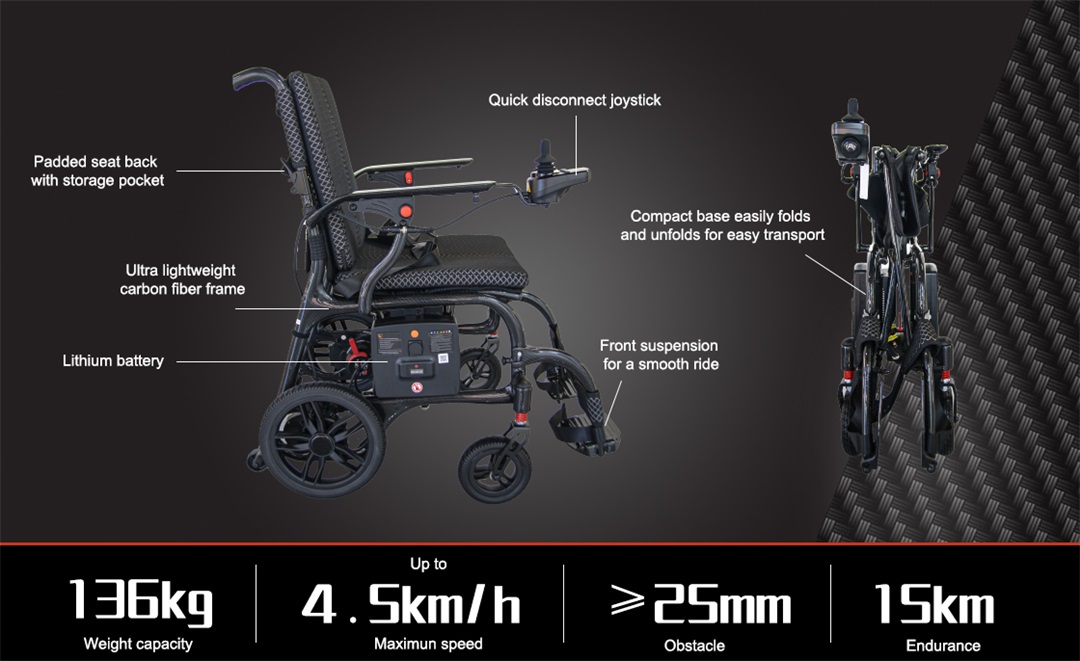
Currently, lightweight electric wheelchairs on the market—particularly carbon fiber models—typically offer a range of 10–20 km, with 15 km becoming a common, practical standard. For most users relying on these chairs for daily activities, a 15 km range covers typical needs such as moving around the neighborhood, short shopping trips, visits to the hospital, and strolls in the park. Furthermore, 15 km represents a reasonable balance achieved by manufacturers between weight, battery capacity, cost, and portability.
Why are power wheelchair users increasingly concerned about range?
With traditional manual wheelchairs, users primarily focus on frame strength, seat comfort, and ease of handling. However, as power wheelchairs become more widespread, the power system and battery performance have become crucial factors determining the user experience. For users with limited mobility, in particular, an insufficient range—leading to constant worry about power consumption while out—can directly undermine their sense of security and confidence when traveling.
A notable issue in the industry is that some consumers tend to confuse "theoretical range" with "actual range." Many power wheelchair products advertise a maximum range—such as 15 km, 20 km, or even 30 km—but these figures are usually obtained under standardized testing conditions. In real-world use, the actual range is influenced by various factors, including user weight, road conditions, driving speed, battery status, ambient temperature, and frequency of use. For instance, a carbon fiber power wheelchair with a rated range of 15 km might come close to that theoretical limit under ideal conditions—flat roads, a standard load, and normal speeds. However, if the user frequently traverses slopes, grassy areas, or uneven terrain, the motor must output more power, causing the battery to drain significantly faster. Therefore, when purchasing an electric wheelchair, users should look beyond the maximum range listed on the spec sheet and consider whether that range actually meets their real-world needs.
What does a 15 km range actually mean for daily use?
Many consumers perceive "15 km" as a limited distance. In practical terms, however, a 15 km range does not imply that the user must drive 15 km continuously in one go; rather, it means the chair can handle multiple short-distance trips throughout the day on a single charge.
Take an average home user, for example: a morning shopping trip to a nearby supermarket might cover a round trip of 2–3 km, while an afternoon outing to a local community center or park might add another 3–5 km. With additional short-distance movements in between, the total daily distance traveled might fall between 5 and 10 km. In this scenario, a carbon fiber power wheelchair with a 15 km range can typically meet the day's needs while still retaining some battery reserve.
A 15 km range is also highly practical for settings such as nursing homes, rehabilitation centers, and hospitals. These environments primarily involve indoor movement, transfers between buildings, and short-distance assisted travel, rather than prolonged, continuous driving. In such cases, prioritizing the unit's portability and ease of operation is often more important than maximizing battery capacity.
Of course, if a user primarily engages in long-distance outdoor activities—such as traveling more than 15 km continuously each day—or lives in an area with complex terrain and steep slopes, a wheelchair with a range exceeding 20 km would be a more suitable choice. However, for the vast majority of daily mobility needs, a 15 km range represents a well-balanced configuration.
Why do many carbon fiber electric wheelchairs opt for a 15 km standard range?
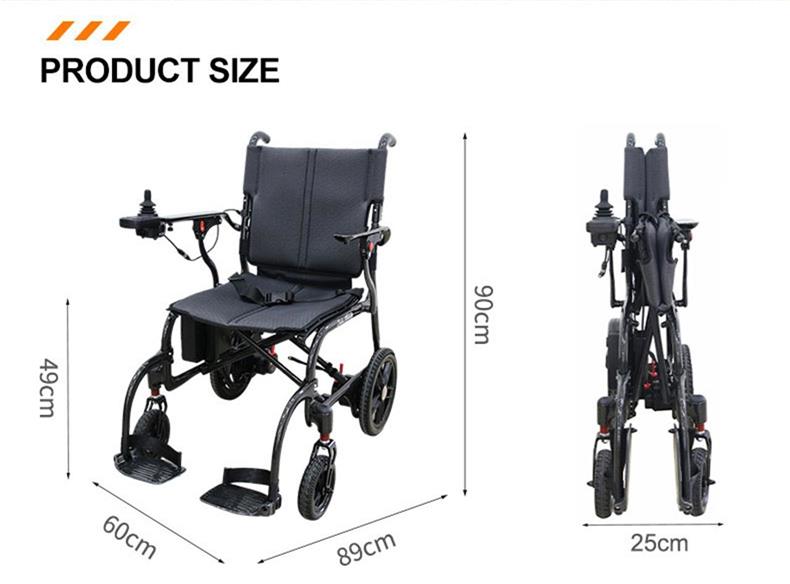
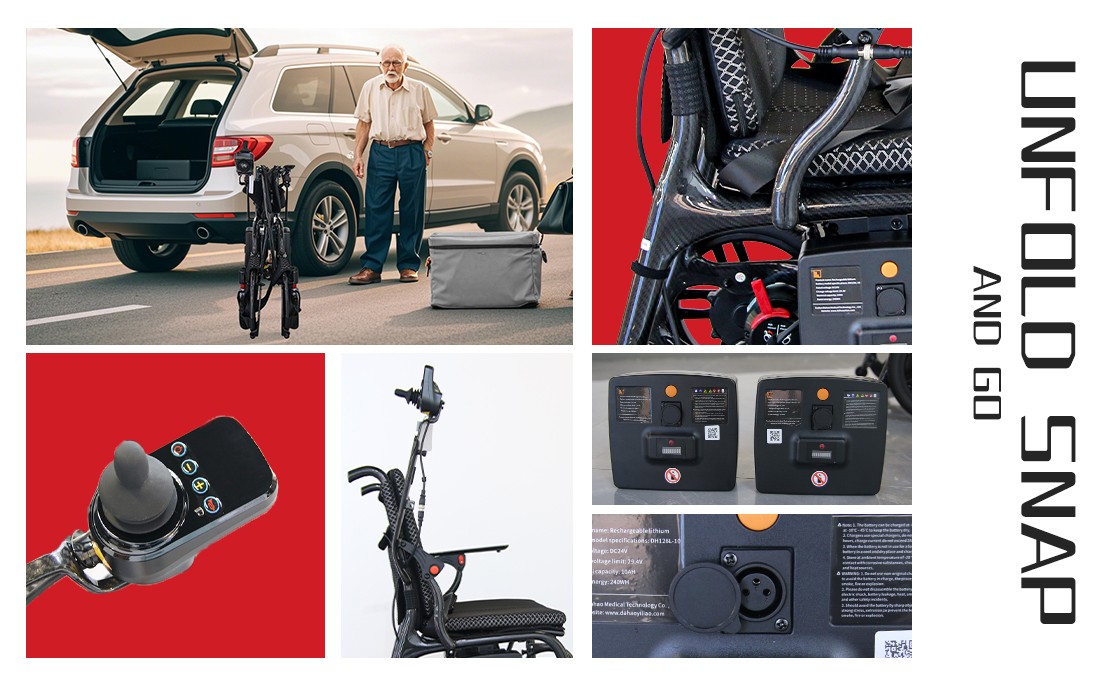
The defining characteristic of carbon fiber power wheelchairs is their lightweight design. Compared to traditional steel models, carbon fiber offers high strength and low density, allowing for a significant reduction in the wheelchair's overall weight without compromising structural stability. For electric wheelchair users, weight is a critical factor. Many users need to place their wheelchairs in car trunks or fold and carry them. While installing a higher-capacity battery can extend the driving range, it also increases the overall weight, thereby compromising portability.
Consequently, manufacturers of carbon fiber electric wheelchairs must strike a balance across several areas:
| Comparison Item | Carbon Fiber Electric Wheelchair with Around 15KM Range | High-Range Electric Wheelchair |
| Product Positioning | Daily mobility assistance and lightweight travel | Long-distance mobility |
| Battery Capacity | Usually equipped with 10Ah-12Ah lithium batteries | Larger-capacity battery packs |
| Overall Weight | Lightweight and easy to carry | Usually heavier |
| Portability | More suitable for folding and transportation | Higher requirements for handling and storage |
| Application Scenarios | Home use, community activities, travel, hospital visits | Extended outdoor activities and long-distance mobility |
From a manufacturing perspective, a 15km range is not merely about cost-cutting; it represents a rational balance between product performance and user experience. For lightweight carbon fiber electric wheelchairs, excessively increasing battery capacity would undermine the product's greatest advantage: portability.
Therefore, many professional manufacturers improve actual range without adding significant weight by optimizing frame structures, reducing mechanical resistance, enhancing motor efficiency, and refining battery management systems.
What are the main factors affecting the range of carbon electric wheelchairs?
The range of an electric wheelchair is not determined solely by battery capacity; it is influenced by the entire powertrain system.
First, battery capacity is a fundamental factor determining range. Most lightweight carbon fiber electric wheelchairs on the market use lithium batteries, with common configurations such as 24V 10Ah or 24V 12Ah. Battery energy can generally be calculated using the following formula:
Battery Energy (Wh) = Voltage (V) × Capacity (Ah)
For example, a 24V 10Ah battery has a theoretical energy of approximately 240Wh, while a 24V 12Ah battery has about 288Wh. All other factors being equal, a higher-capacity battery provides a longer range.
Second, motor power also affects energy consumption. Common configurations include dual 150W, 180W, or 250W brushless motors. Higher power improves hill-climbing and load-bearing capabilities but may also increase energy consumption. Manufacturers must therefore select motor specifications appropriate for the product's intended positioning.
Additionally, the user's weight is a significant factor affecting range. Manufacturers typically test range based on a standard load, but in real-world use, users of different weights place varying loads on the motor. For instance, with the same carbon electric wheelchair, a lightweight user might achieve a range close to the rated specification, whereas the range could decrease under heavier loads.
Road conditions are another crucial factor. Flat indoor floors and concrete surfaces typically consume less power, while environments such as grass, gravel paths, and slopes place greater strain on the motor. Therefore, it is essential to clarify the primary usage scenarios before purchasing a power wheelchair.
How do you determine if a 15km range meets your needs?
The best way to assess whether the range is sufficient is not simply by comparing numbers, but by calculating your daily travel distance.
If the user's primary needs include:
Activities near home;
Walking within the community;
Shopping at malls;
Hospital visits;
Short-distance trips;
Transitioning between indoor and outdoor environments;
...then a carbon fiber electric wheelchair with a 15km range will usually suffice.
However, if the user falls into the following categories:
Requires long-distance outdoor activity daily;
Frequently drives continuously for several hours;
Lives in an area with many slopes;
Needs to be out and about all day;
...then one might consider a model with a higher-capacity battery or extended range.
It is worth noting, however, that extended-range products often come with larger batteries, increased weight, and higher costs. Therefore, when selecting a power wheelchair, the goal is to strike the optimal balance between range and portability, rather than simply chasing the highest mileage.
How do OEM carbon electric wheelchair manufacturers address the range issue?
For overseas electric wheelchair brands, range is a key focus during the OEM manufacturing process. Top-tier carbon fiber electric wheelchair manufacturers (such as Dahao Medical) do not simply increase battery capacity; instead, they enhance product efficiency through systematic design.
First, the use of carbon fiber materials reduces the wheelchair's weight. A lighter frame lessens the load on the motor, allowing the limited battery power to be utilized more efficiently.
Second, high-efficiency brushless motors are employed. Compared to traditional motors, brushless motors offer advantages such as lower noise, higher efficiency, and a longer lifespan, providing more stable power output.
Third, the Battery Management System (BMS) is optimized. A sophisticated BMS regulates charging and discharging, enhances battery safety, and extends the battery's cycle life.
Fourth, products are customized to meet the specific demands of different markets. For instance, users in European and American markets may prioritize portability (foldability) and ease of transport for travel; markets in China and parts of Asia might focus more on balancing price and functionality; while medical institutions prioritize durability and ease of maintenance.
Therefore, for OEM clients, partnering with a carbon fiber electric wheelchair manufacturer that possesses both R&D capabilities and production experience ensures access to products with reliable range and allows for the development of solutions tailored to specific market needs.
FAQ: Common Questions About Carbon Fiber Electric Wheelchair Range
1. Is a 15km range sufficient for a full day's use?
For most everyday users, a 15km range generally meets basic daily mobility needs, such as neighborhood activities, shopping, and trips to the hospital. However, if extensive outdoor activity is required daily, a model with a longer range is recommended.
2. Why is the actual range lower than the manufacturer's rated 15km?
Manufacturer tests are typically conducted under standardized conditions. Actual usage is influenced by factors such as user weight, road conditions, speed, battery status, and temperature; therefore, it is normal for the actual range to be lower than the theoretical value.
3. Do carbon fiber electric wheelchairs always offer a longer range than standard electric wheelchairs?
Not necessarily. The primary advantages of carbon fiber are its lightweight nature and high strength. While reduced weight can improve energy efficiency, the actual range depends largely on battery capacity, motor efficiency, and the overall design.
4. Should range be the only factor considered when choosing a power wheelchair?
No. In addition to range, one must consider factors such as the unit's total weight, folded dimensions, motor power, battery safety, weight capacity, comfort, and after-sales service.
5. How should OEM clients determine the range configuration when sourcing carbon electric wheelchairs?
OEM clients should make decisions based on the needs of their target market, including average usage distance, transportation methods, price positioning, and regulatory requirements. Professional manufacturers typically offer range options—such as 10km, 15km, 20km, or even higher—tailored to specific usage scenarios.
