

In the past, many healthcare facilities relied heavily on traditional manual medical beds. While manual beds feature simple designs and lower procurement costs, they present unavoidable challenges during actual patient care. For instance, whenever a patient needs to adjust their backrest angle, elevate their legs, or change their lying position, caregivers must manually operate a crank mechanism; this process is not only time-consuming but also increases the physical strain on the staff.
For patients who are bedridden for long periods, critically ill, recovering from surgery, or elderly with limited mobility, frequent repositioning is a crucial aspect of care. If the equipment lacks flexibility, it can compromise patient comfort and even heighten the risk of complications such as pressure ulcers, poor blood circulation, and respiratory difficulties.
Simultaneously, modern healthcare facilities face multifaceted pressures, including nursing staff shortages, rising patient volumes, and the need to enhance service efficiency. Global trends indicate that an aging population is driving a rapid increase in the demand for long-term care; consequently, hospitals and elderly care facilities must adopt smarter equipment to alleviate the manual workload and improve the quality of care. Against this backdrop, electric medical beds have emerged as a key solution to the pain points associated with traditional beds.
Electric medical beds utilize motor-driven systems to replace manual mechanical adjustments, enabling caregivers and patients to easily modify bed height, backrest and leg angles, and overall positioning. A high-quality electric medical bed is more than just a place for a patient to lie down; it is a vital piece of assistive equipment that boosts staff productivity and enhances the patient's recovery experience.
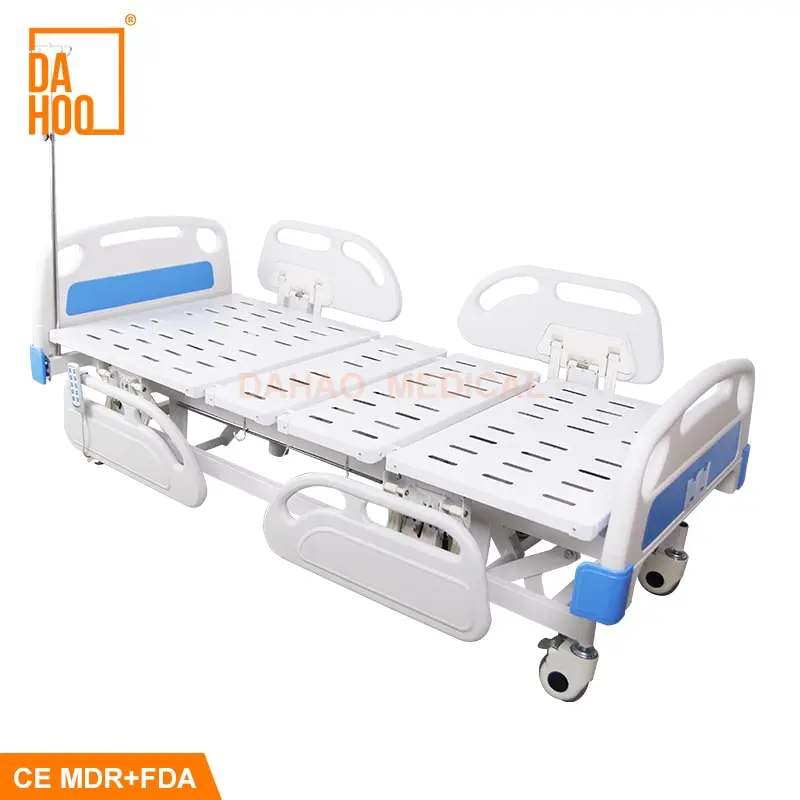
Why do modern healthcare facilities need to upgrade to electric medical beds?
The healthcare landscape is undergoing significant transformation. Historically, medical beds served primarily as a platform for rest and treatment, but today, they have become an integral part of the clinical care process. Since patients spend the majority of their hospital stay in close contact with their beds, the design of the bed directly impacts patient comfort, safety, and the efficiency of care delivery.
The primary drawback of traditional manual medical beds is their reliance on manual operation. For example, when a patient requires a semi-seated position for eating, medical examinations, or respiratory support, caregivers must manually adjust the backrest angle using a mechanical crank. If adjustments are required multiple times a day, the task becomes repetitive and physically demanding for caregivers.
The limitations of traditional hospital beds become particularly apparent in the following scenarios:
First, patients in intensive care require frequent repositioning. Due to their medical conditions, some patients cannot move independently and rely on caregivers to change their body positions regularly. Inefficient bed adjustment not only increases the burden on caregivers but may also hinder patient recovery.
Second, the demand for elderly care is rising. As the global population ages, nursing homes and rehabilitation centers are admitting an increasing number of patients with limited mobility. These patients often rely on medical beds for long-term assistance with daily activities.
Third, caregiver workloads are constantly increasing. The healthcare industry faces widespread staffing shortages; leveraging equipment to reduce repetitive labor has become a key strategy for improving the efficiency of medical services.
Electric medical beds were developed in response to these needs. Equipped with electric control systems, they allow patients or caregivers to easily adjust the bed, making the caregiving process smarter and more efficient.
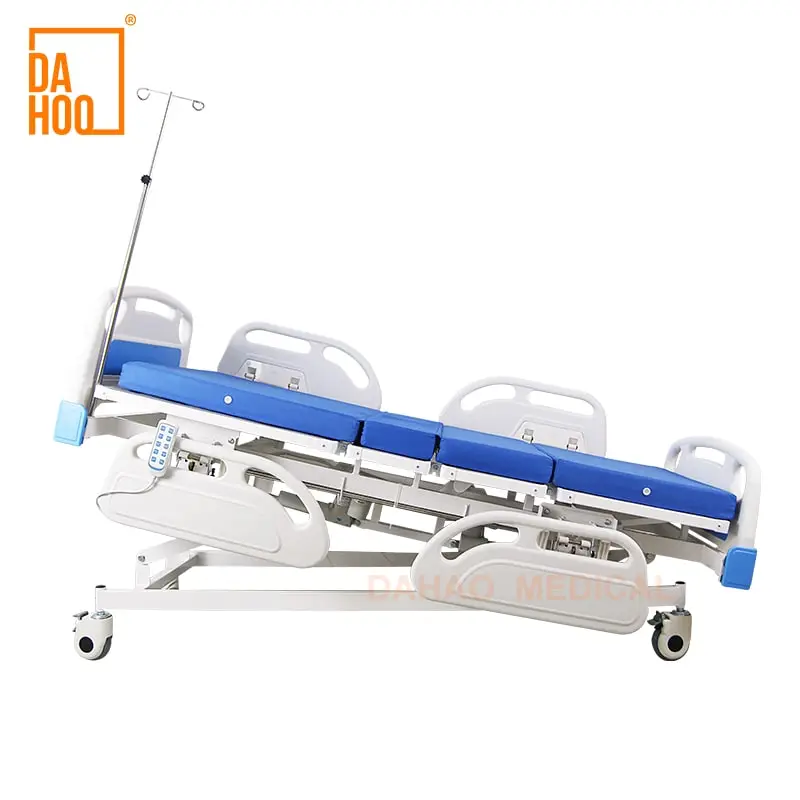
Core Functions and Operating Principles of Electric Medical Beds
Electric medical beds typically consist of a bed frame, electric actuators, a motor control system, a handheld controller, a power supply system, and safety side rails. Depending on the specific application, models may also include features such as a central braking system, a weighing system, a backup battery, a smart control module, and nursing assistance functions.
Their basic operating principle involves using low-voltage motors to drive mechanical structures that alter the bed's configuration. Caregivers or patients issue commands via the handheld controller; the motors then drive the actuators to achieve adjustments at various angles.
Common functions of electric hospital beds include:
•Backrest elevation/lowering;
•Leg section elevation/lowering;
•Overall height adjustment;
•Trendelenburg positioning;
•Reverse Trendelenburg positioning;
•Lateral tilt adjustment;
•Automatic return-to-flat function.
Most electric medical beds on the market utilize a 24V safe voltage system for stable operation. Some specialized models feature multiple independent motors, allowing for separate control of different sections of the bed. For instance, three- or four-motor electric medical beds allow for the independent adjustment of the backrest, leg section, and overall bed height, offering greater flexibility in medical care.
Advantages of Electric Medical Beds in Enhancing the Patient Care Experience
Since medical equipment ultimately serves the patient, the patient experience is a key criterion for evaluating the value of electric hospital beds.
1. Providing more comfortable positioning
For patients confined to bed for extended periods, maintaining a single posture can lead to physical discomfort. Prolonged pressure on specific areas of the body, in particular, can increase the risk of skin damage and pressure ulcers.
Electric medical beds enable patients to adjust their body positions with greater ease.
Examples include:
•Raising the backrest by 30°–70° to facilitate a semi-seated position;
•Adjusting the leg section to enhance lower-limb comfort;
•Raising or lowering the entire bed to make getting in and out easier.
Compared to manual repositioning by caregivers, electric adjustments are smoother and minimize physical strain or pulling on the body.
For post-operative patients, appropriate bed angle adjustments can improve rest quality while also facilitating medical examinations and nursing procedures.
2. Enhancing patient autonomy
While traditional medical beds often require caregiver assistance for adjustments, electric hospital beds allow some patients to operate the controls themselves via a handheld remote.
For rehabilitation patients with some degree of mobility, this means they can adjust their position according to their own needs, such as:
•Raising the backrest angle while reading;
•Lowering the bed when resting;
•Adjusting to a seated position for meals.
This level of autonomous control not only improves daily convenience but also boosts patient motivation during the recovery process.
3. Reducing safety risks during movement
Falls can easily occur when patients get in or out of bed or shift their position if the bed height is unsuitable.
Electric hospital beds typically feature height adjustment capabilities, allowing the bed surface to be set according to care requirements.
Examples include:
•Raising the bed height during nursing procedures to reduce the need for caregivers to bend over;
•Lowering the bed height when the patient is getting out of bed to enhance safety.
Some advanced electric hospital beds are also equipped with fall-prevention side rails, alarm systems, and smart monitoring functions to further ensure patient safety.
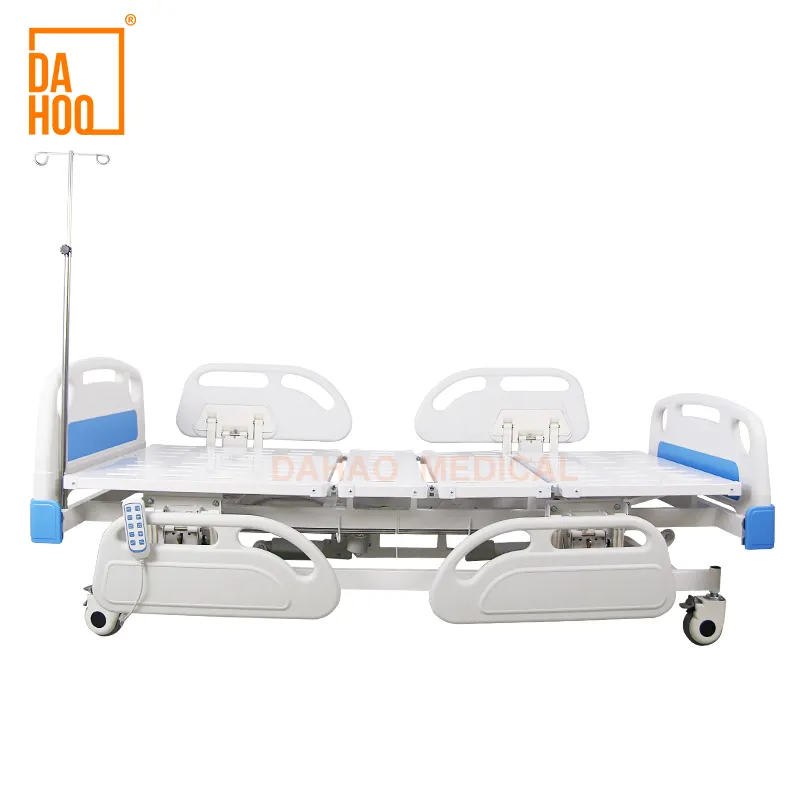
How Do Electric Medical Beds Improve Care Efficiency in Healthcare Facilities?
For hospitals and care facilities, the value of equipment lies not only in the patient experience but also in enhanced operational efficiency.
1. Reducing Repetitive Tasks for Caregivers
Caregivers must perform a large number of bed adjustments daily. Relying entirely on manual operation consumes a significant amount of time.
For instance, a caregiver responsible for multiple patients might need to adjust bed angles dozens of times a day. If each manual adjustment takes 1–3 minutes, the cumulative time lost over the long term is substantial.
Electric hospital beds, controlled by buttons, can complete angle adjustments in seconds, drastically reducing the time spent on mechanical operations.
This allows caregivers to devote more energy to:
•Patient monitoring;
•Communication;
•Rehabilitation guidance;
•Medical support tasks.
2. Lowering the Risk of Occupational Injuries for Caregivers
Back and lumbar injuries have long been an issue in the nursing profession. Adjusting traditional hospital beds often requires caregivers to frequently bend over and exert force to operate mechanical cranks.
Electric medical beds minimize these repetitive motions, making the work more ergonomically sound.
For large hospitals, reducing staff occupational injuries not only boosts job satisfaction but also lowers long-term personnel management costs.
3. Enhancing the Standardization of Medical Services
Modern healthcare facilities are increasingly prioritizing standardized management.
With traditional manual beds, operation methods can vary between caregivers due to the reliance on manual handling. In contrast, electric hospital beds utilize standardized controls, ensuring greater consistency in care procedures.
Examples include:
•Standardized angle adjustments;
•Standardized nursing heights;
•Standardized patient positioning.
This is particularly crucial for intensive care, rehabilitation, and long-term care facilities.
Analysis of Key Application Scenarios for Electric Medical Beds
As healthcare needs expand, electric medical beds are moving beyond large hospitals and into a wide range of care settings.
1. General Hospital Wards
General hospital wards are among the primary settings for electric medical beds.
Inpatients present diverse needs, including:
•Post-surgical recovery patients;
•Elderly patients;
•Patients with chronic diseases;
•Patients with mobility impairments. Electric medical beds meet the diverse needs of patients regarding positioning adjustments and nursing assistance.
2. ICU (Intensive Care Unit) Environments
ICU patients often require precise positioning management.
Electric medical beds enable healthcare staff to quickly perform:
•Semi-seated/reclining adjustments;
•Specialized therapeutic positioning;
•Adjustments to assist with examinations.
Some high-end models also feature built-in scales, allowing staff to monitor changes in the patient's weight in real-time.
3. Rehabilitation Facilities
Rehabilitation patients often require long-term training and physical adjustments.
Electric medical beds assist patients in changing positions before and after training, enhancing convenience throughout the rehabilitation process.
4. Elderly Care Facilities
With the aging of society, the demand for electric medical beds in elderly care facilities is steadily increasing.
Elderly individuals requiring long-term care often need:
•A more comfortable sleeping environment;
•Convenient assistance for sitting up and lying down;
•A safer experience when getting in and out of bed.
Electric medical beds effectively meet these needs.
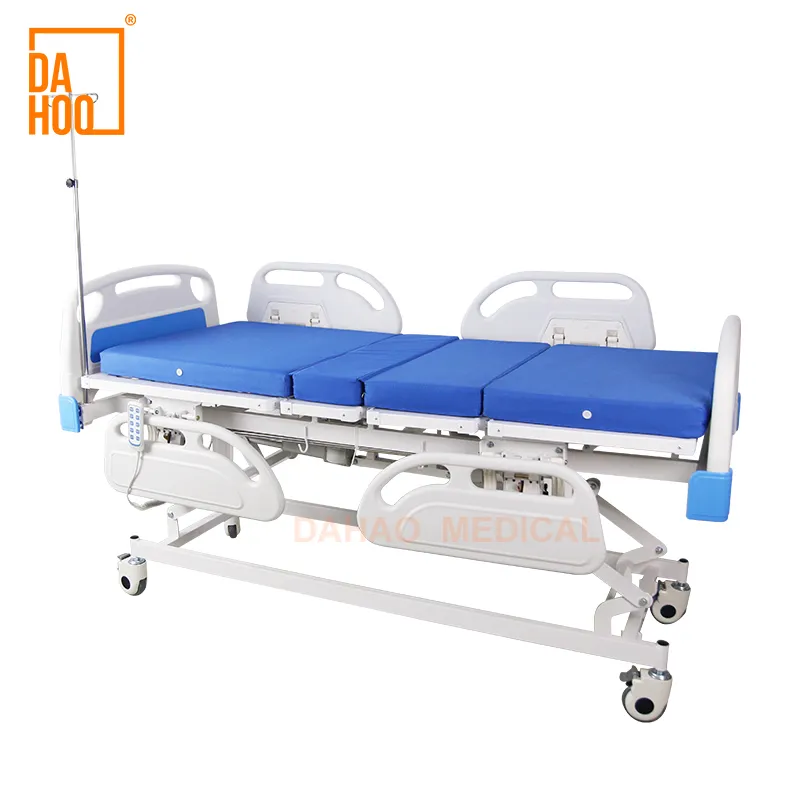
FAQ: Common Questions About Electric Medical Beds
Q1: What is the primary advantage of an electric medical bed over a standard medical bed?
The main advantage is the ability to automatically adjust the bed's position—including the backrest, leg section, and overall height—using electric motors. This enhances patient comfort while reducing the physical strain on caregivers.
Q2: What is the typical weight capacity of an electric hospital bed?
It varies by model. Common electric hospital beds have a weight capacity of approximately 150 kg to 250 kg. When purchasing, medical institutions are generally advised to select models with a safety margin that accommodates the specific needs of their patient population.
Q3: Do electric medical beds require professional operators?
Most electric medical beds are very simple to operate; adjustments can be made using a handheld controller. Caregivers can become proficient in their use after only brief training.
Q4: Why do hospitals prefer electric medical beds?
Hospitals must manage the care needs of a large number of patients. Electric medical beds improve nursing efficiency, reduce the time spent on manual adjustments, and lower the risk of occupational injury for caregivers.
Q5: Can electric medical beds still be used during a power outage?
Most professional electric medical beds are equipped with backup batteries or an emergency lowering function, enabling necessary operations during power outages and enhancing safety.