

For elderly individuals with limited mobility, those who are bedridden for long periods, recovering from surgery, or requiring assistance with daily living, a suitable home care bed can significantly enhance convenience and reduce the physical burden on caregivers.
Unlike standard beds, home care beds are specifically designed with a focus on body support, postural adjustment, and safety. Adjustable home care beds—available in manual or electric versions—allow for the modification of the head section, foot section, and overall bed height, assisting the elderly with daily activities such as sitting up, eating, resting, and getting in or out of bed.
The current market offers various types of home care beds, including manual, electric, and multifunctional models. These products differ significantly in terms of weight capacity, motor performance, side-rail design, and adjustment features.
So, how should families go about choosing the right home care bed? What are the specific advantages of adjustable home care beds? This article explores these questions by examining practical care needs, product specifications, and key considerations for making a purchase.
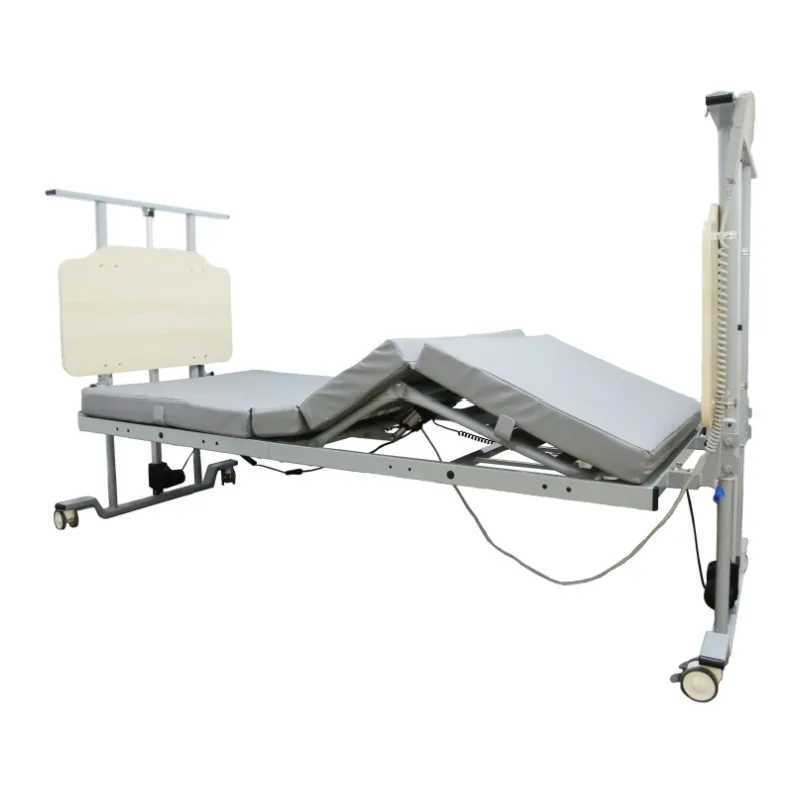
Why do elderly family members need a home care bed?
While not every elderly person requires a specialized care bed, standard beds often fall short when an individual experiences declining mobility, weakness in the lower limbs, long-term bed confinement, or the need for post-surgical recovery.
1. Standard beds make it difficult for the elderly to sit up
As people age, they may experience a gradual decline in muscle strength, joint flexibility, and balance. Transitioning from a lying position to a sitting position often requires the use of one’s arms for support or assistance from another person.
On a standard bed, the angle of the headboard and the height of the bed are typically fixed. If an elderly person wishes to sit up to eat, read, or watch television, they must rely on pillows for propping—a setup that often leads to the body sliding downward or an unstable, uncomfortable posture.
Adjustable home care beds feature a backrest elevation function, allowing the elderly to transition their body position gradually and reducing the physical strain involved in sitting up.
2. Long-term bed confinement increases caregiving challenges
Being bedridden for an extended period increases the risk of pressure injuries (bedsores), particularly over bony prominences such as the sacrum/tailbone, hips, and heels.
Caregivers must regularly assist the elderly in adjusting their posture, turning over, and checking the condition of their skin. If a bed cannot be adjusted, caregivers often have to repeatedly bend over or manually lift the elderly, which places a significant physical strain on them.
3. Improving Home Care Efficiency
Home care is typically provided by a spouse or children. If an elderly person requires frequent assistance with sitting up, eating, personal hygiene, or changing clothes, the caregiver’s workload increases substantially.
Home care beds—equipped with features like electric height adjustment, side rails, and adjustable bed panels—can reduce repetitive physical tasks, making daily caregiving more manageable.
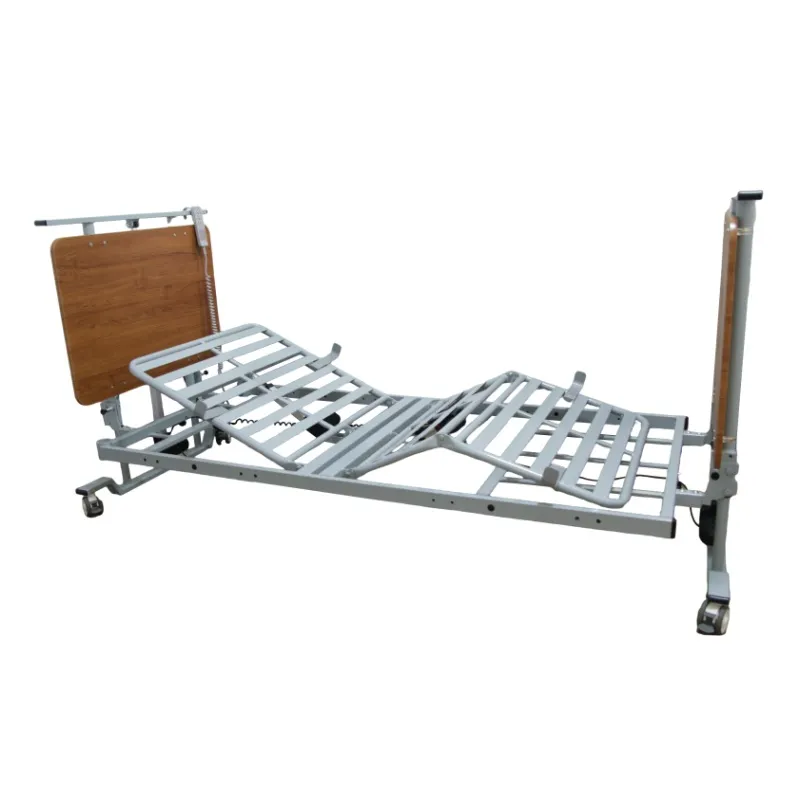
What are the common types of home care beds?
Based on their drive mechanisms and functional configurations, home care beds are generally categorized into the following three types:
1. Manual Home Care Beds
Manual care beds use hand cranks or levers to adjust the angle of the bed panels; common functions include raising or lowering the backrest and the leg section.
These beds have a relatively simple structure and do not rely on electric power. They are generally more affordable to purchase and maintain, making them suitable for families with limited budgets or those who do not require frequent adjustments.
The drawback is that adjustments must be performed manually by the caregiver. If the elderly person needs to change positions frequently, this can increase the caregiver's physical workload.
2. Electric Adjustable Home Care Beds
Electric care beds use motors, a control box, and a remote control to adjust the bed. They are currently the most practical type of home care bed.
Common functions include:
•Backrest adjustment: Helps the elderly sit up for activities such as eating or reading.
•Leg section adjustment: Allows for the adjustment of leg positioning to enhance comfort while resting.
•Overall height adjustment: Enables the bed surface to be raised or lowered, facilitating easier entry/exit and caregiving tasks.
•Synchronized back and leg adjustment: Allows for the simultaneous adjustment of both the backrest and leg section.
Electric adjustable home care beds are ideal for families where the elderly person requires frequent position changes, receives long-term home care, or where the caregiver has limited physical strength.
3. Multifunctional Home Care Beds
Multifunctional care beds build upon basic adjustment features by adding capabilities such as turning assistance, built-in commode openings, removable headboards, and casters for mobility.
These products are designed for elderly individuals with more complex care needs. However, it should be noted that as the number of features increases, so do the price, the complexity of operation, and the maintenance requirements. Therefore, families should not blindly pursue a high number of functions; instead, they should make choices based on the elderly individual's actual physical condition.
Comparison of Different Types of Home Care Beds
| Bed Type | Main Features | Advantages | Limitations |
| Manual Care Bed | Hand-crank adjustment | Simple structure, lower cost | Requires manual operation |
| Electric Care Bed | Motorized adjustment | Easy operation, convenient positioning | Requires power supply |
| Multifunctional Care Bed | Multiple adjustable functions | Supports complex care needs | Higher cost and maintenance |
What parameters should you consider when choosing a home care bed?
A home care bed is more than just a piece of furniture—it is a piece of long-term care equipment. When purchasing one, you should focus on specifications such as bed dimensions, load-bearing capacity, adjustment range, side rails, and the mattress.
1. Bed Dimensions and Load-Bearing Capacity
The dimensions of the bed directly affect the user's sleeping comfort, while also influencing how well it fits into the bedroom space and how easily caregivers can perform their tasks.
Below are some common reference parameters for home care beds:
| Parameter | Common Reference Range |
| Bed Width | 90–120 cm |
| Bed Length | 190–210 cm |
| Bed Height Adjustment | Approximately 35–75 cm |
| Safe Working Load | Approximately 180–250 kg |
| Backrest Adjustment | Approximately 0–70° |
The data above serves only as a reference range for certain products; please refer to the manufacturer’s specific technical specifications.
Pay particular attention to the "Safe Working Load" (SWL), which must be sufficient to support the combined weight of the elderly individual, the mattress, bedding, and any other accessories used on the bed.
For example, if an elderly person weighs 80 kg and the mattress and bedding weigh 15 kg, the bed’s load capacity should include an appropriate safety margin—avoid selecting a bed where the total weight is consistently near its maximum capacity.
2. Backrest and Leg-Rest Adjustment Functions
One of the primary advantages of an adjustable home care bed is the ability to change body positioning to suit different daily activities.
Adjusting the backrest allows the user to transition from a lying-down position to a semi-seated position, which is ideal for eating, reading, or socializing. Adjusting the leg section allows for changes in the support position of the knees and lower legs, enhancing comfort in various situations.
Before purchasing, consider checking the following:
•The maximum adjustment angle of the backrest.
•Whether the leg section can be adjusted independently.
•Whether the backrest and leg section can be adjusted in synchronization.
•Whether the adjustment mechanism operates smoothly.
•Whether the bed platform is designed to provide proper bodily support.
Note that a larger adjustment angle is not necessarily better. For individuals recovering from surgery or those with specific medical restrictions regarding body positioning, please consult a physician or rehabilitation therapist first.
3. Side Rail Design and Safety
Side rails help the elderly maintain their position on the bed and, to some extent, reduce the risk of accidentally rolling off. When selecting a bed rail, pay close attention to its locking mechanism, edge finishing, gaps, and ease of operation. Be particularly mindful of the space between the bed rail and the mattress to prevent any risk of a person’s head, neck, or limbs becoming trapped.
If an elderly individual has cognitive impairments, exhibits agitation, or is prone to climbing over the bed rail, an individualized safety assessment is necessary. Bed rails are not a substitute for regular, daily supervision.
4. Mattress Support and Pressure Relief
The mattress directly affects both the comfort and skin health of an elderly person who is bedridden for long periods.
Common types of nursing mattresses include:
•High-density foam mattresses: Provide basic support; suitable for general home care.
•Zoned-support mattresses: Offer varying levels of support for different parts of the body.
•Pressure-relieving mattresses: Utilize specific materials and structures to distribute body pressure.
•Alternating-pressure air mattresses: Use air chambers that inflate and deflate in cycles to shift pressure points.
For individuals who are bedridden for extended periods or are at a high risk of developing pressure ulcers, an appropriate pressure-relieving mattress should be considered. However, a mattress cannot replace the need for regular repositioning, skin inspections, and proper nutritional management.
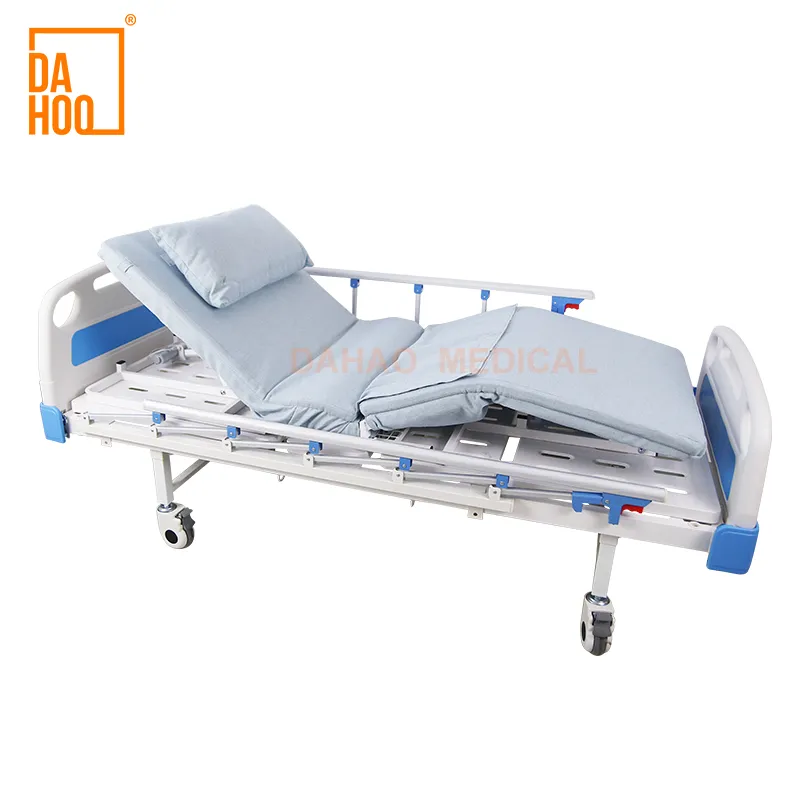
What are the key advantages of adjustable nursing beds for home use?
Compared to standard beds, the primary advantage of an adjustable nursing bed is the ability to modify the bed’s position and height to suit an elderly person’s physical condition.
1. Multi-angle adjustment for greater convenience
While a standard bed only offers a fixed, flat position, an adjustable nursing bed allows for the elevation of the back and leg sections to meet various needs.
For instance, the backrest can be raised for meals, adjusted to a comfortable semi-seated position for reading, or returned to a preferred resting posture.
This design reduces the need for the elderly to shift their bodies frequently and eliminates the instability often caused by using pillows to prop oneself up.
2. Electric height adjustment to ease the burden on caregivers
Some adjustable nursing beds for home use feature overall height adjustment, allowing caregivers to set the bed surface to an optimal height for their tasks. For example, when changing bed linens, tidying sheets, or performing personal hygiene, the bed surface can be raised to a comfortable height, reducing the need for prolonged bending. Conversely, when an elderly person prepares to get out of bed, the surface can be lowered to allow their feet to reach the floor easily.
3. Improving the Experience of Eating and Daily Activities
Elderly individuals who are bedridden for long periods may need to eat, drink, or read while in bed.
With an adjustable backrest, a home nursing bed allows the user to maintain an upright or semi-upright sitting position. However, for those with swallowing difficulties, the appropriate posture for eating should be assessed by a professional to prevent the risk of aspiration.
4. Facilitating Caregiving and Daily Cleaning
Adjustable bed frames allow caregivers to modify the height and angle of the bed surface to suit specific tasks—such as changing linens, inspecting the skin, or assisting the user with turning.
Some nursing beds also feature detachable headboards and movable side rails, which make daily cleaning and maintenance much more convenient.
Common Pitfalls When Purchasing Home Nursing Beds
While the market for home nursing beds is expanding, some products suffer from poorly conceived designs, unreliable motor quality, or inadequate after-sales support.
1. An Abundance of Features with Little Practical Value
Some manufacturers highlight features like automated turning, backrest adjustment, leg elevation, height adjustment, and built-in commode openings as key selling points; however, not every household requires such an extensive configuration.
For instance, an elderly person who is still capable of turning over independently might benefit more from a simple backrest adjustment and overall height adjustment, rather than a complex automated turning system.
Solution: Assess the individual’s physical condition and daily care requirements before deciding on a specific set of features. Prioritize functions that will be used frequently to avoid unnecessary costs.
2. Poor Motor Quality Affecting Long-Term Use
Electric home nursing beds rely on motors to drive the bed platform and adjustment mechanisms. If a motor lacks sufficient power or the control system is unstable, it may lead to issues such as slow movement, excessive noise, or interruptions during adjustment.
When purchasing an electric home nursing bed, consider checking the following:
| Motor Performance | Recommended Inspection |
| Motor Quantity | Confirm motor configuration |
| Rated Load | Match motor capacity with bed load |
| Operating Noise | Check noise during adjustment |
| Protection System | Check overload and overheating protection |
| Control System | Test remote control response |
| Service Life | Request durability test data |
Please note that the number of motors does not necessarily correlate with the overall quality of the nursing bed. It is even more critical to ensure that the motor is well-matched to the bed frame structure and that the entire unit can operate stably under its rated load.
3. Mismatch between side rails and mattress
Some consumers may replace the original mattress with a thicker one after purchasing a nursing bed. However, a change in mattress thickness can create new gaps between the side rails and the mattress, increasing the risk of an elderly person becoming trapped.
Solution: Prioritize using the mattress and side rails recommended by the manufacturer. Whenever a mattress is replaced or an accessory is added, re-examine the gaps around the side rails and the overall safety of the bed.
4. Insufficient bed stability
The bed frame, connecting components, and casters all affect the overall stability of a nursing bed. If the structural strength is inadequate or the caster locking mechanisms are unreliable, the bed may shift when an elderly person gets in or out.
Recommendation: Carefully inspect the materials of the bed frame, the integrity of connection points, the functionality of the caster brakes, and whether the bed exhibits any noticeable wobbling during height adjustments.
5. Inadequate after-sales service and spare parts availability
Components such as motors, remote controls, control boxes, and casters may eventually require repair or replacement.
Before purchasing, verify the warranty period, repair procedures, availability of spare parts, and the extent of technical support provided. For electric nursing beds, it is also essential to understand the emergency operating procedures in the event of a power outage.
How to choose the right nursing bed for a home environment?
Beyond product specifications, the home space and the environment in which the bed will be used are equally important.
1. Measure the bedroom space. Before making a purchase, measure the dimensions of the bedroom, doorways, and hallways. In addition to the bed itself, ensure there is sufficient space for caregivers to move around. If the user relies on a wheelchair, account for the space needed for parking and maneuvering the wheelchair.
2. Check power supply requirements. Electric home nursing beds require a stable power source. Power cords should be routed carefully—avoiding main walkways—to prevent elderly users or caregivers from tripping.
3. Consider the need for mobility. Some home nursing beds are equipped with casters, which facilitate cleaning underneath the bed and allow for repositioning. Always ensure the casters are locked during use to prevent the bed from moving unexpectedly.
4. Anticipate future care needs. An elderly person’s physical condition may change over time. While a bed with only backrest adjustment might suffice currently, features such as full-bed height adjustment may become necessary in the future. Therefore, if your budget allows, you may opt for an electric nursing bed with a reliable structure and a well-thought-out set of features.
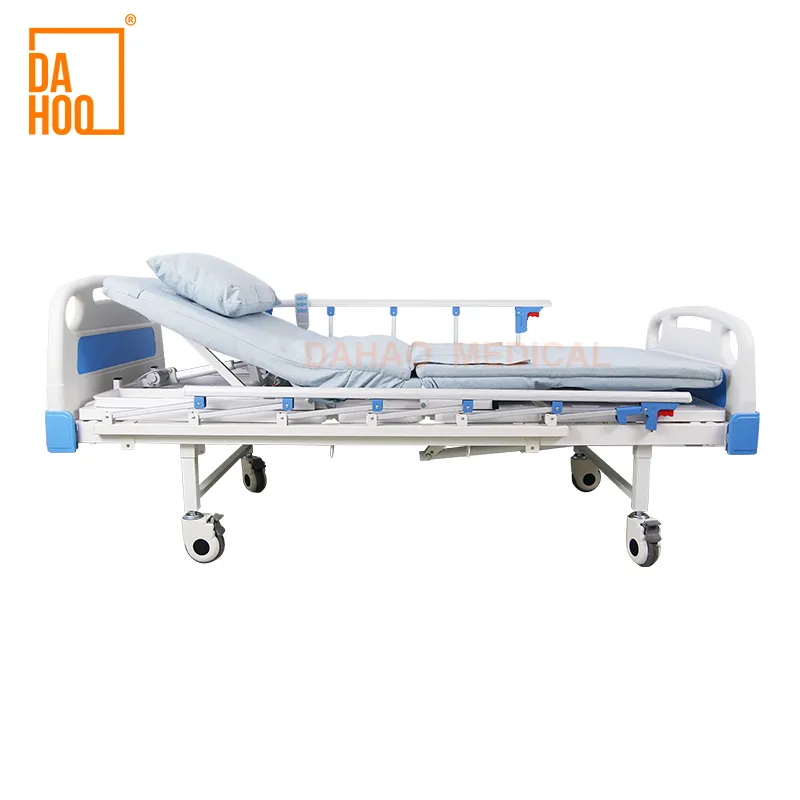
Frequently Asked Questions (FAQ) About Home Nursing Beds
Q1: Can a regular bed serve as a substitute for a home nursing bed?
If an elderly person is able to get up and move around independently, a regular bed is generally sufficient to meet their basic needs. However, for those who are bedridden for long periods, have limited mobility, or require frequent care, a home nursing bed is a more practical choice.
Q2: Should I choose a manual or an electric home nursing bed?
Manual nursing beds are suitable for situations where adjustments are infrequent or for households with a limited budget. Electric, adjustable nursing beds offer greater convenience and are ideal for those who need frequent position changes or in cases where caregivers have limited physical strength.
Q3: What weight capacity should I look for in a home nursing bed?
Some models have a safe working load of approximately 180–250 kg. You should select a bed based on the combined weight of the elderly person, the mattress, and any accessories, while ensuring an adequate safety margin.
Q4: Can a home nursing bed prevent pressure ulcers (bedsores)?
While a nursing bed helps with adjusting body position, it cannot prevent pressure ulcers on its own. For individuals who are bedridden long-term, it is also necessary to change positions regularly, monitor the skin, and use a pressure-relieving mattress based on the individual's risk level.
Q5: Can an electric home nursing bed still be used during a power outage?
This depends on whether the product is equipped with a backup battery or a manual emergency override mechanism. You should verify these features with the manufacturer before making a purchase.