

— A Comprehensive Analysis of Senior Assistive Mobility Needs, from Safety and Comfort to Lightweight Electric Wheelchairs
As the global community is becoming an older one, one of the main social challenges is how to maintain the quality of life and independence of the elderly people as well as their mobility. Many old-timers who are affected by weak legs or mobility limitations or have a chronic illness struggle daily with the execution of the most typical activities at home. Not so rarely, in old days, some families solved the problems with limited mobility by accompanying the elderly with family member, using a push chair, or limiting outdoor activities. However, this approach increases the level of the caregiver’s burden. Besides that, it is almost unavoidable that older people's activities become less social which in turn affects their mental wellbeing. For these reasons, electric wheelchairs are now more than just a means of mobility for senior citizens, they are a very efficient tool for enabling independence, increasing social interactions and reducing the need for care in their everyday lives.
When many families decide to actually purchase an electric powerchair, one of the common things that they experience is that, the process is far more difficult than imagining. A wide range of powerchairs is available. There are electric wheelchairs designed for home use only, power wheelchairs that easily fold, lightweight ones for transportation, long-range models suitable for the elderly who travel regularly by wheelchair, and rugged all-terrain units ideal for rough or outdoor environments. Each model differs greatly in the terms of weight, battery power, motor output, control features, safety features, and cost. The risk of picking an "unsuitable" purchase is very high if only the price, looks, or specs are the only things of concern but they forget a senior's physical condition as well as their real-life use environment.
A very well known case is where one family went all out with a very light electric wheelchair, thinking that a smaller size means easier to transport and use. However, they later discovered that the battery life was so insufficient that even a long journey would not be possible. Likewise, other people have had the desire to run at a higher speed so they bought a high-powered version, only to discover that the resulting bulkiness made it very difficult for the senior to handle it by themselves and also for relatives to move it. Some of the shoppers overlook the comfort of the seating, the responsiveness of the controls and the safety features, with the result that the elders have an electric wheelchair at their disposal but are missing out on a true, improved experience of use.
The elderly population that is 70 and up is growing continuously all around the globe as the statistics show. An aging society is the reason why the number of people requiring various kinds and types of assistive devices increases. Electric wheelchairs have become such an important part of daily living that one can hardly separate them from other mobility appliances. Senior citizens use these assistive devices not only to maintain their independence but also to have a much easier interaction within their community as their physical mobility is one of the limiting factors. As a result, in order for the elderly to have their best electric wheelchairs, it is important to look at the physical characteristics of the elder, the surrounding environment, their usage pattern and the product performance in a holistic way and not just go by the price.
This article will begin by addressing the main issue facing elderly seniors when it comes to getting an electric wheelchair. Then it will go further and provide an in-depth guide on picking a suitable product and focus mainly on what lightweight electric wheelchair features and purchasing considerations are most relevant to senior users.
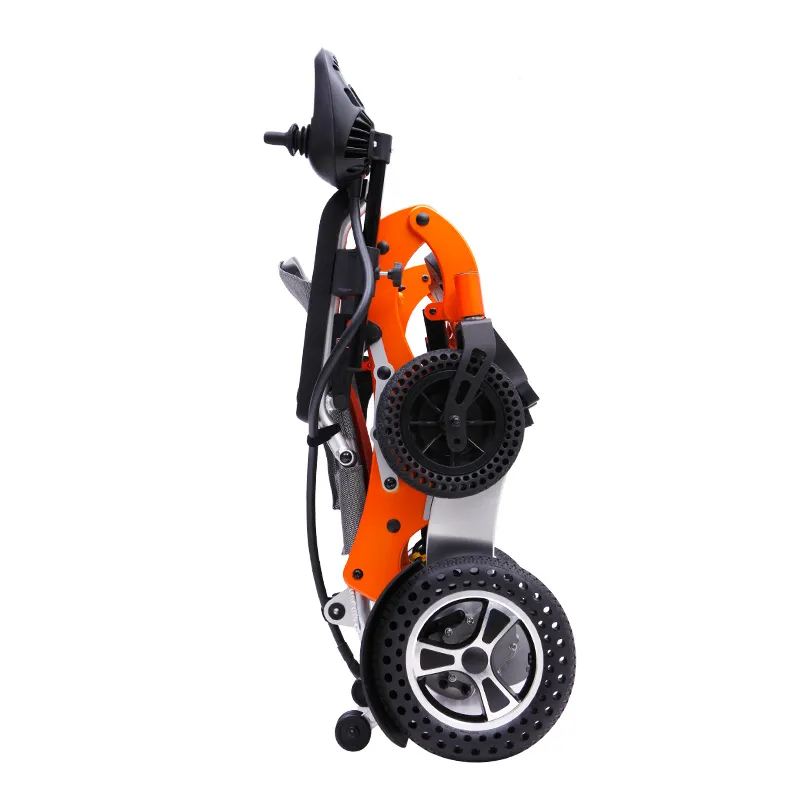
Should seniors refrain from focusing too much on price when getting an electric wheelchair?
Cheap is usually the go-to option for many users who are interested in electric wheelchairs, and it is not surprising to find a number of customers choosing a wheelchair based purely on price. Nonetheless, a senior’s decision should go beyond money because they are the one that will use the device. An electric wheelchair needs to be strong enough to hold both the senior as well as any additional items that maybe required while moving around. Furthermore, powerchairs also consist of several key components, which include batteries, motors, controllers, and the electric wiring. Therefore, the durability, safety aspects, and level of comfort are the more important factors when evaluating the quality of a powerchair.
A number of cheap electric-wheelchair models that look promising could still be the ones that fail on all the counts if they have only cheap batteries, weak motors, and a very simple control system. When these are being used for a longer time, they will cause some serious problems which include rapid battery drain, motor faults, and even complete loss of control. In other words, the cost of maintenance and the dangers that could follow these problems for a consumer of an affordable product are far more than the savings in the first instance.
The better idea is to identify the most appropriate type and model of electric wheelchair for a senior person. In a typical family, say, if the elderly senior hardly ever leaves the residence but when outside is at most in the area of their home, parks, etc., maybe the lightweight version will be sufficient. On the other hand, if the person frequently shops or goes around on ramps, then more serious features should have been chosen, such as strong power, enough battery, a good stable framework, etc.
Hence, it is wrong to think that only the best and the most expensive equipment is the most suitable. In fact, the elderly powerchair should be the one that balances the four major factors: safety, convenience, comfort, and reliability.
Determining the Physical Capacities of the Elderly Before Going for an Electric Wheelchair
The health status and physical abilities of elderly people can be quite different. One product being suitable for everyone is therefore a wrong assumption. In selecting an electric wheelchair it is essential that the elderly's physical capacity, habits of using the seat, and home environment are all thoroughly analyzed before the sale.
Beyond any doubt, the person's ability to control upper limb movement is of first consideration in wheel-chair selection. Electric wheelchairs rely on a motor for locomotion and don't involve the kind of repetitive manual pushing that you find with regular wheelchairs, yet the user still has to manipulate a controller device or joystick steering. Where an elderly person shows signs of reduced hand strength and restricted joint motion and slower reaction, it is highly recommended that one buys an electric wheelchair which features an easy to operate design that demands a minimal effort to control, and allows fine steering changes that will make one feel much at home as the user.
In fact, one of the major points of concern here is the elderly person's ability to remain seated without shifting around excessively. While there are elderly people who cannot walk a long distance, a few are so balanced on their seat that even regular electric wheelchairs won't pose a risk to them, but there are also those whose muscle tone has deteriorated, making it very likely that they will fall off to one side, thus, calling for a backrest with extra lateral support and other protective features.
Weight and size of the person are another big consideration. Electric wheelchairs come with specifications stating up to how much weight they can carry, such as 100kg, 120kg, or even 150kg, but one should not get fixated on the weight limit number alone when making selections, and it will be equally vital to check out factors such as the width and the length of the seat, and the height of the back-rest. If the chair seat is too narrow for example, the sitting comfort can be adversely affected. The same is the case with wide seats that may compromise the seating stability.
In normal situations, seat width of the regular adult's electric wheelchair ranges from 40 to 45cm, those that are larger would probably need a chair with a much wider seat. However, for the elderly, a seat comfort is more significant than trying for a larger size or capacity only of the machine.
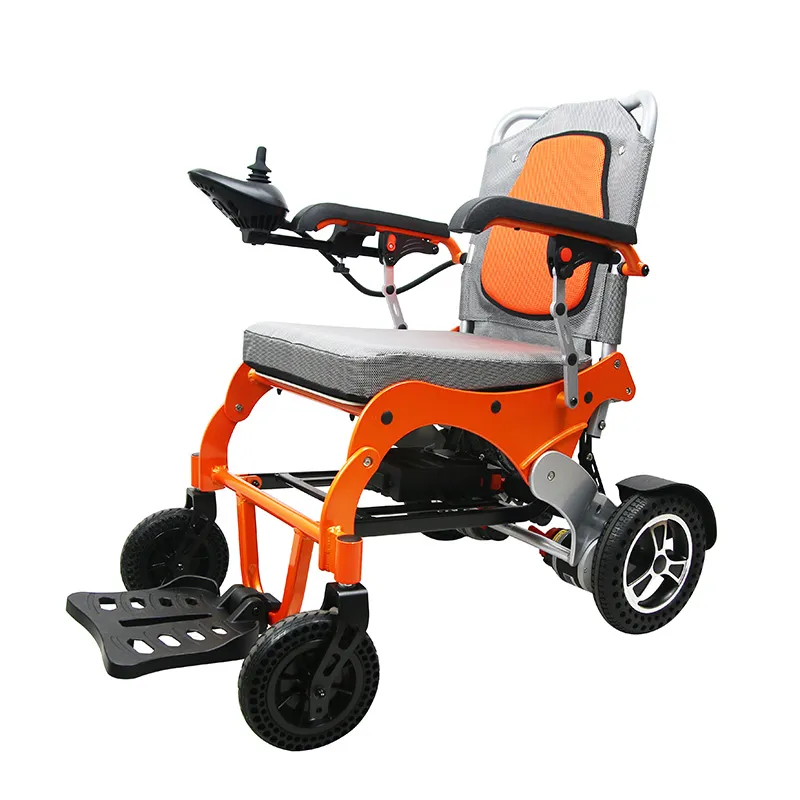
Why are lightweight electric wheelchairs preferred by an increasing number of elderly families?
In recent years, lightweight electric wheelchairs have gained more and more popularity among consumers mainly because they have overcome such drawbacks of traditional electric wheelchairs as heaviness and difficulty in transporting them.
A big heavy battery, motor, and a strong and big frame are required for traditional electric wheelchairs, and some of them weighing even up to 50 kg and more. Although a robust design of this kind ensures powerful operation and reliable grip on the ground, it does add significant weight, and home users will find the process of lifting, keeping, carrying, and placing them in the car very unpleasant.
Lightweight electric wheelchairs mostly use the light aluminum frame, small high-efficiency motor, and lithium battery system. Through a better design, lightweight wheelchair manufacturers manage to reduce weight. Nowadays, many lightweight electric wheelchairs available in the market have a size from 20kg-35kg. Some folding light wheelchairs have even been improved in portable aspect.
Lightweight electric wheelchairs can bring various benefits for elderly users:
First, they are easier to maneuver at home. Many elderly people can operate power wheelchairs, but cannot physically move the wheelchair. Therefore, if family members need to put wheelchair in the trunk of car many times, the lightweight wheelchair would greatly decrease the hassle of use.
Second, they are more suitable for the home interior layout. Usually, the doorways, narrow hallways, and elevator space of the homes are very small. The wheelchair with a large frame makes turning very difficult. Lightweight electric wheelchairs are generally very tight in shape and have a tiny turning circle allowing them to be ideal in a home setting.
Third, they offer a much straight forward and friendly user interface. For most elderly people, it is the improvement of mobility from the bedroom to the living room that brings them a new power wheelchair. At the same time, getting around the neighbourhood or going to the stores is also within their reach with the lightweight electric wheelchairs.
Nonetheless, consumers need to grasp what is meant by "lightweight". Lightweight electric wheelchairs don't mean superior performance in all aspects. As their weight is limited, they may be inferior to their large outdoor power wheelchair counterparts in the capacity for going up hills, adaptability to a difficult terrain, and the maximum working time of batteries, etc. So, purchasing a wheelchair has to be done based on the real use situations.
What factors can you look at to decide an electric wheelchair is good for old people?
When shopping for electric wheelchairs, consumers usually pay close attention to such specifications as the motor power, the battery capacity, the maximum speed, battery endurance, and so on. But they are not the best or only criteria when it comes to picking an electric wheelchair for an elderly person.
The power of the motor is essentially the performance of an electric wheelchair. Nowadays, one of the electric wheelchair motors has, in general, a power of about 150 watts to even up to 500 watts.
In normal indoor conditions or road conditions, the power of around 200 watts is enough for the most basic needs. Only when there is a strong inclination, or frequent outdoor uneven terrain, then we can look up the performance to 300 watts or more.
Nevertheless, higher power means that the wheelchairs are also heavier and more power-hungry. Consequently, designers of lightweight electric wheelchairs usually go for a good compromise between power and weight.
Battery storage space is a measure of range. Battery pack capacities on market include 12Ah, 20Ah, 30Ah, and 40Ah, etc. It might seem bigger battery equals longer range on the road but that will not always be the case. Actual trip distance in a wheelchair will also depend on the user's weight, driving terrain, speed, ambient temperature, motor efficiency, etc.
On general grounds, most elderly people's daily usage is relatively short trips inside their car with the electric wheelchair so a maximum range of 10-20 kilometers should be sufficient for all their activities. However, for someone who is out and about quite a bit, a larger capacity battery is a much better choice.
Nowadays, the majority of lightweight electric wheelchairs are already equipped with lithium-battery technology. As compared to the use of traditional lead-acid batteries, lithium batteries have several distinct advantages which include much lighter weight, higher charging efficiency, and longer lifetime of use cycles (how many hours a battery will last after it is charged)
To conclude, the light electric wheelchairs have solved the heavy and transport problem and, at the same time, have more advantages, like easier handling at home, greater suitability for indoor movement, and user-friendliness. But their power, mobility, and battery life are still limited if the users' needs extend beyond the house, for example to travel on difficult ground or uphill regularly. Therefore, users should consider carefully the purpose of the wheelchair and, accordingly, select the proper size, motor power, battery, and model. On the other hand, if they need an electric wheelchair which can be used in both indoors and the outside world including difficult terrain, it is better they go for a heavy-duty outdoor model instead.
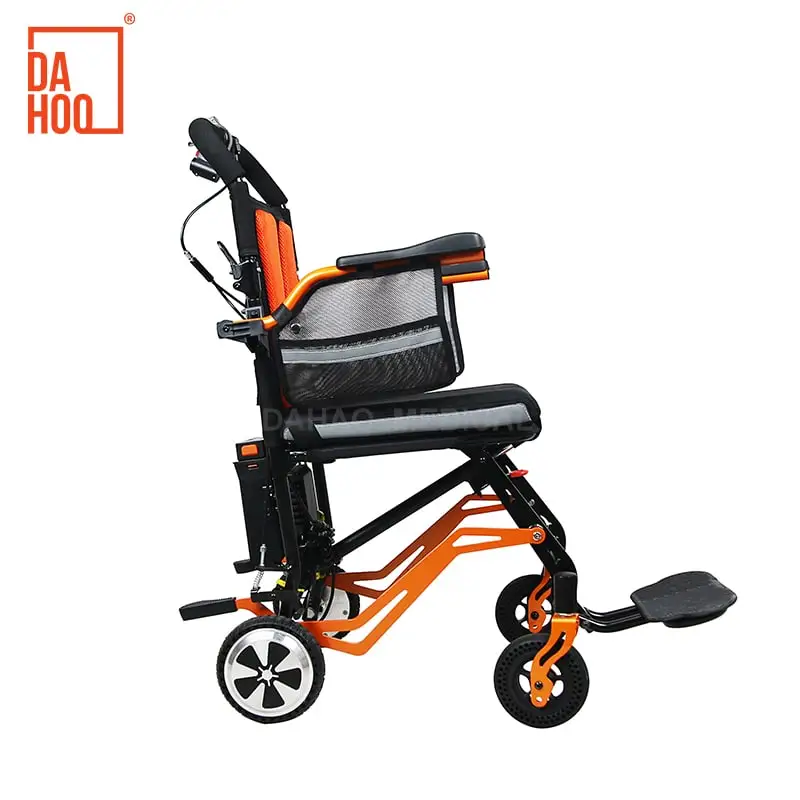
Safety Design is Safety of the Electric Wheelchair Most Important in the Perspective of Elderly Riders
Speed may be an important aspect of electric wheelchair performance for young people, but for old people, safety is their most important concern.
First and foremost is the consideration of the electromagnetic braking system which high-performance electric wheelchairs typically utilize. When the operator disengages the controller, the machine simply stops on its own, which prevents the possibility of a slip.
Second, the prevention of tipping is of great importance. Seniors' drivers may not be very experienced so an inaccurate design of the center of gravity can lead to a serious accident especially at turning or downhill areas. Thus a solid frame, the usage of non-tipping wheels, and a proper wheelbase are crucial.
Third, the design of the wheelchairs chair is very important. Seniors may operate their power wheelchairs for hours at a stretch; therefore absence of proper back support and chair ergonomics can result in severe back pain. Following features should be considered:
Thickness of the seat cushion;
Angle of the backrest;
Height of the armrests;
Design of the leg rests.
Moreover, a proper regulation of speed remains an important area. If it's the first time the elderly person is using a power wheelchair, then they should consider getting a model which enables them to change the speed so that they can learn the driving style gradually.
Indoor and Outdoor Use: Electric Wheelchair Choice Depends on Usage
When you decide to buy an electric wheelchair you should get quite clear about where the wheelchair would be used. You can then look for a wheelchair that is suitable.
To be used mostly indoors, features like wheelchair size, the ability to make a U-turn, a light folding and quiet operations can be a deciding factor. A lightweight electric wheelchair is a safe and suitable choice for such a scenario.
Electric wheelchair for the elderly that can be used mainly outdoors would be those that have sufficient battery life, bigger tires, powerful enough motor, safety features
That is, if they are the type that usually takes neighborhood roads or park trails, a moderate-sized power electric wheelchair would do; on the contrary the ones needing to go through grass or gravel or a hill would definitely need a better frame structure, a stronger frame etc.,
A lot of consumers never made the purchase of a wheelchair due to not thinking about what the main place of usage of the wheelchair, and only choosing a wheelchair that they saw as a best buy.
Some of the Most Common Misconceptions About the Purchase of the Light Weight Electric Wheelchair
A very common misconception is believing that lighter means better. Light weight indeed gives ease of handling but going too heavy on weight savings affects the wheelchair's stability and load capacity.
Second biggest misconception is that battery life should be the only reason to buy a wheelchair. Battery range, certainly, is a critical element but seniors also greatly depend on the wheelchair's handling capability, comfort provided by the chair and presence of the safety features.
Third biggest misconception is to overlook post-sale support. A power wheelchair is made up of various elements like the battery, the motor, and the controller, which may require regular care or repairs. A reliable after-service can greatly reduce the repair expenses.
A fourth misconception is that the user's experience does not matter. Elderly people, in fact, have different physical capabilities which are not justifiable by numbers. When you have an opportunity, it is wise to have the senior try out the operation controls, chair comfort and the wheelchair's general smoothness themselves.
If the elderly want their wheelchair to work consistently over a long period, how do they take care of a power wheelchair?
Meticulous care-taking can be one of the key reasons for a wheelchair staying on an electric motor in a stable state for a long time.
The first care advice would be to charge the wheelchair correctly. It is advised to do not let your battery completely run down before charging it. It is best to charge when battery is only down to say between 20% to 30% of its full capacity.
The second tip is if you are not going to use the wheelchair for a long time, regularly have a look at the battery, make sure it's in good condition. Especially for the lightweight electric wheelchairs with lithium batteries, the storage without recharging should not be extended to the point where the battery is empty completely.
It is also recommended to look at the wheelchair from time to time for any damage or wear and tear. That is checking tire pressure, tightening screws, controller sensitivity, etc., and most importantly brake performance.
Keep the device free from dust and moisture that are harmful to both motor and electronic devices by giving a regular deep cleaning to your wheel chair.
Along with increasing operational times of the devices, the above kind of care is a way to improve safety of the elderly users.
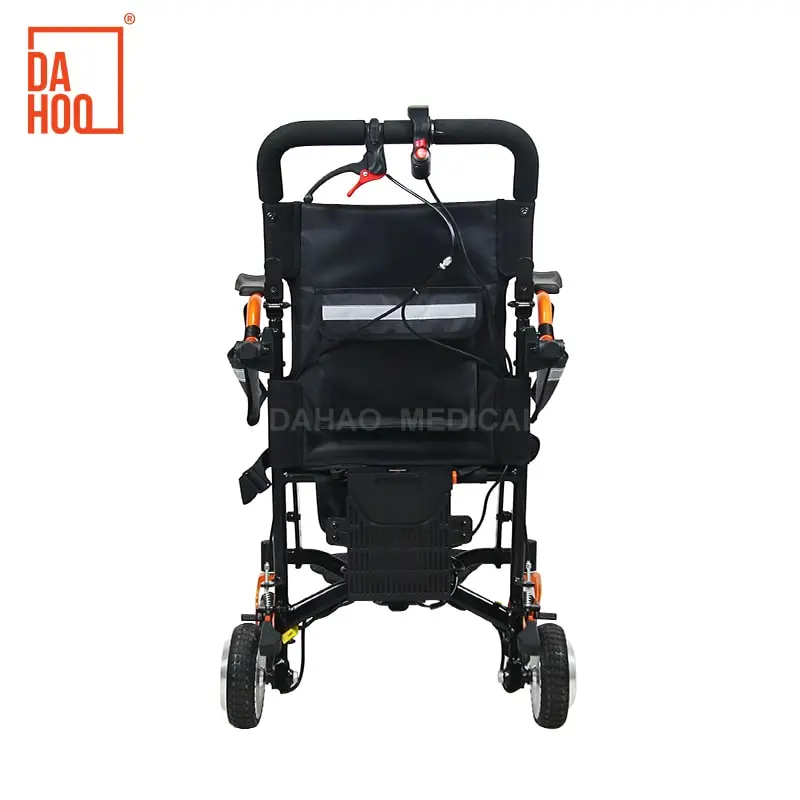
FAQ: Frequently Asked Questions about Electric Wheelchairs for the Elderly
Q1: Are lightweight electric wheelchairs suitable for all elderly people?
Lightweight electric wheelchairs are suitable for most elderly people with daily mobility needs, especially for use in homes, neighborhoods, and parks. However, if an elderly person frequently encounters slopes, complex road surfaces, or long-distance travel, a more powerful model is necessary.
Q2: What precautions should an elderly person take when using a power wheelchair for the first time?
Upon first use, the elderly person should familiarize themselves with the controller operation in a safe area, including forward, backward, turning, and braking. Only after mastering these functions should they proceed to public roads.
Q3: Is a lighter electric wheelchair always better?
No. Lighter weight improves portability, but stability, battery life, and load-bearing capacity must also be considered.
Q4: Is it safe for the elderly to use electric wheelchairs?
With a suitable model and correct use, electric wheelchairs can effectively improve the safety of elderly people's mobility. However, attention still needs to be paid to speed control, braking systems, anti-tipping designs, and routine maintenance.
Q5: How long can a lightweight electric wheelchair typically be used?
Under normal circumstances, the frame and motor can be used for many years, while the battery is a consumable component and needs to be replaced periodically based on usage frequency and maintenance.
Q6: What parameters should be prioritized when purchasing a power wheelchair?
For elderly users, it is recommended to prioritize safety, comfort, ease of operation, battery reliability, and after-sales service, rather than simply pursuing speed and power.