

The challenge of declining mobility in the elderly: How can we strike a balance between safety and independence?
The decline in mobility among the elderly is typically a gradual process rather than a sudden event. As people age, muscle mass naturally decreases; a loss of strength in the lower limbs, in particular, directly impacts the ability to stand, walk, and maintain balance. Concurrently, factors such as joint degeneration, reduced bone density, declining eyesight, and slower neurological response times increase the risks associated with movement.
In practice, many families respond to an elderly relative's limited mobility by restricting their activities—encouraging them to walk less, go out less frequently, and limit independent movement. While this approach may reduce the immediate risk of falls, it can lead to a rapid deterioration of physical function. A prolonged lack of physical activity causes further leg muscle atrophy and impaired coordination, ultimately resulting in a greater need for caregiving assistance.
This issue is even more pronounced in elderly care facilities. Caregivers must assist numerous residents with mobility tasks daily—such as moving from their beds to the dining hall, restroom, or activity areas. Relying solely on manual assistance is labor-intensive and increases the risk of occupational injuries to the caregivers, particularly in the lower back and shoulders.
Consequently, the modern elderly care industry requires equipment that ensures safety while encouraging seniors to maintain a level of physical activity. The 4-wheeled rollator meets this need perfectly. Rather than completely replacing the user's own mobility, it provides additional support based on their existing capabilities, enabling them to move about more stably during daily routines.
For instance, an elderly person who can stand independently but tires easily after walking for a short time can use a 4-wheeled rollator walker to continue taking walks in the community, participating in family activities, and making short trips outdoors, rather than curtailing all activity out of fear of falling. This type of assistive device helps maintain physical function and boosts psychological well-being.
How do 4-wheeled rollators differ from traditional mobility aids?
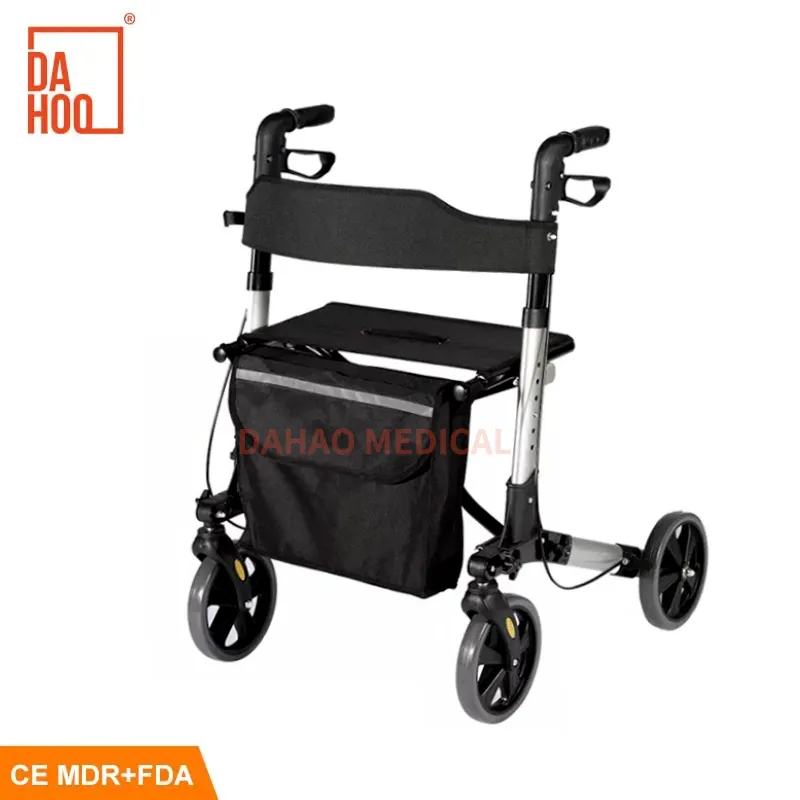
A 4-wheeled rollator is a mobility aid specifically designed for individuals with reduced mobility. It typically features a four-wheel design, utilizing components such as a frame, wheels, a braking system, handles, and a seat to provide stable support for the user.
The primary difference between a 4-wheeled rollator and a standard walker lies in the method of movement. Traditional walkers require the user to repeatedly lift the device and move it forward—a process that can be difficult for elderly individuals with limited arm strength. In contrast, a 4-wheeled rollator moves by rolling on its wheels; the user simply needs to give it a gentle push, significantly reducing the physical effort required.
A typical 4-wheeled rollator generally includes the following components:
•A high-strength aluminum alloy or steel frame;
•Four swivel wheels;
•A dual-sided handbrake system;
•Height-adjustable handles;
•A folding mechanism;
•A seat and/or backrest;
•A storage bag or shopping basket.
Different types of 4-wheeled rollator walkers are optimized for specific environments. For instance, indoor models prioritize lightweight portability and maneuverability, allowing users to navigate narrow spaces easily. Outdoor models focus on tire size, frame stability, and the ability to traverse uneven terrain. Medical-grade models emphasize load-bearing capacity and long-term durability.
In terms of functionality, the 4-wheeled rollator walker sits somewhere between a cane, a standard walker, and a wheelchair. It offers greater support than a cane while encouraging active walking more than a wheelchair does, making it an ideal choice for many elderly individuals with mild to moderate mobility impairments.
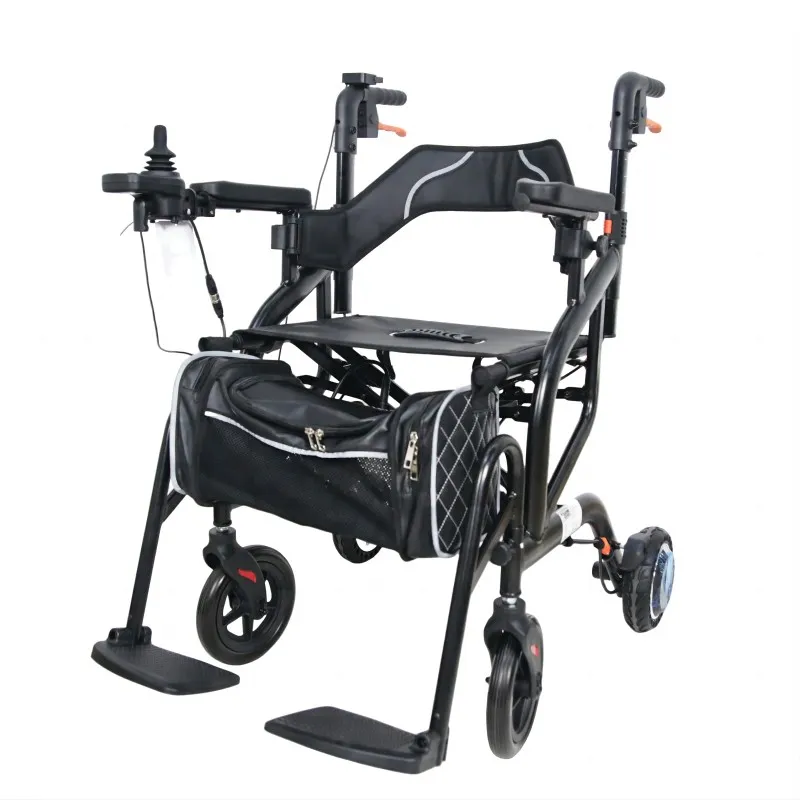
How does a 4-wheeled rollator improve mobility for the elderly?
1. Providing stable support to help restore confidence in walking
Many elderly individuals reduce their physical activity not because they are completely unable to walk, but because they fear losing their balance. A past fall can create psychological anxiety and a fear of falling again, leading them to voluntarily limit their movement.
The 4-wheeled rollator provides continuous, stable assistance through its four-wheel support structure. Unlike traditional canes, which offer only one or two points of contact, the four-wheel design creates a wider, more stable base of support, giving users greater peace of mind while walking. Four-wheeled rollator walkers help seniors maintain their balance, particularly when turning, starting to move, or coming to a stop. For instance, after rising from a chair, a senior can grasp the rollator walker's handles for support before moving; this is far safer than attempting to walk independently without aid.
For seniors with mild mobility impairments, those recovering from surgery, or those experiencing reduced leg strength, this stable support boosts their confidence in resuming daily activities.
2. Expanding the range of activity and enhancing independence
As mobility declines, many seniors find their world shrinking—shifting from outdoor activities to being confined to walking around the house or even remaining seated or bedridden for long periods. This transition affects not only physical health but also mental well-being.
Four-wheeled rollators help seniors expand their range of activity, enabling them to:
•Take walks within their residential area;
•Visit nearby shops for daily necessities;
•Participate in community events;
•Engage in light exercise in the park.
Seniors who frequently go outdoors can choose models with larger wheels. Generally, tires around 6 inches in diameter are better suited for indoor use, while 8-inch or even 10-inch tires are preferable for outdoor terrain, as larger wheels navigate uneven surfaces more effectively.
By creating more opportunities for activity, rollators not only facilitate movement but also help seniors stay socially engaged.
3. Reducing fatigue and extending walking endurance
A common issue among seniors is the ability to walk short distances without difficulty, yet becoming easily fatigued after prolonged standing or walking.
While traditional canes offer no place to rest, many four-wheeled rollators feature foldable seats, allowing seniors to stop and rest whenever necessary.
For example, during a walk, if a senior feels leg fatigue, they can lock the brakes and sit on the rollator walker’s seat to rest, resuming their activity once they have regained their strength.
This design is crucial for encouraging seniors to go out and addresses the common concern of being afraid to venture too far from home.
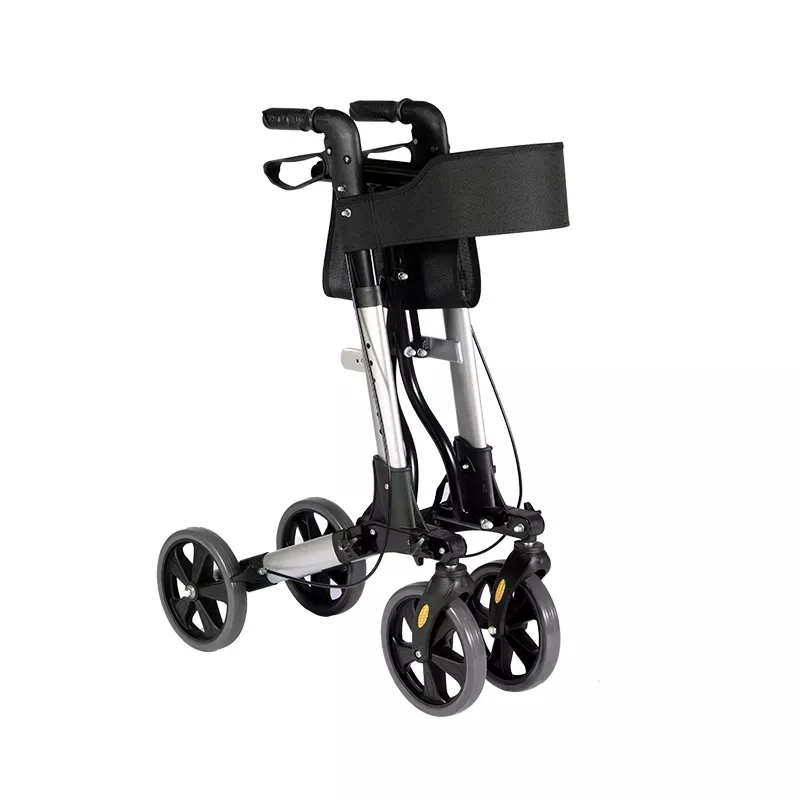
How do four-wheeled rollators enhance safety for seniors?
Safety is always the primary criterion for evaluating assistive devices for the elderly. Through structural design, braking systems, and ergonomic optimization, four-wheeled rollators minimize mobility-related risks for seniors in several ways.
1. Four-wheel structure enhances stability
The primary safety advantage of a 4-wheeled rollator walker stems from its four-point support structure. With all four wheels in contact with the ground simultaneously, the device maintains excellent stability.
Compared to aids with fewer contact points, a 4-wheeled rollator walker minimizes the impact of body sway. The benefit of continuous support is particularly noticeable when walking on flat surfaces.
Of course, safety also depends on proper usage. For instance, users should avoid suddenly leaning their full body weight onto the rollator; instead, they should maintain a natural pushing motion while utilizing the device for assisted support.
2. Braking system prevents loss of control
High-quality 4-wheeled rollators are typically equipped with a hand-operated braking system, allowing users to control their movement speed while gripping the handles.
Common designs include:
•Walking brakes;
•Parking/locking brakes;
•Dual-sided synchronized braking.
When the user needs to rest or sit down, the brakes must be locked first to prevent the device from rolling away.
3. Height adjustment improves posture
The height of the rollator walker directly impacts safety during use.
If the height is too low, the user may constantly stoop while pushing, placing strain on the lower back; if it is too high, it can compromise body control.
Consequently, 4-wheeled rollator walkers usually feature adjustable height settings. Ideally, when standing and holding the handles, the user's arms should be naturally bent and shoulders relaxed to ensure optimal support.
4. Sturdy frame increases load-bearing capacity
Most 4-wheeled rollators on the market have a weight capacity of 100kg to 150kg, with some reinforced models capable of supporting over 180kg.
When selecting a model, consider not only the user's current weight but also:
•Long-term stability;
•Weight-bearing requirements when sitting to rest;
•The weight of items being carried (e.g., shopping).
Heavier users should prioritize models with reinforced structural designs.
How should different users choose a 4-wheeled rollator?
Since physical conditions vary among seniors, the choice of a 4-wheeled rollator should be based on actual needs rather than simply seeking the model with the most features.
For seniors who can still walk independently but experience fatigue or reduced balance, a lightweight 4-wheeled rollator is a suitable choice. These users prioritize device weight, ease of folding, and maneuverability.
For elderly individuals recovering from surgery—such as knee or hip procedures, or those healing from fractures—a 4-wheeled rollator offering superior stability is the best choice. These users typically require more reliable support, making frame strength, braking performance, and tire quality particularly important.
For elderly individuals with long-term mobility issues, the focus should be on comfort and durability—specifically seat width, backrest design, weight capacity, and the overall experience during extended use.
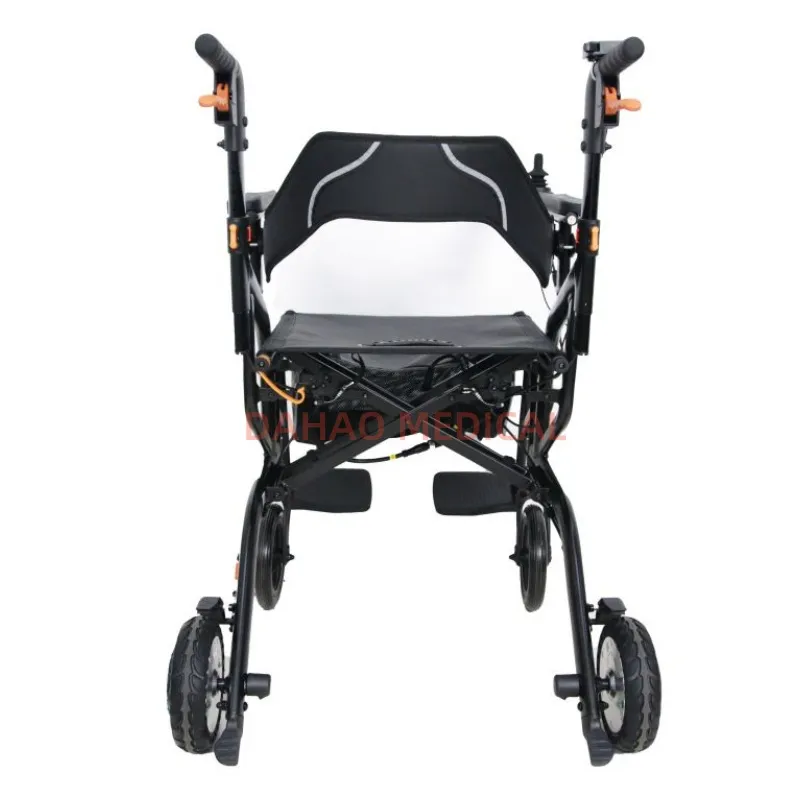
FAQ: Common Questions About 4-Wheeled Rollators
Q1: Who is a 4-wheeled rollator walker suitable for?
4-wheeled rollator walkers are primarily suitable for elderly individuals who can stand and walk independently but struggle with impaired balance, insufficient leg strength, or fatigue. If an elderly person is completely unable to stand, a wheelchair or specialized nursing equipment may be required.
Q2: Are 4-wheeled rollators safer than standard canes?
Generally, 4-wheeled rollators offer greater stability due to their four-wheel support structure and braking systems. However, safety still depends on product quality, correct height adjustment, and the user's habits.
Q3: What is the typical weight capacity of a 4-wheeled rollator walker?
Standard 4-wheeled rollator walkers typically support between 100 kg and 150 kg, while some heavy-duty models can support over 180 kg. Selection should be based on the user's weight and specific needs.
Q4: Do 4-wheeled rollators with seats pose safety risks?
Well-designed rollator walkers with seats usually feature a parking brake lock; as long as the user ensures the brake is locked before sitting down, they can generally be used safely.
Q5: Can 4-wheeled rollator walkers be used outdoors?
Yes. For outdoor use, it is recommended to choose a model with larger wheels, a more stable frame, and superior braking performance to handle various road conditions.
