

With the help of advancing assistive medical technology, electric wheelchairs are now essential tools enabling people with reduced mobility to enhance their living standards. Electric wheelchairs are powered by a motor, a battery, and a control system; therefore, the users are not required to rely on their physical power much, and they can move independently with greater ease. That's why these wheelchairs are very popular among the disabled people and the elderly and also used to a great extent throughout various places such as homes, hospitals, rehabilitation centers, and even during outdoors.
Still, lots of people end up wondering when they decide on the type of wheelchair they want. Which type of electric wheelchair is suitable for a long time use: heavy-duty ones or the lightweight ones?
Evidently, while both types of electric wheelchairs come under the category of power-assisted movable devices, their development concepts are quite divergent. High-duty wheelchairs are made to carry heavier loads and to perform in harsh conditions for a long time as well as being stable and durable; on the other hand, lightweight electric wheelchairs are built for ease of movement, carrying them, and their daily commuting.
So high-duty wheelchairs, as compared to lightweight ones, are almost like a "reliable and sturdy mobile platform." They are suitable for users who need to be mobile all day long, have a heavy build, or regularly experience difficult terrains.
Lightweight wheelchairs, on the other hand, are almost "portable personal transportation devices." These are suitable for those people who are going out regularly or traveling as their lifestyle or have small living spaces at home.
Worldwide, aging population trend and an increasing demand for rehabilitation assistive devices have triggered the market of electric chairs to grow more and more. People now not only focus on their ability to move; they also look for comfort, safety, battery life, and, most importantly, whether a wheelchair is suitable to match their lifestyle. Therefore, understanding the differences between high-duty and lightweight electric wheelchairs is very essential and can help you to make the right decision.
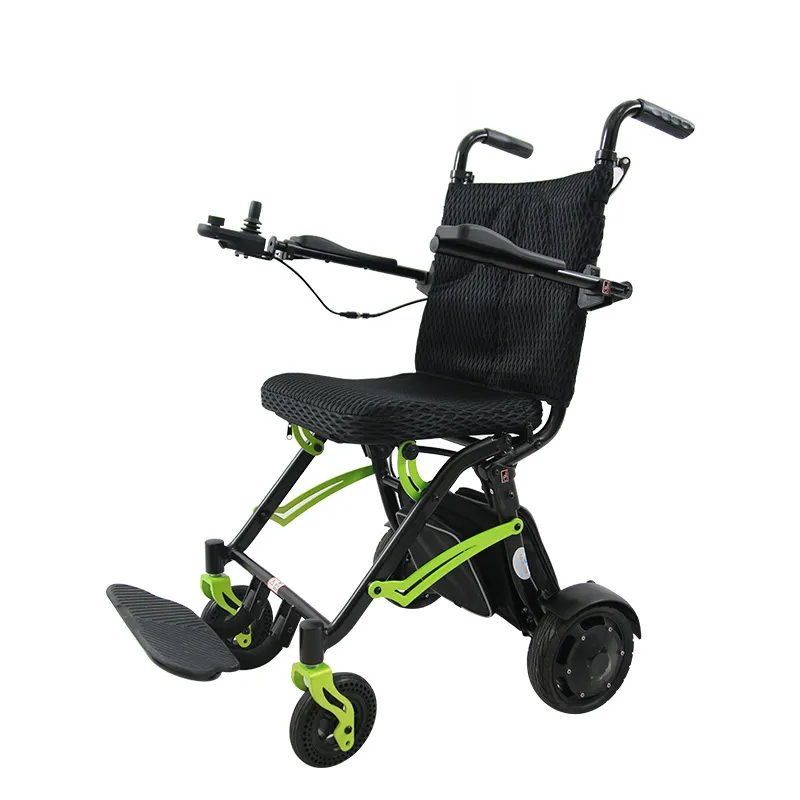
What is a High-duty Electric Wheelchair?
Generally, high-duty electric wheelchairs refer to electric wheelchairs with reinforced frames, stronger motors, load-bearing structures, and better stability in complex situations design. Their goal is neither to focus on reducing weight nor to achieve lightness but to ensure maximum carrying strength, extended lifespan through the use of higher quality materials for different parts of the wheelchair, and to improve its suitability for difficult environments.
These types of wheelchairs are commonly found in elderly facilities, medical units, outdoor recreation areas, and other situations that require maximum chair stability.
In general, compared to regular electric chairs, high-duty electric electric chairs may have features such as:
1. A stronger frame construction: in order to meet the demand for a higher load, high-duty electric chairs will be most likely to reinforce the structural frames through high quality steels, aluminum alloys or composite materials that can help the wheelchair resist greater pressure from a single point on the structure
2. A stronger motor: since these devices should also support the weight or be capable of climbing on slopes or grass, and/or overcoming uneven grounds, high-duty electric wheelchairs usually come with higher torque motors.
3. A very stable body: to make a chair stay grounded even on a rough surface, manufacturers widen wheelspacing (between the front and back wheels), and increase the size of wheels as well as enhance the body's suspension. These measures allow the user to be secure even in the worst conditions that nature can bring to the user.
4. Longer operating life: these chairs are generally built with durable and reliable components because of their frequent and extensive usage.
High-duty electric chairs have the reliability of long-term support, so it is more suitable for users to depend on a wheelchair every day.
What is a Lightweight Electric Wheelchair?
Lightweight electric wheelchairs are designed first and foremost for easy transportation, mobility needs, and everyday movements. The main advantage of lightweight electric wheeled vehicles compared to high-duty ones is the fact that they are much thinner in weight and occupy lesser space.
Many models of lightweight electric wheelchairs are based on the use of folding mechanisms in addition to aluminum frames which allow them not only to be light but compact; at the same time, they are fitted with lightweight motors, and their battery systems have been minimized. As to this, the lightweight electric wheelchairs can be handled or carried quite easily.
Towards the lightweight electric wheelchairs, some of the major characteristics to take note of are as follows:
Difference in the amount of weight First, they are quite lighter than their heavier counterparts. Whereas the latter can weigh up to about one hundred kg or more, the former models may remain in the 30-40 kg range and there are quite a few that fold and are even lighter.
Their size being less facilitates movement indoors.
Because of their smaller sizes, light electric wheelchairs are usually easier to pass through doorways, lifts, and narrow spaces.
A second point is that they are more user-friendly when it comes to the aspect of transport. As for a user who often travels by car, ferry, plane, or who wants to travel a lot for work/recreation purposes and the like, transporting a heavy electric wheelchairs would be difficult for such users so light ones would be better suited for their needs.
A third feature is greater room movement capability. Their compact nature allows them to pass easily through doorways, elevators, etc.
It should however be said that lightweight design entails a sacrifice of certain aspects in terms of performance like for example higher maximum load, greater off-road capability, longer range, and greater stability of lightweight electric wheelchairs as compared to heavy-duty electric wheelchairs generally speaking.
No one can say that lightweight electric wheelchairs are "low-performance". Instead they are just different product types serving diverse user requirements.
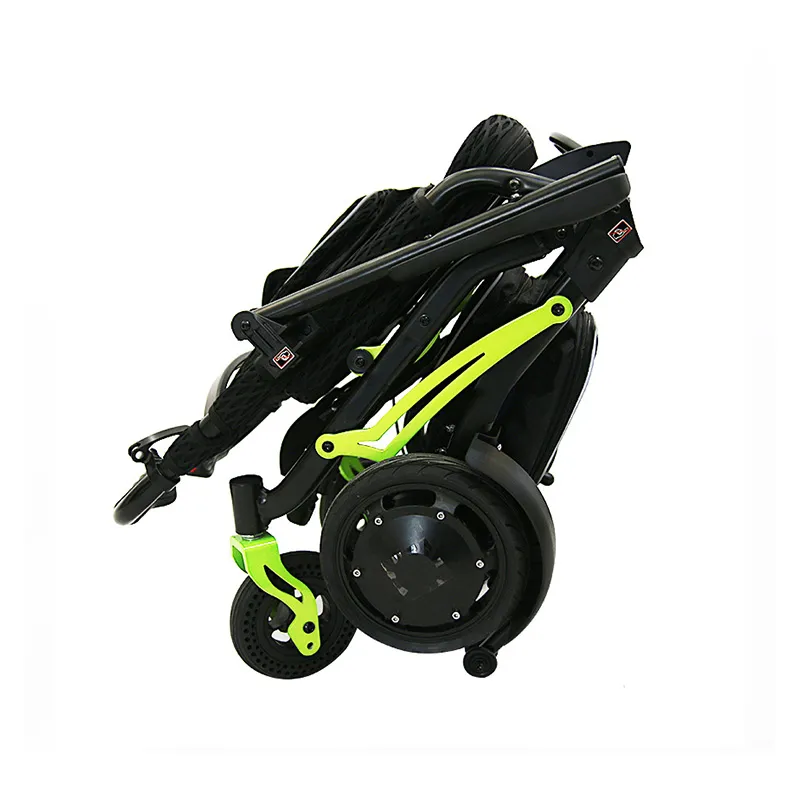
What is the major difference between high-strength electric wheelchairs and lightweight electric wheelchairs?
I. Structural Design Difference: One is More Focus on Strength, Another on Portability
The most striking difference is their structural design.
High-strength electric wheelchair models are constructed to support bigger weight. As a result, they generally have a thicker frame, a broader body, and more robust connecting parts.
For instance, some high-strength wheelchair models are strong enough to withstand pressure of up to 180 kg, or even 200 kg, which would serve the needs of larger users or those using them extensively for periods.
Lightweight electric wheelchairs, in contrast, focus on easy mobility. Producers cut down the whole weight by redesigning the frame, getting rid of all superfluous weight, and employing lightweight materials.
Actually, this difference is quite analogous to the difference between a big SUV and a city car: while SUVs emphasize power and off-road abilities, city cars emphasize compactness and fuel efficiency.
II. Weight Difference: Lightweight Electric Wheelchairs Are More Easily Transported
For most consumers, deciding what to buy is quite an important decision based on weight.
As a matter of fact:
• Lightweight electric wheelchairs weigh around 25 to 45 kg;
• Standard electric wheelchairs weigh around 50 to 90 kg;
• High-strength electric wheelchairs may be above 100 kg.
For travelers by car who regularly need to carry electric wheelchairs in the trunk, a few tens of kg weight difference can bring an enormous variation in their overall comfort level.
Take, for example, an older person who depends on the help of their immediate member for putting the electric wheelchair into a car. It's obvious that a lightweight electric wheelchair would make their lives easier.
On the flip side, if an individual uses an electric wheelchair almost continually without stops and they get stuck with roads where the terrain is tricky, then the heavier weight may indicate a higher degree of steadiness.
III. Difference in the Ability to Support Load: It is High-strength Wheelchairs That Are the Best
The ability of high-strength electric wheelchairs to carry weight can be considered another of their strong characteristics.
In general, ordinary lightweight electric wheelchairs are good for users who are not overweight while high-strength electric wheelchairs are designed to suit the carrying requirement.
Examples are:
• users with heavier body weight;
• users who need to carry extra stuff;
• users who often climb ramps;
• users who need to be outdoors for long times.
Under these conditions, the use of high-strength electric wheelchairs can be recommended.
However, it has to be understood that load-bearing does have an influence on not only the safety but also the lifetime of the apparatus as well. For instance, if a person's weight is consistently near or beyond the maximum limit of the electric wheelchair, this will definitely lead him/her to an increased strain on the motor, battery, and frame.
IV. Differences in Distance: High-strength Electric Wheelchairs Usually Better-suited Long-distance Use
This point of difference is yet again a key differentiator between the high-strength and the lightweight electric wheelchair.
High-strength electric wheelchairs have bigger battery cells, so they normally get further. High-end devices can even go for 30 km and beyond.
They suit the following:
• participation in town activities;
• doing shopping in open-air markets;
• trips that require travel for a longer time;
Lightweight electric wheelchairs, due to the limit in weight, most often have smaller capacity battery, hence their travel capacity will probably be less than that of the former ones.
Still for the purposes where the user moves the electric wheelchair within the home, shopping centers, or over short distances only, then lightweight electric wheelchairs will do just fine.
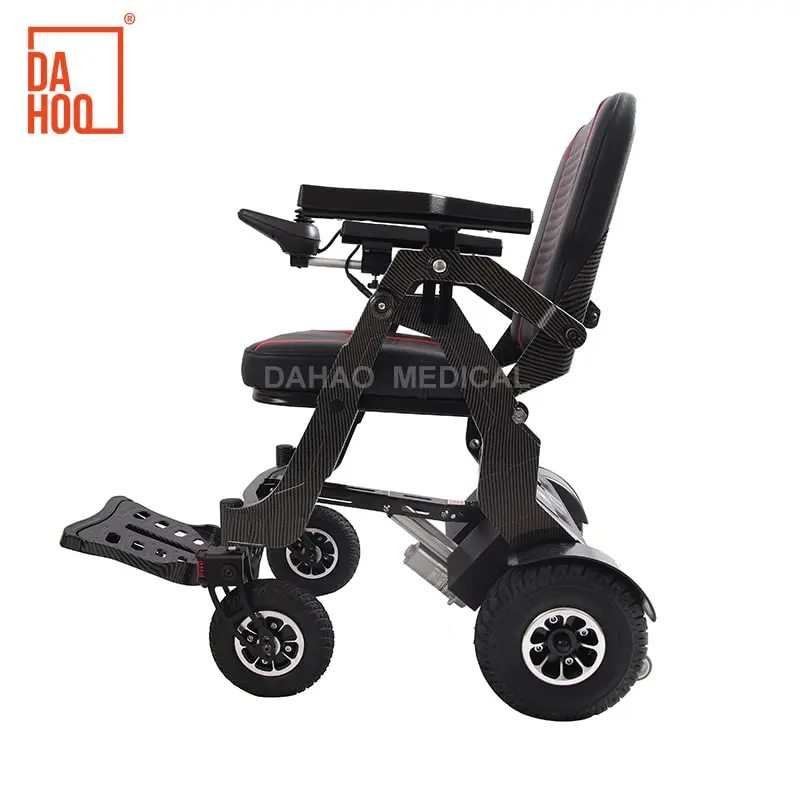
Who are electric wheelchairs strong frame suitable for?
Electric wheelchairs with sturdy framework is highly recommended for these users:
1. Wheelchair users who live with a wheelchair most of their life
If a client will be using the wheelchair for a great portion of the day, a long lasting motor is really important.
Long time wheelchair use means:
Motor working frequently;
Frame stressed;
Seating area used for a longer time;
Thus, high-strength electric wheelchairs would deliver the more reliable prolonged support.
2. Large-framed users
For a larger user, a safer choice is a weight-bearing electric wheelchair with high capacity.
Besides the factor of maximum load capacity,
also, the width of seat, backrest support, and overall stability will be important.
3. People who spend their outdoors a lot
If the user often moves through the following terrains:
• Grass;
• Hill;
• Rock path;
• Surface irregularity
Wheelchairs are likely to offer superior adaptability in rough terrains if their frames are strong and they have sturdy tires.
Who Are Lightweight Electric Wheelchairs Suitable For?
Lightweight electric wheelchairs suit the following user types:
1. Traveling often
Weight is an important factor for those people who travel a lot by airplane, train, or car.
One advantage of lightweight electric wheelchairs is that they are easier to:
• Collapse;
• Carrying;
• Storing.
2. Space-constrained home dwellers
If someone's home environment offers features like:
• Narrow passage;
• Space-limited lifts;
• Small-sized rooms.
The mobility of lightweight wheelchairs, in general, is more superior.
3. Wheelchair users that occasionally need mobility support
In this case, there are elderly persons or those with mobility impairments whose dependency on wheelchairs is not whole day. They only use them when outdoors.
In such situation, a lightweight electric wheelchair should be quite good fit.
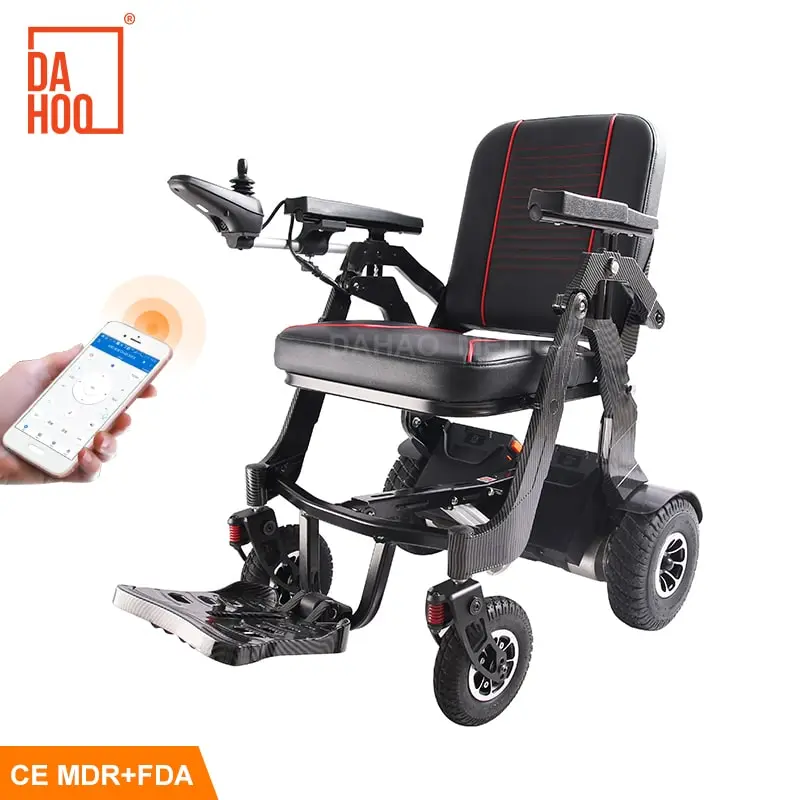
How to pick an electric wheelchair according to your needs?
Don't just assume "the tougher the better" or "the lighter the better" when picking an electric wheelchair.
Really well-fitting product is one which considers the below criteria:
1. Where is it primarily used?
If you use it indoors only,
you should focus on:
Turning radius;
Chair width;
Goes around easily feature;
If it is mainly a wheelchair for being outdoors,
one must look for these aspects:
Electric motor power;
Tire performance;
Suspension system;
2. How often does a wheelchair user require it
Wheelchair use of an everyday nature,
strong electric wheelchair would provide support for years,
A wheechair of light weight and portable will suit those who go out only occasionally.
3. Medical condition of the wheelchair user
An electric wheelchair for a physically weak individual without mobility at the upper limbs would require the wheelchair to provide the most stability and comfort.
Those who are quite mobile can also think of a lightweight design.
FAQ
1. Is a high-strength electric wheelchair always better than a lightweight electric wheelchair?
Not necessarily. High-strength electric wheelchairs excel in stability and load-bearing capacity, while lightweight electric wheelchairs excel in portability and flexibility. The choice depends on the user's actual needs.
2. Are lightweight electric wheelchairs suitable for daily use?
Some high-quality lightweight electric wheelchairs can meet daily needs, but if the user uses them frequently and requires high load-bearing capacity, a high-strength electric wheelchair may be more suitable.
3. Are high-strength electric wheelchairs suitable for indoor use?
Yes, but size needs to be considered. If the home space is small or the doorway width is limited, the wheelchair width and turning radius should be confirmed in advance.
4. How many years can an electric wheelchair typically last?
Lifespan depends on product quality, frequency of use, battery maintenance, and the environment in which it is used. High-quality electric wheelchairs can typically last for many years, and regular maintenance can extend their lifespan.
5. What parameters should you focus on when buying an electric wheelchair?
It is recommended to focus on maximum load capacity, range, motor power, overall weight, seat size, tire type, safety features, and after-sales service, rather than just price or appearance.