

In the past, many users primarily focused on "mobility" and "battery life" when purchasing electric wheelchairs. However, today, more and more consumers are paying attention to weight, portability, comfort, safety, and long-term operating costs. Among these, carbon electric wheelchairs, made from carbon fiber materials, are gradually becoming an important direction in high-end mobility aids due to their lightweight, high strength, and corrosion resistance.
However, a very common question arises during the actual purchasing process: why do some carbon fiber electric wheelchairs cost only a few thousand yuan, while some high-end products can cost tens of thousands of yuan or even more? They all appear to have carbon fiber frames, folding functions, and use lithium batteries, so what exactly is the difference?
In fact, the difference between entry-level and high-end carbon fiber electric wheelchairs is not simply about "whether the material is carbon fiber," but involves multiple aspects such as structural design, motor system, battery configuration, control technology, ergonomics, safety features, and long-term reliability. For people who rely on electric wheelchairs for daily mobility, these differences directly impact the user experience.
This article will delve into the core differences between entry-level and high-end carbon fiber electric wheelchairs from an industry perspective, helping consumers understand how to choose the most suitable product based on their needs.
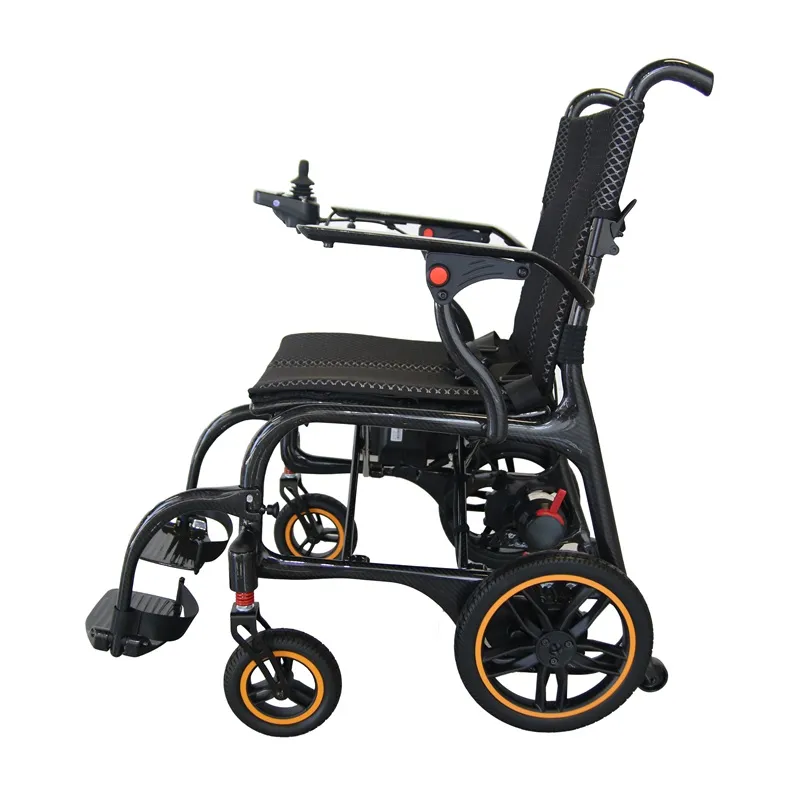
Why are carbon electric wheelchairs becoming the development direction for high-end mobile devices?
The core reason for the market attention given to carbon electric wheelchairs is the superior weight-to-strength ratio of carbon fiber composite materials compared to traditional steel and aluminum alloys.
Traditional electric wheelchairs typically use steel frames. While structurally stable and inexpensive to manufacture, they often weigh 40kg or even over 60kg, posing a significant burden for users who frequently need to get in and out of the wheelchair, travel, or are carried by family members. Aluminum alloy electric wheelchairs, while reducing weight, still have limitations in terms of rigidity and fatigue resistance.
The density of carbon fiber material is approximately 1.6g/cm³, while the density of steel is approximately 7.85g/cm³, resulting in a significant theoretical weight advantage. Furthermore, high-quality carbon fiber composite materials have high tensile strength, allowing for reduced material usage while maintaining structural strength. Therefore, many lightweight carbon fiber electric wheelchairs currently on the market can be weighed under 20kg or even less.
Some lightweight carbon fiber electric wheelchairs weigh approximately 12kg-15kg (excluding battery), and with a lithium battery, the weight is typically kept between 15kg-20kg. Some travel models weigh around 25-30 pounds (approximately 11-14kg) and support dual motors ranging from 200W to 500W.
For users, reduced weight is not just a simple change in numbers; it means:
First, family members can more easily put the wheelchair in the trunk of a car; second, users can more easily participate in activities such as travel, shopping, and medical checkups; third, it takes up less space when folded, making it more suitable for home storage.
However, it's important to note that not all electric wheelchairs labeled "carbon fiber" represent the same quality. Different products vary significantly in carbon fiber grade, structural design, and manufacturing processes, which is a major reason for the price difference between entry-level and high-end carbon fiber electric wheelchairs.
What are the main characteristics of entry-level carbon electric wheelchairs?
Entry-level carbon fiber electric wheelchairs are typically positioned to meet basic mobility needs, targeting users who occasionally travel, engage in indoor activities, or have a limited budget.
The biggest advantage of these products is their relatively low price, while retaining the core lightweight characteristics of carbon fiber. Generally, entry-level carbon fiber electric wheelchairs weigh around 15kg-25kg, using a basic carbon fiber frame or a hybrid structure of carbon fiber and aluminum alloy.
Regarding the power system, entry-level products typically employ a dual-motor design, such as two 180W-250W brushless motors, with a total output power of approximately 360W-500W. This configuration can meet the needs of flat roads, gentle slopes, and indoor use.
For batteries, common configurations include 24V 10Ah or 12Ah lithium batteries, with a theoretical range of approximately 15-25 kilometers. Some products using dual-battery solutions can achieve a range of around 30 kilometers, but the actual range will be affected by the user's weight, road conditions, temperature, and driving style. Some lightweight carbon electric wheelchairs on the market use dual 12Ah battery configurations, with an official range of around 30 miles, but real-world urban driving distances are usually lower than experimental data.
Entry-level products typically include the following features:
• Manually folding frame;
• Basic joystick controller;
• Electromagnetic braking system;
• Solid run-flat tires;
• Fixed armrests and footrests;
• Basic shock absorption structure.
These features are sufficient for daily mobility needs, but they may be insufficient for extended periods of use, adaptability to complex road conditions, and personalized adjustments.
For example, a user who uses a carbon fiber electric wheelchair for more than 6 hours a day may experience significant fatigue over time if the seat lacks sufficient support, the backrest angle is not adjustable, and the shock absorption system is weak.
Therefore, entry-level carbon fiber electric wheelchairs are more suitable for:
• Primarily indoor activities;
• Occasional short trips;
• Roads with relatively smooth surfaces;
• Infrequent use;
• People who do not have high demands for intelligent features.
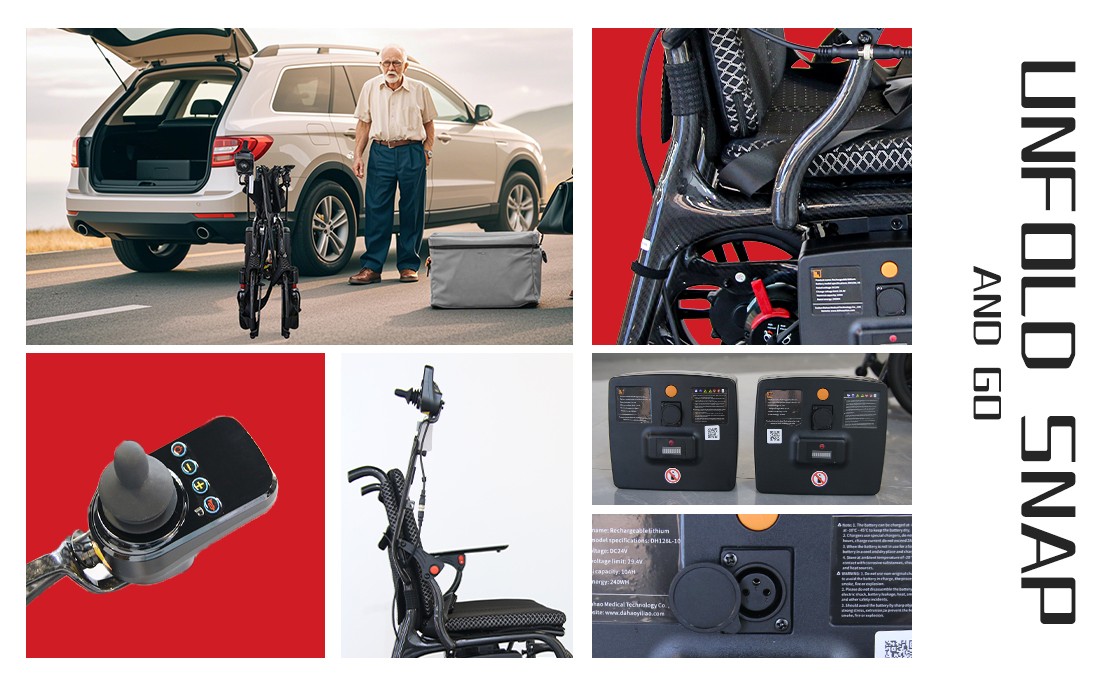
What upgrades are available in high-end carbon fiber electric wheelchairs?
The biggest difference between high-end carbon fiber electric wheelchairs and entry-level products is not a single feature upgrade, but a higher level of overall system engineering.
First, high-end products place greater emphasis on the carbon fiber frame structure design.
Standard carbon fiber frames may be simply molded, while high-end products typically employ multi-layered carbon fiber layups in stress-bearing areas, such as increasing the material strength of the seat connection area, folding joint area, and motor mounting area.
This is because electric wheelchairs bear not only the user's weight during operation but also:
• Road impacts;
• Lateral steering forces;
• Uphill power loads;
• Long-term fatigue cycles.
If the frame design is inadequate, even with carbon fiber materials, structural fatigue problems may occur.
Secondly, high-end carbon fiber electric wheelchairs are usually equipped with more powerful power systems.
For example: entry-level products may use 2×180W or 2×200W motors; high-end products may use 2×250W, 2×300W, or even higher power brushless motors.
The advantages of higher power motors include:
• Smoother start-up;
• Stronger uphill capability;
• More stable load-bearing capacity;
• Lower temperature rise during long-term operation.
For heavier users or those who frequently traverse slopes or outdoor roads, the importance of high-performance motors is particularly evident.
Battery System: A Key Differentiator Between Entry-Level and High-End Models
Many consumers believe the price difference in carbon electric wheelchairs mainly stems from the frame material, but in reality, the battery system is often a crucial factor influencing cost.
Entry-level carbon electric wheelchairs typically use standard lithium batteries, while high-end products focus more on:
1. Battery capacity;
2. Battery safety certifications;
3. Battery Management System (BMS);
4. Ease of disassembly;
5. Charging efficiency.
For example, for a 24V system:
A 10Ah battery capacity is approximately 240Wh;
A 20Ah battery capacity is approximately 480Wh.
Increased capacity means longer range, but it also increases weight. Therefore, high-end products need to strike a balance between lightweight design and range.
Some high-end carbon fiber electric wheelchairs employ a dual-battery design, allowing users to extend range as needed while easily removing and recharging batteries separately. Some products utilize removable lithium batteries that meet air transport requirements, enhancing travel convenience.
For frequent travelers, battery design is even more important than the frame material.
Comfort: The Hidden Value of High-End Carbon Fiber Electric Wheelchairs
Many first-time electric wheelchair buyers tend to overlook comfort.
In reality, electric wheelchairs are not simply means of transportation, but rather assistive devices that users use for extended periods every day.
Entry-level products typically use fixed seats, while high-end products incorporate more ergonomic designs, such as:
• Adjustable backrest angle;
• Thicker seat cushion;
• Lumbar support;
• Adjustable footrests;
• Shock-absorbing structure;
• More ergonomic seat width.
For example, for users of different body types, the seat width may need to be adjusted to 16 inches, 17 inches, 18 inches, or even larger. If the seat is too narrow, it will affect comfort; if it is too wide, it will affect stability.
High-end carbon fiber electric wheelchairs typically pay more attention to the distribution of body pressure, reducing the pressure from prolonged sitting through seat materials and support structures.
For users who use them for more than 4 hours a day, these upgrades are not just "luxury features," but important factors affecting health and quality of life.
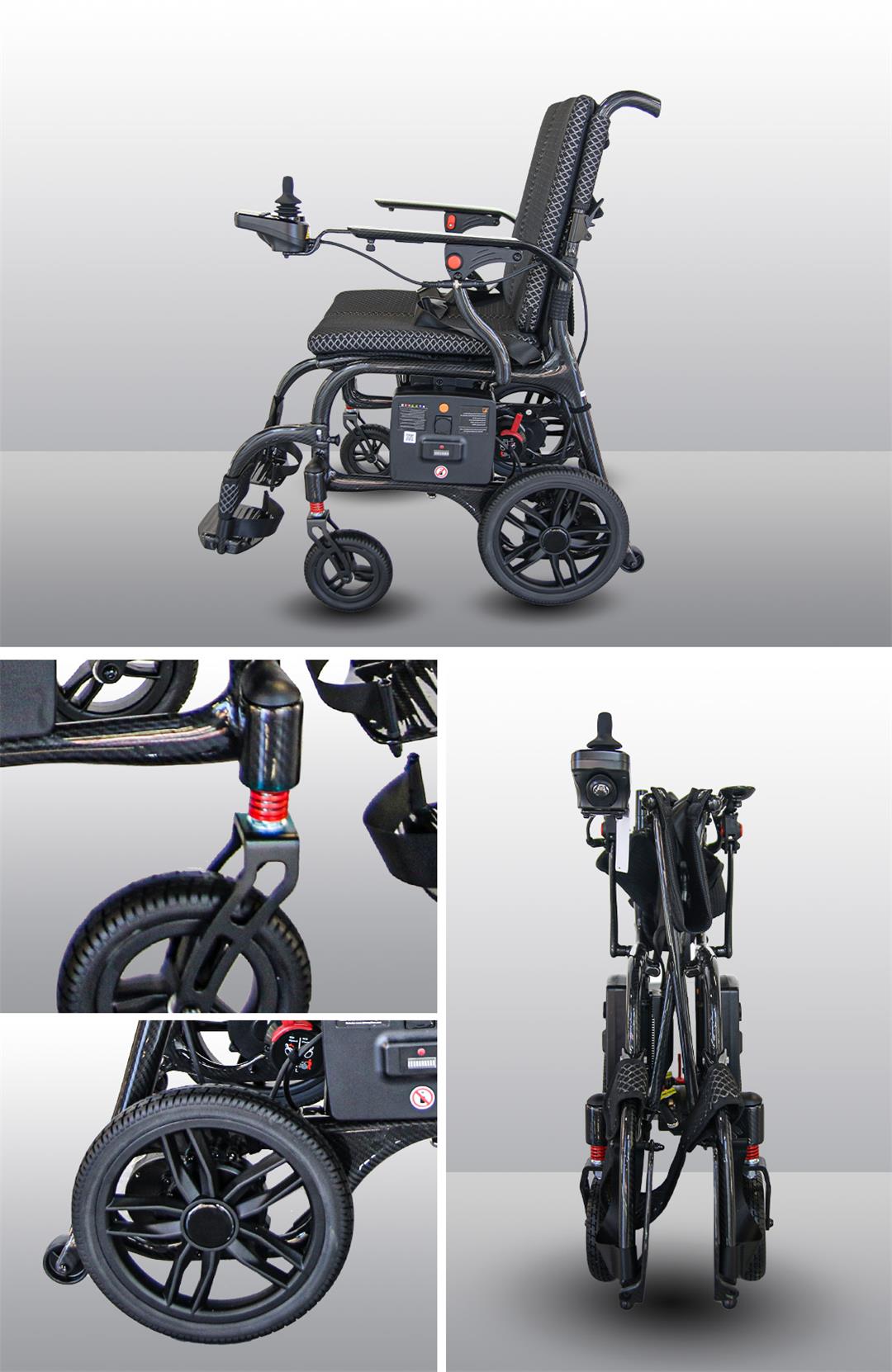
Intelligent control systems are also a significant source of price differences in electric wheelchairs
Modern carbon electric wheelchairs are no longer just mechanical devices, but are increasingly evolving into intelligent mobile terminals.
Entry-level controllers mainly offer:
• Forward and backward movement;
• Speed adjustment;
• Battery level display.
High-end control systems may add:
• Multiple speed modes;
• Fault diagnosis;
• Bluetooth connectivity;
• Mobile app control;
• Intelligent anti-theft;
• Parameter adjustment.
Meanwhile, high-end products place greater emphasis on safety controls, such as:
• Automatic electromagnetic brakes;
• Anti-tipping wheels;
• Ramp assist control;
• Motor overheat protection.
These features can reduce the risks during use.
Why are some high-end carbon fiber electric wheelchairs more expensive?
Many consumers, seeing the price differences, wonder: "They're all carbon fiber, so why is the price so much different?"
The main reasons include the following:
First, the material grades are different.
Low-cost products may only use carbon fiber in parts of the structure, while high-end products may use a complete carbon fiber load-bearing frame.
Second, the manufacturing processes differ.
Carbon fiber processing, unlike ordinary metal welding, requires complex processes such as mold design, layering, and curing. High-precision manufacturing increases costs.
Third, the testing standards differ.
High-end brands typically conduct:
• Load testing;
• Folding life testing;
• Battery safety testing;
• Road durability testing.
Fourth, after-sales service differs.
Electric wheelchairs are long-term devices; the motor, battery, and controller will wear out over time. Therefore, repair channels, spare parts supply, and warranty policies all affect their actual value.
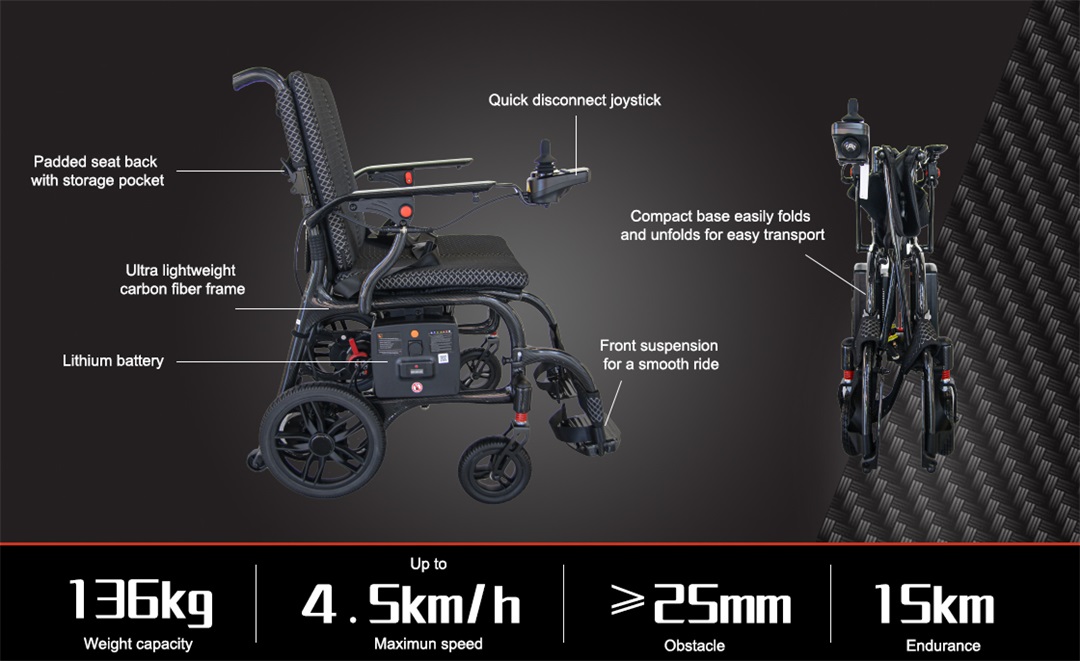
FAQ: Frequently Asked Questions about Carbon Fiber Electric Wheelchairs
1. Are carbon electric wheelchairs always better than ordinary electric wheelchairs?
Not necessarily. The biggest advantages of carbon electric wheelchairs are their lightweight and portability. If the user mainly uses the wheelchair in a fixed environment and doesn't move it frequently, an ordinary electric wheelchair may still meet their needs. However, if travel, getting in and out of vehicles, or reducing the burden of carrying is required, the advantages of carbon fiber electric wheelchairs are more pronounced.
2. How many years can a carbon fiber electric wheelchair typically last?
Under normal circumstances, a high-quality carbon fiber frame can last for many years or even longer, while the battery is usually the component that requires significant maintenance and replacement. Lithium batteries typically experience a gradual decrease in capacity after hundreds of charge-discharge cycles.
3. Can carbon fiber electric wheelchairs be taken on airplanes?
Some products use removable lithium batteries that meet air transport requirements, but different airlines have different regulations. Battery capacity, battery certification, and air transport requirements should be confirmed before purchasing.
4. Is a lighter carbon fiber electric wheelchair always better?
No. Excessive pursuit of lightweight design may compromise load-bearing capacity, comfort, and stability. An excellent carbon electric wheelchair should strike a balance between weight, strength, range, and safety.
5. What should seniors consider when purchasing a carbon electric wheelchair?
It is recommended to focus on safety, ease of operation, braking system, range, and after-sales service. For users with limited mobility, stability and reliability are more important than simply pursuing lightweight design.
