

In the past, many caregiving tasks relied on manual lifting and support by caregivers—such as moving bedridden elderly individuals from bed to wheelchair or to the restroom, or assisting post-operative patients in getting on and off nursing beds. However, as the number of patients, the frequency of care, and patient body weights have all increased, the drawbacks of traditional manual lifting methods have become increasingly apparent.
Caregivers frequently perform actions such as bending, lifting, turning, and supporting weight during their work; these tasks not only consume significant physical energy but also raise the risk of occupational injury. Medical research indicates a high incidence of lower back muscle strain and occupational musculoskeletal disorders among caregivers, with frequent patient lifting being a primary contributing factor. For patients weighing over 70 kg—or even exceeding 100 kg—manual transfers often require the coordination of two or more caregivers. This not only reduces efficiency but also increases the risk of accidents—such as falls, collisions, or physical discomfort—caused by a lack of coordination during the maneuver.
Against this backdrop, patient lifters have emerged as essential equipment in modern healthcare and nursing systems. Electric patient lifters and manual patient lifters are currently the two most widely used types on the market.
When selecting equipment, hospital procurement staff, administrators of elderly care facilities, and home users often face a practical dilemma: Is an electric patient lifter necessarily superior to a manual one? Have manual lifters become inadequate for modern caregiving needs? Which type should be chosen given specific patient conditions and application environments?
In reality, the relationship between electric and manual patient lifters is not simply one of replacement; rather, they are solutions designed to meet different caregiving needs. Making a sound, informed choice requires an understanding of each device's operating principles, performance characteristics, suitable use cases, and long-term costs.
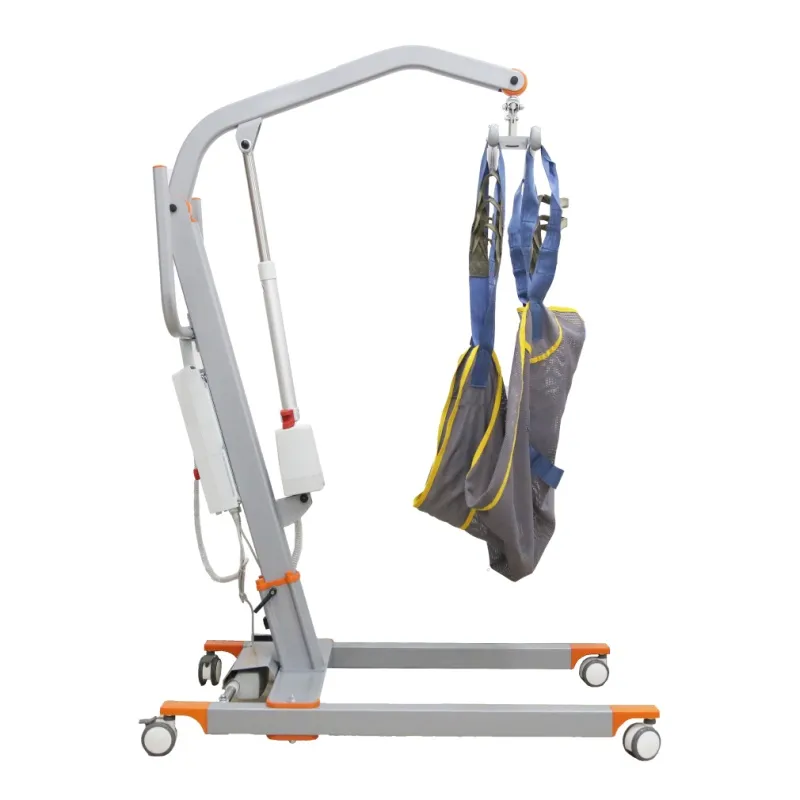
Why have patient lifters become essential equipment in the modern caregiving industry?
As healthcare standards improve, expectations regarding the quality of care have shifted from a sole focus on treatment outcomes to a greater emphasis on patients' quality of life, safety, and the working environment of caregivers. For patients who are bedridden for long periods, elderly individuals with limited mobility, those recovering from surgery, and people with physical disabilities, moving is not a simple action; it is a caregiving task that requires safety, comfort, and professional technique.
While traditional manual lifting and support methods are simple and direct, they have significant drawbacks. First, manual handling places heavy physical demands on caregivers; in long-term care settings, repeating transfer maneuvers dozens of times a day leads to a cumulative physical burden. Second, manual operations are susceptible to variables such as the patient's weight, their level of physical cooperation, and the caregiver's experience. Improper technique can result in skin friction, joint injuries, or even falls.
The advent of patient lifts has transformed this situation. By using mechanical structures to assist with lifting and moving, caregivers are relieved of the need to bear the patient's full weight, instead utilizing the equipment to ensure a more stable and safe transfer process. Patient lifters are now widely used in hospitals, nursing homes, rehabilitation centers, and home care settings.
Based on their drive mechanisms, patient lifting devices on the market are primarily categorized into electric patient lifters, manual patient lifters, sit-to-stand lifts, and overhead track lift systems. Among these, electric patient lifts are becoming a preferred choice for professional care facilities due to their ease of use, high load-bearing capacity, and efficiency.
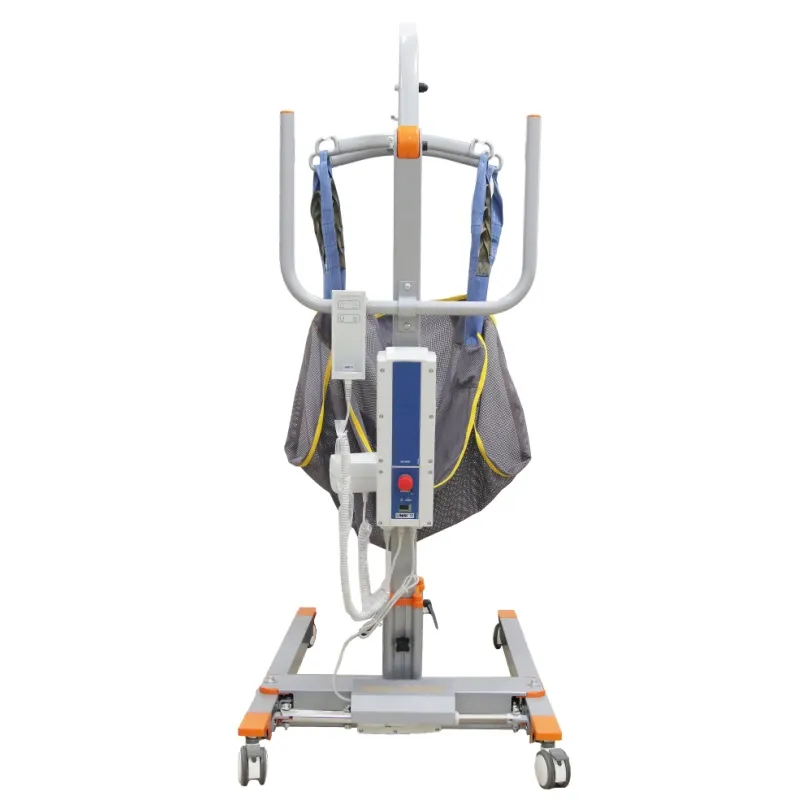
Working Principles and Key Advantages of Electric Patient Lifters
An electric patient lift is a piece of professional care equipment that uses a motor system for power and a lifting mechanism combined with a sling system to assist patients with movement. It typically consists of a base, swivel casters, a lifting column, an electric actuator, a battery, an electronic control system, and a patient sling.
During operation, the caregiver simply positions the specialized sling correctly beneath the patient and uses a handheld controller to manage the lift. The motor drives the lifting mechanism to gently raise the patient, facilitating transfers between locations such as beds, wheelchairs, care chairs, or toilets. Compared to manual patient lifters, the primary advantage of electric patient lifters lies in their ability to reduce the need for physical exertion while enhancing the stability of the entire transfer process.
1. Reducing caregiver workload and improving efficiency
A major challenge in modern healthcare and nursing environments is the conflict between staffing shortages and rising care demands. This is particularly evident in elderly care facilities and long-term care centers, where a single caregiver may be responsible for multiple patients with limited mobility. Relying on manual lifting not only results in lower efficiency but also leads to caregiver fatigue.
Electric patient lifts utilize motor-driven mechanisms to handle the bulk of the lifting effort. For instance, common models on the market typically offer load capacities ranging from 120 kg to 180 kg, with some heavy-duty units capable of supporting over 200 kg—sufficient to meet the needs of most adult patients.
For care facilities, electric patient lifts enable a single caregiver to perform patient transfers that previously required a team. This not only lowers labor costs but also standardizes care procedures.
2. Smoother movement and enhanced patient safety
Safety is the paramount consideration during patient transfers. Sudden jolts or rapid movements can cause discomfort, especially for patients who are frail, have fragile bones, or are recovering from surgery.
High-quality electric patient lifts typically feature a design that ensures stable, low-speed lifting—usually controlled within a safe range of approximately 5 mm/s to 15 mm/s—allowing for a smooth transfer experience. Furthermore, many models come equipped with safety features such as overload protection, low-battery alerts, emergency lowering functions, and anti-slip casters.
Unlike manual lifting, which can involve uneven application of force, electric equipment maintains a more stable movement trajectory through mechanical control.
3. Better suited for high-frequency use
User needs vary significantly; while home users might only require a lift a few times a day, hospitals and care facilities may need the equipment to operate continuously for hours.
The advantages of electric patient lifters become particularly pronounced in care facilities that must perform dozens of patient transfers daily. Although the initial purchase cost is higher than that of manual equipment, in the long run, it reduces physical strain on caregivers and improves work efficiency, while also minimizing occupational injuries caused by patient handling.
Therefore, electric patient lifters are particularly suitable for hospital wards, elderly care centers, rehabilitation facilities, and professional long-term care environments.
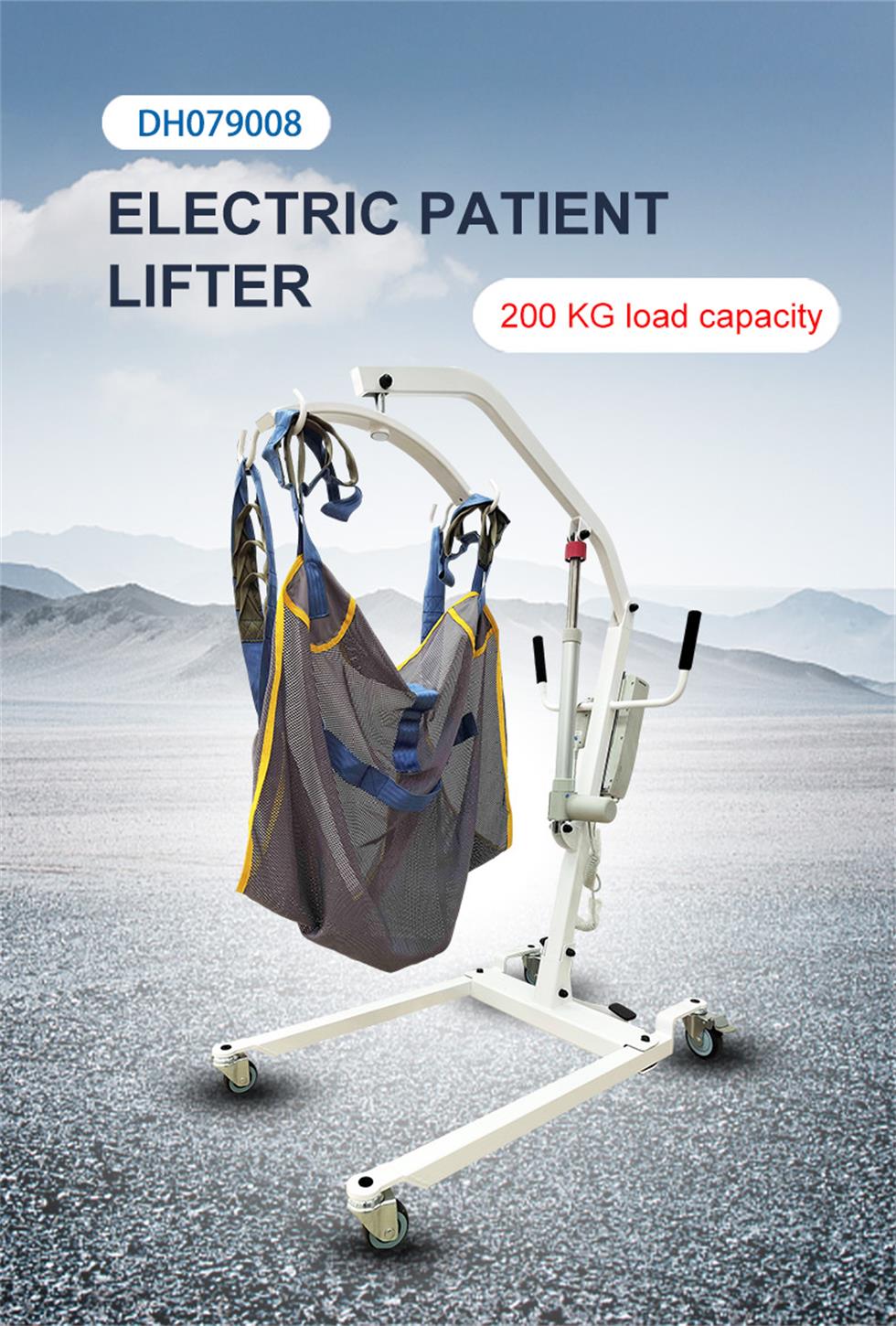
Features and Scope of Application for Manual Patient Lifters
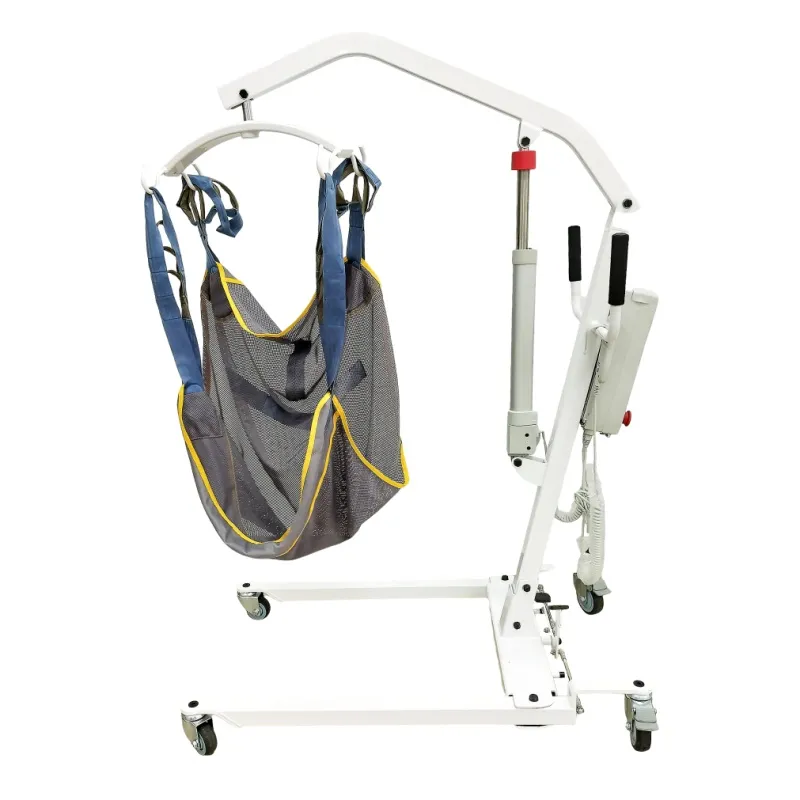
A manual patient lift is a device that uses a mechanical structure or hydraulic system operated by hand to lift and lower patients. Compared to electric patient lifts, they have a simpler design and do not rely on batteries or electronic control systems, resulting in a lower price point.
Traditional manual patient lifters typically use a hydraulic pump or mechanical lever to perform lifting operations. Caregivers must manually generate the power required to move the patient.
While they offer a lower level of automation than electric models, manual patient lifts still hold significant practical value.
1. Lower Initial Purchase Cost
For home users or small care facilities with limited budgets, the price of the equipment is a key factor.
Electric patient lifters incorporate core components such as motors, batteries, and control systems, leading to higher manufacturing costs; in contrast, manual patient lifts feature a relatively simple structure, making them a more economical choice.
If a patient requires assistance with mobility only for a short-term recovery period—such as the months following surgery—a manual patient lift may be the more cost-effective option.
2. Simple Structure and Easy Maintenance
With fewer electronic components, manual patient lifters offer advantages in terms of maintenance. Routine maintenance focuses primarily on:
•Checking the hydraulic system for proper function;
•Inspecting screws and structural connections;
•Checking the sling for signs of wear;
•Ensuring the casters move smoothly.
For settings with lower usage frequency, manual patient lifters can adequately meet basic care needs.
3. Higher Physical Demands on Caregivers
The primary drawback of manual patient lifts is that they require more physical effort from the caregiver.
Although they are safer than manually lifting or supporting a patient directly, the caregiver must still actively operate the device during the lifting and lowering process. If the patient is heavy or requires frequent transfers, manual patient lifts can still increase the workload for caregivers over time.
Therefore, manual patient lifts are better suited for settings with low usage frequency and limited budgets.
FAQ: Common Questions About Electric vs. Manual Patient Lifters
Q1: Are electric patient lifters suitable for home care?
Yes, they are. An increasing number of families are using electric patient lifters to assist in caring for elderly individuals with limited mobility and bedridden patients. When selecting a lift, consider factors such as available home space, power supply availability, and equipment dimensions.
Q2: What is the typical maximum weight capacity of an electric patient lift?
It varies by model. Standard models usually have a weight capacity of around 120 kg to 150 kg, while professional medical-grade models can typically handle 180 kg to 220 kg; some heavy-duty models support even higher weights. It is recommended to factor in a safety margin based on the patient's weight when making a selection.
Q3: Are manual patient lifters suitable for long-term care?
Manual patient lifts can meet needs if usage frequency is low. However, for long-term, high-frequency care environments—such as nursing homes and hospitals—electric patient lifts are highly recommended.
Q4: Do electric patient lifters require frequent charging?
Most electric patient lifts use rechargeable battery systems; a single charge typically supports multiple lifting operations. Actual battery life depends on battery capacity, the specific model, and usage frequency.
Q5: Which type of patient lift should nursing homes prioritize?
For nursing homes, electric patient lifters are generally the better choice due to the high volume of daily patient transfers. They reduce physical strain on caregivers, improve care efficiency, and lower the risks associated with manual lifting and handling.
