

Thanks to the continuous upgrades in modern medical and nursing concepts, a growing number of hospitals, rehabilitation centers, nursing homes, and home care settings are using electric patient lifters all over the place. Compared to manually lifting and carrying patients, this new technology using electric patient lifters with the help of a sling to transfer patients from a bed to a wheelchair or other similar devices is more than a breakthrough. It helps reduce the physical strain on the caregivers and also minimizes the chances of patient falls. It is indeed the biggest challenge to know which type of assistance the hospital or medical facility provides when moving the patient from one location to another.
A frequently asked question in practical application is "How many nurses are needed when using an electric patient lifter to hold a patient suspended in the air?" Most think an electric patient lift, the patient is being held in the sling and therefore, one nurse would be sufficient to do the whole job. Some people, however, are in the belief that for safety reasons, it must be two or more nurses who are involved in each such lift.
Reality is quite different. Both these views are extreme or one-sided. There is no fixed answer to "How many nurses are needed for the patient to be lifted with an electric patient lifter, in all cases;".
A lot of variables will affect the actual number of nurses needed such as whether the patient is awake, the weight, whether and how much he has been helping the nurse, whether the patient has physical handicaps or not, the nursing environment, the model of the device, type of sling, and the patient nursing standards of each hospital. There are cases where, in fact, a professionally-trained nurse working alone is able to complete a transfer; on the other hand, in high-risk situations, two or even three nurses might have to work together so as not to compromise the safety of the patient.
Therefore, it would not be prudent to fix an unchangeable number and ask the staff simply who is to come or go. Rather, it is the matter to know when one is safe enough to do the job alone and when two or more is needed to collaborate for the benefit of the patient and the staff, that would, perhaps, reflect the most important idea of safe handling of patients of these days.
In view of this, modern nurse education emphasizes a "safe patient lifting" system that allows the caregivers to handle a lot of the patient's weight by means of mechanical aids in order to minimize injury and fatigue. Electric patient lifters are a very representative product in that.
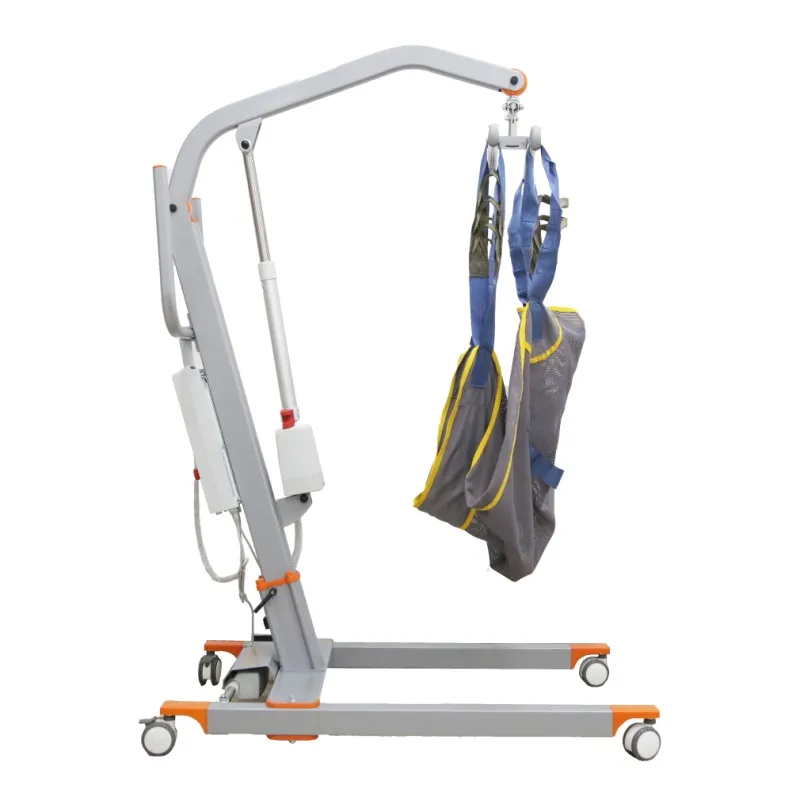
Much of the patient's weight can be borne with modern electric patient lifters. Patient transfers with the help of a boom, an electric lifting unit, and the appropriate slings minimize direct loading of the healthcare workers. Hence, most healthcare institutions these days find that electric patientlifters have become one of the standard essential equipment in intensive care, geriatric, and long-term care units.
What prompted hospitals and medical facilities to introduce electric patient lifters?
Over many years, manual patient transport by nurses has been a key element of their duties. However, multiple findings showed that dependence on manual handling of patients not only results in lower nurse efficiency but more importantly, it causes occupational diseases among the nursing team.
In fact, according to the result of the worldwide nursing industry surveys, nursing staff is one of the occupation groups that suffers most from musculoskeletal injuries, in particular, back injuries, rotator cuff syndrome, and neck discomfort. Frequent patient transports are one explanation of why. These occupationally-related injuries not only affect the health of the caregivers but are also a significant cause of increased staff turnover and management expenses to the facilities that take care of the disabled patients over a long time such as hospitals, rehabilitation centers, and nursing homes.
That is the reason that many countries have started promoting the idea of "Safe Patient Handling" with one main objective that nurses should use mechanical assistive devices, for the maximum possible time, instead of manual lifting.
The electric patient lifter is an example of that.
Can a nurse lift a patient by herself using an electric patient lifter?
This seems to be one of the primary worries not only for hospital management but for nursing staff also.
Literally, in case of the lowest-risk patients, a nurse who is adequately skilled and has a thorough knowledge of the subject area can be the lone operator of the electric patient lifter and do the job without help in a safe manner.
The patient must therefore be conscious, cooperative, within a reasonable weight range and not too difficult for the sling, and at the same time, the relocation route is simple and the surrounding environment is not a hinderance. These are conditions that the nurse can use to her advantage in order for the whole job to be done safely.
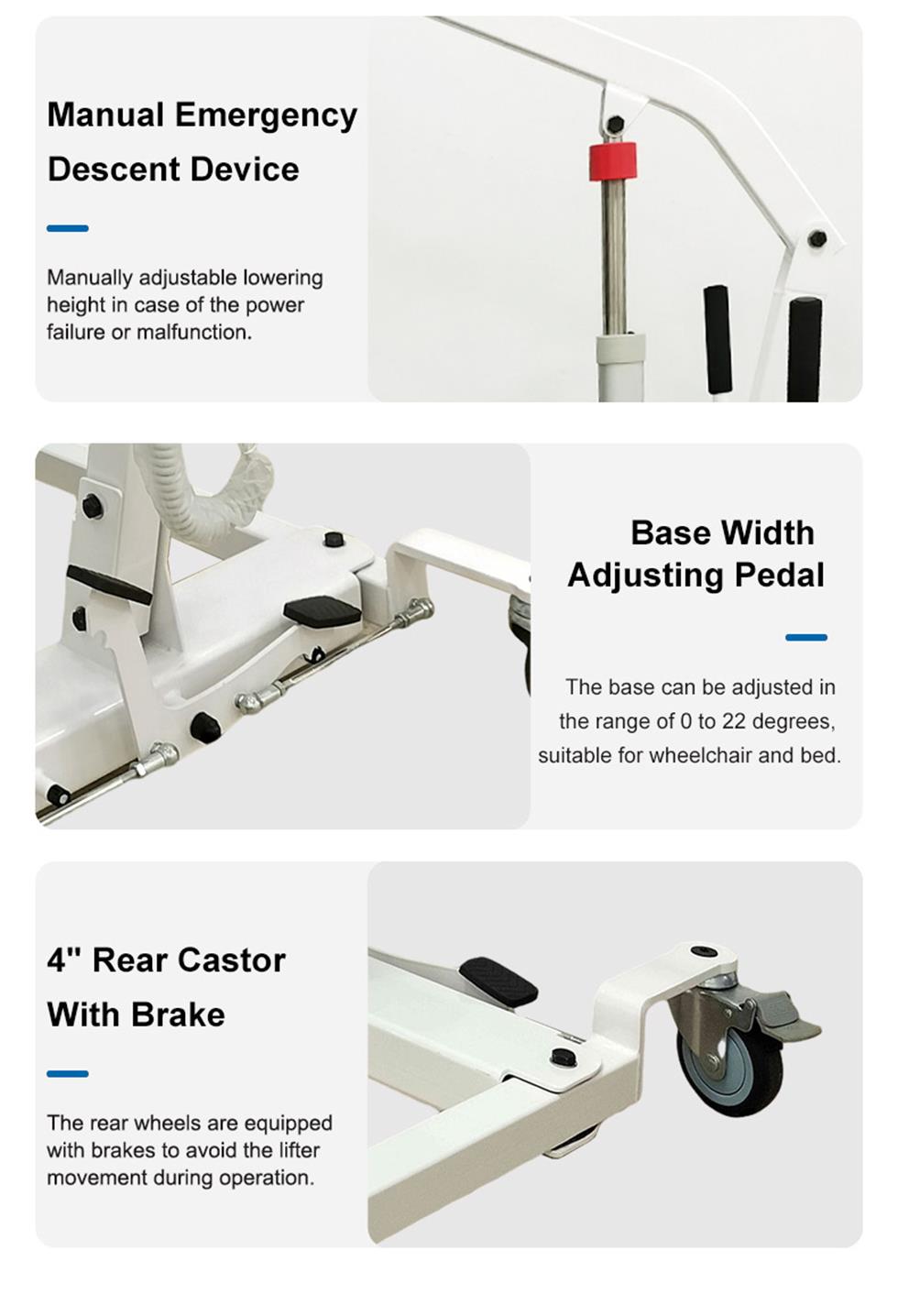
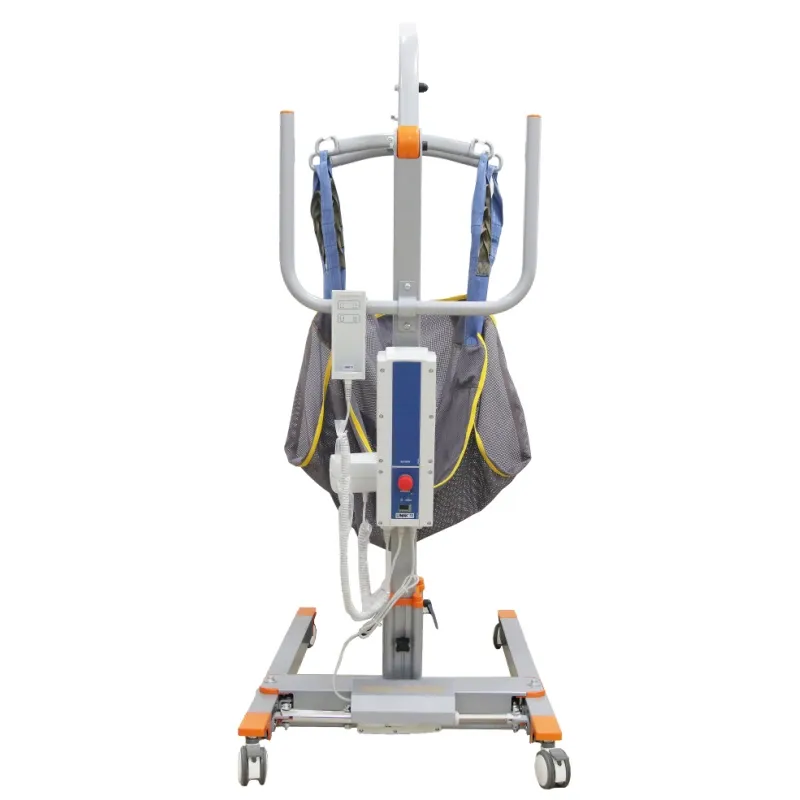
Now, modern electric patient lifters are more and more intelligently designed, offering the user, electric lifting button, emergency stop device, low battery warning, anti-cinch mechanism, and strong, stable chassis, so that the caregiver has better control over the direction of the patient’s lifting and speed.
On top of these features, a majority of these devices have adopted ergonomic sling systems that help to make the patient suspended in a very steady and comfortable way. Yet, one must clearly understand that "can be operated by one" is not equivalent to "all patients can be handled by one." A hospital or healthcare facility typically develops a particular care plan or procedure for a different patient depending on its risk level. They do not just rely on whether the lifter is the one that does the work, that is, they do not base it on the equipment’s capability to lift electrically, they decide upon the number of caregivers, the patient risk level, and other related factors in a holistic way.
What is the reason behind many hospitals recommending two nurses at work when operating the lifter?
Although modern electric patient lifters greatly reduce physical workload, teamwork still remains a norm when it comes to handling patients.
On the one hand, patient safety is the primary concern here. When a patient is taken out of a bed and completely lifted off the bed and up to about three feet in the air, nursing staff not only have to operate the equipment, they must look at the patient's face, observe his breath, look at the way his limbs are positioned, and keep a very close watch on the stress of the slings.
This means if there is only one nurse, then she would have to constantly switch back and forth from controlling the equipment and providing nursing care that may be very time-consuming. In a setting where there are two nurses, one can handle the equipment while the other one can provide direct patient supervision and emotional support.
On the other hand, the efficiency of the operation is also a factor that is influenced by the number of nurses. In narrow medical room, when you have to maneuver around furniture or to adjust a wheelchair, two nurses can get the job to the right spot and complete the transfer so much quicker, thereby avoiding the patient's discomfort of being kept suspended for a long time.
In addition, a patient using an electric patient lift for the first time may develop anxiety because of lack of experience, and in such a scenario the presence of one more nurse may make a big difference. The other nurse can stay on the same wavelength with the patient the whole time, explaining the procedures and helping him/her to be calm which in turn would result in a smoother and a safe transfer.
Therefore, most medical institutions have guidelines where if the equipment can be operated by one person, nurse practice policy still dictates the use of two nurses to do the transfer together.
Which patients are normally taken care of by two or more workers?
We already said that in some cases one nurse will be the only caregiver of the patient but in most situations two or even three caregivers are a must:
Most critically ill patients are those that require two caregivers at a time: for Instance, ICU patients are usually connected to ventilators, infusion pumps, monitors, and various other drains and catheters. A separate person is needed during the patient transfer for managing these various equipment that may have lines, catheters, and devices connected so that it is unlikely for the patient to be disturbed and the lines not to become tangled while transferring. So the patient safety is at the first place, a second reason is that the patient may need to breathe on a ventilator, the nurse may also have some other tasks to do during the patient transfer.
Nearly unconscious patients (patients who do not have any idea what is going on).
Patients who are not conscious are not able to get into the right position on the sling, or even know the fact when something is wrong, it is the duty of the caregivers to keep the patients in a comfortable, and safe position. It is obvious that the weight factor matters. Even though electric patient lifter has a carrying capacity from 150 kg to 180 kg or more, heavy patients make lifting a patient very difficult with the equipment as well. If two people do the work, this will be easier for them.
Precipitated muscle tone change (in patients).
A typical case would be the patient who has been affected by a stroke with resulting spasms, or a patient with terminal stage Parkinson’s disease or other patients suffering from neurological damage who might undergo muscle spasms or uncontrolled movements.
In addition, transfer of these patients after surgeries, with fractures or who are in severe pain requires the presence of a lot of assistants to carry out the whole job and make sure that no one gets hurt.
Number of Nurses is Only One Factor, Standard Operating Procedures Are More Important
Many are preoccupied by the matter "How many nurses are needed," the fact is safety is greatly dependent on the procedure and guidelines rather than the numbers involved in lifting the patient.
For instance, when preparing for an electric patient lifter operation, the equipment condition should be double-checked to make sure that there is sufficient charge in the battery, the sling is free from damages, the hook locking system is working, and if needed, the braking mechanism can be engaged.
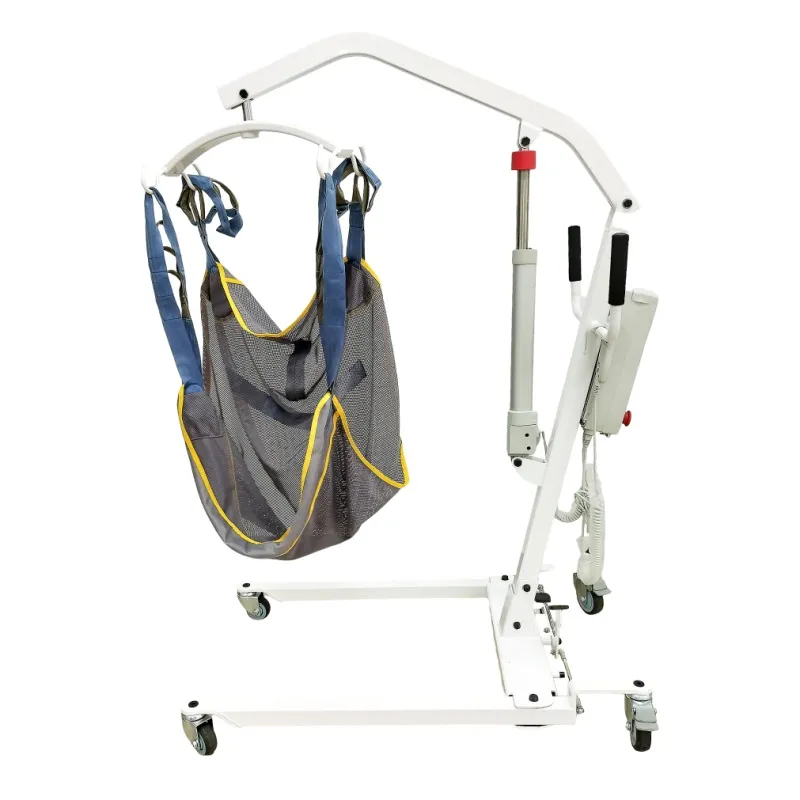
In addition, the right kind of sling must be taken for the purpose based on the patient’s weight physical condition and the nature of the transfer. The type of sling is going to be a major factor in how a patient is supported on the lifter, e.g., a complete-body sling is more suitable for totally immobile and bedridden patients, whereas a seated sling is better when patients are still a bit capable of supporting their trunks.
During installation, sling should be evenly distributed and symmetrically aligned so that undue pressure is not being exerted on any particular area of the patient’ body. Before doing the actual lift, it is good to do a test lift to get the slings and other connecting parts properly positioned that way. The significance of these steps is probably greater in terms of safety than the number of caregivers.
How does an electric patient lifter help to prevent occupational injuries of the nurses?
It is increasingly becoming a trend in many hospitals to take care about the well-being of their nursing staff, and this explains the fact that electric patient lifts have been quickly adopted and became very popular with them.
Nurses are required in most cases by the nature of their work to assist or carry their patients in a variety of ways, for instance turning the patients over, raising them, moving them from one place to another, and getting them to a standing position. All these are a bit heavy on the body and may give rise to problems such as disc hernation of the back, rotator cuff problems, and chronic muscle strain. It is especially in wards that have patients that require a great degree of long-term care, neurological departments, physical therapy departments, and home hospice that nurses can find it extremely physically draining to assist their patients since the job of transferring a patient is one of the frequent ones.
By using electric patient lifters the caregivers would not be required to bear the weight of the patients as it is the lifter that will carry the heavy patient from one place to another.
One way to lower the amount of strain that nurses are exposed to when they are assisting patients is by giving them the opportunity of using electric lifts in which case the patient’s weight is carried by the lifter so that the nurse’s lower back will be significantly less burdened. Health care facilities around the world have started making the move to the use of electric patient lifts that has been proven to help raise the standard of care, also cut on the losses arising from sick leaves, as the rate of staff turnover, due mainly to occupational injuries, gets significantly reduced, thus overall nursing effectiveness is boosted in this case.
How many people are required to do the lifting operation when electric patient lifter is used at home?
Over the past few years, the electric patient lift has found a place for itself in the home care market to meet the growing demand for such services.
Whether or not an at-home user will be able to handle the lift on their own depends to a large extent on the specific condition of the patient. In case the patient is not incapacitated, the patient is well aware and is cooperating, and the house is big enough, one person caregiver with good training in use of the device could do a simple transfer like bed to wheelchair or wheelchair to sofa easily.
Where however, the person concerned is totally incapacitated, is very physically large or is being looked after by a carer who hasn't much experience, it may be a good idea that the two people working together to handle a lifting procedure and in case of any difficulty a professional therapist and or nurse should intervene at some point.
In any event, one has to keep in mind that the domestic environment is often the source of quite a lot of obstacles in terms of space utilization whereas for hospital use only the latter is important and the surroundings are kept free for the lift.
The presence of things like a soft floor where it is hard for the wheeled apparatus to pass, narrow passageways with lots of furniture in the way, and small thresholds where wheel chucks in, all of which might interfere with proper functioning of an electric patient.lift. Therefore, before making a decision to buy the machine, one should have the home measured beforehand to see if enough space is available and talk to a professional supplier about getting a model suited for the circumstances.
How does a hospital develop nursing protocols for using electric patient lifter?
For instance, hospitals of a modern character seldom simply say "one person operates it for all patients" or "two persons for all patients," but rather, they have a systematic risk assessment mechanism.
During assessments at nursing home, the nurse will look at all kinds of aspects of the patient’s condition such as the patient’s weight level of consciousness, mobility, degree of cooperation, type of patient’s illness, number of medical tubing, medical care environment to decide suitable way for patient transfer.
For example, a low-risk patient may be transferred by one nurse alone. A medium risk patient is expected to be handled by two nursing staff at once and for a high risk patient besides the nurse, a nurse, a therapist or even a doctor is also included in the case.
This kind of a risk-based system of management allows nursing resources to be utilised in a more efficient and scientific way while keeping both patients and staff safe which is a management model that international medical institutions are increasingly resorting to.
FAQ
1. Is it always necessary for there to be two nurses during the use of an electric patient lifter?
Not necessarily. For conscious, cooperative patients of light/moderate weight, and with low risk a single trained nurse can usually do the procedure alone. Nonetheless, most hospitals still recommend a team of two nurses for the purpose of the safety of patient.
2. Which patients will benefit from the fact that there are two or more people operating an electric patient lifter at the same time?
For example, ICU patients are generally very medically complex and therefore two or more caregivers would be better. Similarly, very weak or unconscious patients, those who are heavy and those with complicated physical or psychological conditions would require additional support by a professional staff and/or relatives. A high degree of collaboration is therefore very strongly recommended for such patients.
3. Can family members, after getting instructions, operate on an electrically operated patient lifting device?
Yes, provided they are trained professionally to understand every detail about its functioning. However, in the case of patients having complications or being in a very restricted home environment, it is better that two people are present for the lifting operation and if necessary also a rehab specialist or a nurse shall guide.
4. Can an electric patient lifter completely replace manual handling?
As far as the patient's transfer from the bed to the wheelchair, wheelchair to the toilet chair, nursing chair and so on goes with the help of electric patient lifters the manual lifting is almost entirely eliminated except for the very unusual cases. However, for specialized procedures like patient positioning, resuscitation or special treatments nursing staff will still need to assist.
5. What is the most significant advantage of using an electric patient lifter?
The major positive effect of electric patient lifting is reduced physical strain on staff who is less likely to suffer from injuries at work in that way. At the same time, the patients&rsquo’ comfort and safety during transportation are improved. It’s become such an essential piece of assistive technology for patients at hospitals&rsquoamp;rsquo&rsquo, rehabilitation centers&rsquoamp;rsquo, nursing homes, or even when giving care in a home setting. That’ the reason why a large majority of medical institutions and homes rely on lifting devices of this type.
