

For long-term bedridden patients, post-operative recovery patients, elderly care recipients, and some patients with chronic diseases, the question of whether the headboard should be raised throughout the night is often overlooked but crucial. With the development of medical care equipment, more and more families and medical institutions are using adjustable hospital beds. These beds allow for electric or manual adjustments to the headboard, footboard, and overall height, enabling patients to achieve a more comfortable and safer sleeping posture.
Many people have questions when purchasing or using adjustable hospital beds:
While raising the headboard does make breathing easier, eating more convenient, and reduces discomfort for some patients lying flat, does this mean the headboard can be kept elevated, allowing them to sleep in a semi-reclining position all night? The answer isn't a simple "yes" or "no." For some patients, maintaining a moderately elevated headboard angle throughout the night has positive effects; however, if the angle is too high, the posture is incorrect, or the same position is maintained for an extended period, it may lead to new nursing problems.
Therefore, correctly understanding the adjustment principles, applicable populations, recommended angles, and long-term usage precautions of adjustable hospital beds is crucial for improving sleep quality and reducing nursing risks.
Why are more and more people choosing adjustable hospital beds for long-term care?
Traditional ordinary beds only provide a fixed supine position. For people with declining physical function, limited mobility, or those requiring long-term bed rest, a fixed angle often cannot meet their daily needs. For example, patients need to sit up to eat, sit semi-sitting to read or communicate, and elevate their upper body when experiencing breathing difficulties. Nursing staff also need to adjust the bed height and angle when changing dressings, performing examinations, or turning the patient.
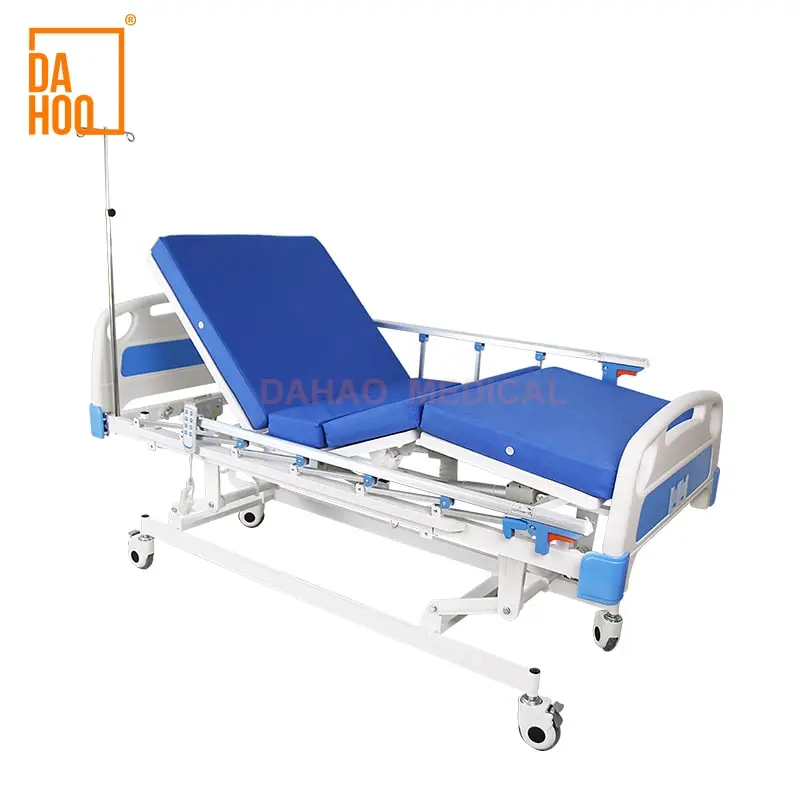
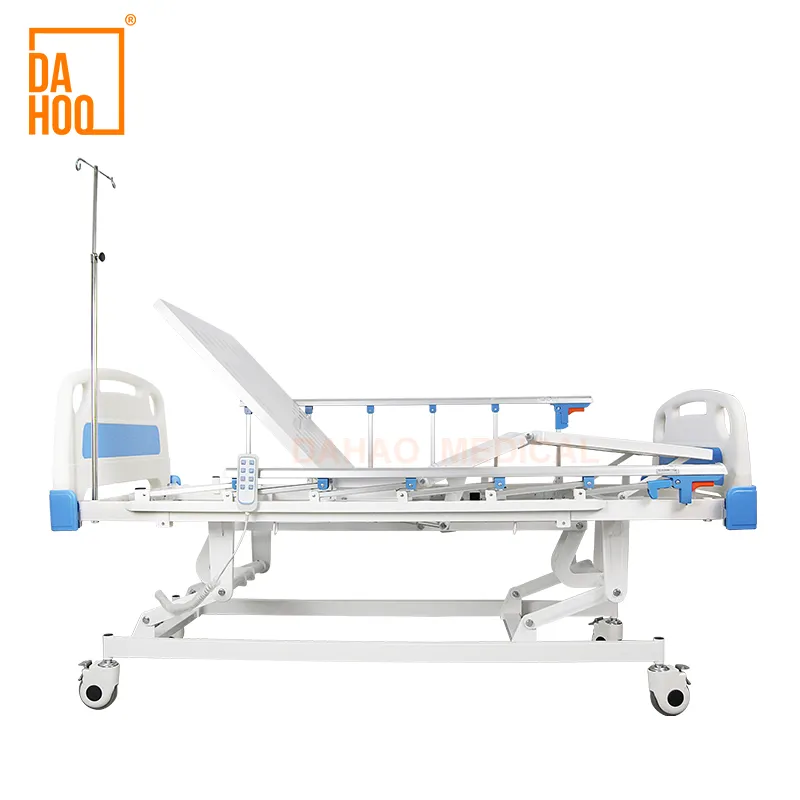
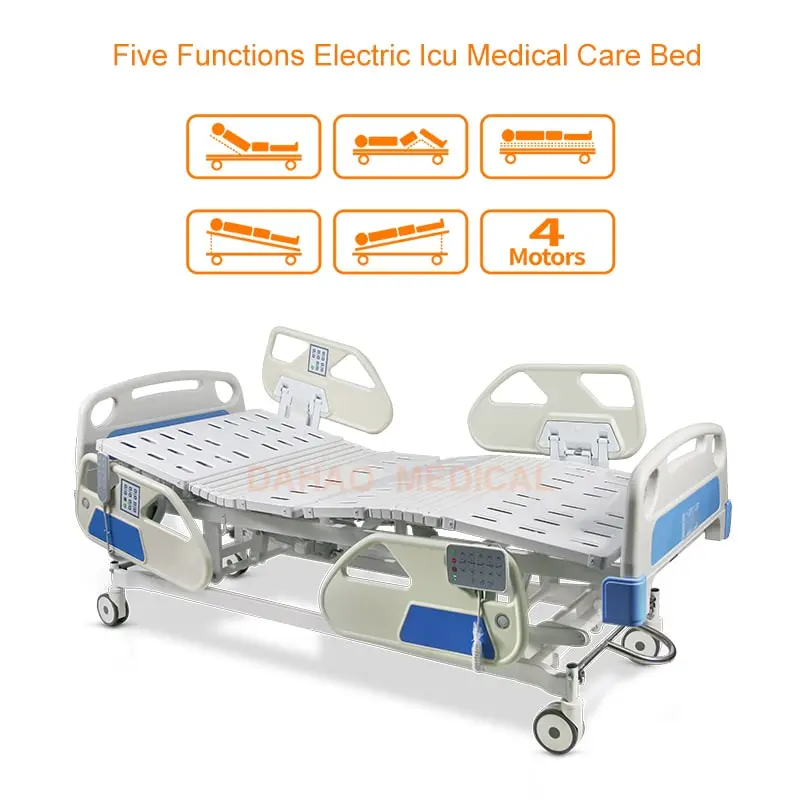
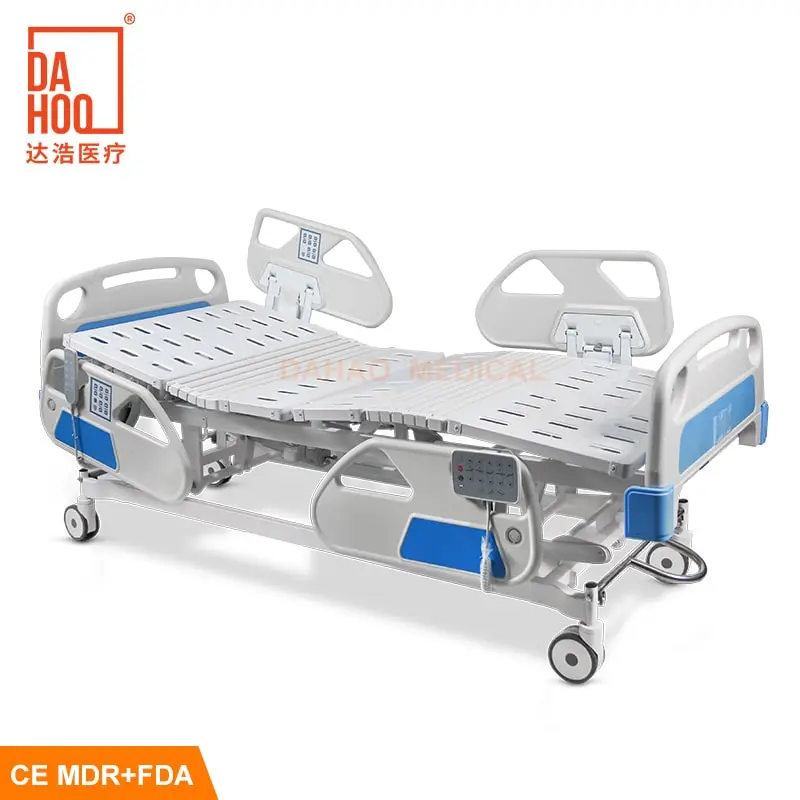
The core value of adjustable medical beds lies in their ability to meet different human posture needs through mechanical structures or electric drive systems. Currently, common multi-functional nursing beds typically have backrest height adjustment, legrest height adjustment, and overall height adjustment functions. Some electric models can adjust the backrest from 0° to approximately 70° or even 75°, the legrest angle from approximately 25° to 45°, and the overall bed height can be adjusted within a range of approximately 400mm to 800mm according to nursing needs. Some medical procurement standards require electric nursing beds to have functions such as backrest adjustment, knee adjustment, and overall height adjustment to meet different nursing scenarios.
For patients, these functions are not simply about "easy sitting up," but are related to breathing, swallowing, blood circulation, pressure distribution, and nursing safety. For example, a headboard elevation of 30°–45° is generally considered a common semi-recumbent position, which can help improve breathing comfort and reduce the risk of aspiration in some bedridden elderly people.
However, precisely because adjustable medical beds are highly flexible, many users easily fall into a misconception: that the higher the angle, the more comfortable, or that maintaining one position for a long time is more convenient. In fact, the human body needs dynamic balance during sleep, and the headboard angle is not necessarily better the higher it is.
Is it okay to sleep with the headboard elevated all night on an adjustable hospital bed?
From a medical and nursing perspective, some patients can sleep with the headboard elevated all night, but the angle needs to be controlled and adjusted according to their physical condition.
For ordinary healthy people, sleeping flat usually allows the spine, muscles, and joints to be in a more natural state. For certain patients requiring special care, such as:
• Individuals prone to nighttime breathing difficulties;
• Individuals with gastroesophageal reflux disease (GERD);
• Elderly patients with declining cardiopulmonary function;
• Individuals who are bedridden for extended periods and have reduced swallowing ability;
• Individuals who need to reduce abdominal pressure after surgery; Elevating the head of the bed may improve comfort.
For example, for some elderly patients who are bedridden for extended periods, maintaining a slight elevation of approximately 20°–30° at night can reduce chest tightness caused by lying flat and also help reduce the risk of oral secretions or stomach contents refluxing into the airway. Elevating the head of the bed is also a commonly used method in nursing care for patients requiring nasogastric feeding or with weak swallowing function.
However, caution is needed if the adjustable hospital bed is adjusted to 60° or even 70° or higher throughout the night. This angle is closer to a sitting posture and is not suitable as a long-term sleeping position for most people. Maintaining a high angle for a prolonged period may lead to the following problems:
First, the body is prone to sliding down.
Raising the head of the bed causes the body to gradually move towards the foot of the bed due to gravity, placing greater shear forces on the buttocks and sacrum. This can increase the risk of pressure injuries, especially for patients with poor skin tolerance.
Secondly, it increases pressure on the lower back.
While raising the head of the bed can alleviate some breathing problems, without simultaneous adjustment of the leg angle, the lumbar spine and pelvis may be stretched, leading to lower back pain and buttock discomfort.
Thirdly, sleep quality may decrease.
While a high-angle semi-recumbent position is convenient, it may affect deep sleep stages for those without specific needs, preventing the body from fully relaxing.
Therefore, the key to whether an adjustable medical bed can be raised all night is not the equipment itself, but rather the patient's physical condition, type of illness, and whether the head of the bed angle is appropriate.
How much should the head of an adjustable hospital bed be adjusted for all-night sleep?
In actual nursing care, the head of the bed usually needs to be adjusted according to the patient's condition; there is no fixed answer that applies to everyone. However, the following common ranges can be used as a reference:
1. 0°–15°: Slight adjustment, closer to supine position
This angle is suitable for most ordinary resting positions. A lower angle can be used if the patient does not have significant breathing difficulties, reflux, or special care requirements.
The advantage is that the body's stress is closer to lying flat, with less pressure on the lower back, and the sleep experience is usually more natural.
2. 20°–30°: A common nighttime angle for long-term bedridden patients
This is a common range in many care scenarios. For elderly people who are bedridden for extended periods or those with limited mobility, a slight elevation can improve comfort while avoiding prolonged periods of complete supine lying.
Some medical care recommendations indicate that elevating the head of the bed by about 30° can help prevent aspiration and improve breathing in some bedridden patients.
3. 30°–45°: Semi-recumbent position, suitable for some patients with special needs
If the patient has breathing difficulties, gastroesophageal reflux, or discomfort after eating, doctors or caregivers may recommend this range.
In this case, it is best to use leg raises to help the body achieve a more stable posture. For example, raising the back by 30° while slightly elevating the knees can reduce the body's downward slippage.
4. Above 60°: More suitable for short-term activity, not recommended for prolonged sleep
60°–75° is typically used for sitting up, eating, rehabilitation training, examinations, or nursing procedures, rather than normal sleep.
While some adjustable medical beds can achieve a back elevation angle of 70° or even 75°, this represents the equipment's capability and does not mean that this angle is suitable for maintaining continuously throughout the night.
What nursing problems might arise from prolonged bed elevation?
Many families using adjustable medical beds focus on "comfort," but professional caregivers prioritize "safety." If the bed is maintained in an elevated position for extended periods, several issues need to be considered.
First is the risk of pressure injury
When the body is bedridden for extended periods, the sacrum, coccyx, buttocks, shoulder blades, and heels are prone to continuous pressure. When the head of the bed is raised, the body slides down, creating friction, which further increases the possibility of skin damage. Therefore, in addition to adjusting the headboard angle, a suitable nursing mattress is needed, such as a pressure-relieving mattress, air mattress, or high-density support mattress.
Secondly, there's the issue of postural stability
Many people believe that raising the headboard only requires back support, but in reality, the human body requires overall coordination. If only the back is raised while the legs remain straight, the patient is prone to sliding to the foot of the bed.
Therefore, when using an adjustable medical bed, it is recommended to use the "back-leg linkage" function. If the equipment supports it, the knee position can be adjusted while raising the back, creating a more stable sitting or lying posture. Some high-end nursing beds even have a backrest adjustment function, which can reduce pressure on the lower back and abdomen area during back raising.
Additionally, attention must be paid to the safety of the guardrails
With the headboard raised for extended periods, the patient's center of gravity shifts. If the patient is unconscious or has reduced mobility at night, the risk of falling increases. Hospital beds that meet nursing needs are usually equipped with adjustable guardrails, which should have a stable locking structure.
How to correctly use an adjustable medical bed for safer sleep at night?
To ensure the effectiveness of adjustable medical beds, relying solely on adjustment buttons is insufficient; proper care is also crucial.
First, adjust the angle according to the patient's condition
Do not immediately adjust the headboard to its highest position. Start with 15°–30° and observe. If the patient feels comfortable breathing and has stable sleep, adjust as needed.
Second, avoid maintaining a single posture for extended periods
Even with a fully functional adjustable hospital bed, patients should not remain completely immobile. Long-term bedridden patients still require regular turning and adjustment of pressure points. Caregivers should check the patient's skin condition periodically.
Third, utilize leg adjustment features
If the headboard needs to be raised for extended periods, it is recommended to adjust the leg angle accordingly. This reduces the risk of slippage and improves stability.
Fourth, choose a suitable mattress
Standard mattresses may not meet the needs of prolonged bed rest. Nursing mattresses typically balance support and pressure relief, with a common thickness of approximately 8–15 cm. Different patient types require different products. Some nursing standards also consider pressure-relief mattresses to reduce the risks associated with prolonged bed rest.
Fifth, regularly check the equipment status
Electric adjustable medical beds rely on motors, controllers, and mechanical transmission systems to operate. Long-term use requires monitoring the motor's operating noise, lifting stability, power supply circuitry, and the functionality of the emergency descent function.
When choosing an adjustable medical bed, which functions are more important?
Many adjustable hospital bed models are available on the market, but more functions do not necessarily mean better suitability for home use. The choice should be based on nursing needs.
For general home care, focus on:
• Backrest lifting function;
• Legrest lifting function;
• Overall height adjustment;
• Silent motor;
• Anti-pinch hand rails;
• Reliable caster braking system.
If the patient requires long-term bed rest, consider:
• Maximum weight-bearing capacity;
• Bed stability;
• Pressure-reducing mattress fit;
• Turning assistance function;
• Emergency repositioning function.
Currently, some medical-grade electric nursing beds have a maximum load capacity of over 200kg, with some models even reaching 250kg to 400kg. The backrest adjustment range is approximately 70°. These parameters can meet the needs of patients of different body types and nursing scenarios.
FAQ: Frequently Asked Questions about Adjustable Hospital Beds for Nighttime Use
1. Can I raise the headboard of an adjustable hospital bed every night?
Yes, but it depends on the patient's condition. For some patients with breathing difficulties, gastroesophageal reflux, or those who are bedridden for extended periods, moderately raising the headboard may be helpful. However, it is not recommended for ordinary patients to maintain an excessively high sleeping angle for extended periods.
2. Can I sleep with the headboard raised 30 degrees all night?
In many cases, yes. 30° is a common semi-recumbent angle, balancing comfort and safety. However, if the patient experiences back pain, slips, or increased skin pressure, readjustment is necessary.
3. How high can the headboard of an adjustable medical bed be raised?
Different models have different heights. Common nursing beds have a backrest angle of approximately 70°–75°, but the highest angle is typically used for sitting up or nursing procedures, and is not necessarily suitable for sleeping all night.
4. Will raising the head of the bed for extended periods affect blood circulation?
If the bed angle is reasonable, it generally won't cause significant problems. However, maintaining a high angle for a long time while keeping the body stationary may increase localized pressure, requiring adjustments such as turning over and repositioning.
5. What should be considered when purchasing an adjustable medical bed for home use?
Focus on safety, weight-bearing capacity, motor quality, guardrail design, mattress compatibility, and after-sales maintenance, rather than simply the number of features.