

For electric wheelchair users, the question, "Can I replace the motor with a larger one to make the wheelchair run faster?" is a very real concern. This is especially true when users need to commute daily, shop, go to the doctor, or travel long distances within large communities, campuses, or commercial centers. The factory-installed maximum speed of the electric wheelchair may feel "not fast enough" to some. Some users therefore consider replacing the motor with a higher-powered one, increasing the battery voltage, modifying controller parameters, or even removing speed limits to increase the maximum speed.
From a mechanical and electrical perspective, increasing the motor power can indeed change the vehicle's power output; however, from the perspective of complete electric wheelchair system engineering, safety testing, and medical device design, the idea that "replacing it with a larger motor will safely make it run faster" is a very dangerous misconception. An electric wheelchair is not simply "motor + battery + four wheels," but a comprehensive mobility aid system that integrates the power system, controller, braking system, frame, tires, seat, center of gravity, stability, software control, and electromagnetic compatibility. Unauthorized alteration of any core parameter could compromise the originally verified safety boundaries. International standards even specifically define testing methods for the maximum speed of electric wheel chairs. ISO 7176-6:2018 is a standard for determining the maximum speed of electric wheel chairs, and its test subjects include electric wheel chairs and similar devices with a maximum nominal speed not exceeding 15 km/h. The US FDA also recognizes relevant standards and considers maximum speed, acceleration, and deceleration as important parameters for evaluating the performance and safety of electric wheel chairs.
Therefore, the real issue worth discussing is not "how to modify the motor to make the electric wheelchair run faster," but rather: why can't the speed of electric wheel chairs be increased arbitrarily? If you feel that your electric wheelchair is too slow, how can you solve this professionally?
The following will systematically analyze this issue from multiple perspectives, including the electric wheelchair's power system, controller, battery, braking distance, steering stability, center of gravity, tires, frame, and safety standards.
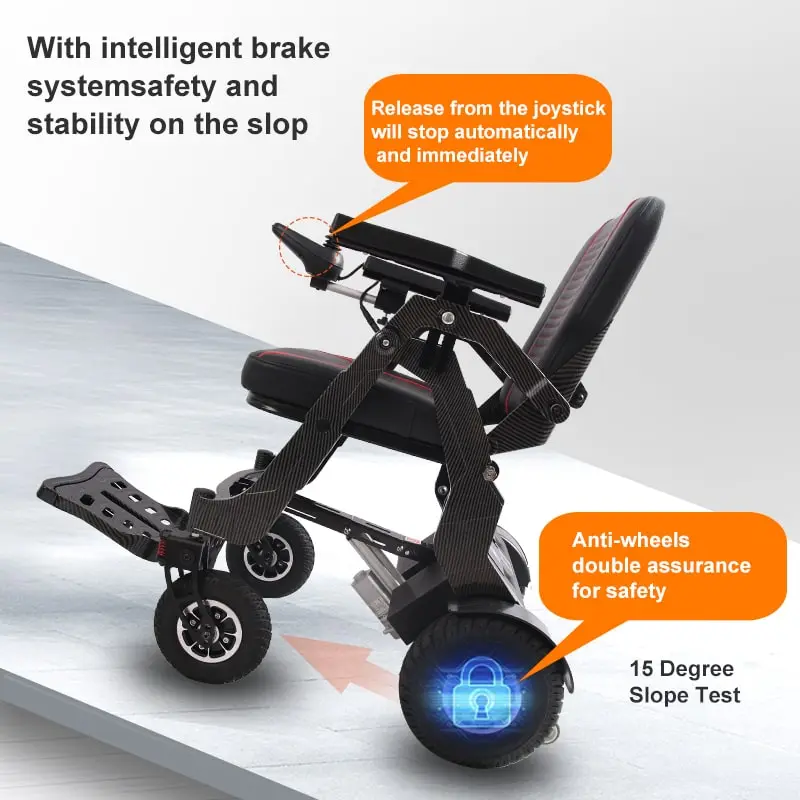
Why are more and more electric wheelchair users hoping to "run faster"?
Behind the issue of electric wheelchair speed lies the increasing demand of modern users for mobility efficiency. In the past, when people bought electric wheel chairs, their primary concerns were "whether it can walk," "whether it can climb hills," and "whether the battery life is sufficient." However, users' environments are now more complex. Electric wheel chairs are not only used for indoor mobility but also frequently in residential areas, hospitals, shopping malls, airports, retirement communities, parks, and accessible roads.
For example, if a user needs to drive their electric wheelchair 3-5 km daily, and the actual average speed is only 4-5 km/h, a longer trip could take close to an hour. For people who need frequent movement, this time cost is indeed significant. Therefore, some users might think that if the maximum speed of electric wheel chairs could be increased from 6 km/h to 10 km/h or even 12 km/h, wouldn't travel efficiency be significantly improved?
From a purely mathematical perspective, increasing speed can indeed shorten the theoretical travel time. For example, traveling 5 km at 5 km/h takes about 60 minutes, while at 10 km/h it would theoretically only take 30 minutes. However, actual driving is not a continuous high-speed journey on a straight line without obstacles. Users also have to deal with turns, parking, slopes, pedestrians, doorways, ground elevation differences, and complex environments. Therefore, a theoretical increase in speed does not simply equate to an increase in actual efficiency.
More importantly, electric wheel chairs are powered mobile devices that support the human body. The driver is typically seated, with a relatively high center of gravity, and the vehicle's wheelbase, track width, and seat height are all designed holistically. As speed increases, the vehicle's dynamic stability, braking distance, and steering response all change. In other words, the "speed" of an electric wheelchair is not an independently adjustable number, but rather part of the overall system's safety performance.
The US FDA classifies powered wheelchairs as medical devices used to assist mobility impairments and explicitly includes related products in the medical device regulatory system. This also means that electric wheel chairs are fundamentally different from ordinary toy vehicles, electric models, or DIY vehicles.
Can an electric wheelchair run faster by replacing the motor with a higher-powered one?
The answer needs to be considered on two levels.
From an engineering perspective, the motor's speed, torque, rated voltage, rated current, reduction mechanism, and wheel diameter all affect the vehicle's power performance. Therefore, replacing the motor with one of different specifications could theoretically alter the electric wheelchair's driving performance.
However, from a practical safety perspective, users cannot arbitrarily increase the speed of their electric wheelchair beyond the manufacturer's designed and verified range by replacing the motor with a higher-powered one, disabling the controller's speed limit, or altering the battery voltage.
The reason is quite simple: the motor is only one component of the electric wheelchair's power system.
Assuming the original electric wheelchair uses a 24V system with two 250W rated drive motors, the total rated motor power is approximately 500W. If a user considers "500W too low" and replaces it with two 400W or even 500W motors, superficially it only increases the power, but in reality, increasing the motor power necessitates a reassessment of the controller's output capacity, the battery's continuous discharge capacity, the wiring's current carrying capacity, fuses, gearbox, axles, tire grip, and braking capabilities.
If the original system's controller has a maximum continuous current of 30A, and the new motor requires a higher current under high load conditions, the controller may overheat, trigger protection mechanisms, malfunction, or even be damaged. Even directly replacing the controller with a larger capacity one doesn't solve the problem, as the battery and wiring harness's ability to withstand the new current over a long period still needs to be verified.
Therefore, "replacing the motor" is not an isolated modification project.
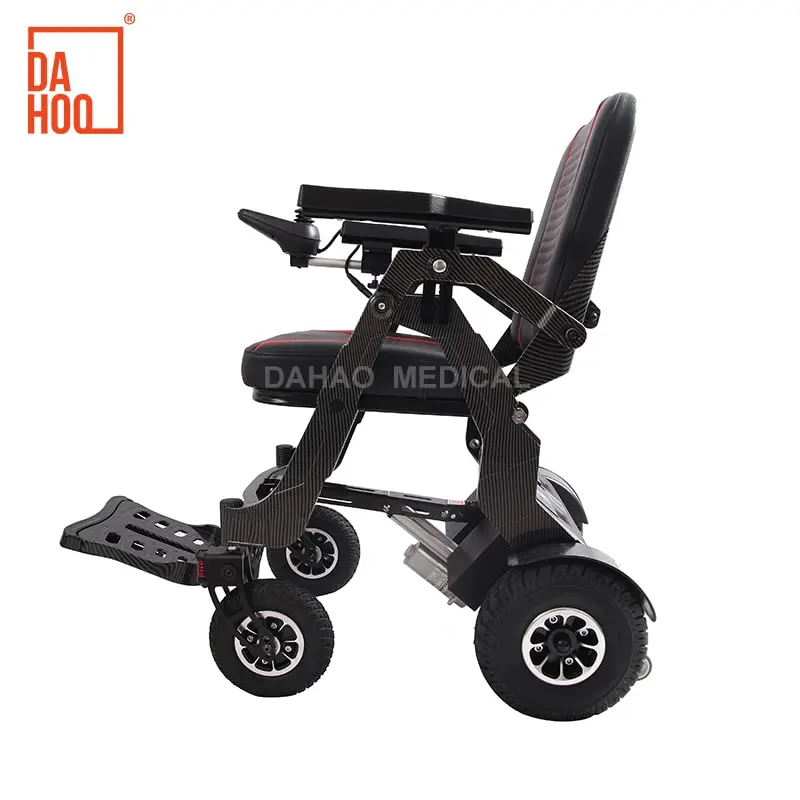
Why can't the speed of a power wheelchair be adjusted "at will"?
Many users mistakenly believe that power wheelchairs are like electric cars, thinking that the maximum speed can be increased as long as the controller allows it. However, modern power wheelchairs typically use a controller to precisely control the motor, including multiple processes such as starting, acceleration, deceleration, direction changing, and stopping.
The controller of a power wheelchair is not simply a "throttle." It needs to control the motor output based on joystick inputs, system voltage, current, operating status, and other safety logic. ISO 7176-14 specifically specifies requirements and test methods for the power and control systems of electric wheel chairs and electric mobility devices, and the US FDA lists this standard as one of the recognized consensus standards.
Therefore, when a user modifies the controller parameters, it may actually change not only the maximum speed but also acceleration, deceleration, and steering response.
For example, an electric wheelchair that initially accelerates smoothly from a standstill may experience a greater driving force in a shorter time if the user removes the acceleration limit from the controller. For a standing person, this change might just be a "sudden lurch forward," but for a user sitting in the electric wheelchair, the body may lean forward noticeably due to inertia.
Especially for users with limited trunk control who require seat belts, side supports, or headrests, sudden acceleration can pose a more significant risk to postural stability.
This is why the maximum speed, acceleration, and deceleration of power wheelchairs need to be tested as a complete system, rather than allowing users to adjust them arbitrarily via a controller knob. The ISO 7176 series of standards explicitly includes these parameters as important components of power wheelchair testing and evaluation.
One of the biggest risks associated with increasing the speed of a power wheelchair is the increased braking distance
Many people only focus on "going fast," neglecting "being able to stop."
This is one of the most easily underestimated issues in power wheelchair speed modifications.
A vehicle needs a certain amount of time and distance to come to a complete stop from a moving state. In simplified terms, there is a clear relationship between braking distance and the square of the speed. Under the same braking conditions and road conditions, if the speed increases from 6 km/h to 12 km/h, doubling the speed, then from a classical kinematics perspective, the theoretical braking distance could increase to approximately four times the original.
Of course, the actual braking of a power wheelchair is also affected by factors such as motor control strategy, controller, electromagnetic brakes, tires, road friction, vehicle weight, and slope. Therefore, this ratio cannot be simply used as the actual braking distance. However, this relationship is sufficient to illustrate that increasing speed is not a linear risk.
Assuming that under certain conditions a power wheelchair can effectively decelerate at 6 km/h in about 0.8 m, then when the speed increases to 12 km/h, even if the vehicle can maintain a similar braking force, the theoretical dynamic braking requirements will increase significantly.
More dangerously, users are not usually driving power wheelchairs on a flat laboratory surface.
Real-world environments may contain tiles, carpets, wet surfaces, ramps, tile grout lines, gravel, and other obstacles. The friction conditions between the tires and the road surface will change, and the braking performance will also change accordingly.
Therefore, the maximum speed of an electric wheelchair must be considered in conjunction with the braking system.
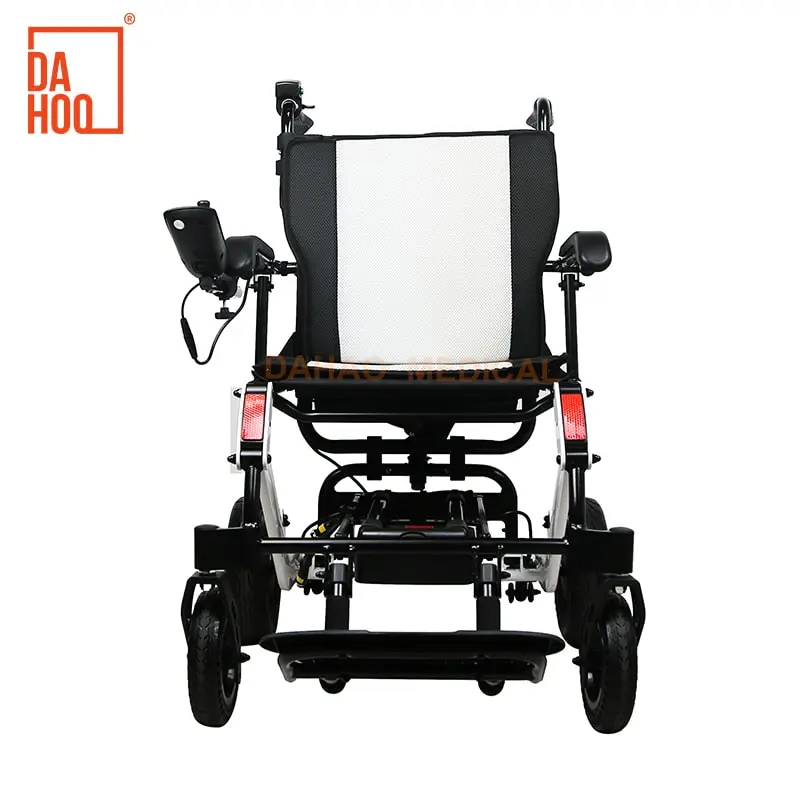
Why does increased speed increase the risk of tipping over when turning?
Besides braking, turning is another crucial issue.
Electric wheel chairs typically employ a small turning radius to facilitate agile maneuvering indoors. However, vehicles experience lateral acceleration during cornering, the magnitude of which is related to the square of the velocity and the cornering radius, and can be simplified as:
a = v² / r where v represents the velocity and r represents the cornering radius.
This means that if the cornering radius remains constant, but the speed doubles, the theoretical lateral acceleration will increase by approximately four times.
This is why "a slight increase in the speed of an electric wheelchair" can actually significantly alter the vehicle's dynamics during cornering.
For example, an electric wheelchair cornering at 6 km/h might allow the user to maintain natural body control. If the speed is increased to 10 km/h, the dynamic load on the vehicle during cornering increases significantly. If encountering slopes, curbs, or insufficient tire grip, the risk of lateral instability may further increase.
Therefore, engineers designing electric wheel chairs need to comprehensively consider parameters such as wheelbase, track width, seat height, drive wheel position, battery weight, user weight, tire size, and maximum speed.
This is also why it's not accurate to simply assume that "a higher-powered motor equals a safer power upgrade."
If a power wheelchair experiences insufficient power, what order should the user check?
If a user finds their power wheelchair is significantly slower than before, troubleshooting should follow the principle of "basics first, then system."
First, check the battery, including its age, charging status, static voltage after a full charge, and voltage performance under load.
Second, check the tires and mechanical resistance, confirming if the tires are noticeably low on air or abnormally worn, and if there is abnormal resistance in the drive wheels.
Third, check the motor and braking system, confirming if there is any abnormal noise, overheating, or significant power reduction during motor operation, and checking for any dragging in the electromagnetic brakes.
Fourth, check the controller and wiring, including connectors, wiring harnesses, and whether there are any fault codes on the controller.
Only in the fifth step should you consider whether to replace core components.
If the motor is ultimately confirmed to be damaged, it should be replaced with a motor of the manufacturer's specifications, rather than arbitrarily installing a high-power motor to achieve higher speeds.
Especially for repairs involving the battery, motor, controller, and braking system, it is best to have them performed by experienced technicians.
FAQ: Common Questions about Increasing Electric Wheelchair Motor Speed
FAQ 1: Will replacing the electric wheelchair motor with a higher-power one definitely increase the speed?
Not necessarily. The maximum speed of an electric wheelchair is determined not only by the motor power but also by factors such as motor speed, reduction gear, controller, battery voltage, wheel diameter, and software parameters. Even with a more powerful motor, if the controller is not appropriately matched, the maximum speed may not increase significantly and could even cause system overheating or malfunction. Therefore, it is not recommended for users to replace the motor themselves.
FAQ 2: My electric wheelchair originally ran at 8 km/h; can I change it to 12 km/h?
It is not recommended. Going from 8 km/h to 12 km/h means a 50% increase in maximum speed, but this will change the vehicle's braking, turning, stability, and structural load. ISO 7176-6 specifically specifies the test method for the maximum speed of electric wheel chairs; therefore, the maximum speed should be a verified performance parameter of the entire vehicle, not a parameter that users can arbitrarily modify.
FAQ 3: Is increasing the battery voltage the fastest way to increase the speed of an electric wheelchair?
No, and it carries a high risk. Increasing the battery voltage may exceed the design limits of the motor, controller, charger, and other electronic components. If the original system is 24V, you cannot change it to 36V or 48V simply to increase the speed. The battery system must be compatible with the vehicle's electrical system.
FAQ 4: Why is my power wheelchair getting slower lately?
Common causes include battery aging, insufficient tire pressure, increased mechanical drag, brake drag, degraded motor performance, controller protection mechanisms, and poor wiring connections. It is recommended to troubleshoot first rather than directly replacing the motor with a higher-powered one.
FAQ 5: Is a higher top speed always better for a power wheelchair?
No. Top speed is only one performance indicator for power wheelchairs. Users should also pay attention to braking distance, acceleration, cornering stability, hill-climbing ability, range, seat stability, and the actual usage environment. For indoor users, precise low-speed control may be more important than a higher top speed.