

As the world's population ages and the demand for rehabilitation and home care services continues to rise, electric wheelchairs have become an indispensable assistive tool for more people with physical disabilities to be able to enjoy a greater degree of independence. Unlike conventional manual wheelchairs that require the user's physical effort for pushing, electric wheelchairs are operated with motors, reducing the strain on the user, and they also facilitate the user to do more self-sufficient daily tasks such as shopping, attending medical appointments, going on trips, and social activities. Therefore, they are in use at home or in facilities like nursing homes, rehabilitation centers, and hospitals for the elderly and disabled.
Nonetheless, many buyers of electric wheelchairs have a great deal of worry before purchase, especially about the question "Is it possible for an electric wheelchair to fit through a 30-inch doorway?"
It might look a straightforward question at first, but on a deeper level, it encompasses a number of aspects, viz., overall dimension of the wheelchair, clearance width of the doorway, turning radius, location of the handle, kind of door, house layout, and user's ability to handle the wheelchair. People usually think that if the door is at least 30 inches (76.2 cm approximately) wide then without fail all electric wheelchairs can fit in and pass through it. Another point of view is that since power assist wheelchairs, as a size, are quite big, there won't be a 30-inch wide doorway that even the chair can possibly pass through. But to be precise, both views are partial in their truth.
An electric wheelchair can in some respects go through a 30-inch door, but not all power assist wheelchairs in general will be suited. Whether it is a door that can be a doorway, it is the combination of the following: -the actual wheelchair width; -the width of the door opening; -the environment that the wheelchair will be used in, if the home, public or private facility, etc.
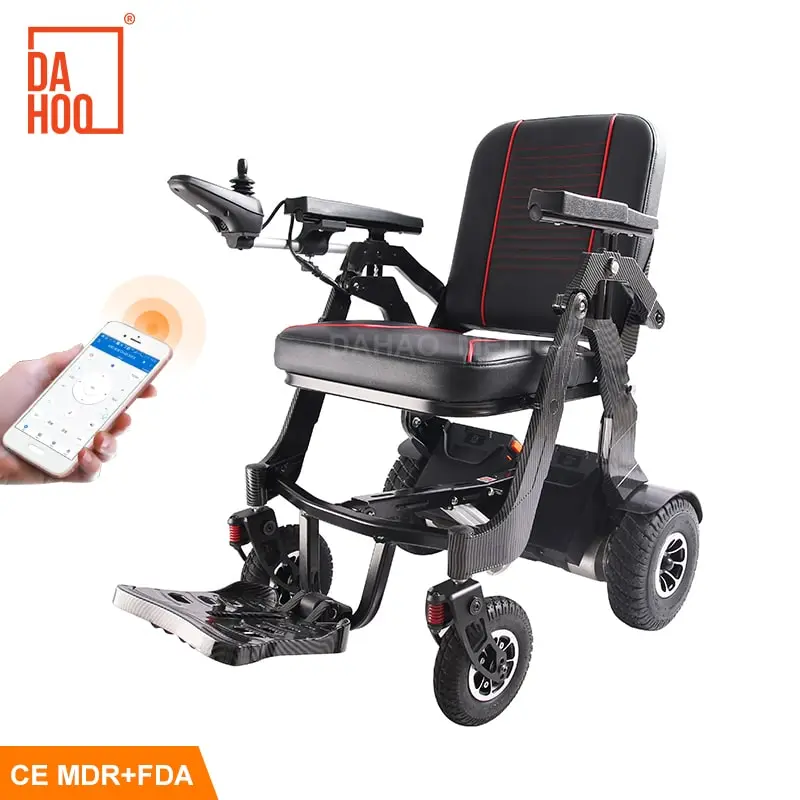
The reason that the door width of 30-inch is a subject of much household concern?
The door with 30 inches (76.2 cm approximately) is one among several popular interior door sizes in many houses or residences, especially those of an older generation houses, apartments, and some plain simple homes. While building code standards differ from country/region to country/region, doorway dimensions for many sleeping rooms, baths, and studies are almost near this one.
To the average person a door of around 30 inches wide is sufficient for passing through it, but for the person dependent on a powered wheelchair, whether the width is enough or not will largely affect their ability to freely move from different areas like the bedroom, bathroom, kitchen, and even outside to the balcony.
Much of the consumer's attention is given during the purchase of a power assist wheelchair to the matters of battery operation or maximum speed, comfort, and cost while the one really critical factor is ignored: Will the wheelchair be able to pass through each door in the house? When they find out later that the wheelchair doesn't fit in the bathroom or the bedroom with great disappointment, that will be a serious issue and will cause a lot of inconveniences in daily life.
Before purchasing an electric wheelchair, therefore, it is vital to prepare by measuring widths of doors, widths of hallways, and areas of rooms.
How wide are electric wheelchairs?
In order to determine the answer to the question of whether an electric wheelchair can fit through a 29.4-inch wide door, first of all, the dimensions of the wheelchair itself must be found out.
A whole range of electric wheelchairs may be found on the market, from brand to brand, design to design, and intended application to intended application, leading to a wide variation in overall width. In general term, lightweight folding electric wheelchairs are about 58-65 cm wide while some specifically-designed, small-sized, household electric wheelchairs are even below 60 cm, making them pass through doorways of 30 inches very easily most of the time.
Most standard wheelchairs are 62 - 70 cm wide, which is by the way a very common size of the product. As a rule, if the doorway is open fully to 30 inches and its clear width is sufficient, an power assist wheelchair can usually pass through without difficulty.
Unfortunately, however, some ultra heavy-duty, rugged off-road or wheelchair users needing large seats due to their size could result in a very big overall size of the chair, reaching even 75 cm or more. These sizes of power assist wheelchairs can't make 30-inch doorway work because of the armrests, wheels size, footrests, or steering angles even though theoretically the sizes are almost close to each-other.
Because of that, just knowing the width of the door is insufficient; it is necessary to confirm what is the maximum external total width of the power assist wheelchair including armrests, wheels, footrests, etc., not by a simple measurement or estimation of the seat width.
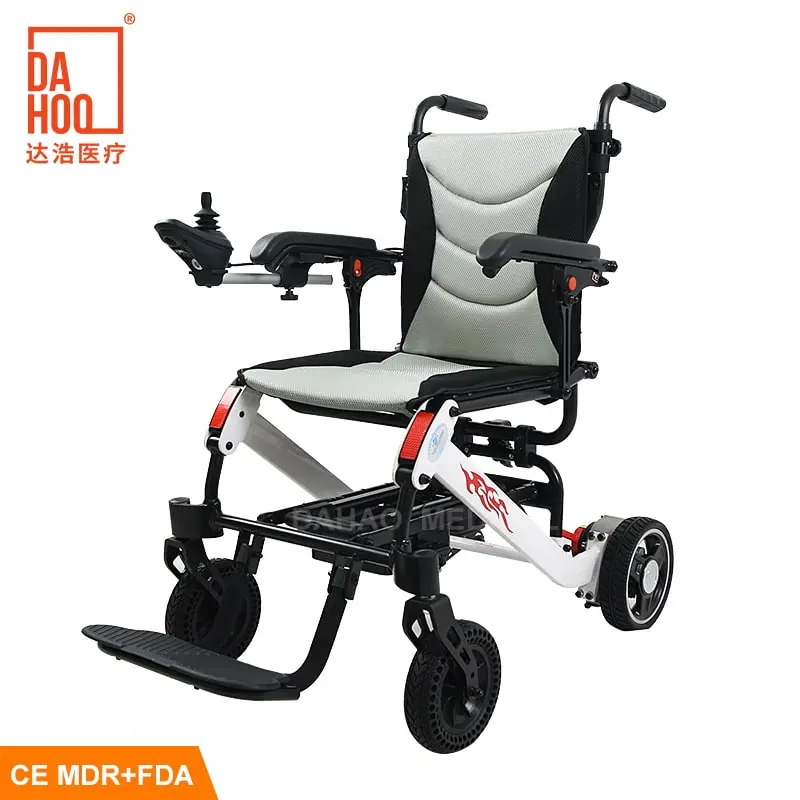
1. Doorway Width Does Not Equal Actual Passage Width
That is a very basic but often overlooked problem by the buyer.
A lot of the persons only look at the size of the door frame when they think to get the size of a door. Therefore, if a door says '30 inches', they may imagine that 30 inches are completely open passageways at any time. The truth, however, is that if the doorway is the only thing that affects the passing capabilities of the wheelchair, it will be only the 'clear width' of the doorstep that will come into account.
To illustrate, door leaf thickness, door frame structure, door hinges, door handle, and so forth take up a certain amount of space. Even with the help of a full 90+ degree open, some door handles that stick out quite far may make the effective passage width a few centimeters smaller than what is shown on the label.
A little gap between the doorway and the wheelchair isn't the end of the world for us; but just being a few centimeters short of the door's clearance would spell the difference between a wheelchair being able to smoothly pass or it not being able to pass at all.
Besides, if there are walls, furniture, or cabinets on either side of the door, then while the wheelchair can be going through the opening it might have to make a turn and it might get stuck inside the room. As a final consideration, when a user is deciding whether an electric wheelchair is going to be suitable enough for home use, besides considering the actual width of the doorway, the user is also advised to look at the door opening angle and activity space around the doorway in order to have a more accurate picture instead of relying solely on the dimensions of the doors alone.
2. Width Is One Dimension, But Equally, the Turning Radius Is Also One
Many of them concentrate merely on the width of the chair when acquiring a power assist wheelchair while completely missing an equally essential measure: the turning radius.
The fact is, if a wheelchair is passing through a 30-inch door without a hitch, but space is not enough either inside or outside the door, the user could still have a problem turning. As an example, a bathroom door may be a few feet away from a sink, toilet, or furniture; however, despite being wide enough for a wheelchair, the wheelchair could end up getting in a way that the user is not even sure where to go.
The present-day market is mainly divided into three classes of drive of power assist wheelchairs: front-wheel drive, mid-wheel drive, and rear-wheel drive. The mid-wheel drive electric wheelchairs usually have an almost minimum turning radius; as a consequence, they are suitable and ideal for indoor home environments. While on the other hand, rear-wheel drive electric wheelchairs are great for long outdoor usage, their maneuverability is quite lower in small and confined areas.
Therefore, users who will primarily depend upon them for home-based activities have not only to look at the overall chair width; but, also be aware of the product's minimum turning radius; in the long run, smooth passage through doorways and performing various operations in one's room and home will all depend highly upon this turning radius feature.
3. Different Types of Electric Wheelchairs Have Different Abilities to Pass Through 30-Inch Doors
The market nowadays offers several kinds of electric wheelchairs: foldable ones that are light in weight, standard, ones able to hold the weight of a person very heavily, and finally, terrains that are suitable for almost all types of ground or surface.
Because of their very simple compact layout, foldable small power assist wheelchairs are generally the narrowest and the easiest ones to get through a regular home doorway of 30-inches. In addition, besides being light, it is very portable and, hence, great for home use as well as travel.
A standard wheelchair offers a fine combination of comfort and good handling. The majority of them can also get through a doorstep with a width of 30 inches, but for practical purposes, it's still quite important to double check the exact product specifications and dimensions.
Huge load-bearing wheelchairs, on the contrary, generally have a wider seat, an even bigger frame, and the capability to carry more weight, which means the product has a much bigger total size. It is very probable that the user is bigger or would need a wider seat, that, the user will have to check for beforehand what the entrance's size of home is. Otherwise, a situation could happen that the wheelchair won't fit, thus, being of no use anymore.
Design-wise, all-terrain wheelchairs or terrains wheelchairs are the type of wheelchairs for outdoor that can tackle various kinds of difficult terrains, usually, equipped with wide tires, larger bodies, and suspension system that has been reinforced. As a result, their overall size is quite substantial and they may have difficulty getting through narrow areas like typical residential spaces.
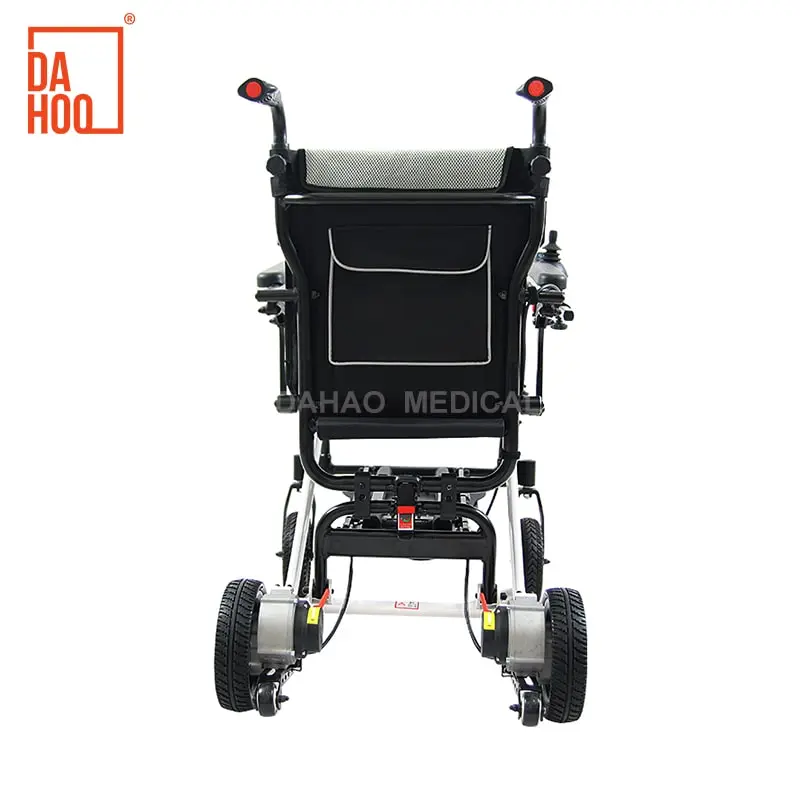
What measurements should a person take before buying an electric wheelchair?
In order to prevent compatibility issues after buying the product, it is advised that individuals first do a thorough measurement of their home environment to select the right kind of wheelchair after that.
First of all, all door openings that are leading to the rooms should be measured, especially the one of bedrooms, bathrooms, kitchens, and living room balconies, etc., with the width of the clear opening. Besides, the width of the main hallways and the movement spaces in front and behind the doorways should also be measured for a smooth turn of the wheelchair in question.
Besides the above, be sure of the elevator size also. The person living in a multi-storey building should check the elevator's width, depth and also the elevator door's width before hand to make sure the wheelchair will be able to go into the elevator without any difficulty.
If the user is the type of one that loves to travel from his/her car a lot, it is absolutely very important that he/she measures either the trunk or the platform space of an accessible van to see that the electric wheelchair can easily be transported by the car, i.e., loaded onto it or taken out of it.
A few steps such as the above although simple will be able to help you prevent many annoying and unnecessary problems later.
Choose the Right Product When It Comes To Electric Wheelchairs Used At Home
In the face of an array of products of electric wheelchairs at the shops, buyers can't make an informed choice unless their actual usage scenarios are considered.
If a major activity of a wheelchair is within one room i.e. the house, you should put the emphasis on the product which is a compact chair in terms of width as well as radius when turning, the product should additionally be foldable, charged easily as well as be good at slow maneuvering of the wheelchair. If the wheelchair will be used for going to the shops, traveling, or visiting in a park, the priority should be the length of the battery life, shock absorption and comfort while riding. To sum it up, the user should choose the product that meets his/her needs without chasing the maximum functionalities.
Lastly, those who depend on electric wheelchairs for the long-term period of time or who have to take them everywhere should prioritize the product that offers more than just the technical features: size of the seat, the ergonomic design and the backrest support and, of course, good after-sales service because an electric wheelchair is a very good companion to the disabled people in their long journey, thus, the comfort and reliability factors are equally very important to look at.
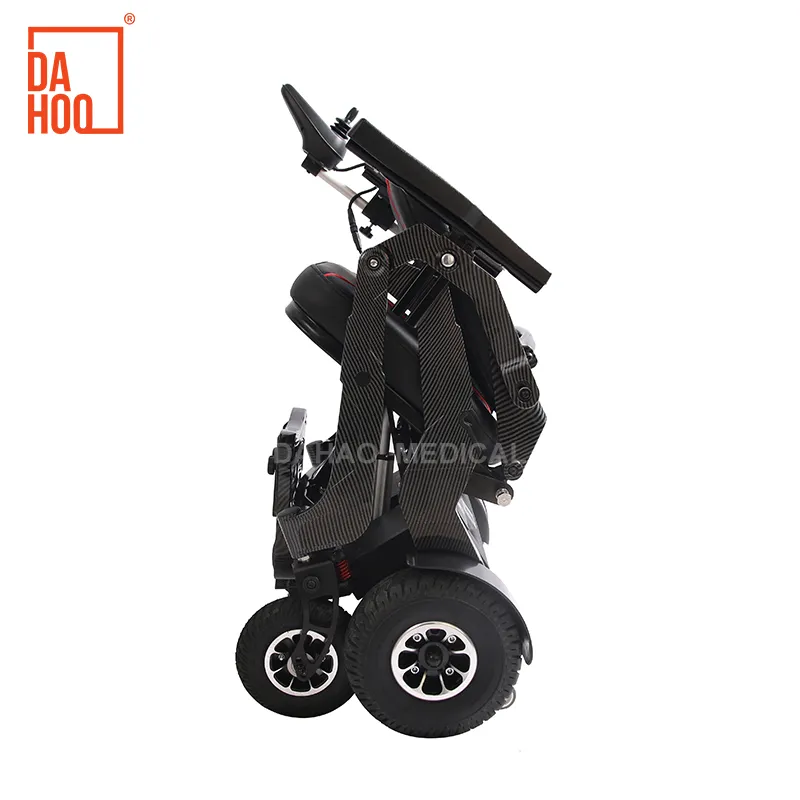
Q and A Session
Question 1: Are all of the electric wheelchairs going to be fitted through the door of 30 inch-wide doorway?
We say 'No'.
Some very light and standard models of electric wheelchairs can pass through a door of only 30 inches in width, which are the size that is used commonly in the house but others which are heavier, designed for all types of roads or even with very wide seats may not go through such a passage and thus need a careful check before purchasing if what you're getting is just the maximum dimension of the product and also the width, etc., of the outside space where the product would be placed in use.
Question 2: Why is an electric wheelchair not going to be able to pass through a doorway of 30 inches wide?
The doorway of this width often is only the nominal one but the actual one that the wheelchair could have gotten into is much narrower, this is also affected by the door frame, door leaf, door handle and also opening angle that are the factors responsible for the narrowing-down of the free passage width. In addition, a very narrow doorway may not give space for turning of the wheelchair so that, despite a wide passage the wheelchair cannot be made to go through.
Question 3: Which type of electric wheelchair is best suited for a home usage?
Should an electric wheelchair be mostly used at home, it might be best to choose a power assist wheelchair with a small overall size, very short minimum turning radius, good flexibility, and a compact design, which is lightweight and standard type. These kind of electric chairs are usually very suitable for normal house doors and narrow hallway areas without much difficulty.
Question 4: What are a buyer’s essential dimensions measuring in order to ensure that power assist wheelchair they are going to buy fits well into the house?
Seriously, measure doorway width (clear), corridor width (clear), turning space in a room, elevator size(s of width and depth), and automobile trunk. Compare these measurements together with the product's actual dimensions including overall length, width, and minimum turning radius to avoid daily life difficulties.
Question 5: Will electric wheelchairs get smaller or more home-friendly with time or not?
Yes, they definitely do. With the introduction of high performance lightweight materials and intelligent control systems with the design that is as much as the size that the user doesn't mind, in the coming days, these devices will not only stay comfortable and safe but will also further reduce their dimensions. So that their ability to easily navigate narrow doorways and limited home spaces is increased, meeting the care, mobility, and daily living needs at home better than before.
