

In the past, there were misconceptions about mobility aids; people often viewed walkers, wheelchairs, and crutches merely as tools to "replace walking," fearing that their use might diminish a patient's own physical capabilities. However, modern rehabilitation medicine has shifted its perspective. Assistive devices do not simply replace bodily functions; instead, by providing appropriate support, they enable patients to engage in active training safely, thereby gradually restoring muscle strength, balance, and the ability to move independently.
During traditional rehabilitation, individuals with limited mobility often face a dilemma: a complete lack of physical activity leads to further declines in muscle strength and balance, yet jumping straight into high-intensity training risks falls, pain, or even secondary injuries due to physical instability. Consequently, finding a training method that offers safe support while encouraging patients to move actively has become a key topic in the field of rehabilitation.
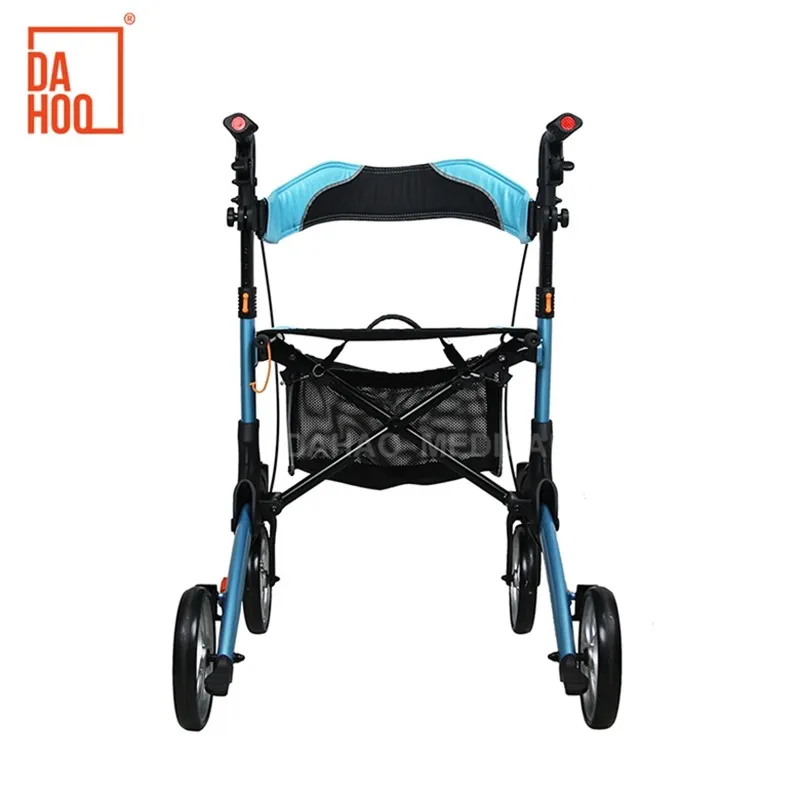
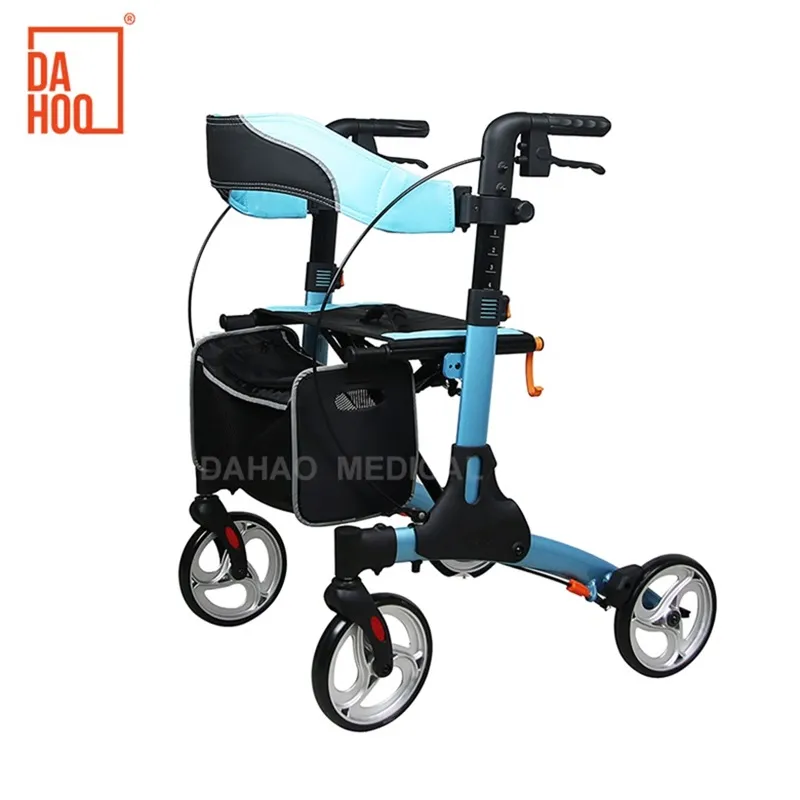
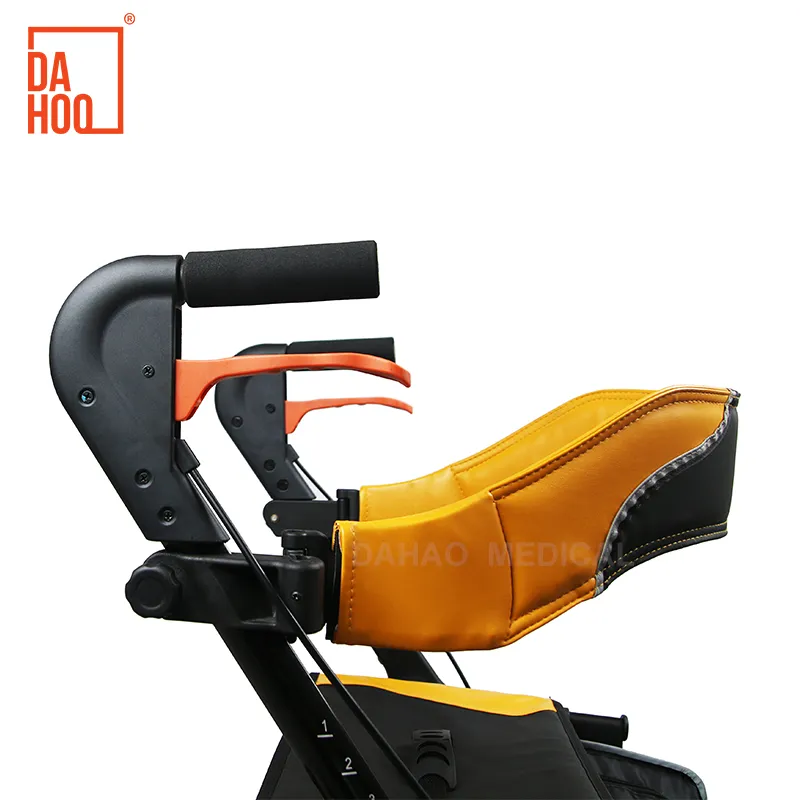
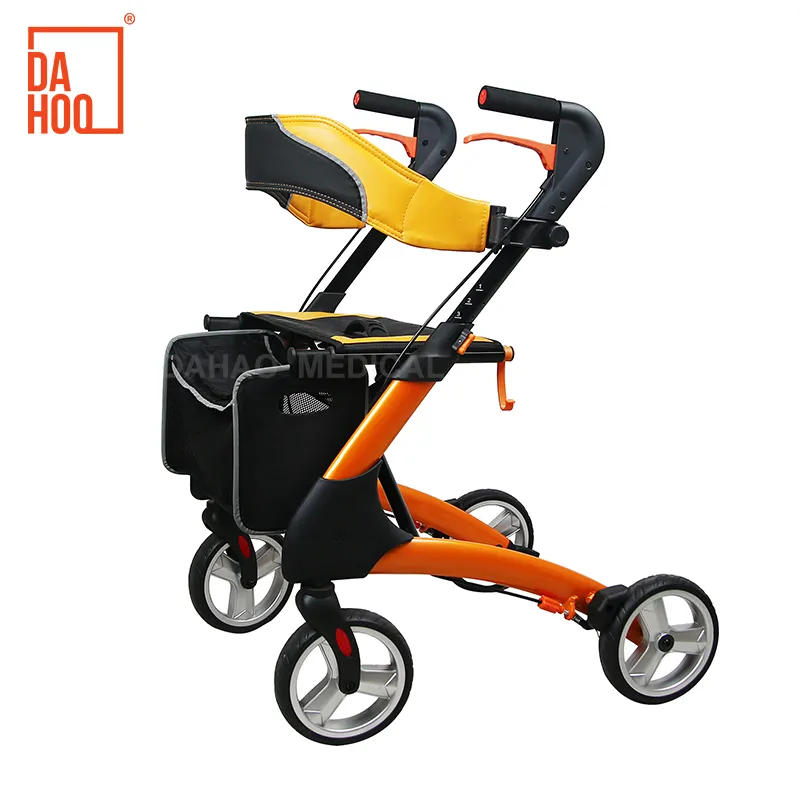
The 4-wheeled rollator addresses this need. Unlike standard walkers, the 4-wheeled rollator walker features four wheels that provide continuous support. It typically incorporates braking systems, a seat, a storage basket, adjustable height settings, and ergonomic handles, allowing users to practice walking in a more natural posture. For many patients in recovery, the 4-wheeled rollator serves not only as a daily mobility aid but also as a vital tool for rehabilitation training.
So, is the 4-wheeled rollator truly suitable for rehabilitation training? What specific capabilities can it help train? How should it be used at different stages of recovery? This article provides a comprehensive analysis from the perspectives of rehabilitation medicine, product design, training methods, and practical application.
4-Wheeled Rollator vs. Standard Walker: What’s the Difference?
A 4-wheeled rollator is a walking aid equipped with four wheels, designed to help individuals with reduced mobility improve their safety and independence. It typically consists of a frame made of aluminum alloy or lightweight steel, four wheel assemblies, handles, a braking system, a seat, and a storage compartment.
Compared to traditional two-wheeled walkers or non-wheeled walking frames, the defining characteristic of the 4-wheeled rollator walker is its ability to facilitate continuous movement. Standard walkers typically require the user to lift the device, take a step forward, and then repeat the process; while this method offers high stability, the pace is slow, and it can place a burden on individuals with limited upper-body strength.
In contrast, four-wheeled walkers (rollators) utilize wheels to eliminate the need to lift and reposition the device; users can simply push the walker forward while using the handles for balance. This movement pattern closely mimics natural walking, helping to train gait coordination.
Common specifications for four-wheeled walkers on the market include:
•Product weight typically ranges from 6 kg to 12 kg;
•Maximum weight capacity usually ranges from 100 kg to 160 kg, with some reinforced models supporting over 180 kg;
•Handle height is generally adjustable across multiple levels, typically ranging from 80 cm to 100 cm;
•Wheel diameters usually range from 6 to 10 inches, with larger wheels being better suited for outdoor use;
•Seat height typically ranges from 50 cm to 65 cm, allowing users to rest when fatigued.
These specifications make four-wheeled walkers suitable not only for daily mobility assistance but also for rehabilitation training.
Why are four-wheeled walkers suitable for rehabilitation training?
The core goal of rehabilitation training is not merely to get the patient moving, but to gradually restore bodily function through repetitive, moderate, and safe exercise. Therefore, a suitable rehabilitation aid must meet three basic criteria: providing safety, enabling active patient participation, and supporting progressive training.
Four-wheeled walkers meet these requirements perfectly.
First, four-wheeled walkers reduce the risk of falls during training. For many rehabilitation patients, the primary issue is not a complete inability to walk, but rather a lack of stability while doing so. For instance, patients recovering from knee surgery may lack leg strength, stroke survivors may experience balance issues, and elderly individuals may suffer from gait instability. Without assistance, these patients are prone to falling due to poor control of their center of gravity.
Four-wheeled walkers provide a wide base of support through their four-point structure, enhancing body stability during movement. Particularly in the early stages of rehabilitation, the device helps alleviate the patient's fear, encouraging them to engage more actively in training.
Second, four-wheeled walkers facilitate repetitive walking training. In rehabilitation medicine, "repetitive training" is a crucial principle. Whether the goal is restoring muscle strength, recovering neurological function, or adjusting gait, extensive repetitive movement is required for stimulation.
For instance, a patient recovering from knee replacement surgery needs to gradually increase standing time and walking distance once the doctor clears them for weight-bearing exercises. Using a four-wheeled walker allows the patient to take multiple short walks throughout the day, rather than limiting their activity due to a fear of falling.
Thirdly, a four-wheeled walker helps patients gradually regain their independence. Rehabilitation encompasses not only the recovery of physical function but also the restoration of psychological well-being and the ability to manage daily life. Being able to use the walker to move around the room, use the restroom, or take outdoor walks significantly boosts a patient's self-confidence.
What rehabilitation skills can be trained using a four-wheeled walker?
Many people assume rehabilitation training focuses primarily on leg strength; however, walking ability actually involves multiple bodily systems, including muscle strength, joint mobility, balance, coordination, and cardiopulmonary endurance.
1. Training lower-limb muscle strength
A four-wheeled walker facilitates progressive weight-bearing training.
For patients who have been bedridden for a long time or are recovering from surgery, leg muscles may weaken due to prolonged inactivity. For example, after several weeks of bed rest, significant muscle atrophy can occur in the lower limbs. Expecting a patient to walk independently immediately during the recovery phase would be overly challenging.
With a four-wheeled walker, patients can adjust the proportion of weight they bear based on their capabilities. When physically weaker, they can rely more on the device for support; as their strength returns, they can gradually reduce their reliance on the handles.
This progressive training approach aligns with modern rehabilitation principles.
2. Improving balance
Impaired balance is a major cause of falls among the elderly. Research indicates that the risk of falling is closely linked to aging, muscle loss (sarcopenia), and slower neurological reaction times.
A four-wheeled walker provides stable support, allowing patients to practice shifting their center of gravity in a safe environment. For example, when taking a step forward, a patient must control the movement of their center of gravity while keeping their torso stable. This effectively serves as a form of functional balance training.
Compared to remaining completely sedentary (sitting or lying down), engaging in moderate activity with a four-wheeled walker is more beneficial for maintaining physical coordination.
3. Improving Gait Training Outcomes
Many rehabilitation patients struggle with issues such as shortened stride length, reduced walking speed, and left-right asymmetry.
A four-wheeled walker can help patients establish a proper walking rhythm. For instance, adjusting the device's height helps maintain good posture, while controlling movement speed allows patients to gradually adapt to a continuous walking pattern.
Some professional rehabilitation facilities incorporate four-wheeled walkers into gait training programs, including:
Short-distance straight-line walking;
Turning maneuvers;
Adapting to different surface types;
Starting and stopping exercises.
These exercises help improve patients' mobility in real-life situations.
4. Enhancing Cardiopulmonary Endurance
Many elderly individuals and patients with chronic illnesses face not only muscular issues but also a decline in physical stamina.
A four-wheeled walker enables patients to safely increase their activity duration. For example, they might start with five minutes of walking daily and gradually increase this to 15 or 30 minutes as their bodies adapt.
This type of low-intensity, continuous exercise has a positive impact on improving cardiopulmonary function and building endurance.
Who Is Suitable for Rehabilitation Training with a Four-Wheeled Walker?
While four-wheeled walkers offer significant assistive benefits, they are not suitable for every patient. A proper assessment of the user's physical condition is essential.
First, they are suitable for individuals with mild to moderate mobility impairments.
For example, some elderly individuals can stand and take steps but require extra support due to impaired balance.
Second, they are suitable for patients recovering from surgery.
Examples include:
Patients recovering from knee replacement surgery;
Patients recovering from hip surgery;
Patients in the recovery phase following a fracture.
These individuals often need to gradually regain weight-bearing capabilities, and a four-wheeled walker can provide transitional support.
Third, they are suitable for patients undergoing neurological rehabilitation.
For instance, some stroke patients in the recovery phase may use a four-wheeled walker for gait training following a medical assessment.
Fourth, they are suitable for individuals with chronic frailty.
For example, the very elderly or those with reduced muscle strength can use a four-wheeled walker to maintain daily activities.
However, for individuals who are completely unable to stand, have severe cognitive impairment, or cannot control their balance, other specialized care equipment—such as electric patient lifts—should be selected instead of relying solely on a four-wheeled walker.
How do you properly use a 4-wheeled rollator for rehabilitation training?
Many users focus solely on whether they can walk when they buy a 4-wheeled rollator walker, overlooking the importance of proper training techniques. In reality, incorrect usage can diminish the effectiveness of the training and even increase safety risks.
First, the height must be adjusted correctly. Generally, when the user stands and holds the handles, their elbows should remain slightly bent—an angle of approximately 15° to 30° is ideal. If the height is too low, the user may lean forward; if it is too high, stability and control may be compromised.
Second, it is essential to learn the correct braking technique. Most 4-wheeled rollator walkers are equipped with a handbrake system, and users need to maintain control over the brakes while walking. It is particularly important to ensure the device is locked when navigating slopes, turning, or sitting down to rest.
Third, follow a progressive approach. Rehabilitation training is not a case of "more is better"; the routine should be adjusted based on the user's physical recovery progress.
For example:
Phase 1: Short-distance walking for 5 to 10 minutes daily;
Phase 2: Increase duration to 15–30 minutes and incorporate turning exercises;
Phase 3: Try walking in outdoor environments to improve overall mobility.
If a patient experiences significant pain, fatigue, or dizziness, the training intensity should be adjusted promptly.
4-Wheeled Rollator FAQ
FAQ 1: What is the difference between a 4-wheeled rollator and a standard walker?
The main difference lies in how they move. Standard walkers usually require lifting to move forward, whereas 4-wheeled rollator walkers allow for continuous movement via their wheels. This mimics natural walking more closely and is suitable for individuals requiring long-term walking assistance and rehabilitation training.
FAQ 2: Can using a 4-wheeled rollator fully restore walking ability?
A 4-wheeled rollator walker does not directly cure medical conditions, but it facilitates training that helps users increase physical activity, build muscle strength, and improve balance. The extent of recovery depends on the patient's physical condition, the nature of their medical condition, and the rehabilitation plan.
FAQ 3: Is a 4-wheeled rollator suitable for patients recovering from knee surgery?
Many patients recovering from knee surgery can use a 4-wheeled rollator walker for assisted training once their doctor has cleared them for weight-bearing. However, the specific timing and intensity of use should be determined based on the details of the surgery.
FAQ 4: What is the maximum weight capacity of a 4-wheel walker?
It varies by model; the typical range is approximately 100 kg to 160 kg, though some heavy-duty models can support over 180 kg. When selecting a model, it is advisable to allow for a safety margin based on the user's body weight.
FAQ 5: Can a 4-wheel walker be used for the long term?
Yes. For the elderly, individuals with chronic illnesses, and those with long-term mobility limitations, long-term use of a 4-wheel walker can enhance independence and reduce the risk of falls.