

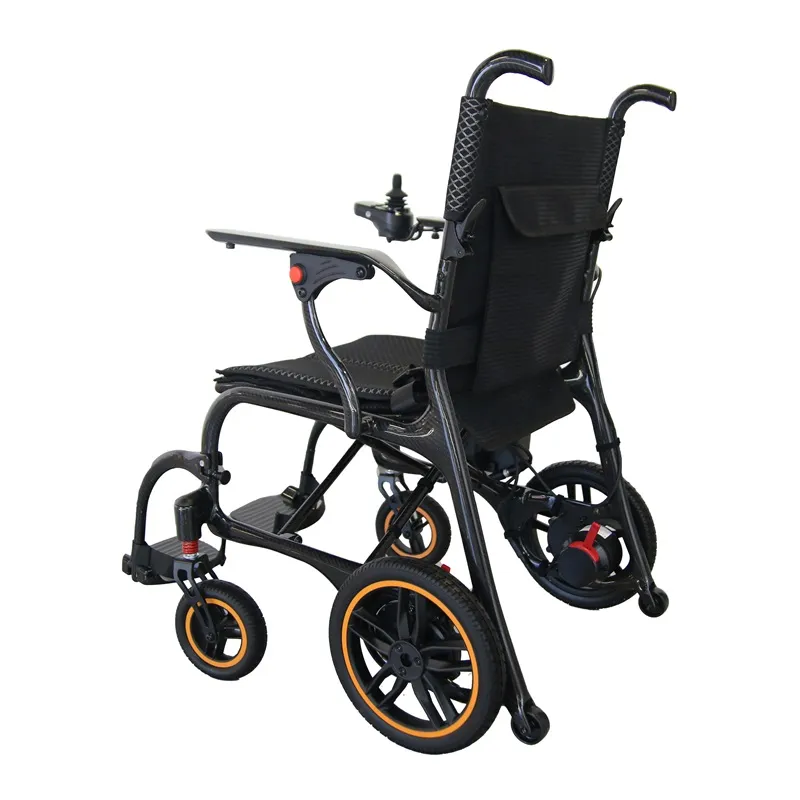
Thanks to their lightweight nature, high strength, corrosion resistance, and excellent rigidity, carbon fiber electric wheelchairs are gradually entering the high-end market. Compared to traditional metal frames, carbon fiber materials significantly reduce the overall weight of the wheelchair while maintaining structural integrity; this makes the chair easier to transport, reduces the load on the motor, and improves battery range.
However, as the market for carbon fiber electric wheelchairs grows, a question of great concern to both consumers and the industry has emerged: are these wheelchairs prone to structural fatigue? Could the frame fracture after long-term use? While carbon fiber is incredibly strong, is it truly more reliable than traditional metal materials?
In reality, any mechanical structure subjected to cyclic loading over time is susceptible to fatigue, and electric wheelchairs are no exception. Whether made of steel, aluminum alloy, or carbon fiber, all electric wheelchairs require consideration regarding structural lifespan and safety performance. However, fatigue mechanisms differ significantly between materials; carbon fiber electric wheelchairs do not simply replicate the fatigue failure modes of traditional metal frames but instead exhibit structural changes characteristic of composite materials.
Therefore, assessing the durability of a carbon fiber power wheelchair requires more than just looking at the label "carbon fiber." A comprehensive analysis is needed, covering material properties, structural design, manufacturing processes, operating environments, and long-term maintenance.
Why is structural fatigue a concern for electric wheelchairs?
Many consumers assume that because electric wheelchairs operate at low speeds—unlike cars or airplanes—structural fatigue is not a significant issue. From an engineering perspective, however, electric wheelchairs are devices subjected to constant cyclic loading.
During daily use, a standard electric wheelchair is continuously exposed to various types of loads. For instance, the frame absorbs an instantaneous impact when a user sits down; while driving, the structure withstands shocks from the ground when traversing paving gaps, thresholds, small inclines, or uneven surfaces; and the frame endures constantly changing torsional loads during motor startup, braking, and turning. Based on typical usage patterns—where a user operates an electric wheelchair for approximately 3 to 6 hours a day, roughly 300 days a year—critical load-bearing areas of the frame may undergo hundreds of thousands or even over a million cycles of loading.
Take, for instance, an electric wheelchair with a rated load capacity of 120 kg: during engineering design, structural calculations do not rely solely on the 120 kg figure; instead, a safety factor is incorporated. Testing is often conducted using a design load 1.5 times (or higher) that capacity to ensure the frame can withstand fluctuations in user weight, sudden impacts, and complex road conditions.
Consequently, a high-quality electric wheelchair must not only meet static load-bearing requirements but also pass dynamic fatigue tests, including:
•Long-duration road simulation tests;
•Frame cyclic loading tests;
•Impact tests;
•Vibration tests;
•Durability tests for structural connections.
For carbon fiber electric wheelchairs, structural fatigue performance is arguably even more critical than weight metrics alone.
Do carbon electric wheelchairs experience structural fatigue?
The answer is yes, though the nature of the fatigue differs from that of traditional metal electric wheelchairs.
Traditional steel or aluminum alloy electric wheelchairs primarily face issues related to metal fatigue. When metal materials are subjected to repeated loading over long periods, microscopic damage gradually accumulates within the internal crystalline structure, eventually leading to the formation of fatigue cracks. If these cracks propagate, structural integrity can be compromised, potentially resulting in catastrophic failure or breakage.
For example, after prolonged use, conventional metal electric wheelchairs are prone to the following issues:
•Cracking in welded areas;
•Fatigue-induced deformation at frame bends;
•Loosening of bolted connections;
•Localized corrosion of the metal material.
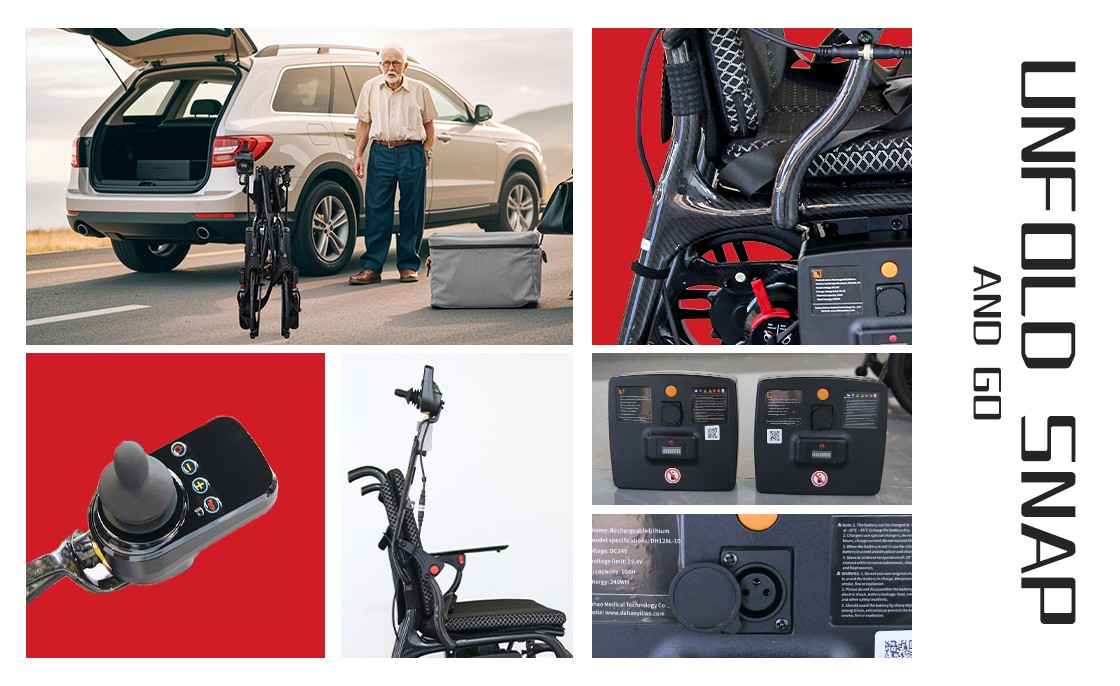
In contrast, carbon fiber electric wheelchairs utilize carbon fiber-reinforced polymer (CFRP) composites, which consist of carbon fibers embedded in a resin matrix. While carbon fiber itself boasts exceptional tensile strength and fatigue resistance, the composite structure relies on the synergistic interaction between the fibers and the resin, making its fatigue behavior more complex.
The primary structural fatigue issues that may arise in carbon electric wheelchairs include the following:
First is resin matrix fatigue. Carbon fibers provide the primary structural strength, while the resin secures the fibers in place and facilitates load transfer between fiber layers. Prolonged vibration, temperature fluctuations, and cyclic loading can lead to the formation of micro-cracks within the resin. However, this process is typically gradual and does not result in the rapid crack propagation often seen in metals.
Second is the issue of interlaminar delamination. Carbon fiber components are not monolithic blocks; rather, they are constructed by layering carbon fiber fabrics in various orientations and curing them with resin. Fibers oriented in different directions serve distinct functions—for instance, longitudinal fibers primarily resist tension and bending, while diagonal fibers resist torsional loads. Significant external impacts—such as the wheelchair dropping from a high step or the frame striking a sharp object—can cause the fiber layers to separate.
Third is fatigue in connection zones. Although the main carbon fiber structure is exceptionally strong, electric wheelchairs incorporate components such as motor mounts, axle connectors, and seat-fixing structures. These areas often require metal connectors; consequently, poor design can turn these connection points into zones of stress concentration.
Therefore, carbon fiber electric wheelchairs are not immune to failure; rather, advanced materials and structural design are employed to keep fatigue-related risks within manageable limits.
Why do many high-end electric wheelchairs utilize carbon fiber?
Despite the need to address fatigue issues, carbon fiber power wheelchairs remain popular in the market because the material offers a combination of performance advantages that are difficult to achieve simultaneously with traditional metals.
First, carbon fiber boasts an exceptionally high strength-to-weight ratio.
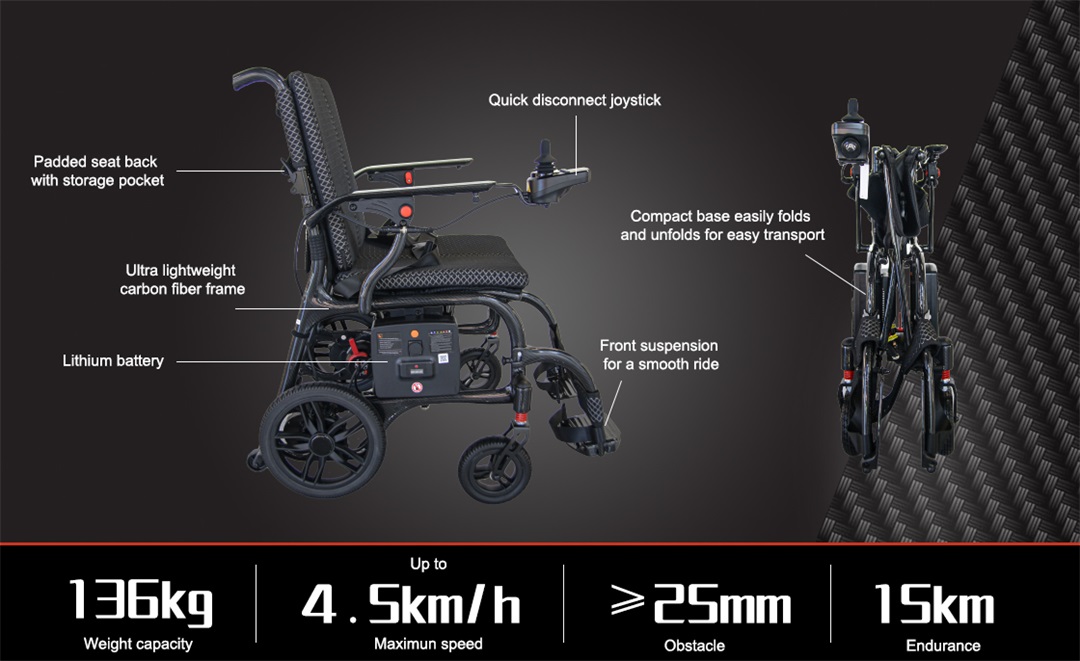
While a standard steel electric wheelchair might weigh between 35 and 45 kg, a model optimized with a carbon fiber structure can reduce the total weight to the 15–25 kg range. Some high-end carbon fiber electric wheelchairs weigh less than 20 kg while maintaining a load-bearing capacity of approximately 120–136 kg.
The advantages of this weight reduction are significant. For users who frequently need to transport their electric wheelchairs, a lightweight design reduces the physical strain associated with lifting the chair in and out of vehicles or stowing it for travel. From the perspective of the electric drive system, lower weight means the motor consumes less energy, resulting in improved range for the same battery capacity.
Secondly, carbon fiber offers excellent corrosion resistance.
Traditional metal electric wheelchairs are prone to oxidation and rust when exposed to humid environments for extended periods; in contrast, carbon fiber composites do not rust like steel, making them better suited for long-term use.
Thirdly, carbon fiber possesses superior vibration-dampening capabilities.
Users often spend long periods seated in their electric wheelchairs; if the frame is overly rigid, road vibrations are transmitted directly to the body, compromising comfort. Carbon fiber composites exhibit inherent damping characteristics that help attenuate high-frequency vibrations, thereby enhancing the overall riding experience.
Therefore, a high-quality carbon fiber electric wheelchair is not merely about being "lightweight"; rather, it represents a balance between weight, strength, comfort, and durability.
Key Pain Points in the Carbon Fiber Electric Wheelchair Industry
Despite their distinct advantages, carbon fiber electric wheelchairs face several challenges as the industry evolves.
The first pain point is the difficulty consumers face in assessing product quality.
While many products on the market advertise the use of "carbon fiber frames," there are significant differences between them. Carbon fiber materials vary in grade, and manufacturing quality is influenced by factors such as fiber specifications, layup patterns, resin ratios, and molding processes.
For instance, a truly high-performance carbon fiber power wheelchair requires fiber orientation to be tailored to specific stress zones, rather than simply increasing material thickness.
The second pain point is the tendency for some products to prioritize weight reduction excessively.
While a lightweight design is a major advantage, reducing material usage solely to cut weight can compromise structural rigidity and safety margins.
A truly excellent carbon fiber power wheelchair should achieve:
A balance between lightweight design, high strength, and high reliability.
The third pain point is the lack of a comprehensive maintenance and inspection system.
With metal frames, users can often visually detect issues such as cracks or deformation. However, internal damage to the carbon fiber structure may be hidden beneath the surface, requiring specialized inspection methods.
Examples include:
•Ultrasonic testing;
•Tap testing (acoustic inspection);
•Professional structural inspections.
In the future, the carbon fiber electric wheelchair industry needs to establish more robust quality inspection and after-sales service systems.
What is the typical lifespan of a carbon fiber power wheelchair?
Under normal use, the frame of a high-quality carbon fiber electric wheelchair can typically last over eight years; some products that have undergone rigorous design and testing may last even longer.
However, the overall lifespan of the electric wheelchair does not depend solely on the frame.
Generally speaking:
•The lithium battery lifespan is approximately 3–5 years;
•The motor system lifespan is approximately 5–10 years;
•The control system lifespan is over 5 years;
•The carbon fiber frame may outlast the electronic components.
Consequently, many users replace their electric wheelchairs not because the carbon fiber frame has failed, but due to declining battery capacity, a desire for upgraded features, or changing usage needs.
Common FAQs
Q1: Will a carbon fiber electric wheelchair suddenly snap or break?
Under normal circumstances, no. Carbon fiber electric wheelchairs from reputable brands undergo structural design and safety testing, incorporating a safety margin. The real concern is internal damage caused by severe impacts.
Q2: Are carbon fiber electric wheelchairs more durable than standard electric wheelchairs?
It cannot be assumed that *all* carbon fiber electric wheelchairs are necessarily more durable; however, when properly designed and manufactured, they typically offer a superior strength-to-weight ratio, better corrosion resistance, and greater long-term stability.
Q3: Are carbon fiber electric wheelchairs suitable for daily use?
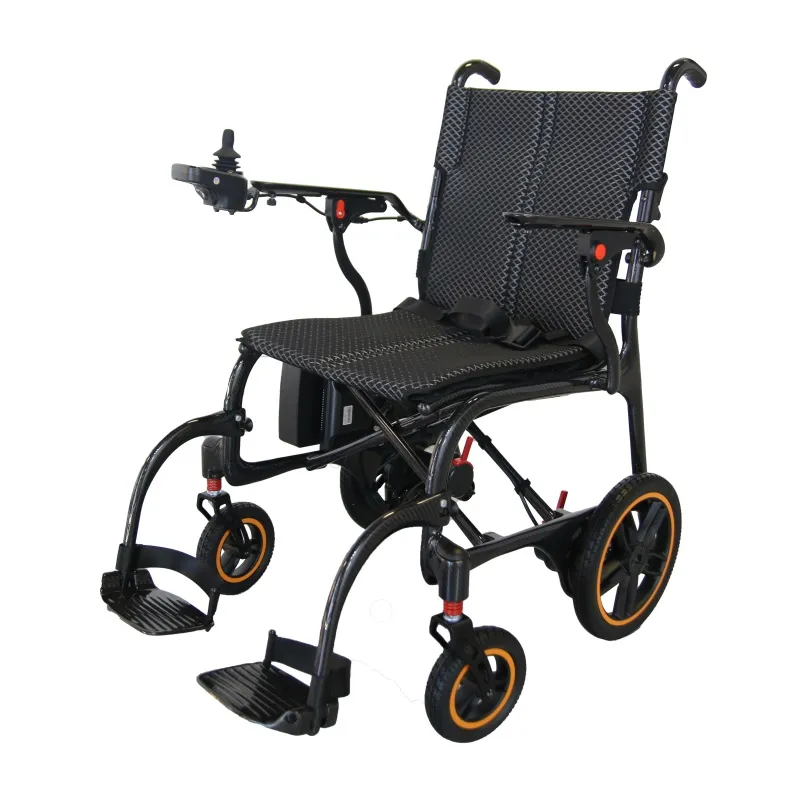
Yes. High-quality carbon fiber electric wheelchairs are designed for long-term mobility and can meet daily needs such as commuting, shopping, and outdoor activities.
Q4: What key specifications should I look for when buying a carbon electric wheelchair?
In addition to weight, you should consider:
•Maximum load capacity;
•Battery capacity;
•Motor power;
•Frame fatigue test results;
•Carbon fiber manufacturing process;
•After-sales maintenance capabilities.
Q5: Is a carbon fiber power wheelchair better the lighter it is?
No. An electric wheelchair requires a balance between weight, stability, and safety. Prioritizing weight reduction to the extreme can compromise structural integrity; a truly excellent carbon fiber electric wheelchair achieves weight reduction while ensuring reliability.
