

"Lightweight design" has long been a crucial technical focus in the evolution of the electric wheelchair industry. While average consumers often prioritize factors like battery range, motor performance, weight capacity, and price when evaluating an electric wheelchair, the total weight of the unit is equally decisive for long-term users. This is especially true for those who frequently travel by car, need to carry the chair up and down stairs, take it on trips, or rely on family members to move the device; a reduction of even a few kilograms can offer significant convenience.
In recent years, as carbon fiber materials have increasingly been applied to medical rehabilitation equipment, a question has gained prominence: Are carbon fiber electric wheelchairs truly lighter than traditional aluminum models? The answer is yes. Based on material properties, structural design, and actual product specifications, carbon fiber electric wheelchairs generally achieve a lower total weight than their aluminum counterparts. Data on lightweight models currently on the market shows that, given comparable configurations, a carbon fiber power wheelchair typically weighs about 3 to 8 kilograms less than an aluminum one. Some high-end lightweight models can even keep the total weight within the 15–20 kg range, whereas traditional aluminum electric wheelchairs mostly fall into the 20–30 kg range.
However, it is important to note that the advantages of carbon fiber power wheelchairs extend beyond mere lightness; they represent advancements in material technology and structural optimization, as well as an evolution in user needs. Why are carbon fiber power wheelchairs lighter than aluminum ones? Have aluminum electric wheelchairs become obsolete? Which material should consumers prioritize when choosing an electric wheelchair? These questions warrant a deeper analysis.
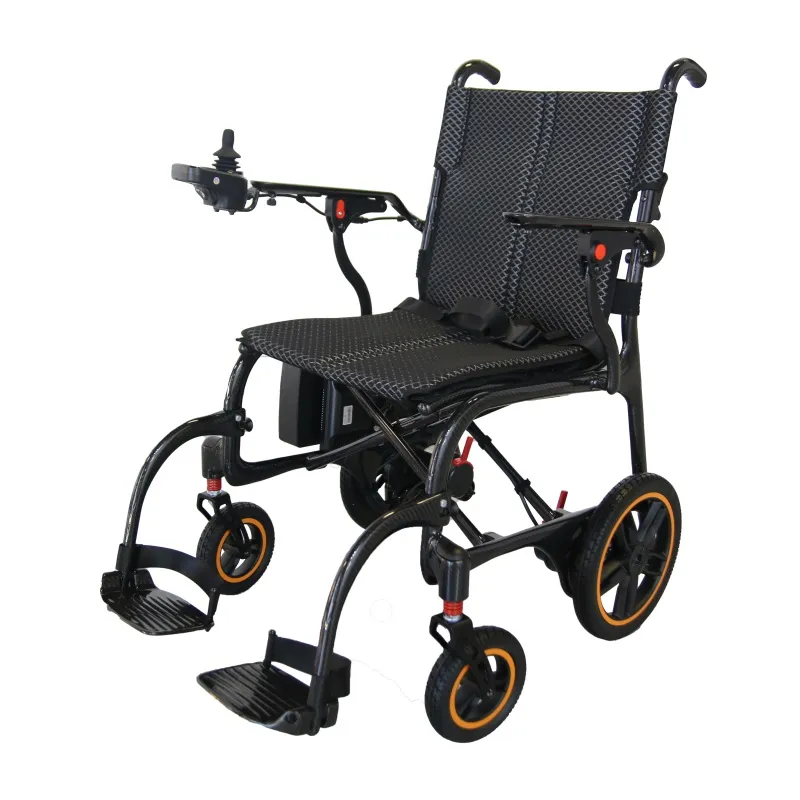
Why has lightweight design become an industry trend for electric wheelchairs?
For a long time, the development of electric wheelchairs focused primarily on upgrading power systems—such as increasing battery capacity, boosting motor power, enhancing climbing ability, and introducing smarter control mechanisms. However, as the market has matured, user demands regarding electric wheelchairs have shifted. Modern users expect more from electric wheelchairs than just mobility; they want devices that integrate seamlessly into their daily lives. For instance, users want to be able to stow the wheelchair in a car trunk, travel by air with the device, and store it easily at home. If an electric wheelchair weighs 30 kg or more, it becomes a burden during actual use, regardless of how excellent its motor performance might be.
For elderly users with limited mobility, people with disabilities, and those undergoing rehabilitation, the weight of the device directly impacts their ability to live independently. A lightweight electric wheelchair reduces reliance on others and encourages more frequent outings, while also easing the physical strain on caregivers who handle the equipment.
Electric wheelchairs currently on the market primarily use three types of frame materials: steel, aluminum alloy, and carbon fiber composites. Steel wheelchairs offer high strength but are notably heavy; aluminum wheelchairs strike a balance between cost and performance, making them the most widely used type; carbon fiber wheelchairs represent the trend toward high-end, lightweight design.
Why are carbon fiber power wheelchairs lighter than aluminum ones?
To understand the weight difference between carbon fiber and aluminum electric wheelchairs, one must first understand the inherent differences between the materials themselves.
Aluminum alloy—specifically the 6061-T6 grade—is a very common material for electric wheelchair frames. It offers good strength, workability, and corrosion resistance, along with relatively low manufacturing costs, making it a popular choice for mid-range products.
Carbon fiber, on the other hand, is a composite material formed by combining high-strength carbon fibers with resin. Its defining characteristic is an exceptionally high strength-to-weight ratio and stiffness-to-weight ratio; in other words, it requires less material weight to achieve the same structural strength.
| Material | Density | Main Characteristics |
| Carbon Fiber Composite | About 1.6 g/cm³ | Lightweight, high strength, high stiffness |
| 6061-T6 Aluminum Alloy | About 2.7 g/cm³ | Durable, affordable, easy to manufacture |
| Steel | About 7.8 g/cm³ | High strength but heavy |
In terms of material density, carbon fiber composites are significantly lighter than aluminum alloys. However, the weight advantage in actual application stems not merely from the difference in material density, but from structural design.
To ensure adequate load-bearing capacity and safety, aluminum electric wheelchairs often require thicker tubing or a greater number of structural connection points. Thanks to their superior strength and rigidity, carbon fiber materials allow for optimized fiber orientation; this enables the frame to maintain structural integrity while using less material.
In short, aluminum electric wheelchairs rely primarily on increasing material thickness to ensure strength, whereas carbon fiber models achieve weight reduction through the inherent properties of the material itself.
Weight Comparison: Carbon Fiber vs. Aluminum Electric Wheelchairs
Looking at products currently on the market, the weight difference between the two types lies mainly in the frame. Since core components—such as motors, batteries, and controllers—are largely similar, the frame material becomes the decisive factor in the total weight of the unit.
| Item | Carbon Fiber Electric Wheelchair | Aluminum Electric Wheelchair |
| Frame Weight | 6-10 kg | 10-16 kg |
| Total Weight with Battery | 15-20 kg | 20-28 kg |
| Portability | Excellent | Good |
| Travel Convenience | Higher | Moderate |
| Production Cost | Higher | Lower |
For instance, a typical aluminum electric wheelchair might consist of:
An aluminum alloy frame weighing approximately 12 kg;
A lithium battery weighing about 5 kg;
Motors and electronic control systems weighing around 7 kg;
A seat and other accessories weighing about 3 kg.
The total weight comes to approximately 27 kg.
In contrast, a lightweight carbon fiber power wheelchair:
Features a carbon fiber frame weighing about 7 kg;
Uses a lithium battery weighing about 4 kg;
Has motors and control systems weighing 6–7 kg;
Includes a seat and accessories weighing about 3 kg.
The total weight can be kept under 20 kg.
Although the difference is only a few kilograms, it is highly noticeable to anyone who needs to lift or transport the wheelchair on a daily basis.
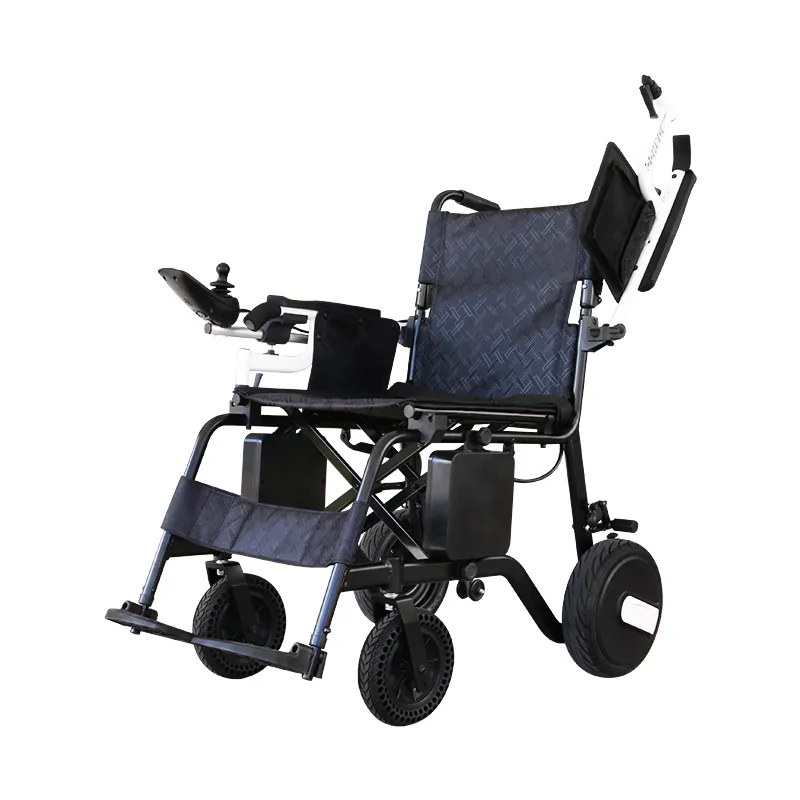
Industry Pain Point: Why Aren't All Electric Wheelchairs Made of Carbon Fiber?
Given that carbon electric wheelchairs are lighter, why do aluminum models still dominate the market? The reasons primarily involve cost, manufacturing processes, and user needs.
First is the issue of price.
Carbon fiber material is significantly more expensive than aluminum alloy, and the production process is more complex. While aluminum wheelchairs utilize established techniques like cutting, welding, and extrusion, carbon fiber models require specialized procedures—such as mold design, fiber layup, and heat-press molding—resulting in higher manufacturing costs.
Currently, a carbon fiber power wheelchair with comparable specifications typically costs 30% or more than its aluminum counterpart. For budget-conscious consumers, aluminum electric wheelchairs remain highly attractive.
Next, there is the issue of maintenance.
One of the major advantages of aluminum electric wheelchairs is ease of repair. If the frame sustains a minor impact or develops a structural issue, professional technicians can address it through methods such as welding.
In contrast, while carbon fiber electric wheelchairs offer high strength, a severe impact can damage the internal fiber structure—damage that may not be visible to the naked eye. Consequently, carbon fiber models place higher demands on manufacturing quality and after-sales service.
Finally, there are differences in user needs.
Not every electric wheelchair user requires extreme lightweighting. For instance, users who primarily stay indoors, rarely move the device, and prioritize price find that aluminum electric wheelchairs fully meet their needs.
However, for users who travel frequently, need to transport the chair by car, or wish to handle the device independently, the value of a carbon fiber power wheelchair becomes much more apparent.
What advantages do carbon electric wheelchairs offer besides being lightweight?
Many consumers believe that reduced weight is the primary advantage of carbon electric wheelchairs, but in reality, they offer benefits in several other areas.
First, carbon fiber electric wheelchairs offer superior structural stability.
Carbon fiber is highly rigid, meaning the frame resists significant deformation when subjected to external forces. This enhances the device's stability for long-term users.
Second, carbon fiber electric wheelchairs provide certain shock-absorption benefits.
Because carbon fiber composites possess vibration-dampening properties, they reduce the transmission of road vibrations compared to traditional metal frames, thereby improving ride comfort. Comfort is a crucial factor for users who spend long periods in their wheelchairs.
Third, carbon fiber materials exhibit excellent corrosion resistance.
Although aluminum alloys do not rust as easily as ordinary steel, they can still be affected by prolonged exposure to humid or salt-spray environments. Carbon fiber composites, being non-metallic, are immune to metal corrosion, making them better suited for use in challenging environments.
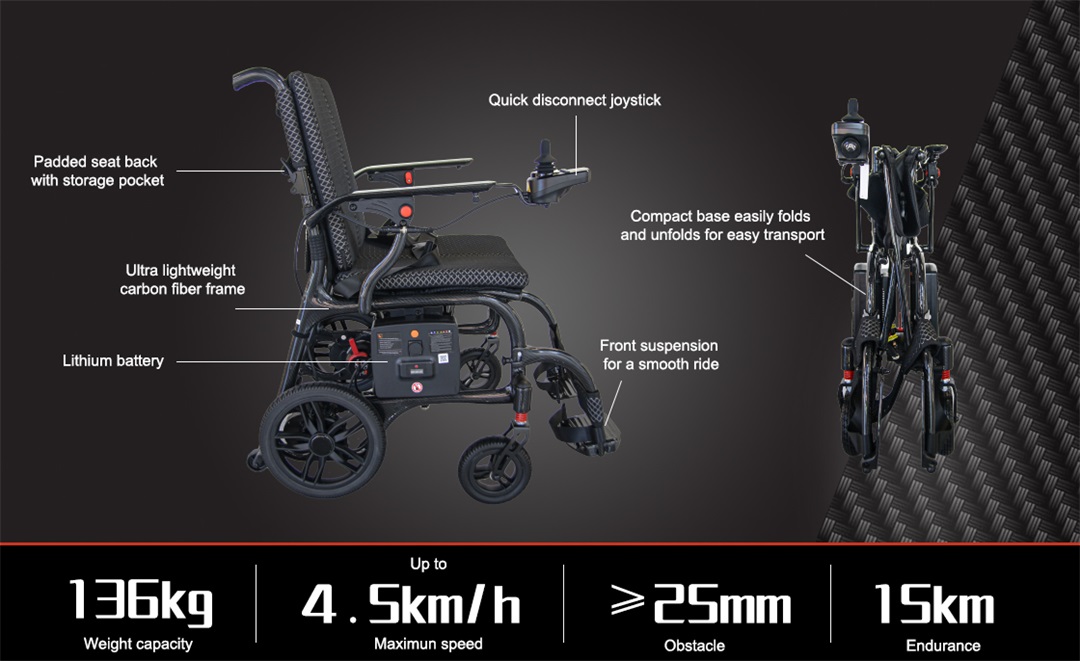
Why do aluminum electric wheelchairs remain the market mainstream?
Despite the clear advantages of carbon fiber models, aluminum electric wheelchairs are not going to disappear from the market anytime soon. The reason lies in the fact that aluminum electric wheelchairs strike a balance between performance, price, and reliability.
For most average household users, an aluminum electric wheelchair weighing just over 20 kg is sufficient for daily mobility needs, while also being more affordable.
Furthermore, aluminum electric wheelchairs benefit from a mature supply chain, with well-established systems covering everything from manufacturing to maintenance and repair services.
Consequently, the industry has developed a clear market segmentation:
Carbon fiber electric wheelchairs primarily target high-end users who prioritize lightweight design and portability;
Aluminum electric wheelchairs primarily target average users who prioritize cost-effectiveness and stability.
Looking ahead, the two will not simply replace one another but will coexist in the long term.
Weight is not the only criterion when buying an electric wheelchair
Although carbon fiber power wheelchairs are lighter, consumers should not base their purchasing decisions solely on the material.
An excellent electric wheelchair requires a comprehensive evaluation of the following factors:
First, overall weight. It is important to consider the actual weight including the battery, rather than just the weight of the frame.
Second, driving range. Most mainstream electric wheelchairs use lithium batteries, offering a range of 15–30 km, though this varies significantly depending on battery capacity.
Third, weight capacity. Lightweight design must not compromise safety; standard electric wheelchairs typically support a weight of 100–150 kg.
Fourth, folding design. A well-engineered folding mechanism can further enhance portability.
Fifth, after-sales service. Especially with carbon fiber models, it is crucial to consider the availability of repair channels and spare parts.
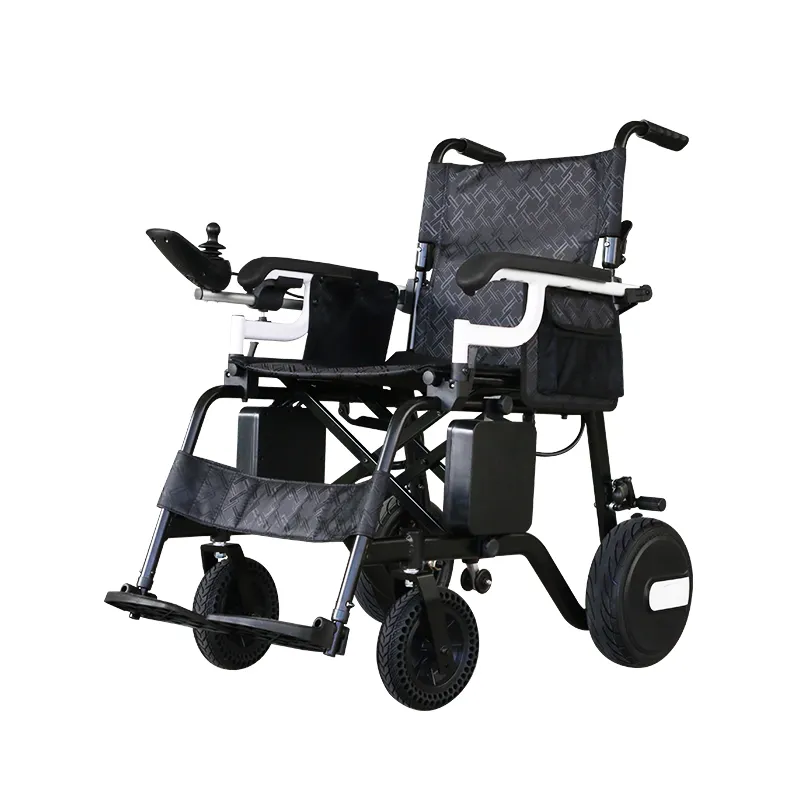
FAQ: Common Questions About Carbon Fiber and Aluminum Electric Wheelchairs
Q1: Are carbon fiber electric wheelchairs really lighter than aluminum ones?
Yes. With comparable specifications, carbon fiber electric wheelchairs are typically 20%–40% lighter than aluminum models; some products offer weight savings of over 5 kg.
Q2: Are carbon fiber power wheelchairs necessarily better than aluminum ones?
No. Carbon fiber power wheelchairs offer the advantages of being lightweight and high-performance, whereas aluminum electric wheelchairs excel in terms of price, ease of maintenance, and market maturity.
Q3: Should elderly users choose a carbon electric wheelchair or an aluminum one?
If frequent outings, vehicle transport, or lifting/carrying the device are required, a carbon electric wheelchair is recommended. If the wheelchair is primarily used at home or in a fixed environment, an aluminum model may be more cost-effective.
Q4: Why are carbon fiber electric wheelchairs more expensive?
The primary reasons are the high cost of carbon fiber material, complex manufacturing processes, and the need for a higher level of structural design.
Q5: Will aluminum electric wheelchairs be phased out in the future?
No. Aluminum electric wheelchairs retain a cost advantage; the future market landscape will likely see aluminum models catering to mass-market needs, while carbon fiber models satisfy high-end, lightweight requirements.