

Research in the global nursing industry indicates that the frequent manual handling of patients is a primary cause of occupational back and lumbar injuries among caregivers. In countries with well-established healthcare systems—such as those in Europe, North America, and Japan—hospitals and long-term care facilities are increasingly adopting electric patient lifters as standard nursing equipment. By replacing manual labor with mechanical power, these devices ensure that patient transfers are safer, more stable, and more comfortable.
For global healthcare procurement professionals, however, selecting a truly reliable electric patient lifter involves more than just a simple purchase. Products on the market vary significantly in terms of load capacity, motor stability, battery life, safety features, ergonomic design, regulatory certifications, and after-sales support.
Low-quality, budget-priced alternatives often suffer from issues such as inconsistent lifting speeds, unstable base structures, poor battery longevity, uncomfortable slings, and high failure rates over time—all of which ultimately drive up operational costs for healthcare facilities. Consequently, finding a manufacturer with robust R&D capabilities, large-scale production capacity, formal quality certifications, and experience in global supply has become a critical priority for international healthcare buyers.
Dahao Medical is a Chinese enterprise specializing in the R&D and manufacturing of medical mobility and nursing equipment. Drawing on years of industry experience, the company provides professional electric patient lifter solutions to the global market. Established in 2008 and headquartered in Foshan, Guangdong, China, Dahao Medical operates an 80,000-square-meter modern production facility. Its product portfolio spans electric wheelchairs, transfer chairs, medical beds, home-care beds, mobility aids, and electric patient lifters. The company holds various international certifications—including ISO 13485:2016, CE MDR, FDA 510(k), TÜV, and BV—and supplies medical assistive equipment to over 100 countries and regions worldwide.
Why is the global healthcare and nursing industry increasingly in need of electric patient lifters?
Over the past few decades, hospitals and nursing facilities have focused primarily on the development of treatment equipment, while the process of transferring patients has often been relegated to the category of basic, routine care. However, as the healthcare paradigm shifts from a "treatment-centered" model to one focused on "lifelong patient care," safe patient transfer has emerged as a key indicator of the quality of care.
For patients who are bedridden for long periods, every movement—whether from a hospital bed to a wheelchair, from a wheelchair to a restroom, or from a nursing bed to diagnostic equipment—carries inherent risks. When such transfers are performed manually, caregivers must bear the full weight of the patient. For instance, moving an 80-kilogram patient without specialized assistive equipment—even when two caregivers work together—poses significant safety hazards due to shifting centers of gravity, spatial constraints, and the patient’s inability to actively assist in the process.
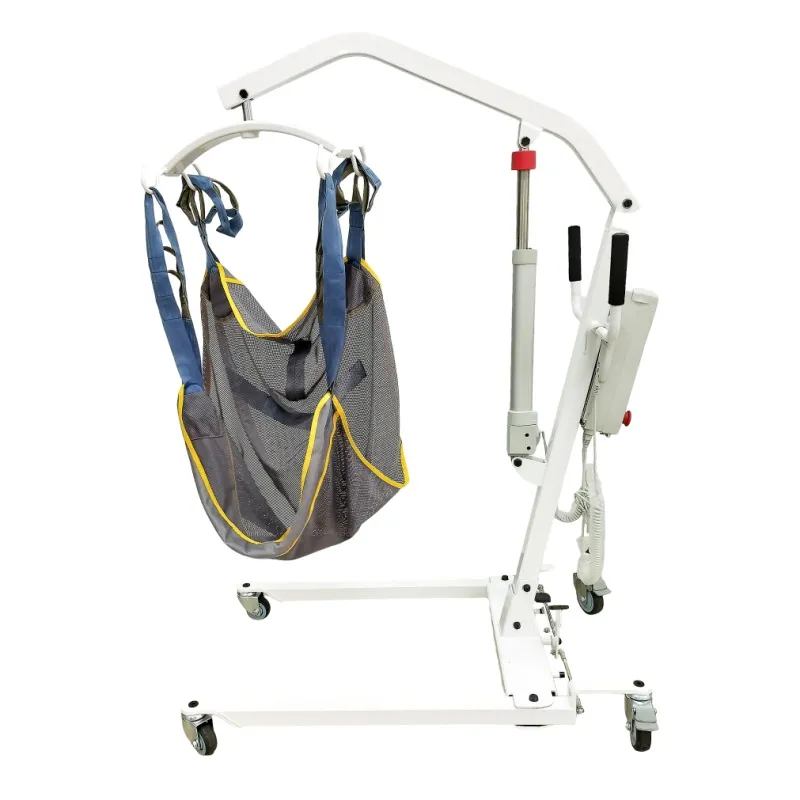
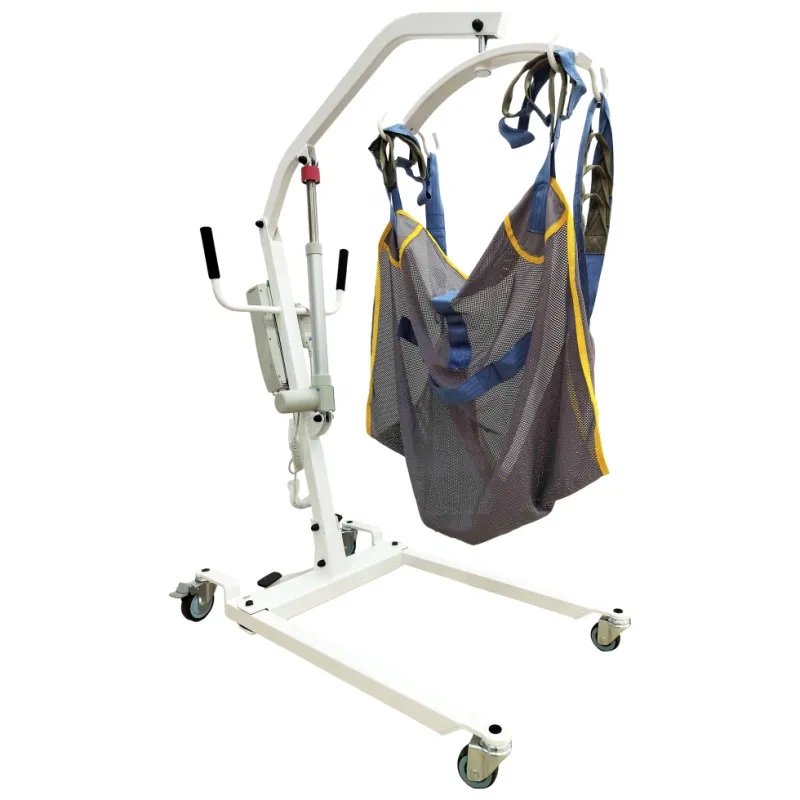
Electric patient lifts—comprising an electric lifting system, a mobile base, a sling support structure, and an intelligent control system—transform the complex task of moving a human body into a mechanized, streamlined process. By using simple control buttons, caregivers can lift, move, and position patients with ease; this significantly reduces physical strain on the staff while minimizing the risk of the patient being pulled, jarred, or subjected to accidental impact.
Currently, electric patient lifters are primarily used in the following settings:
First, in hospital care environments—including ICUs, rehabilitation departments, orthopedics, neurology, and long-term care wards. For post-operative, paralyzed, or mobility-impaired patients, these lifts assist caregivers in transferring patients between beds and chairs, thereby enhancing the efficiency of care.
Second, in elderly care facilities. As the global population ages, nursing homes face a rapidly growing demand for professional care equipment. Electric patient lifters help alleviate the pressure caused by staffing shortages and expand the service capacity of these institutions.
Third, in home-care settings. With more families opting for home-based eldercare, electric patient lifters enable family members to assist elderly individuals—who require long-term care—with daily movements in a safer manner.
Fourth, in rehabilitation centers. Since some patients require frequent position adjustments and rehabilitation exercises during their recovery, stable and reliable patient-transfer equipment helps ensure greater safety throughout the rehabilitation process. Consequently, electric patient lifters have evolved from mere "auxiliary equipment" into essential infrastructure within modern healthcare systems.
What are the core advantages of electric patient lifts compared to manual handling?
During the medical procurement process, a common question from clients is: "Why is an electric patient lift necessary? Can’t manual care suffice?" In reality, the primary distinction lies not just in efficiency, but in safety standards and long-term operational value.
First, electric patient lifters significantly reduce the physical strain on caregivers. Manual handling often requires caregivers to repeatedly bend, lift, and twist—actions that frequently lead to injuries in the lumbar spine, shoulders, and joints. In contrast, electric lifts use motor-driven mechanisms to handle lifting tasks; most operations can be performed by a single caregiver, thereby optimizing staff utilization.
Second, electric patient lifters enhance patient safety. Professional-grade equipment typically features stable chassis designs, anti-slip casters, precise electric lifting controls, and emergency lowering functions—ensuring that a patient’s position can be adjusted rapidly, even in critical situations. High-end models often include additional safeguards, such as overload protection, battery status indicators, and mechanisms to prevent accidental operation, ensuring highly reliable performance.
Third, electric patient lifters promote the standardization of care procedures. In large hospitals or elderly care facilities, where caregivers may possess varying levels of experience, mechanized equipment helps minimize inconsistencies in manual technique, ensuring a uniform approach to patient transfers.
Fourth, electric patient lifters improve the patient experience. For elderly individuals or patients with limited mobility, being lifted or carried by multiple people can be stressful, unsettling, or even compromise their sense of dignity. By utilizing a support sling and electric controls, the transfer process becomes smoother and more comfortable.
From a long-term operational perspective, while electric patient lifters require an initial capital investment, they deliver significant overall economic value by reducing occupational injuries among staff, lowering the risk of patient accidents, and increasing the efficiency of care delivery.
What key technical features should a professional-grade electric patient lift possess?
For global medical procurement professionals, evaluating whether an electric patient lifter meets professional standards requires an assessment across multiple technical dimensions—rather than focusing solely on price.
1. Stable and Reliable Electric Lifting System
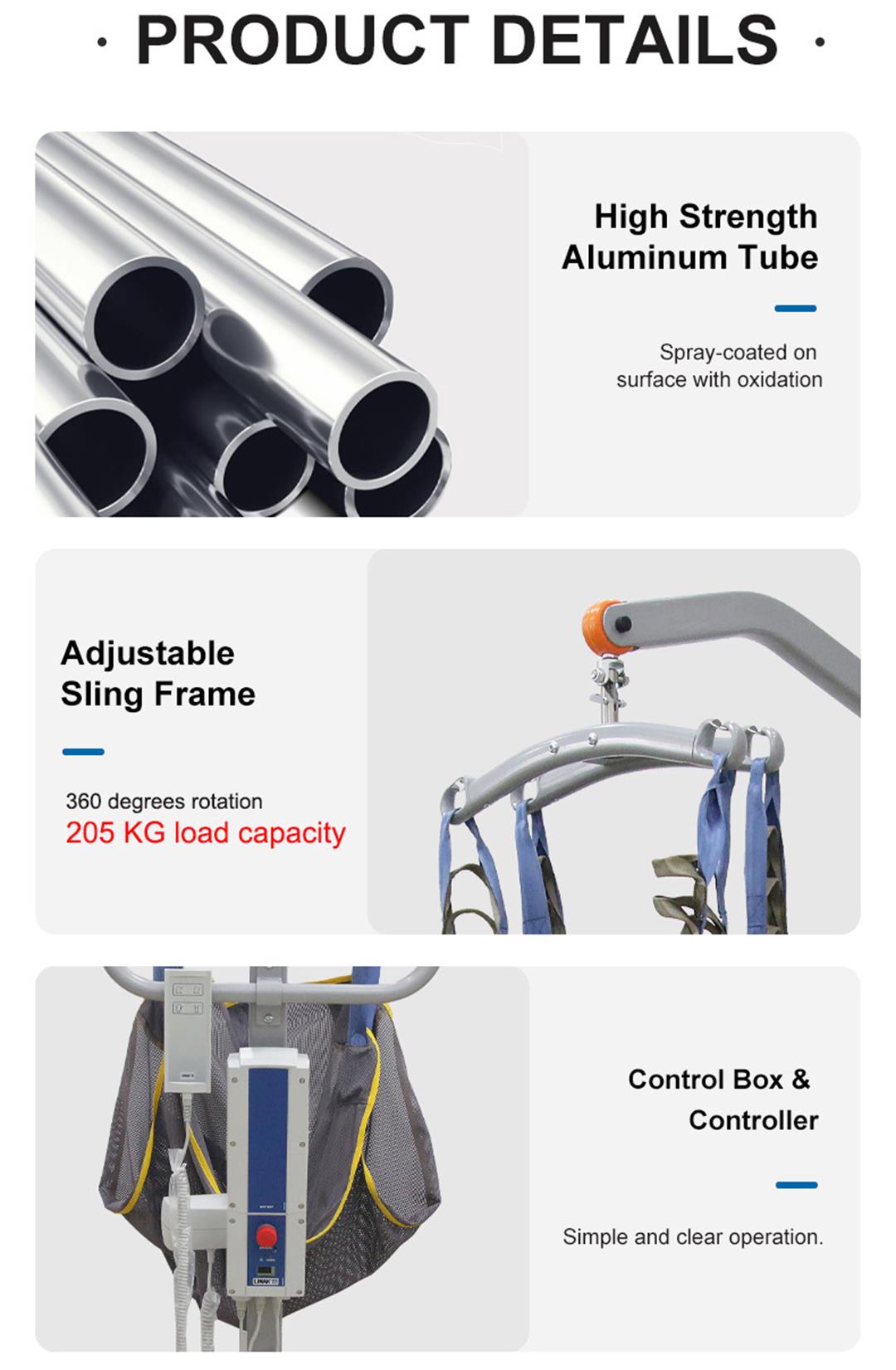
The motor is a core component of an electric patient hoist. High-quality equipment typically utilizes a medical-grade electric actuator system, which provides stable lifting power. Most mainstream products on the market have a weight capacity ranging from 150 kg to 220 kg, with some reinforced models capable of supporting over 250 kg to accommodate patients of various body types.
An excellent lifting system should operate smoothly and quietly, with a soft-start feature and precise stopping capabilities. Significant vibration during motor operation not only compromises patient comfort but may also shorten the equipment's service life.
2. Ergonomic Structural Design
An electric patient hoist is more than just a simple mechanical lifting device; it is a care tool that interacts directly with the human body. Consequently, its structural design is of critical importance.
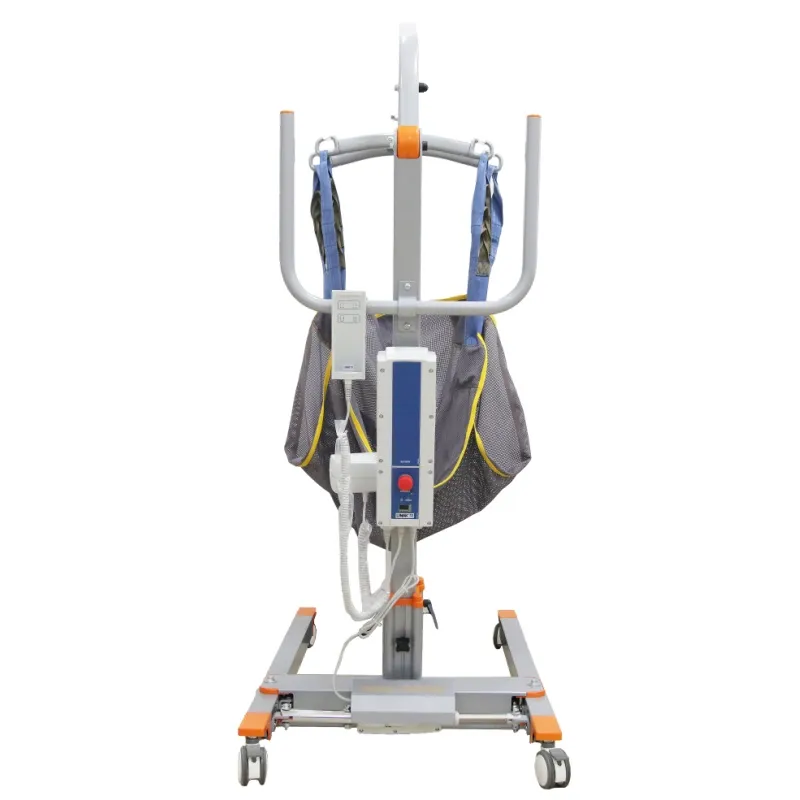
For instance, the width of the base must balance stability with spatial adaptability. In environments with limited space—such as hospital wards or home bathrooms—a device that is difficult to maneuver can negatively impact the user experience. Many professional-grade hoists feature an adjustable base, allowing the support width to be modified (either electrically or manually) to suit different settings.
Furthermore, the design of the sling is vital. High-quality slings are typically made from breathable, anti-slip, and wear-resistant materials. They are engineered based on how pressure is distributed across the human back and legs, helping to minimize concentrated pressure points on the patient.
3. Long-Lasting Battery and Safety Control Systems
Electric patient hoists are generally powered by rechargeable batteries. For hospitals and nursing facilities, battery life directly impacts operational efficiency.
Typically, a professional-grade hoist can perform dozens of lifting cycles on a single charge, though the exact number varies based on factors such as patient weight, battery capacity, and frequency of use. To prevent issues caused by sudden power loss, some high-end models include features like a battery level indicator, a low-battery alarm, and a manual emergency lowering function.
In terms of safety, essential features include an emergency stop button, overload protection, and a design that prevents the unit from tipping over.
Dahao Medical—A Manufacturer of Electric Patient Lifters for B2B Buyers
For global medical procurement professionals, selecting a supplier of electric patient lifters is not merely about choosing a piece of care equipment; it is about establishing a long-term partnership with a medical device manufacturer. Unlike standard industrial products, medical devices have a direct impact on patient safety, the efficiency of care, and the end-user experience. Consequently, an excellent manufacturer of electric patient lifters must possess not only production capabilities but also expertise in R&D, robust quality control systems, the ability to secure international certifications, and a commitment to ongoing service.
Dahao Medical has grown and evolved in response to these industry requirements. As a specialized Chinese manufacturer of medical assistive devices, the company focuses on mobility aids, patient transfer solutions, and rehabilitation equipment. Through continuous R&D and the development of a comprehensive production infrastructure, Dahao Medical provides reliable solutions for healthcare institutions, senior care organizations, distributors, and the home-care market worldwide.
Dahao Medical operates a modern production facility spanning approximately 80,000 square meters, featuring an integrated system for R&D, manufacturing, testing, and supply chain management. For international buyers, the scale of manufacturing is crucial for ensuring a stable supply. The medical market typically demands consistent, long-term product availability; insufficient production capacity can lead to issues such as extended lead times, inconsistent quality across batches, and difficulties in sourcing spare parts for after-sales support.
FAQ: Frequently Asked Questions About Electric Patient Lifters
1. For which types of patients are electric patient lifters suitable?
Electric patient lifters are primarily designed for individuals with limited mobility who cannot perform transfers independently—such as bedridden patients, the elderly, those recovering from surgery, individuals with paralysis, or patients undergoing rehabilitation. Before use, the appropriate model should be selected based on the patient’s weight, physical condition, and specific care requirements.
2. What is the maximum weight capacity of an electric patient lifter?
Weight capacity varies by model. Most electric patient lifters currently on the market have a capacity ranging from approximately 150 kg to 220 kg, with some heavy-duty models capable of supporting up to 250 kg. When purchasing, it is essential to select a model with a weight capacity suitable for your target user group.
3. How many people are required to operate an electric patient lifter?
Unlike traditional manual patient handling, which often requires multiple people, most professional electric patient lifters are designed so that a single trained caregiver can perform basic operations. However, actual use should always be determined based on the patient’s specific condition and the safety protocols of the healthcare facility.
4. How long can an electric patient lifter last on a single charge?
The duration of use depends on factors such as battery capacity, the patient’s weight, the number of lifting cycles, and the specific model of the equipment. Typically, medical-grade devices can support multiple patient transfers on a single charge and are equipped with a battery-level indicator, allowing caregivers to plan for recharging in advance.
5. Does Dahao Medical offer OEM and ODM customization services?
Yes. Dahao Medical supports OEM/ODM partnerships for clients worldwide. We offer customization options—including product appearance, functional configuration, branding (logos), packaging, and market-specific requirements—to help medical device brands and distributors develop products tailored to their local markets.