

In the past, many people believed that wheelchairs were the first choice for people with mobility impairments. However, for those who still have some walking ability, wheelchairs are not the best solution. Long-term reliance on wheelchairs can not only reduce lower limb muscle strength but also decrease physical activity, hindering rehabilitation training and the maintenance of physical function. Therefore, 4-Wheeled Rollators, which combine safety, walking assistance, and rehabilitation training functions, are gradually becoming one of the most popular mobility assistive devices in home care, nursing homes, hospitals, and rehabilitation centers worldwide.
According to data released by market research institutions such as Grand View Research and Fortune Business Insights, the global mobility assistive device market has maintained steady growth in recent years and is expected to maintain a compound annual growth rate of approximately 6% to 8% in the coming years. Among them, 4-Wheeled Rollators, with their greater flexibility, safety, comfort, and versatility, are capturing an increasingly larger market share. Especially in countries with high aging populations such as Europe, the United States, Japan, and Australia, Rollators have almost become an essential care product for home-based elderly care.
However, ordinary consumers, medical institution purchasing personnel, and international distributors often encounter various procurement challenges when faced with the wide variety of four-wheeled walking aids on the market. For example, different products vary greatly in price, yet their functional descriptions are very similar; some products advertise high load-bearing capacity, but their actual stability in use is unsatisfactory; and some products, while inexpensive, have folding mechanisms, electric braking systems, wheel quality, and after-sales service that are difficult to meet long-term usage needs. For international buyers, in addition to the product itself, they also need to consider the supplier's R&D capabilities, production scale, international certifications, and OEM/ODM service capabilities.
Therefore, a professional and systematic 4-wheeled rollator walker buying guide can not only help consumers choose products that truly suit their needs, but also help global buyers find professional manufacturers worthy of long-term cooperation.
This article will provide an in-depth analysis of the working principles, main functions, and product types of four-wheeled walking aids, and, combined with Dahao Medical's many years of experience in manufacturing medical rehabilitation equipment, will provide more professional and comprehensive procurement advice.
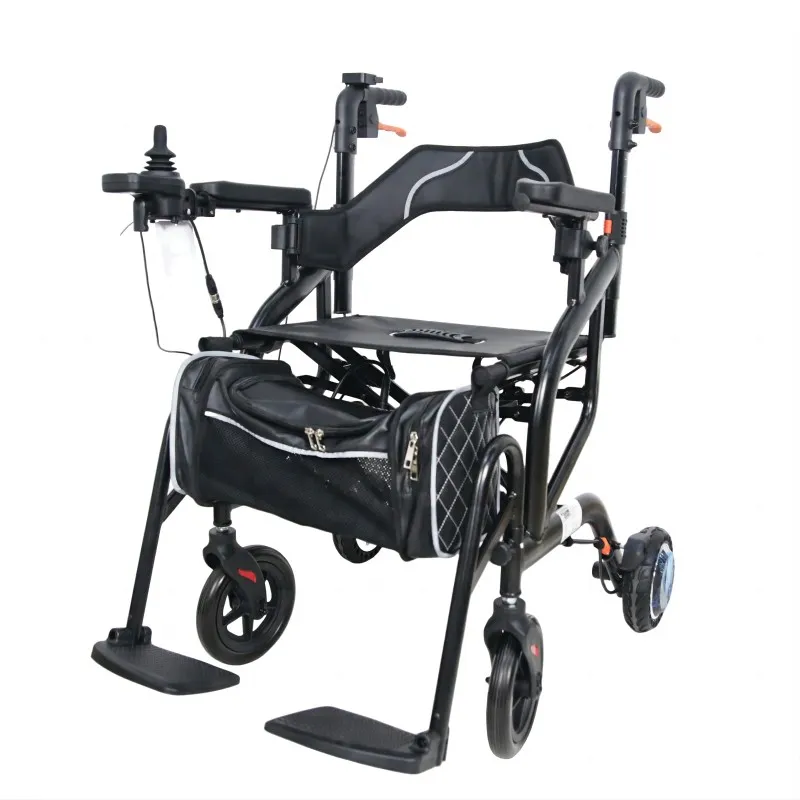
Why are more and more people choosing four-wheeled rollators instead of traditional walking aids or wheelchairs?
With the continuous development of rehabilitation medicine, people are increasingly recognizing the importance of maintaining adequate walking ability for the elderly and rehabilitation patients. Medical research shows that appropriate walking can help improve lower limb blood circulation, strengthen muscles, improve cardiopulmonary function, and reduce the risk of complications from prolonged bed rest or sitting.
While traditional fixed walking aids provide some support, each step requires lifting the entire aid, which not only consumes more energy but also easily disrupts walking rhythm. Wheelchairs, while completely replacing walking, reduce patients' opportunities for active movement, which is detrimental to long-term rehabilitation.
In contrast, 4-wheeled rollator walkers provide a more natural and continuous walking experience while maintaining stable support. The four large wheels smoothly propel the vehicle forward, eliminating the need for frequent lifting and significantly reducing energy expenditure. Furthermore, the ergonomic handlebars, sensitive braking system, and comfortable seat design allow users to flexibly adjust their walking and resting rhythm according to their individual needs.
For individuals with mild to moderate mobility impairments, 4-wheeled rollator walkers are not only assistive tools but also crucial devices for restoring independence. A growing number of rehabilitation physicians and physical therapists are also recommending that, where physical conditions permit, a rollator should be prioritized for assisted walking training, rather than relying entirely on a wheelchair.
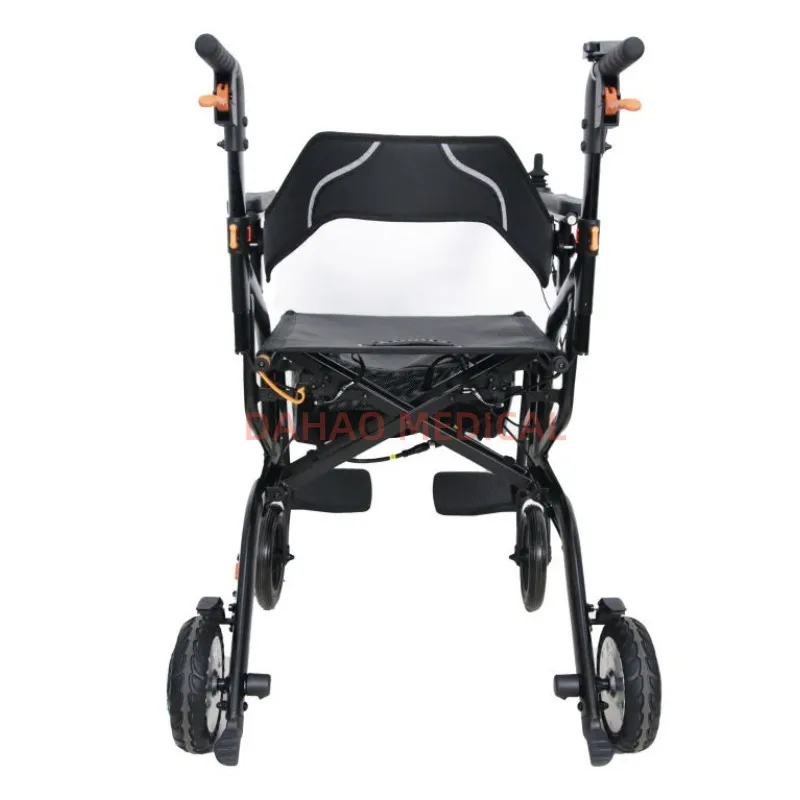
What is a 4-Wheeled Rollator?
A 4-Wheeled Rollator is a mobility aid equipped with four wheels, handles, a braking system, and a seat. It is primarily used to help people with reduced mobility walk safely. Compared to traditional walking aids, its biggest advantage is that it can be continuously propelled forward without needing to be lifted as a whole, thus requiring less effort and conforming more closely to the natural human gait.
Modern 4-Wheeled Rollators are typically made of lightweight aluminum alloy or high-strength steel, with the overall weight generally controlled between 6 and 10 kilograms. The maximum load capacity is typically between 100 and 150 kilograms, with high-load models even exceeding 180 kilograms, catering to the needs of users of different body types.
Most products also feature a foldable frame, storage bag, backrest, safety brake, and height-adjustable handlebars, enabling users to easily complete daily walks and enjoy a better experience in various scenarios such as shopping, travel, park walks, and hospital checkups.
Because of its multiple functions, including mobility assistance, temporary rest, and carrying items, the 4-wheeled walking aid has become one of the fastest-growing products in the global home care equipment market.
What are the core functions of a 4-wheeled walking aid?
For first-time Rollator buyers, simply understanding the product's appearance is far from enough; it's more important to understand the practical significance of each function for daily use.
First is the stability support function. The 4-wheeled walking aid provides users with more stable body support through a rationally designed frame center of gravity and a four-point support structure. When the elderly or patients have difficulty walking due to insufficient lower limb strength or decreased balance, the Rollator can effectively distribute body weight, improve walking safety, and reduce the risk of falls.
Second is the braking system. Modern 4-wheeled walking aids generally adopt a dual braking design, including normal deceleration braking and a parking lock function. When users need to stop briefly or sit down to rest, simply locking the brakes prevents the vehicle from slipping, improving overall safety. Some high-end products also feature more sensitive ergonomic brake levers, making operation easy even for elderly people with limited strength.
The seat function is another key feature that distinguishes 4-wheeled rollator walkers from ordinary walking aids. Many elderly people experience fatigue during long walks, and the comfortable seat equipped with Rollator provides a resting space at any time. Some products also include a backrest, allowing users to enjoy a more comfortable resting experience.
Furthermore, modern four-wheeled walking aids increasingly emphasize convenience. For example, large-capacity storage bags can hold medicines, water bottles, shopping items, and personal belongings; the folding design makes it easy to put into a car trunk; height-adjustable handles can accommodate users of different heights, ensuring optimal walking posture and reducing shoulder and back fatigue.
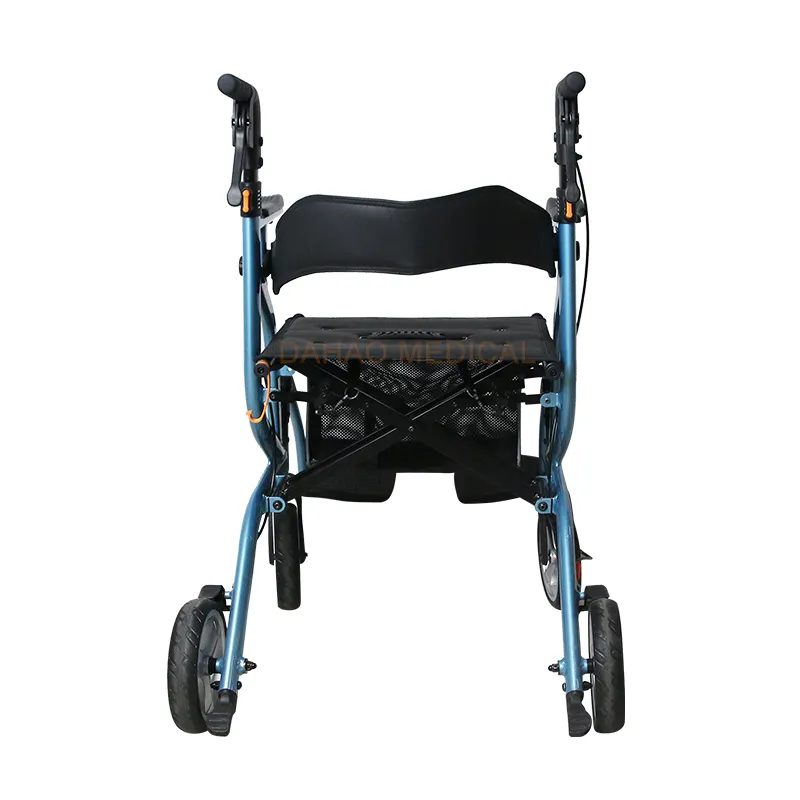
What are the main types of four-wheeled rollator walkers on the market?
With the continuous diversification of market demand, four-wheeled walking aids have developed into several different sub-types to meet the needs of different age groups, physical conditions, and usage scenarios.
The most common is the standard four-wheeled walking aid. These products typically feature a classic four-wheel structure, equipped with a seat, storage pockets, and a dual braking system, making them suitable for most home-based elderly users. Balancing price, stability, and comfort, they are the best-selling type of roller scooter globally.
Lightweight four-wheeled walking scooters have experienced rapid growth in recent years. These products extensively utilize aerospace-grade aluminum alloys, further reducing overall weight while maintaining strength, generally weighing only 6 to 8 kilograms. They are ideal for female users or those who frequently need to carry items. For users who frequently travel, shop, or get in and out of cars, the lightweight design significantly improves ease of use.
High-load-bearing four-wheeled walking scooters are primarily aimed at larger users. These products use thickened steel tubing, high-strength welding processes, and a wider seat design, resulting in higher overall stability and meeting the long-term safe use needs of heavier users.
Off-road four-wheeled walking scooters are equipped with larger wheels, wider tires, and better shock absorption systems. They are suitable not only for hospitals and homes but also for challenging terrains such as parks, residential roads, and lawns, enhancing outdoor activity capabilities.
In recent years, an increasing number of high-end Rollators have incorporated ergonomic handlebars, non-slip tires, concealed brake cables, quick-folding mechanisms, and more modern designs, giving them the dual attributes of medical assistive devices and stylish lifestyle products.
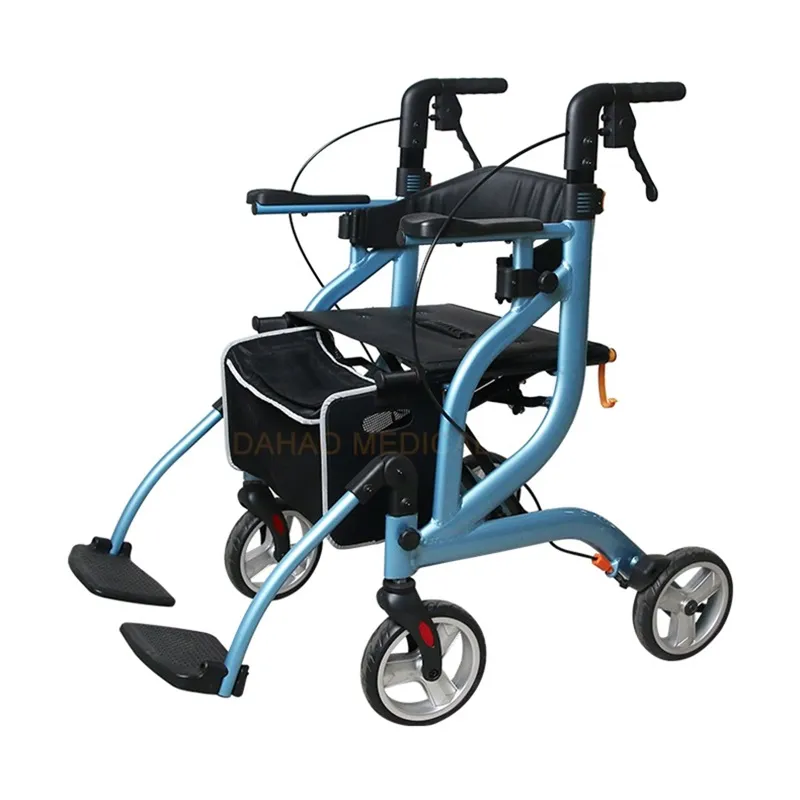
Dahao Medical: A Professional 4-Wheel Walking Assist Manufacturer Providing Reliable Solutions to Global Customers
As a professional manufacturer of medical rehabilitation equipment, Dahao Medical has long focused on the research, development, production, and global sales of walking aid products, accumulating rich manufacturing experience in the field of 4-wheeled walking aids. Our company adheres to safety, comfort, and durability as the core of product development, continuously optimizing the ergonomic design, structural stability, and folding convenience of Rollators to provide more comprehensive mobility assistance solutions for different markets worldwide.
Leveraging a modern manufacturing base, advanced production equipment, and a professional R&D team, Dahao Medical can offer a variety of 4-wheel walking assistive vehicle products, including standard, lightweight, high-load-bearing, and customizable models, and supports OEM and ODM collaborations to meet the diverse needs of medical device brand owners, distributors, elderly care institutions, and large-scale procurement projects.
Meanwhile, the company strictly implements the international quality management system, and its products meet multiple international standards, are exported to many countries and regions, and continuously provide stable and reliable products and services to global customers.